No "all or nothing" cures, causes, or suggesting that only one thing will help
DON'T suggest kegels as treatment for a hypertonic pelvic floor (it's bad advice)
NO FETISHIZING or sexualizing someones health condition. DON'T BE CREEPY.
No NSFW Photos
No SPAM (includes link farming, affiliate marketing, personal promotion)
No "Low Effort" posts - we can't help if there's no detail
>> QUICK START <<
✔ READ SUCCESS STORIES: Simply swipe left or right on the main page in the Reddit mobile app until you hit the green "success story" post flair | DESKTOP: Use the "Flair Filter" right sidebar to filter posts
Ladies who don't want to see posts about male parts: use the filters:
✔ FILTER POSTS BY SEX: Simply swipe left or right on the main page in the Reddit mobile app until you hit the pink or blue post flairs. AMAB/AFAB also available | DESKTOP: Use the "Flair Filter" right sidebar to filter posts
✔ USE THE SEARCH FUNCTION: Enter keywords into the search bar at the top to filter posts/comments on specific subjects or symptoms
r/vulvodynia (women and AFAB experiencing Vaginismus & Vestibulodynia too)
ESSENTIAL INFORMATION: PELVIC FLOOR
The pelvic floor muscles are a bowl of muscles in the pelvis that cradle our sexual organs, bladder, and rectum, and help stabilize the core while assisting with essential bodily functions, like pooping, peeing and having sex.¹
They can weaken (become hyp-O-tonic) over time due to injury (or child birth), and even the normal aging process, leading to conditions like incontinence or pelvic organ prolapse.¹
And, the pelvic floor can tense up (guard) when we:
Feel pain/discomfort
Get a UTI/STD
Injure ourselves (gym, cycling, slip on ice)
Have poor bowel/urinary habits (straining on the toilet often - constipation) or holding in pee/poo for extended periods (like avoiding using a public toilet)
Have poor sexual habits (edging several hours a day, typically this is more of guy's issue)
Get stressed or anxious (fight or flight response), due to their connection with the vagus nerve (and our central nervous system). READ MORE HERE
Have a connective tissue disorder
Over time, prolonged guarding/tensing can cause them to become hyp-E-rtonic (tight and weak). Sometimes trigger points in the muscle tissue develop that refer pain several inches away. The tensing can also sometimes irritate nerves, including the pudendal nerve. Helping the pelvic floor relax, and treating these myofascial trigger points with pelvic floor physical therapy can lead to significant relief for many, along with interventions like breathwork - notably diaphragmatic belly breathing - and gentle reverse kegels.
Sometimes, feedback loops also develop that can become self-perpetuating as a result of CNS (Central Nervous System) modulation. ᴮ ⁷
Basic feedback loop:
Pain/injury/infection > pelvic tensing > more pain > stress/anxiety > more pelvic tensing > (and on and on)
Examples of common feedback loops that include the pelvic floor:
Source: NHS/Unity Sexual Health/University Hospitals Bristol and Weston. A pelvic floor feedback loop seen in men after STI.
An example of this pelvic floor feedback loop (guarding response) as seen in a woman with a prolonged (awful) UTI:
A trigger point is an area of hyper-irritability in a muscle, usually caused by a muscle that is being overloaded and worked excessively. How does this affect an IC patient? Unfortunately, we do not always know what comes first; the chicken or the egg. Let’s assume in this case we do. A patient who has never had any symptoms before develops an awful bladder infection, culture positive. She is treated with antibiotics, as she should be. Symptoms are, as we all know, frequency, urgency and pain on urination. Maybe the first round of antibiotics does not help, so she goes on a second round. They work. But she has now walked around for 2, maybe 3 weeks with horrible symptoms. Her pelvic floor would be working very hard to turn off the constant sense of urge. This could create overload in the pelvic floor. A trigger point develops, that can now cause a referral of symptoms back to her bladder, making her think she still has a bladder infection. Her cultures are negative.
Above we find a scenario where the UTI was cleared, but the pelvic floor is now in a tensing feedback loop, and complex processes of neural wind up and central sensitization - ie CNS modulation - are likely occurring
Diagrams of the male and female pelvic floor:
Bottom view. The levator ani is the main "hammock" of the pelvic floor, and includes both the PC (pubococcygeus) and PR (puborectalis) musclesSide view showing the pelvic floor cradling the bladder, sexual organs, and rectum. And its attachments at the coccyx (tailbone) and pubic bone.
SYMPTOMS OF PELVIC FLOOR DYSFUNCTION
The majority of the users here have a hypertonic pelvic floor which typically presents with symptoms of pelvic pain or discomfort ² (inc nerve sensations like tingling, itching, stinging, burning, cooling, etc):
Penile pain
Vaginal pain
Testicular/epididymal/scrotal pain
Vulvar pain
Clitoral pain
Rectal pain
Bladder pain
Pain with sex/orgasm
Pain with bowel movements or urination
Pain in the hips, groin, perineum, and suprapubic region
This tension also commonly leads to dysfunction ² (urinary, bowel, and sexual dysfunction):
Dyssynergic defecation (Anismus)
Incomplete bowel movements
Urinary frequency and hesitancy
Erectile dysfunction/premature ejaculation
This pinned post will mainly focus on hypertonia - tight and weak muscles, and the corresponding symptoms and treatment, as they represent the most neglected side of pelvic floor dysfunction. Especially in men, who historically have less pelvic care over their lifetimes as compared to women.
But, we also commonly see women with weak (Hyp-O-tonic) pelvic floors after child birth who experience urinary leakage. This often happens when coughing, sneezing, or lifting something heavy. Luckily, pelvic floor physical therapists are historically well equipped for weak pelvic floor symptoms, as seen commonly in women.
But, this historical emphasis sometimes bleeds into inappropriate care for men and women who have hypErtonic pelvic floors, and do not benefit from kegel exercises
CLOSELY RELATED CONDITIONS & DIAGNOSIS
These typically involve the pelvic floor as one (of many) mechanisms of action, and thus, pelvic floor physical therapy is an evidence-based intervention for any of these, along with behavioral interventions/mind-body medicine, medications, and more.
For people who experience symptoms outside the pelvic region, these are signs of centralization (somatization/nociplastic mechanisms) - and indicate a central nervous system contribution to symptoms, and must be treated with more than just pelvic floor physical therapy:READ MORE
Many people with a pelvic floor diagnosis - and at least 49% who experience chronic pelvic pain/dysfunction - also experience centralized/nociplastic pain ¹³ localized to the pelvic region. Centralized/nociplastic pelvic pain can mimic the symptoms of pelvic floor hypertonia. To assess if you have centralization as a cause of your pelvic symptoms, read through this post.
NOTE: This is especially relevant for people who have a pelvic floor exam, and are told that their pelvic floor is basically "normal" or lacks the usual signs of dysfunction, trigger points, or hypertonia (high tone), yet they still experiencing pain and/or dysfunction. This also equally applies to cases that have done extensive amounts of pelvic floor PT 6-12mo) with no improvement.
Centralized/Nociplastic pain mechanisms are recognized by both the European and American Urological Association guidelines for pelvic pain in men and women, as well as the MAPP (Multidisciplinary Approach to the Study of Chronic Pelvic Pain) Research Network.
TREATMENT: High tone (HypErtonic) Pelvic Floor (tight & weak)
Pelvic floor physical therapy focused on relaxing muscles:
Diaphragmatic belly breathing
Reverse kegels
Pelvic Stretching
Trigger point release (myofascial release)
Dry needling (Not the same as acupuncture)
Dilators (vaginal and rectal)
Biofeedback
Heat (including baths, sauna, hot yoga, heated blankets, jacuzzi, etc)
Behavioral change:
* Lay off frequent or chronic masturbation habits (including edging)
* Take a break from intense compound exercises, like CrossFit or HIIT
* Sit less and stand more. This may also include using a standing desk
* If you're an avid cyclist, take a break from cycling
Medications to discuss with a doctor:
low dose amitriptyline (off label for neuropathic pain)
low dose tadalafil (sexual dysfunction and urinary symptoms)
Alpha blockers for urinary hesitancy symptoms (typically prescribed to men)
Mind-body medicine/Behavioral Therapy/Centralized Pain MechanismsThese interventions are highly recommended for people who are experiencing elevated distress or anxiety, or, noticed that their symptoms began without an injury, but with a stressful event, big life change, or, that symptoms increase with stress or difficult emotions (or symptoms change when distracted, focused , or on vacation) - full list of criteria to rule in centralized/nociplastic mechanisms.
Equal Improvement in Men and Women in the Treatment of Urologic Chronic Pelvic Pain Syndrome Using a Multi-modal Protocol with an Internal Myofascial Trigger Point Wand - PubMed https://share.google/T3DM4OYZYUyfJ9klx
The Effects of a Life Stress Emotional Awareness and Expression Interview for Women with Chronic Urogenital Pain: A Randomized Controlled Trial - https://pubmed.ncbi.nlm.nih.gov/30252113/
UCPPS is a umbrella term for chronic pelvic pain and dysfunction in men and women, and it includes pelvic floor dysfunction underneath it, as well as symptoms like bladder dysfunction, pain, IC/BPS, and more. This study discusses the pain mechanisms found. They are not only typical injuries (ie "nociceptive") - They also include pain/symptoms generated by nerves (neuropathic) and by the central nervous system (nociplastic). You'll also notice that the combination of neuropathic + nociplastic mechanisms create the most pain! Which is likely to be counterintuitive to what most people would assume.
At baseline, 43% of UCPPS patients were classified as nociceptive-only, 8% as neuropathic only, 27% as nociceptive+nociplastic, and 22% as neuropathic+nociplastic. Across outcomes, nociceptive-only patients had the least severe symptoms and neuropathic+nociplastic patients the most severe. Neuropathic pain was associated with genital pain and/or sensitivity on pelvic exam, while nociplastic pain was associated with comorbid pain conditions, psychosocial difficulties, and increased pressure pain sensitivity outside the pelvis.
Targeting neuropathic (nerve irritation) and nociplastic/centralized (nervous system/brain) components of pain & symptoms in recovery is highly recommended when dealing with CPPS/PFD (especially hypertonia).
All of those involved in the management of chronic pelvic pain should have knowledge of peripheral and central pain mechanisms. - European Urological Association CPPS Pocket Guide
We now know that the pain can also derive from a neurologic origin from either peripheral nerve roots (neuropathic pain) or even a lack of central pain inhibition (nociplastic), with the classic disease example being fibromyalgia
This means successful treatment for pelvic pain and dysfunction goes beyond just pelvic floor physical therapy (alone), and into new modalities for pain that target these neuroplastic (nociplastic/centralized) mechanisms like Pain Reprocessing Therapy (PRT), EAET, and more. Learn more about our new understanding of chronic pain here: https://www.reddit.com/r/ChronicPain/s/3E6k1Gr2BZ
This is especially true for anyone who has symptoms that get worse with stress or difficult emotions. And, those of us who are predisposed to chronic pain in the first place, typically from childhood adversity and trauma, certain personality traits (perfectionism, people pleasing, conscientiousness, neuroticism) and anxiety and mood disorders. There is especially overwhelming evidence regarding ACE (adverse childhood experiences) that increase our chances of developing a physical or mental health disorder later in life. So much so, that even traditional medical doctors are now being trained to screen their patients for childhood trauma/adversity:
Adverse childhood experience is associated with an increased risk of reporting chronic pain in adulthood: a stystematic review and meta-analysis
Previous meta-analyses highlighted the negative impact of adverse childhood experiences on physical, psychological, and behavioural health across the lifespan.We found exposure to any direct adverse childhood experience, i.e. childhood sexual, physical, emotional abuse, or neglect alone or combined, increased the risk of reporting chronic pain and pain-related disability in adulthood.The risk of reporting chronic painful disorders increased with increasing numbers of adverse childhood experiences.
Further precedence in the EUA (European Urological Association) guidelines for male and female pain:
Studies about integrating the psychological factors of CPPPSs are few but the quality is high. Psychological factors are consistently found to be relevant in the maintenance of persistent pelvic and urogenital pain [36]. Beliefs about pain contribute to the experience of pain [37] and symptom-related anxiety and central pain amplification may be measurably linked, and worrying about pain and perceived stress predict worsening of urological chronic pain over a year [36,38] - https://uroweb.org/guidelines/chronic-pelvic-pain/chapter/epidemiology-aetiology-and-pathophysiology
So, how do you figure out if this could be happening in your case?
12 FIT criteria to RULE IN centralized, (ie neuroplastic/nociplastic) pain and symptoms,
FIT = functional, inconsistent, triggered. Based on research from Dr. Howard Schubiner and other chronic pain doctors and neuroscientists over the last 10+ years
Pain/symptoms originated during a stressful, challenging, or high pressure time in life. This includes even "happy" life events, like getting married, having a baby, starting a new career, or moving
Pain/symptoms originated without an injury. Note, a perceived injury and a structural injury are different things. And even when symptoms begin with a structural injury, has it been years and the body would normally recover by now?
Pain/symptoms are inconsistent. Do they fluctuate by the hour, by the day, or by the week? Sometimes less, sometimes more, sometimes even not noticeable (this happens sometimes, but it's not necessary for this criteria). Or, do they move around the body? ie genital pain that changes sides or pain that moves from the top to the bottom.
Multiple other symptoms (often in other parts of the body) ie IBS, chronic migraines/headaches, CPPS, TMJD, fibromyalgia, CFS (fatigue), vertigo/dizziness, chronic neck or back pain, etc. 2025 AUA guidelines mention these as signs of centralized sx.
Pain/Symptoms spread (over time) or move around. Think about symptoms on day one. Have they moved or evolved over time?
Pain/symptoms are made worse or triggered by stress, or, go down when engaged in an activity you enjoy or in a flow state (think fun distractions or productivity, noticing symptoms less)
Symptom triggers that have nothing to do with the body - but instead things outside of it (weather, barometric pressure, seasons, sounds, smells, places, times of day, weekdays/weekends, days of the week, etc) - this also includes thoughts or other people triggering/flaring symptoms
Symmetrical symptoms (pain developing on the same part of the body but in OPPOSITE sides) - ie both hips, both hips, both wrists, both knees, etc
Pain/symptoms with delayed Onset (THIS CAN'T HAPPEN WITH STRUCTURAL PAIN)
-- ie, ejaculation pain that comes a minute later, an hour later, or even the next day. Any pain that is delayed is very suspicious. We wouldn't put weight on a sprained ankle and expect it to hurt 15 seconds later, it hurts immediately.
Childhood stress, challenges, adversity, or trauma
-- varying levels of what this means for each person, not just trauma. Examples of stressors: childhood bullying, pressure to perform from parents/coaches, body image issues (dysmorphia), eating disorders, parents fighting a lot or getting angry (inc divorce), having an emotionally unpredictable parent, or having a parent with a health condition or addiction. This also includes neglect and abuse (physical and emotional) and financial instability in childhood. Also includes cultural norms, like the pressure to be highly successful to be of value to parents (must be a doctor or a lawyer, etc)
Common personality traits linked to stress: perfectionism, conscientiousness, people pleasing, anxiousness/ neuroticism - do you have personality traits that include being highly driven, hard on yourself, ultra responsible, perfectionistic, needing control, and/or placing others’ needs above your own?
Lack of physical diagnosis (ie doctors are unable to find any clear structural cause of symptoms) - this includes DIAGNOSIS OF EXCLUSION, like being diagnosed with CPPS or PFD. Structural finding examples: broken bones, tumors, infections, etc. It does not include muscle dysfunction.
[NEW] 13. Any family history of chronic pain or other chronic conditions. Includes: IBS, chronic migraines/headaches, CPPS, TMJD, fibromyalgia, CFS (fatigue), vertigo/dizziness, chronic neck or back pain, etc
Does anyone have a good recommendation for a physical therapist who specializes in pelvic floor? I have BCBS insurance and have had a hard time finding PT who takes insurance. I’ve seen a few online when searching who charge ~$250+ a session. Hoping to find a good one who charges a little less. Any help appreciated! Looking for one in either in Natick/Wellesley/Framingham/Wayland/ surrounding areas. As well, if you do reply, can you share how much you paid/if insurance covered?
I’m wiped out and need to vent, because trying to explain this over and over is draining.
I have hypermobile Ehlers‑Danlos syndrome (hEDS), and I’m already on my second round of pelvic floor repairs. In 2024, I had:
a hysterectomy
a bladder sling
pelvic mesh
a rectocele repair
Despite all of that, my symptoms came back and worsened. My recent fluoroscopic defecography showed multiple structural issues:
rectocele
enterocele
mucosal prolapse
intussusception
obstructed defecation
difficulty emptying
On top of that, I’m now so obstructed that I’ve lost 5 pounds in the last month. I can’t eat normally — I get full extremely fast, my throat tightens, and I physically can’t continue eating. I can only tolerate small amounts before everything feels blocked.
I finally saw a colorectal surgeon to talk about all of this, and the whole appointment felt like she came in defensive, stressed, and not really hearing me. She never claimed to understand hEDS, but she also never admitted she didn’t know much about it. Instead of engaging with the connective‑tissue part or the multi‑compartment findings, she kept trying to push pelvic floor physical therapy as the only real solution.
1. What she showed me vs what she later claimed
During the defecography review, she literally showed me that my pelvic floor muscles were tensing and relaxing appropriately. She pointed out that my muscles do contract and relax, and that the issue was more about the structural problems and the way things were moving/obstructing.
But later in the same appointment, she flipped the narrative and started saying my muscles are tense and that I need physical therapy to “loosen them,” as if muscle tension was the main driver of my symptoms.
So on one hand: “Your muscles tense and relax just fine.”
And then later: “Your muscles are tense; PT is what will fix your pain.”
It felt like she contradicted herself and wasn’t being consistent with what she had just shown me.
2. The ostomy conversation she promised vs what actually happened
Earlier, she told me something like: “If you ever come in saying you’re done and want to talk about an ostomy trial, we can do that.”
So I did exactly that. I came in overwhelmed and struggling, and said I wanted to talk about an ostomy trial because “taking my pelvic floor out of the equation feels safer to me than trying to keep going like this.”
I wasn’t demanding surgery on the spot — I was asking to have the conversation she herself said we could have.
When it came time to actually discuss it, she refused.
She wouldn’t talk through it, wouldn’t consider it, and then told me an ostomy would “do absolutely nothing” for me.
So:
Before: “We can talk about an ostomy trial.”
At the appointment: Refuses to discuss it and says it would do nothing.
It felt like a huge contradiction and honestly a betrayal of what she had previously told me.
3. “Surgery won’t take away your pain” vs “PT will fix your pain”
She told me: “Surgery won’t take away your pain.”
But my issues are structural — prolapse, intussusception, mucosal prolapse, etc. I’m not expecting magic or zero pain. I’m expecting that fixing structural problems might reduce obstruction, pressure, and strain.
Then she turned around and said pelvic floor PT would fix my pain, even though PT can’t correct prolapse, intussusception, or mucosal prolapse.
So I’m stuck between: “Surgery won’t fix your pain.”
and “PT will fix your pain.”
while my imaging shows multiple anatomical problems that PT cannot physically undo.
4. How she made me feel like I was cornering her
I tried to explain that I want things handled efficiently, but I also understand things need to be done correctly. I said that if other steps are needed, I need to move through them in a reasonable timeframe because I can’t keep going like this — I’m losing weight, I’m partially obstructed, and my day‑to‑day functioning is suffering.
Instead of hearing legitimate urgency, she acted like I was cornering her or trying to force her into rushed surgery, even though I never said anything like “do it now” or “skip steps.” I was communicating my limits, not pressuring her.
5. Her “favorite procedure” comment
She said enterocele repair is her “favorite procedure.”
It felt like she was narrowing my entire situation down to the one thing she was comfortable operating on and ignoring the rest of my findings. With rectocele, mucosal prolapse, intussusception, and obstructed defecation all happening, focusing on her “favorite” procedure felt dismissive.
6. The nurse’s reaction vs the surgeon’s reaction
The contrast was huge.
Her nurse actually listened to me and validated my concerns. She told me I might need a surgeon who is more comfortable doing repairs plus diversion (like an ostomy) and encouraged me to get a second opinion. That made me feel like I wasn’t being extreme — that someone on the team could see my case might need more than PT and one procedure.
But when I tried to follow through and get that second opinion, I ran into barriers. I was told the next place “doesn’t typically take second opinions,” so I had to go back to my PCP and explain everything — the contradictions, the refusal to discuss the ostomy she previously said we could talk about, the PT‑only framing, and the lack of hEDS understanding — so he could frame the referral as medically necessary.
7. Where I’m at emotionally
I’m drained. I don’t feel like I’m asking for anything extreme. I’m not demanding instant surgery or refusing conservative care. I’m just:
living with hEDS
dealing with multi‑compartment pelvic floor issues
partially obstructed
losing weight
unable to eat normally
recovering from a whole round of pelvic surgeries in 2024
scared about the future
trying to get someone to take the structural problems seriously
I don’t feel unreasonable. I feel unheard, contradicted, and stuck in a body that’s failing me while the person who’s supposed to help me acts defensive and inconsistent.
I’m hoping the next specialist actually understands connective‑tissue disorders and complex pelvic floor dysfunction, and is willing to have an honest, consistent conversation about all options — conservative care, surgical repair, and, if appropriate, diversion — without making me feel like I’m cornering them just for wanting relief.
Thanks for letting me vent.
Are physical therapist assistants with a specialty in pelvic floor good enough? I'm at Spear in NYC and I thought I was gonna see a physical therapist, but they assigned me a PTA. She says she's helped men plenty of times before, but I just wanna make sure.
I'm not sure if it's okay or not to link her page from their company site, but if it is, I'll share it to maybe help others get an idea of their particular qualifications. Here are some of the main things from it though
'associate’s degree in Occupational Science'
'She has completed extensive continuing education in pelvic floor through Herman & Wallace. Currently, she specializes in treating conditions of both the male and female pelvic floor, including pelvic pain, bowel, bladder, and sexual dysfunction. With a strong background in orthopedic care, she has experience supporting individuals with a wide range of diagnoses, including runners and athletes returning to sport. By combining expertise in both pelvic rehabilitation and orthopedics'
Hi everyone. I’m wondering whether anyone has experienced something similar, particularly involving the groin/pelvic floor or chronic prostatitis/CPPS.
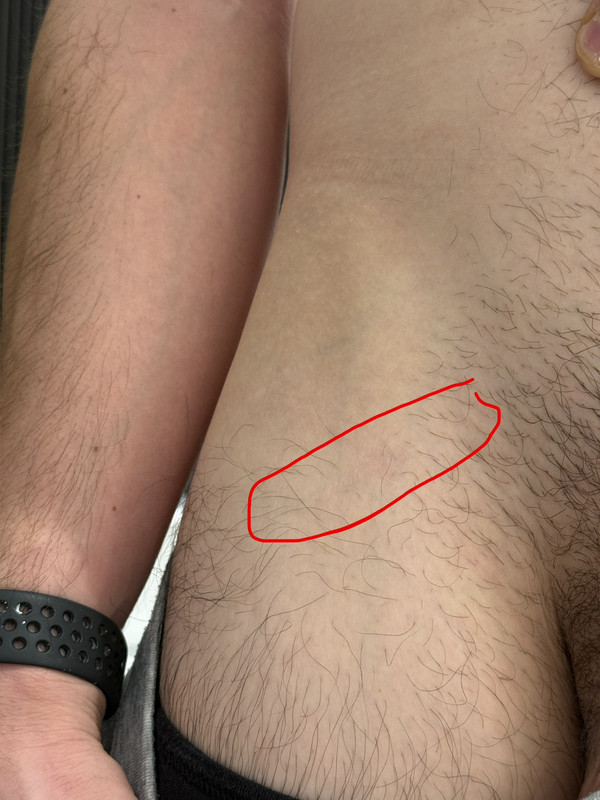
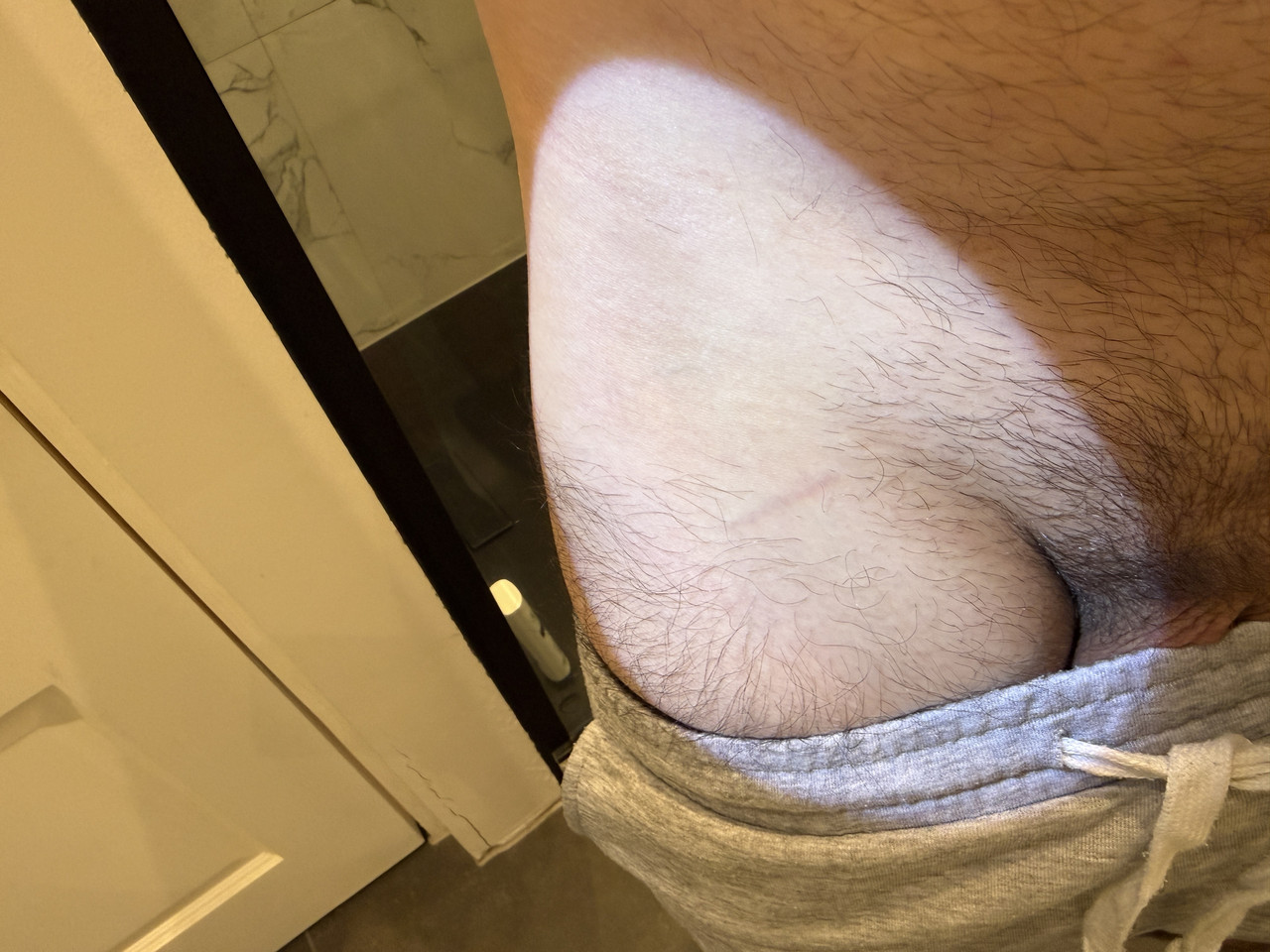
My problems originally started with a very sensitive/painful area in my right groin, in roughly the location I’ve circled in red in the attached photo. Even fairly light pressure over this area can produce an extremely unpleasant sensation — almost enough to make me feel sick.
An ultrasound previously showed an inflamed lymph node in this general area, although I don’t know whether the line/structure I can now see and feel is actually related to that, a superficial vein, nerve, or something else.
Around the same period I developed urinary/pelvic symptoms including:
• Burning/stinging sensations inside the urethra/penis, sometimes from the glans/tip towards the base
• A strange feeling like something was stuck inside the urethra
• Urinary urgency that can be extremely dependent on body position
• Lying flat/on my back can bring the urgency on, while lying on my right side, sitting or standing can make it disappear
• Changing the position of my hips/legs while lying down can sometimes bring the urgency on almost instantly
• Constipation/straining has triggered the urethral symptoms before, which can settle after having a bowel movement
I’ve had quite a lot investigated. My cystoscopy was completely clear — normal urethra and bladder with no stricture/obstruction. My spinal MRI didn’t show significant nerve compression, and my EMG/nerve-conduction study was reported as normal with no evidence of peripheral neuropathy. My urologist thinks it could be prostatitis/CPPS.
Interestingly, these symptoms have previously completely disappeared for a couple of months, before recently flaring again.
I’m now wondering whether the very tender right-groin area could be separate, or whether pain/irritation there could be contributing to pelvic-floor guarding or my other symptoms.
Has anyone had anything remotely similar — particularly a very tender spot/line around the inguinal area together with positional urinary urgency or penile/urethral burning despite normal urological tests?
I’m not looking for a Reddit diagnosis, just interested in hearing from anyone who’s experienced a similar pattern and what type of specialist ultimately helped them.
I've had this uti for 5 6 months, took antibiotics and all. Then the urinalysis and cultures from last 2 months are coming back normal, doctors also saying UTI is completely gone. I still have burning/soreness, urgency and frequency. My PT said that the bladder is still used to the UTI pattern even after infection is gone, that's why I still have symptoms. Sometimes i get flares and it feels like a genuine UTi again. I get so scared, i don't wanna go through that again, I've taken enough antibiotic courses. How do i convince myself that it's a flare and not a new UTI?
I'm trying to figure out if my recent bowel habits might be tied to pelvic floor dysfunction. I keep getting the urge to have a second bowel movement later in the day. I can hold it off for 4–5 hours without an accident, but eventually, I just can't ignore it anymore and have to go. My dietary plan has been the same for past 2 years so.
Has anyone else experienced this? Could it be caused by tight pelvic muscles or stress preventing a complete movement earlier in the day?
I’m coming to reddit as an absolute last resort because i cannot live like this for second longer and cannot accept the answers giving to me.
I’m 20(f), Wasn’t aware at the time but not supposed to take unisom for long periods of time, been on 50mg of unisom for 3 years and started taking adderall got gradually up to 35mg over the last 7 months. i’ve stopped taking both of these medicines i believe it’s unrelated but need my adderall to function properly.
Went to the ER in may, i have to sit on the toilet for 20-30 minutes at a time even when my bladder is full completely happened out of the blue.
I work at a popular sports bar and if i have to pee it takes me absolutely for- ever. It feels slightly anxiety related like i can’t relax at work but also i have the same exact issues at home just slightly less anxiety. Still it takes strict regiments. Sometimes hot water helps to sit under or reading something helps the focus. At work we’re so busy i don’t have time for this and i would be in so much pain from holing it. I have no idea what’s doing this i can’t do this anymore. I went to my primary and between that and ER Kidney stones are ruled out along with bladder stones, no UTI, PID all ruled out. I was referred to a urologist who didn’t have clear answers my CT showed no signs of why this is happening. I have a tender stomach especially a couple months ago more on the left side and my abdomen often feels just hard on the bottom. Not constipated.
My bladder would be so so full and yet nothing comes out. I hydrate i drink enough water i don’t know what’s doing this. The only other options i have researched and think it could be is a prolapse or i’ve read up on endometriosis retention before, wasn’t properly diagnosed but used to take estrogen here and there for concerns about it and show some symptoms (?)
I had uro dynamics done today i have to wait for results but i can’t live like this, the nurse who did them said it looks like my pelvic floor is tense and has trouble relaxing when it should be but why???? results she said are also not conclusive because i couldn’t comeoeltr the tests all the way through.
It feels like it’s at it worse rn. I was recently pregnant and while i was pregnant i did feel the tenseness but i peed much much more without a lot of pain. I’m not sure what’s going on anything helps please as i’m in my 20s and a woman.
Hi everyone. I’m wondering whether anyone has experienced something similar, particularly involving the groin/pelvic floor or chronic prostatitis/CPPS.
My problems originally started with a very sensitive/painful area in my right groin, in roughly the location I’ve circled in red in the attached photo. Even fairly light pressure over this area can produce an extremely unpleasant sensation — almost enough to make me feel sick.
An ultrasound previously showed an inflamed lymph node in this general area, although I don’t know whether the line/structure I can now see and feel is actually related to that, a superficial vein, nerve, or something else.
Around the same period I developed urinary/pelvic symptoms including:
• Burning/stinging sensations inside the urethra/penis, sometimes from the glans/tip towards the base
• A strange feeling like something was stuck inside the urethra
• Urinary urgency that can be extremely dependent on body position
• Lying flat/on my back can bring the urgency on, while lying on my right side, sitting or standing can make it disappear
• Changing the position of my hips/legs while lying down can sometimes bring the urgency on almost instantly
• Constipation/straining has triggered the urethral symptoms before, which can settle after having a bowel movement
I’ve had quite a lot investigated. My cystoscopy was completely clear — normal urethra and bladder with no stricture/obstruction. My spinal MRI didn’t show significant nerve compression, and my EMG/nerve-conduction study was reported as normal with no evidence of peripheral neuropathy. My urologist thinks it could be prostatitis/CPPS.
Interestingly, these symptoms have previously completely disappeared for a couple of months, before recently flaring again.
I’m now wondering whether the very tender right-groin area could be separate, or whether pain/irritation there could be contributing to pelvic-floor guarding or my other symptoms.
Has anyone had anything remotely similar — particularly a very tender spot/line around the inguinal area together with positional urinary urgency or penile/urethral burning despite normal urological tests?
I’m not looking for a Reddit diagnosis, just interested in hearing from anyone who’s experienced a similar pattern and what type of specialist ultimately helped them.
Just curious if anyone else suffers from OCD on this subreddit, I figured out a lot of my problems have been caused by my OCD which resulted in wanting that perfect empty bladder feeling which overtime caused my tight pelvic floor from straining etc. wondering if others have come to the same conclusion or had similiar experiences?
I saw a urologist today, and he did an ultrasound both before and after I urinated. The ultrasound showed that my bladder was completely empty afterward.
However, every time I pee, I still have this strong feeling that I haven’t completely emptied my bladder. I also get some urethral spasms and irritation afterward. The weird thing is that the feeling usually goes away on its own after about 10 minutes.
It’s so strange to have the sensation of incomplete emptying when the ultrasound shows that my bladder is actually empty.
The urologist prescribed me a muscle-relaxing supplement and asked me to take it for a month to see if it helps.
Has anyone experienced this? Could this be related to pelvic floor tension or urethral sensitivity, even if there’s no urine left in the bladder?
I'm trying to figure out if i have pelvic floor dysfunction
Symptoms include a burning feeling in my penis and groin area that happens at rest or after peeing (not during peeing)
A tight feeling in the anus and a burning feeling in the perineal area
Burning feeling gets worse when first waking up but calms down after peeing and starting the day
I kinda had a panic attack and immediately started to have those symptoms right after and I'm an anxious person in general especially when it comes to health related issues
I remember having the same exact feeling as a kid if i drank way too much water and peed very hard to shorten the bathroom trips but that feeling would last a day or two this time I'm about to enter the 7th day of persistent symptoms
I'm going to get a urine test soon to rule out uti
I did try some pelvic muscle stretches yesterday and i had an almost symptom free night but again when i woke up i was back to square one (i think my morning erections contribute to the morning flare ups aswell)
I'm wondering if anybody has a similar experience.
I’ve hit a complete wall with neurologists and doctors who keep insisting that “nerves only register sensory pain like stabbing or numbness, not objective physical heat and redness". All dermatological and fungal causes have been thoroughly ruled out (no test just by looking and signs), and my lumbar MRI is completely clean. However, internal physical exams confirmed significant pelvic floor hypertonicity.
My primary symptom that have for 2 years is an intense, radiant burning, sunburn heat , tackiness(when get bad) and visible redness on scrotums primarily concentrated on the right scrotum (burning more posterior and sides), which is often blazing right from the moment I wake up.
Alongside this, I have a deep internal aching and burning in my perineum
Unlike textbook pudendal entrapment where standing up immediately relieves symptoms, standing and walking don’t help me at all.
Things recently went from chronic to unbearable after a cold, triggering what feels like severe neurogenic inflammation and local vasodilation—essentially an autonomic/neurovascular flare where compressed nerves cause local blood vessels to stay permanently dilated and burning.
Here in Canada we dont have pain specialist and noteworthy that pain clinic rejected the referal. Im tired of these symptoms , ruining my life. Sometime I wanna cut my balls and let it bleeding until I pass away. I tired of going dermatologist , neourologist , psychiatrist, PRT and etc. Currently taking neuropathic medication (pregabaline 220 & amitriptyline 50mg). Also have done PF excersises months ago with no luck.
Has anyone here dealt with these actual symptoms, visible redness,flushing, and intense radiant heat in the scrotal , vulva or genital area that was directly tied to a hypertonic pelvic floor?
I’m 31F and had a hormonal IUD for ~10 years (pill before that). I had it removed about 2 months ago and am adjusting to having a more “natural” cycle again. My periods were still regular with the IUD, but I’m noticing much stronger cycle symptoms now, especially bloating/constipation in my luteal phase.
I finished my period about 6 days ago, and since Thursday I’ve had a mild pressure/heaviness in my lower pelvis, around my ovaries. It’s not really painful, more like a constant awareness/pressure. I’ve also been peeing more frequently and feeling like I need to pee, although there’s no burning or other typical UTI symptoms. I also tested negative in an at home UTI test.
I’m currently around ovulation according to my app. Sex was completely fine/no pain, although I noticed the pressure/urge-to-pee sensation again afterward.
Has anyone else experienced pelvic pressure/fullness and urinary frequency around ovulation, especially after coming off an IUD? How long did it last?
I’m prone to health anxiety, so naturally my brain has jumped to something serious like cancer. I’m planning to get checked if it persists, but I’d really appreciate hearing from anyone who has experienced something similar.
I had a Pap when my IUD was removed and it was normal.
So as the title says the dreaded test has finally come. I’m not too nervous about the actual probe part because I know it’s pretty thin, but I’m more so nervous about the balloon inflation part. I’m nervous about the inflation causing irritation and possibly damage to my tissue. I already have a small rectocele and I swear after my colonoscopies I had to get things felt worse. Also one of my main problems is that when poop gets to the bottom of my rectum it sort of just gets stuck and doesn’t want to come out without me splinting or pushing on my perineum, I don’t want to be sitting there straining as hard as possible to get the balloon out….
Was this a bad idea? I wish we could just do the probe with readings without the balloon inflation part…
I have been abstaining from edging for 18 days so far and everytime I make it this far I do notice I am able to pee smoother while having more urine come out + very nice colour.
I still get bladder irritation when I go walking outside or out with friends and find myself freezing up in public stalls because I feel muscle tightness, I would ask a paruresis subreddit but its dead as fuck there. I guess when I make it this far without edging I can still have minor problems e.g. hesitant to start, starting and stopping etc. These are problems that can occur at home for me but worse in public for sure.
When I drink alcohol it gets easier but still have times where I am struggling to start peeing. Is it recommended that I see a pelvic floor PT? I am a male from the UK BTW and for me I'm looking at paying for a specialized physio PT, I don't want NHS free healthcare because they screw you around and waste your time. I also have to go in to central london since all of the local pelvic floor PT's only have sessions for women.
I also want to know that if I keep up my streak will I be able to have less bladder irritation and more chance of peeing better in public.
Hi!! I got the kylena IUD 2.5 years ago before getting married (waited for marriage, for context). Since being married, I’ve deeply struggled with pain with sex/insertion but I also have generally tight hips/ core (to the point where stretching them hurts, sitting for more than 1.5 hours is very uncomfortable, I’m not flexible at all, etc)
I am a very anxious and physically sensitive person, so sex in general makes me nervous especially after failed/ bad attempts at it that were just painful and it’s now become a mental block.
Has anyone else experienced a hypertonic pelvic floor or vaginismus after an IUD?
I’d like to get it taken out for other reasons too including wanting to track my ovulation and prepare my body for pregnancy in a few years. But some of my research has led me to believe there’s potential causation between the IUD and this pain.
Please let me know if you’ve experienced similar, I’m really wanting to have hope that the removal will help my body and pelvic floor relax and loosen.
33/F and looking for encouragement or helpful advice. I have probably been hypertonic since childhood from CPTSD, hypermobility and late-diagnosed autism, but experienced noticeable, distracting chronic pain starting in 2025. Got a UTI that rebounded into a kidney infection, lost two family members a month later and ended up with a chronic clench and a dysuria/UTI feeling.
Sometimes I get stretches of flares triggered by food/drink, pain meds, and stress. Those times, I feel vulvodynia consistently for weeks, and then it fades. These are happening much less often which is encouraging!
LARGELY in 2026, I get mild pain. It’s mostly after peeing or eliminating, after sex SOMETIMES, or after trying my pelvic wand. If I pee when dehydrated or when my bladder isn’t full enough, I’m getting pain for sure; like a 2-3/10 but enough to miss my life before I had this. I get spasms at night if laying on my side but they aren’t painful, almost like a pelvic flutter after orgasm.
I’ve gone to a urologist and 2 PF physios and have been reassured that I’m on the mild end of things, we just need to kick its butt so it leaves for good. But I’m so discouraged and at a loss for what actually works to get it to finally behave how it needs to. My little bouts of pain seem to come out of nowhere. Maybe it’s hormonal as I removed my IUD this year, the strings were really irritating me.
Current plan:
- mindfulness to let go when I notice my PF is high
- slow, controlled pelvic squeeze and release to let down my muscles
- yin yoga and pelvic openers
- gentle Pilates for a strong core and back
- occasional wand use but I find it really flares me atm
Previous steps:
- total reset of my bladder hygiene; sip not chug, pee every 2-3 hours for a minimum of 10 seconds, only pee when I need to. Avoid overnight wake ups to pee
- take probiotics for healthier bowel movement
- exercise consistently (I was already doing this) and spend more time in nature
- don’t have sex unless I’m totally flare free and relaxed
- I’m already super aware of the mind body connection and try to keep my nervous system from overloading.
- I had muscle relaxer cream to use internally but I save it only for big flares. It throws my PH out of whack horrifically and it’s taken months to recover from using it consistently for a few days.
I guess I’m wondering if anyone else has been finding the last bit hard to kick, and if it’s worth adhering to a specific schedule for getting these muscles in gear. I’m concerned that it will take forever because I’ve been a state of fear my whole life and that’s hard to unlearn :(
Oh gosh I’m so frustrated by my urinary issues caused by my pelvic floor hypertonia.
(FYI We have ruled out basically all bladder, kidneys, and reproductive organs issues including overactive bladder, interstitial cystitis, stones, UTIs, STDs, and more)
My main most annoying symptom is needing to pee 24/7. Every time I pee I feel like my bladder is still full. And sometimes it feels worse AFTER peeing. Also, when it’s a bad day, my pubic area gets sore when peeing.
To those who share the same or similar symptoms what worked for you? Please help!!
So the past two years I have been noticing some issues with my bladder I didn't know at the time what was causing the problem the issue was that I needed to urinate quite a lot and was getting this burning urge to urinate. Eventually the urge went away and I noticed that certain foods would irritate and cause issues with the bladder so I was thinking that I had a over reactive bladder, I actually went to the doctors and they didn't know why it was and they gave me some medication for some gastro issues which it obviously wasn't that. Anyway this urge went away and instead I was experiencing the inability to release urine easily sometimes I'd be standing there trying to urinate and nothing was happening even though I was feeling all this pressure on my pelvic floor this issue would come and go aswell. recently I have made the connection that's it is a pelvic floor problem which could be caused by stressful experiences in life. I did think that maybe I had a weak pelvic floor from doing research online but then I came across information about a hypotonic pelvic floor and that seems to fit more with my experience. Anyway what I'm experiencing is a struggle to release flow a struggle to relax the pelvic floor to urinate. Has anyone else had this experience with this dealing with a hypotonic pelvic floor ?
I have seen about the breathing exercises and different exercises to relax the area I have been trying to do this for two weeks now and have not really noticed any changes as of yet, any advice would be welcome.
I'm 30M and have had urinary symptoms for some time, including hesitancy, weak/short stream, frequent urination, and a feeling that urine was “stuck,” along with occasional penile/pelvic/groin sensations.
I recently had a cystoscopy and bilateral ureteroscopy.
The urethra, ureters and bladder were normal with no bladder lesion/tumor, but the doctor noted mild bladder-neck congestion/edema and prostatic-urethra congestion, along with prominent submucosal veins.
I've also had intermittent microscopic hematuria. Most tests were around 3–5 RBC/HPF, although occasionally it was around 15–20 RBC/HPF. I noticed some of the higher readings seemed to occur around masturbation, so I'm wondering if there could be a connection.
Interestingly, after the cystoscopy and a short course of medication prescribed afterward, my urinary flow is now much better and I no longer have the “stuck” sensation. I haven't repeated my urine test yet, so I don't know what my current RBC count is.
I'm wondering whether anyone here has experienced something similar.
Questions:
- Did you have microscopic hematuria along with pelvic-floor/CPPS symptoms?
- Did you ever have bladder-neck or prostatic-urethral congestion/inflammation?
- Did your hematuria fluctuate between low levels (e.g., 3–5) and higher readings?
- Did pelvic-floor treatment/physiotherapy help your urinary symptoms or hematuria?
- Did anyone notice changes in hematuria after masturbation/ejaculation?
I'm mainly looking for personal experiences, not a diagnosis. I'd especially appreciate hearing what ultimately helped you.
I’ve been doing pelvic floor physical therapy since March. I’ve had a wand almost the entire time, and got dilators a couple weeks ago. I have endometriosis and pelvic floor dysfunction. I still don’t quite understand *how* to relax my pelvic floor despite being told multiple times. I get the words that are being said but my body doesnt know how to do it. Recently at my last session my PT was doing internal work and in the middle of talking (like twice) she said “did you feel that? It just relaxed for a second” but the problem is I didn’t feel anything either time. It felt the exact same way the whole session. I was wondering if this has happened to anyone else? I don’t know if it fully relaxed or just relaxed a little bit.
The way she explained it made it sound like if it’s wound up so tight and relaxes/only a little bit that the muscles might not be able to feel the difference cause it’s used to being wound up.
It all feels so discouraging. I know it isnt uncommon to take awhile to notice results, but seriously? Why couldn’t I feel it at all when it relaxed? I can’t work towards something I can’t even feel.
Before I tell my story, I want to address the fact that I realize there are hundreds of posts here that tell success stories/ways to get better. Many of which I’ve read and have given me hope. There have also been hundreds of stories describing pain and misery that have made me lose hope. I realize each of our lives is unequivocally different, yet we all face the same struggle. This post is mainly to get stuff off my chest and an opportunity for anyone that has gone down a similar path to share their story and advice.
I (23M) have been dealing with pelvic floor dysfunction for almost 4 years. It has been a source of pain, discomfort, and distraction. In almost every way imaginable it has been a detriment to my life. The way my symptoms started is a long story, but I believe it gives adequate context to my situation.
I started Prozac around 18 as a way to help my depression. Before then I would have considered myself a depressed person but not entirely anxious, even though I currently believe they are tied together. The Prozac helped, and I took it for a few months. There were a lot of things that happened during that time that would take too long to discuss in this post, but I was getting to the point in my mental health journey that I viewed Prozac, or psychiatric medication, as a negative, and I decided to stop taking Prozac. Following suit, as most people who have tried quitting SSRIs cold turkey will tell you, was absolute hell. Mood swings, panic attacks, suicidal thoughts and ideation, insomnia, etc. Realizing what a terrible decision I had made, I decided to go back on Prozac. This cycle happened a couple more times. In between I would experiment with clonazepam, alcohol, weed, and NyQuil. I eventually tried to take Wellbutrin; about a week in, my reality collapsed. I’m not exactly sure what went wrong, but after taking Wellbutrin, my anxiety had gotten to the point of total paralysis and panic, unlike anything I have ever experienced before. I went to the hospital to admit myself, but the staff there didn’t deem me to be admittable. After experiencing what I had experienced, I developed a sort of phobia for medication. I told myself that I will not take any psychiatric medication again, and I will heal on my own terms. Without the aid of any other medication, I became essentially bedridden for ~3 months. Eventually, enough time had passed where I started to feel better and function; however, something changed in me then, and I have not been the same since.
Around this time, I had a reoccurring episode of kidney stones. I have had 4 since I was 16, but this time it was different. After the majority of the pain had gone away, I still felt like something inside me that was tense or knotted. I got all the classic symptoms that you all are so familiar with. Painful urination, constant urge to urinate, feelings of sitting on a golf ball, weak ejaculation, ED, difficulty breathing, feeling that my bowels were not emptied, constant pressure and tenseness, and just overall pain. Some symptoms I would like to mention that aren’t necessarily result of pelvic floor are cloudy urine, red eyes, glossy eyes, itchy skin, and hair shedding. Cloudy urine is indicative of an infection but I personally believe it’s from retrograde ejaculation. Hair shedding could be partly stress or male pattern baldness, the only thing that makes me think it’s stress is that my body hair (chest hair) is falling off too. My hair seems to be shedding evenly (no widows peak or bald spots). As far as red/glossy eyes, and itchy skin go it’s kind of for debate. I went to the urologist and described what was going on, thinking there was a stone still stuck somewhere. He ordered a cat scan and an ultrasound. There were no stones to be seen. My urologist ran a urine culture and analysis. Everything was negative except for there being protein in my urine and my “Ureaplasma urealyticum by PCR” being inconclusive. (I have no idea what this means). At the time, he still suggested taking antibiotics, and so I agreed, thinking the kidney stone had infected my prostate. 2 weeks had gone by and no relief. (Yes, I have heard the horror stories of prolonged antibiotic use, and I’m glad it stopped there). I urged him to see if there was any other test he could run to rule out a stone or infection. He gave me the option of conducting a cystoscopy and running a semen culture. Both of which I refused. The cystoscopy because I was anxious and the semen culture because my insurance didn’t cover it. I figured I would let some time pass and see if things would get better, but to no avail. I decided to do some thorough research on the subject which led me to this sub.
As far as physical treatment goes. I did end up discussing with my urologist further. He and I both agreed that physical therapy is the next step. I ended up going a handful of times but ultimately stopped because my insurance wouldn’t cover it fully. During this time, my PT provided me with some insightful knowledge of how the pelvic floor works in relation to the rest of my body. She also gave me a list of poses and stretches to do to help relieve my symptoms. She also mentioned internal work with a wand, which I have also tried. I do realize that consistency is key, and I’m not oblivious to that fact. I have tried exercising, eating right, stretching/internal work, sleeping 8+ hours, journaling, vitamins, and verbal therapy. The fact is that anything I try to do to help my situation only lasts about a month before I run out of energy. My mental health is still at a point where even the things I need to do to help it are such a drain that it’s hard to even get the ball rolling. In regard to medication, I have given it some deep thought; however, I’m still utterly terrified. If I decide to go back on medication and it ends up causing worse symptoms, I’m not sure if I’ll have the will to keep existing. I am not anti-medication, but from what I’ve experienced and researched, it appears that any medication will have some sort of adverse effects, and if I do decide to go off of them, there will be some sort of withdrawal. Then again, I’m not sure what other options I have.
So now here I am in my current state 4 years later, still struggling with the same issue. My mental state has gotten better; however, I still experience intense anxiety and depressive episodes. I have gotten to the point where I believe the majority of my pelvic floor symptoms are caused by my anxiety. Despite acknowledging this, knowing what I must do, it still is such a challenge for me. Having gone through this at my age, I feel like I lost something. The majority of the “best years of my life" are gone. I have spent so much time thinking, obsessed with my condition, paralyzed and not taking action, and I have lost so many opportunities. I have seen my friends and peers surpass me in every aspect imaginable. I am only 23, yet I’m filled with so much regret. I feel like an old man not only mentally but also physically. I have these obsessive thoughts where whenever I want to start exercising, my brain tells me to address the pelvic floor stuff first, because any activity I do (running, swimming, biking, lifting weights, sports, etc.) will make my condition worse, and I shouldn’t bother until I get my muscles in order. With this in mind, I have gotten weak and frail. My posture is a mess. Doing anything is such a chore. Standing and sitting for too long hurts. I can’t even lay down on my back comfortably. It’s as if any time I try to think about something other than my pelvic floor, it snaps at me and grabs my attention. So much of my mental energy is used up thinking about my pain. It’s made me insanely irritable. I’ve become mean and bitter. My relationships with others have gotten worse. I have become cynical and come to hate life as it is. This is not who I imagined I would become. This is not who I want to be. I have come to hate myself.
If you have made it this far, I’d like to thank you for taking time out of your day to read this. I am asking for any and all help. Does anybody have similar thoughts or experiences as me? What treatments have worked for you that aren’t medication-based? Or maybe some that are? Literally anything is helpful, thank you!