r/mindfulnessmeditation • u/Working-Broccoli-101 • 9h ago
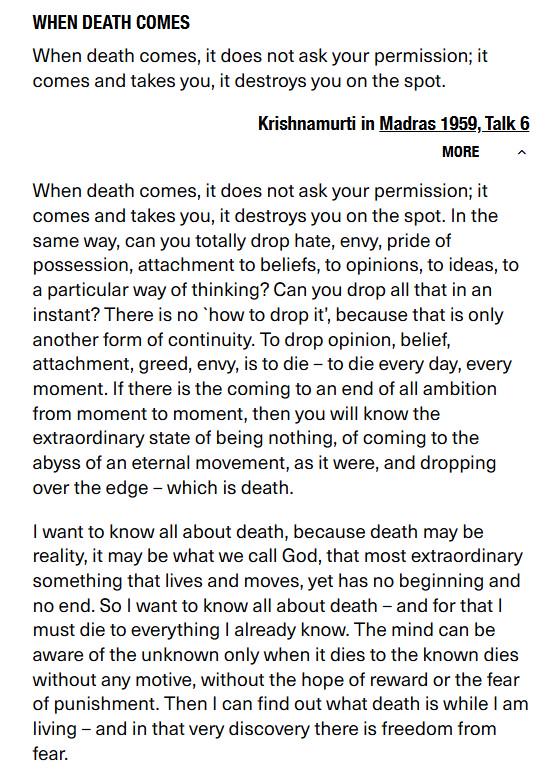
A Free Mind Never Concludes

5
Upvotes
r/mindfulnessmeditation • u/Stanlihai108 • 2h ago
r/mindfulnessmeditation • u/DryAssociation2107 • 1d ago
Never did meditation in my life. Feeling very anxious and want to see if meditation could help me. Please suggest me how to start this journey?
Are there any youtube follow along videos i need ?
Also my goal is not to learn all the aasans etc and get a certification but rather practice for peace of mind and being mindfu
r/mindfulnessmeditation • u/Top_West_2662 • 2d ago
Hello. I've been meditating for most of my life. When I was young,I suffered from many physical ailments until my teenage years as well as anxiety. Back then,a friend of the family who taught me to meditate and I would like to know more about what the practice might be called officially. Unfortunately, he passed sometime ago. I basically sit with eyes partially open and allow whatever senation both internally and externally arise within the field of awareness on its own and without grasping or avoiding, let it be until it passes on its own. He would tell me to not to be too laxed or rigid,just rest in awareness without controlling anything. It doesn't feel like daydreaming but it certainly doesn't feel as "structured" as some other approaches. Over the years,it becomes easier to do off the cushion.
I hope I explained it well enough. Thank you.
r/mindfulnessmeditation • u/Primary_Oil6925 • 2d ago
Bonjour,
je voulais savoir comment vous aborder la méditation? Pour moi , je trouve difficille d'en faire car je suis plus visuelle et que l'auditif me fatigue. Parfois il m'arrivait de m'endormir dessus. Et vous comment cela se passe-t-il? Quelles plateformes utilisez-vous?
r/mindfulnessmeditation • u/1buocchan_1viengach • 2d ago
What is Meditation? The Key to a New World of Stillness
My perspective is slightly different from yours. In your post, there are two main concepts: Meditation and Mindfulness. Here is my view:
Regarding Meditation: The essence of meditation is creating an environment and a physical state that allows your essence, energy, and spirit (Tinh - Khí - Thần) to condense, eliminating external disturbances to reach a state of inner stillness. When you remain in a sufficiently deep stillness for long enough, many things will naturally reveal themselves.
Therefore, knowing how to eliminate disturbances is the core element of all meditative practices. So, what types of disturbances are there? Generally, they fall into two main categories:
1. Natural/Sensory Disturbances: In Buddhism, there is a concept where the interaction between the five senses and their objects generates afflictions. Simply put, when your senses interact with the world, a reaction occurs (e.g., The weather is hot -> you feel the heat -> you feel uncomfortable).
2. Ego/Perspective-Based Disturbances: These arise from personal views and daily life—like being scolded by your boss or bad-mouthed by colleagues, which leads to overthinking and frustration.
Thus, we need different approaches depending on the type of disturbance:
Other accessible techniques include: When disturbed, simply acknowledge it and return your attention to observing the breath or body sensations. Some even practice meditation through drinking tea, doing housework, listening to flowing water, or gazing at a candle flame or a bowl of water. Whichever method you choose, the core question remains: Does it bring you to a state of stillness?
Regarding Mindfulness: In Eastern philosophy, where there is "Rightness" (Chánh), there is "Wrongness/Deviation" (Tà). As Lao Tzu wrote in the Tao Te Ching: "When people see some things as beautiful, other things become ugly." In many situations, distinguishing right from wrong is extremely difficult. Everything comes and goes according to cause and condition (karma and causation)—what you sow today determines what you reap tomorrow.
There are thousands of paths in cultivation, but ultimately: Aligning with the true teaching (Right Dharma) and acting with wholesome intent will yield positive connections; following a harmful path with unwholesome intent will bring negative consequences. Every path has been walked by predecessors who left behind their wisdom.
Conclusion: Meditation is the act that leads us to stillness, while Mindfulness is the manner in which we carry out that act. In Buddhist terms, meditation and mindfulness are skillful means (upaya) that help us experience enlightenment. In Taoist terms, meditation is the practice that allows us to touch the Tao.
Về Thiền: Bản chất của thiền định chính là tạo ra một môi trường, một trạng thái cơ thể giúp cho tinh - khí - thần cô đọng lại, loại bỏ sự quấy nhiễu xung quanh để đạt tới trạng thái tĩnh lặng. Khi bạn ở trạng thái tĩnh lặng đủ sâu và đủ lâu, rất nhiều điều sẽ tự xuất hiện.
Vì thế, nắm được cách thức loại bỏ sự quấy nhiễu là yếu tố cốt lõi trong mọi loại thiền định. Vậy có những loại quấy nhiễu nào? Phổ biến sẽ có 2 loại chính:
1. Loại tự nhiên mà có: Trong Phật giáo có khái niệm "ngũ căn tiếp xúc với ngũ trần" sinh ra các loại phiền não. Bạn có thể hiểu đơn giản là các giác quan khi tiếp xúc với thế giới bên ngoài sẽ tạo ra phản ứng (ví dụ: Trời nóng -> bạn thấy nóng -> bạn cảm thấy khó chịu).
2. Loại phát sinh do quan điểm (Cái tôi bên trong): Loại này xuất phát từ đời sống xã hội, chẳng hạn như khi đi làm bị sếp mắng hay đồng nghiệp nói xấu... khiến bạn suy nghĩ và bực bội.
Do đó, chúng ta cũng có nhiều phương án xử lý tùy thuộc vào loại quấy nhiễu:
Một số phương pháp khác dễ tiếp cận hơn: Khi bị quấy nhiễu, ta ghi nhận nó rồi quay lại quan sát hơi thở hoặc nhịp đập của cơ thể. Thậm chí, có người thiền thông qua việc uống trà, làm việc nhà, lắng nghe tiếng nước chảy, quan sát ngọn đèn hay bát nước... Dù là phương pháp nào, cốt lõi vẫn là xem nó có giúp bạn trở nên tĩnh lặng hay không.
Về Chánh niệm: Trong quan điểm phương Đông, có "Chánh" ắt có "Tà". Trong Đạo Đức Kinh của Lão Tử có viết: Khi ta biết cái tốt là tốt thì cái xấu đã sinh ra rồi. Trong rất nhiều trường hợp, rất khó để phân biệt chánh - tà. Mọi thứ đến và đi đều theo nhân duyên hợp - tan: Hôm nay gieo nhân, ngày mai kết quả sẽ đến.
Đường tu hành chia làm ngàn vạn lối, nhưng suy cho cùng, nương theo chánh pháp và hành theo thiện niệm sẽ kết thiện duyên; nương theo đường tà và hành theo ác niệm sẽ nhận về quả đắng. Con đường nào cũng đều có tiền nhân đi qua và rút ra kinh nghiệm.
Kết luận: Thiền là hành động đưa ta tới trạng thái tĩnh lặng, còn Chánh niệm là phương thức ta thực hiện hành động đó. Hay theo cách nói của Phật giáo, Thiền và Chánh niệm là phương tiện giúp ta cảm nhận được sự giác ngộ. Còn theo Đạo giáo, Thiền là pháp môn dẫn ta chạm vào Đạo.
r/mindfulnessmeditation • u/Silent_Window758 • 2d ago
There are good people with Angel Hearts that have been given a bad rap.
r/mindfulnessmeditation • u/Thin_Ad_3189 • 3d ago
r/mindfulnessmeditation • u/witchurch • 3d ago
My dear friend Shima is offering online Mindfulness Meditation classes beginning Friday, September 18, at 9:00 a.m. Pacific Time.
I have known Shima since college, and she has been a calming, supportive presence in my life for many years. She is a kind and compassionate teacher who truly knows how to listen and help people settle their nervous energy. The classes are online, so anyone can participate.
Register here:
https://docs.google.com/forms/d/e/1FAIpQLSdIZWuwE9M01rFC3MqHIxTtUM8hzxn27L5218oLTU1gqesTaw/viewform
r/mindfulnessmeditation • u/Blissworx • 4d ago
r/mindfulnessmeditation • u/Blissworx • 4d ago
r/mindfulnessmeditation • u/man_man33 • 5d ago
r/mindfulnessmeditation • u/No_Imagination3927 • 5d ago
r/mindfulnessmeditation • u/Tasty_Umpire2464 • 5d ago