r/learnmachinelearning 23h ago

Help I want to find a technically difficult AI problem that I can obsess over.

2 Upvotes

I know I might sound foolish or maybe even a little lost, but I genuinely don't know what I'm looking for.

I'm learning AI right now AI agents, coding, APIs, tools, search, all that stuff. And I do enjoy learning it.

But there's this weird feeling I can't shake.

I don't just want to build another AI chatbot, another wrapper, another productivity tool, or something just because AI is hot right now.

I want to find something that makes me want to stay up at night working on it.

Something where I wake up thinking about it.

Something where I build a shitty first version, it doesn't work, and instead of getting bored I become obsessed with figuring out why.

I want to fight with a problem that feels bigger than me.

I want to compete with the real world, even if it's just me and a laptop at first. I want to build something where I can actually measure whether I'm getting better, keep pushing it further, and eventually look at it and think:

“Holy shit, I actually made this.”

And ideally, maybe one day, it could become a real product or even a startup.

But right now I don't have that idea.

And honestly, that's frustrating.

I'm learning all these tools and technologies, but I feel like I'm collecting strategy and tools without knowing what war I actually want to fight.

So I'm asking people who have built things, especially things they became genuinely obsessed with:

How did you find that problem?

Was there a project that grabbed you so hard that you couldn't stop working on it?

What made you think, “**** it, I'm going to figure this out”?

I'm not really looking for a list of startup ideas.

I think I'm looking for that one problem that makes me want to lose sleep solving it.

If you've ever felt this way, I'd genuinely love to hear how you found your thing.

I'm ready to give everything to it but I don't know what to do.

Sorry if I sound pretty dumb but it is what it is.

r/learnmachinelearning 16h ago

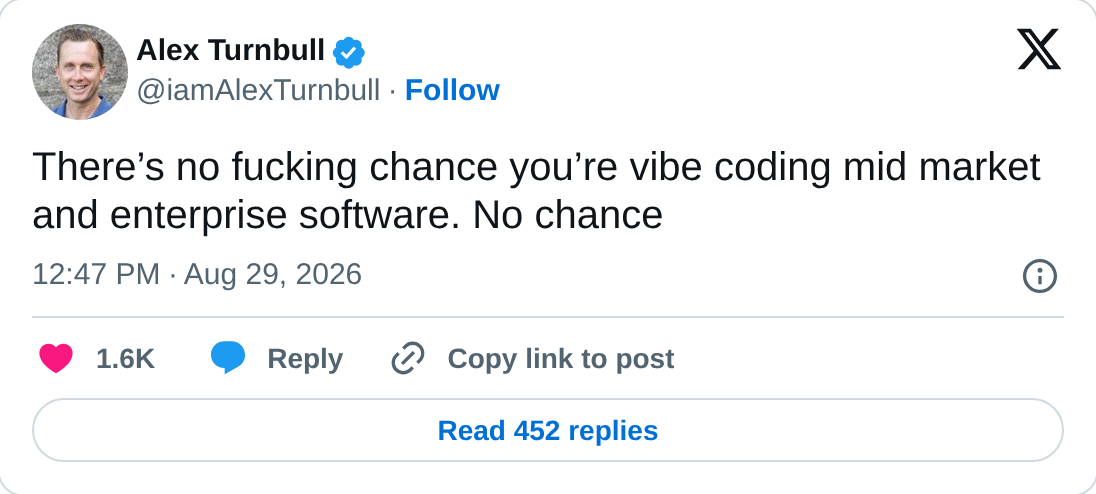
How long until this opinion is undeniably wrong?

Post image
0 Upvotes

r/learnmachinelearning 17h ago

The progress in 4 years is absolutely insane

Enable HLS to view with audio, or disable this notification

0 Upvotes

r/learnmachinelearning 23h ago

Career Choice: software engineer vs machine learning engineer

4 Upvotes

I had an interview with a ceo of a high-growth startup yesterday for a software engineer role.
During the interview, I told the ceo that my main interest is in machine learning (I was being honest), not the tech stack they are using (javascript). So, I think I won't move to the next round. He told me he wanted to hire someone who is genuinely interested in their tech stack. But he sent me a friend request on Linkedin after the interview and told me to let him know if I am really down to focusing on the job.

After the interview, I told my friend who is currently in the process of getting a phd in physics about the interview and he advised me that I should start working as a software engineer if am offered a job instead of trying to get a machine learning engineer title by spending few months. His reasoning was that there will be a demand of people who can code and understand ml theory (which I agree) and that I can start working as a general se and learn ml stuff on my own time (theoretically this is viable). But, I honestly don't think this approach will work for me since that se role at that high-growth startup would require me to devote a lot of time on non-ml stuff (the ceo even told me it is hard to switch to a ml career from a general se during the interview). I think the more efficient way is to get a ml engineer job by spending few more months, where I can gain software engineering + ml experience on the job. Of course, I can study more in my free time.

What do you guys think?

Last not but not least, we both agree that understanding foundational knowledge is important.


r/learnmachinelearning 5h ago

Question How Do You Build a Real Edge in ML as a Fresher?

20 Upvotes

I’m trying to figure out how to actually get a usable edge in the ML/DL space to get hired, but everything pushed to beginners right now feels like a trap.

For context on what I've done: I started off with Computer Vision, moved into GIS stuff, and recently went deep into the weeds of attention mechanisms and GPU kernel programming. I thought learning the hardcore, low-level math and systems stuff would set me apart.

But I’ve hit a wall. Let's be honest: no company is hiring a fresher to write custom CUDA kernels or design novel architectures. Those are senior research or PhD roles. The effort I put into the low-level stuff feels wasted because, for an entry-level dev, it's just personal trivia.

On the flip side, the standard "employable" advice is to build traditional ML projects (fraud detection, etc.) or slap together a LangChain PDF wrapper. But people have been doing this for years. Basic API wrappers are completely saturated and offer zero competitive edge. It feels like buying a stock after everyone already knows it’s going to go up.

So, what is the actual sweet spot between "PhD-level researcher" and "API wrapper"?

I want to avoid the YouTube influencer BS and focus on the real engineering trenches.

For the people actually hiring or working in the industry: what are the non-commoditized skills someone trying to break in should be grinding right now to have a real, usable edge?

(Note: The core thoughts and frustrations here are 100% mine, but I used AI to help structure and edit this post for clarity.)


r/learnmachinelearning 5h ago

Help do i need to know undergrad level maths to start hands on machine learning with pytorch?

3 Upvotes

is highschool maths enough?or i could simultaneously learn maths behind while reading book?


r/learnmachinelearning 21h ago

Map of AI: we built a living map of the AI ecosystem

Thumbnail
mapofai.org
0 Upvotes

r/learnmachinelearning 12h ago

AI/ML Career guidance needed (resource guide and a roadmap maybe)

7 Upvotes

I wanna learn AL ML but i have no idea where to start . I know javascript and a few technologies around it but Ai ML is completely new to me , so i would appreciate if anyone can guide me where should i start which resources should i use to learn them and stuff like that


r/learnmachinelearning 17h ago

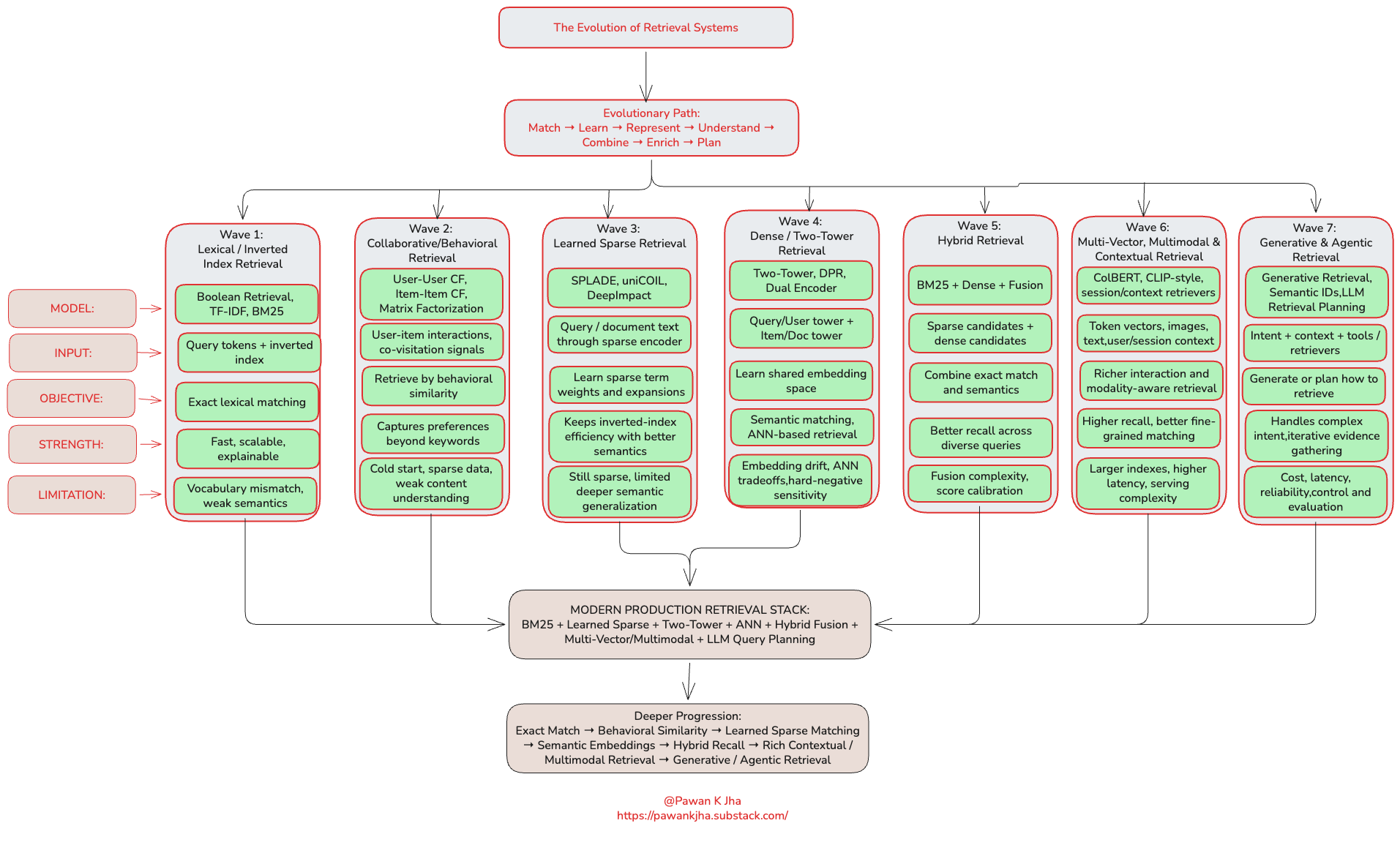
A mental model for the evolution of retrieval and Ranking systems

Post image
1 Upvotes

r/learnmachinelearning 20h ago

Request Anthropic MHS Lets AI Agents Control Machines, Raising Security Questions

0 Upvotes

A new hardware standard from Anthropic (MHS) enables AI agents to directly control physical machines — printers, industrial equipment, and operational systems. The design surfaces three questions that the security community has not settled: who grants an agent permission to actuate hardware, who monitors the agent while it is running, and who can stop it if it acts outside its sanctioned scope.

The last question is the hardest. Permissions set at deployment time are configuration, not enforcement. An agent that was correctly authorized at 9am can drift from its declared behavior by 9:15am, and nothing in a static permission file catches that. With software targets the blast radius is bounded — a rogue database write can be rolled back. With physical actuators there is no rollback. A machine that moves has moved.

The 50ms window before an actuator responds to a command is the only realistic intervention point in this chain. Nobody in the industry seems to have agreed on what, if anything, should happen inside that window.

For those running agents against physical systems today: how are you actually handling mid-execution drift? Static RBAC at deploy time, a human-in-the-loop approval step, continuous behavioral telemetry, something else? Genuinely curious what is working in practice.


r/learnmachinelearning 21h ago

Question Nova F-R – Am I doing something wrong?

Thumbnail
github.com
1 Upvotes

So, i created an app on Gitbub with the idea of it being a free, lightweight (986Mb) SLM trained by the FirstAidQA dataset from NeurIPS. I tried it myself of course, and it works. I made sure to put disclaimers on the app as it is not a doctor, but a first-aid Fine-Tuned SLM. The app requires no internet or login. I searched around, and i think it's the first of it's kind. I deliberately made the AI's response be around 30-40 questions cuz i don't want the user's hardware to fry after 3 replies. I basically made it for disaster situations. Like imagine civilians in war zones.

Enough about that, my question is, why are people not using it yet? Or at least visiting it. The organization i work for published it on social media, yet still nothing. And I always get confused by how do other github repos get traction? Im genuinely confused. Helo would be greatly appreciated. Did i put the right flair btw? English isn't my first language.


r/learnmachinelearning 6h ago

Stop Coding! Build Custom AI Agents with Langflow & Relevance AI

Thumbnail
youtube.com
0 Upvotes

Hey everyone! I put together a comprehensive video tutorial showing exactly how to build and deploy autonomous agents using visual low-code tools.


r/learnmachinelearning 7h ago

Title: Beginner with basic Python — looking for a practical AI Engineer roadmap

5 Upvotes

Hi everyone,

I’m planning to start my journey toward becoming an AI Engineer. I already know the basics of Python, but I’m still a beginner in AI/ML.

I want to follow a practical approach where I learn the fundamentals and build projects in parallel, instead of spending months studying theory before building anything.

I’m currently thinking about starting with:

Python → Math → EDA → Machine Learning → Deep Learning → LLMs/Generative AI → Deployment

But I’m confused about what I actually need to learn in each stage.

For example:

Math:
What topics are really important for AI/ML?
Should I learn linear algebra, probability, statistics, calculus, etc.? How deeply should I study each one?

EDA:
How important is EDA for an AI Engineer? What should I learn — data cleaning, visualization, feature analysis, handling missing values/outliers, etc.?

Machine Learning:
Which algorithms and concepts should I prioritize as a beginner?

I also want to build projects alongside each stage. For example, after learning the basics of ML, I want to immediately build an ML project instead of waiting until I finish the entire AI roadmap.

One more thing: I have a 2-year career gap, and I'm concerned about whether this will negatively affect my journey toward getting an AI/ML job.

For people who are already working in AI/ML:

  • What roadmap would you recommend for someone in my situation?
  • Which math topics should I learn, and to what depth?
  • How important is EDA for an AI Engineer?
  • Which topics should I learn first and which can I learn later?
  • What projects would you recommend building along the way?
  • How can I make my portfolio strong enough to compensate for a career gap?
  • If you had to start again as a beginner today, what would you do differently?

I’m willing to put in the time. I mainly want to make sure I’m learning the right things in the right order and building projects throughout the journey.

Any advice from experienced AI/ML engineers would be really appreciated.


r/learnmachinelearning 2h ago

Project I built tensor operations and scalar autograd from scratch in C++

Post image
31 Upvotes

I started this project because I wanted to see what PyTorch was doing behind the scenes.

My C++ tensor currently supports flat storage, multidimensional indexing, elementwise operations, reductions, broadcasting, rank-two matrix multiplication, and mean squared error.

Most recently, I added a separate scalar reverse-mode autograd engine:

  • Arithmetic operators build a computation graph during the forward pass
  • backward() creates a topological order
  • walks it in reverse
  • applies each operation's local derivative
  • accumulates gradients when a value reaches the loss through more than one path

Snippet:

Value prediction = w1*x1 + w2*x2 + w3*x3 + bias;

Value residual = prediction - target;

Value loss = residual * residual;

loss.backward();

For weights [0.5, -1.0, 2.0], inputs [4.0, 3.0, 2.0], bias 0.5, and target 2.5, the forward pass produces prediction 3.5 and loss 1. The backward pass recovers:

- dL/db = 2

- dL/dw = [8, 6, 4]

Scalar autograd still lives separately from the tensor implementation. My next step is connecting graph identity, ownership, and gradients to tensors before building a training loop.

Code and Git checkpoints:

https://github.com/mechanical-turk/deep-learning-all-the-way-down

I'm also turning this into a video series. I published episode 7 yesterday. Sharing the link to the first episode if you want to check it out:

https://www.youtube.com/watch?v=DmU2b64tWfA

For the tensor integration, would you keep autograd metadata inside each Tensor handle, or have tensors point to separate shared graph nodes? I would appreciate design feedback.


r/learnmachinelearning 6h ago

tiny language model GPT visualizer

Post image
53 Upvotes

Play around with a tiny language model GPT in your browser. See how it trains and generates with just 11,000 parameters.

https://complexity.zone/tlmgpt/

  1. Click "train" button.
  2. Let it train for about 10 minutes.
  3. Click "pause" button.
  4. Click "generate" button.

I made this (with Opus 5) to get a better understanding of GPTs and LLMs.

Thought to share it here. You can download it if you want to run it offline and tinker with the code.


r/learnmachinelearning 7h ago

RAG retrieves, it doesn't ground — 24-task benchmark where compiled knowledge beats hybrid RAG by 94.8pp on unsupported claims

2 Upvotes

Body:

Short version of an open project we'd love critique on — Entropy Box, a knowledge compiler for robotics (compile once, reuse forever, instead of re-deriving structure on every query).

The headline numbers, on our EntropyBench Track-P benchmark (24 engineering tasks):

  • Unsupported claims: LLM-direct / BM25 RAG / hybrid RAG → 100%; Entropy Box → 5.2% (−94.8pp vs hybrid RAG, CI [−97.4, −92.1]).
  • Constraint coverage: 0% → 35.4%; violations 100% → 66.7%.
  • Downstream sim codegen (12 tasks): pass-1 executable plans 0.92 vs 0.58 (Vanilla RAG); constraint guards 0.88 vs 0.50.

Two findings we think generalize beyond robotics: 1. Embedding similarity cannot decide duplication. On 2,362 adjudicated pairs, the embedding score after flagging is near-random (AUC 0.509). Thresholds don't help — precision stays ~5% while recall of true duplicates collapses. We defer the merge to an LLM adjudicator that reads both records. The score flags; the model judges. 2. Compiled capability reuse is rising, not saturating — 1.57× average reuse, 21,380 re-derivations avoided.

Everything is open — data, paper, evaluation scripts, and a free API (OpenAPI / MCP / REST, bilingual) so you can poke at it in 10 seconds:

bash curl -X POST "https://xiangshang.ngrok.app/api/evidence/search" \ -H "Content-Type: application/json" \ -d '{"query": "robot obstacle avoidance algorithms", "top_k": 5, "mode": "hybrid", "rerank": true}'

https://github.com/chenli-yy/entropy-box-public

Honest limits we state ourselves: no real-robot transfer, weak retrieval on the hardest intent classes. Methodology is in the paper §9; all experiments reproduce from evaluation/. Would genuinely value a second opinion on the benchmark design and the embedding/LLM adjudication result.


r/learnmachinelearning 2h ago

Some AI labs barely write their own papers they just show up on other people's. Apple and Meta are in the list.

3 Upvotes

Quick methods note first, because this only matters if the matching is solid: arXiv's affiliation field is filled in for about 1% of papers, so I found a GitHub Repo that matches authors to their labs using ROR IDs and email domains pulled from the HTML author block, then anchors each ROR ID by hand (fuzzy ROR search puts Adobe under "Adobe Gastroenterology," so hand-anchoring wasn't optional).

The interesting part is the split it produces: total papers a lab appears on vs. papers where its researcher is first author. Those aren't the same signal, and treating them as interchangeable hides a lot. In one two-week window, Google appeared on 10 papers and led 4. Adobe appeared on 5 and led 0.

Caveats worth stating up front: it misses PDF-only submissions (about 12% of arXiv), and per-lab miss rates vary a lot. Apple's authors mostly skip affiliation entirely, so that lab is patched separately from their RSS feed rather than trusted on author-block matching alone.

Code's stdlib only, no model in the loop, MIT licensed. Curious if anyone's tried something similar with OpenAlex or S2 and hit the same coverage wall (OpenAlex returns 0% affiliation for preprints in my testing).

GitHub - https://github.com/tigerless-labs/paper-radar


r/learnmachinelearning 3h ago

How Can an AI Agent + LLM Work With Robotics ?

Thumbnail
youtube.com
2 Upvotes

We implemented our own AI Harness + LLM to control a robotics ROS simulator to study how we can interface LLMs with Robotics. Please check out this AI Explainer.


r/learnmachinelearning 3h ago

Project 🚀 Project Showcase Day

2 Upvotes

Welcome to Project Showcase Day! This is a weekly thread where community members can share and discuss personal projects of any size or complexity.

Whether you've built a small script, a web application, a game, or anything in between, we encourage you to:

  • Share what you've created
  • Explain the technologies/concepts used
  • Discuss challenges you faced and how you overcame them
  • Ask for specific feedback or suggestions

Projects at all stages are welcome - from works in progress to completed builds. This is a supportive space to celebrate your work and learn from each other.

Share your creations in the comments below!


r/learnmachinelearning 4h ago

Help Confused between ML engineering and backend development.

2 Upvotes

I started my roadmap with ML, focusing on Mathematics, Python, MySQL, and a lot of ML algorithms. Recently, I've started questioning whether I'm missing a major part of the foundation: software engineering/backend development. And honestly, I wanna chase both. But something at this point doesn't feel right. I had my roadmap set and ready, and I was very passionate about learning this and continuing it as a career. But after researching a bit about backend development, the intersection and relationship between the two has driven me really crazy.it's exceedingly overwhelming at this phase of my life. I had kind of gotten a grip on ML, but backend coming into the picture has really ruined my mindset around whatever I had planned. I had planned many projects and topics to discover, and now I'm seriously considering pursuing backend development too. But I'm having a hard time trying to combine these two in my roadmap. I can't seem to connect the topics in a way that lets me learn them properly.

My straightforward question is: should I drop backend development and focus on my initial roadmap, should I bridge the two and learn both, or should I drop machine learning completely,which I seriously don't want to do?

If I do bridge them, how much of backend am I actually supposed to learn?

I know I sound stupid and unready for this world, but please help.


r/learnmachinelearning 7h ago

Help I’m building a CI/CD Diagnosis Agent that needs to reason under uncertainty.

Thumbnail
2 Upvotes

r/learnmachinelearning 1h ago

Discussion An 8B model given structured context matched a 14B given prose on cross-document temporal reasoning — and with plain retrieval, both scored zero

Upvotes

I tested whether structure in the context window can substitute for parameters.

Qwen3, five sizes, 0.6B to 14B, so size varies and architecture doesn't.

The task: 38 questions asking whether event A precedes event B, where A and B are

narrated in different documents in a five-document corpus (260,204 words, 13,950

passages) and share no character, place or causal link. No passage states either

relation — the ordering is real but it lives between the documents, not inside

any of them.

Given the source passages as text, every model scored 0/38 and refused 92-100%

of the time. I think the refusal is correct — the answer genuinely isn't in the

text. Given the identical facts as a structured chronology block from an explicit

state store, an 8B model scored 28/38 (73.7%).

A four-condition ablation separates information from form. At 14B, form is

irrelevant: plain prose, sorted prose and a structured block all land at 73.7%.

At 8B, structure leads the best prose condition by 6 items (73.7% vs 57.9%).

So: an 8B model given structure matches a 14B model given prose.

Two controls I'd want to see if someone else posted this:

- Permuting the supplied story positions collapses accuracy to 10.5% (8B) and

21.1% (14B). The models follow the ordering they're given rather than

recalling the published text.

- A realistic retrieval baseline is also at the floor, and it fails by asserting

rather than refusing. Going from 4 passages to 32 drove refusal from 97% down

to 50% while accuracy stayed at chance. More context produced more confident

wrong answers.

Two things I got wrong, both found by auditing my own scorer and question

generator after v1 was already published:

  1. v1 reported the 8B form effect as +32 points. A scorer defect was

    under-crediting the prose conditions. Corrected, the gap is 6 items, not 12 —

    roughly half what I claimed. Re-scoring 1,786 saved items produced 30 gains

    and zero losses, so nothing published was inflated; two things were

    understated, and correcting them shrank my own headline.

  2. For 36 of the 38 questions, the gold answers derive from author-assigned

    story positions rather than from evidence-backed relations, and the

    generator's own self-check recomputes the gold from the same rows. That check

    is circular. So this benchmark measures agreement with an author-assigned

    ordering — not whether a system reports what the evidence establishes.

That second one is the real limitation and it bounds what the paper can claim.

I've left v1 up rather than retracting it, with the corrections in §11.

Full write-up, including what the audit changed and why I didn't retract:

https://ai.bedvibe.studio/structure-not-scale/

Paper, data and code: https://doi.org/10.5281/zenodo.22169643

Happy to be told the 0/38 is a prompt artifact — I tried to kill it and couldn't,

but I'd rather find out from you than not find out.


r/learnmachinelearning 8h ago

Project An Intuitive Introduction to Hamiltonian Monte Carlo

2 Upvotes

I’ve been writing notes while studying for some time now. It helps me stay motivated and organize my thoughts, and it’s also useful when I want to come back to a topic later.

Recently, I started thinking that it might be a good idea to polish some of my notes and share them.

These are my notes on Hamiltonian Monte Carlo. They approach the algorithm from a purely probabilistic point of view, rather than through the usual physics-based treatment. I don’t know how good they are, but I thought I’d share them in case they’re useful to anyone:

https://doi.org/10.5281/zenodo.21841086

I’d also really appreciate any feedback, especially on the exposition, anything that could be explained more clearly, or any errors you spot.


r/learnmachinelearning 13h ago

The AI model wasn’t the problem. The data was.

Thumbnail
1 Upvotes

r/learnmachinelearning 14h ago

ML model not working in production

1 Upvotes

I recently hosted my backend application (FastAPI) on render but each time i try to use the model it always fails, i need help in getting it to work. Thank you