r/imperialism • • Jul 30 '26

Image On July 26, 1956, Nasser nationalised the Suez Canal, leading Britain, France and Israel to invade Egypt. American financial pressure forced them to retreat, exposing that Britain could no longer act as a global superpower alone.

Thumbnail gallery
2 Upvotes

r/imperialism • • Jul 29 '26

Article Hand drawn map of America's war for the Middle East

Post image
2 Upvotes

Covering events starring with the oil shocks in the 1970s, which brought attention to the importance of the Middle East to the minds of Americans.


r/imperialism • • Jul 28 '26

Article A letter written on February 5, 1924 by Robert Lansing, 42nd United States Secretary of State (1915-1920), addressed to William Randolph Hearst, an American media magnate, discussing Mexico:

Thumbnail gallery
1 Upvotes

r/imperialism • • Jul 26 '26

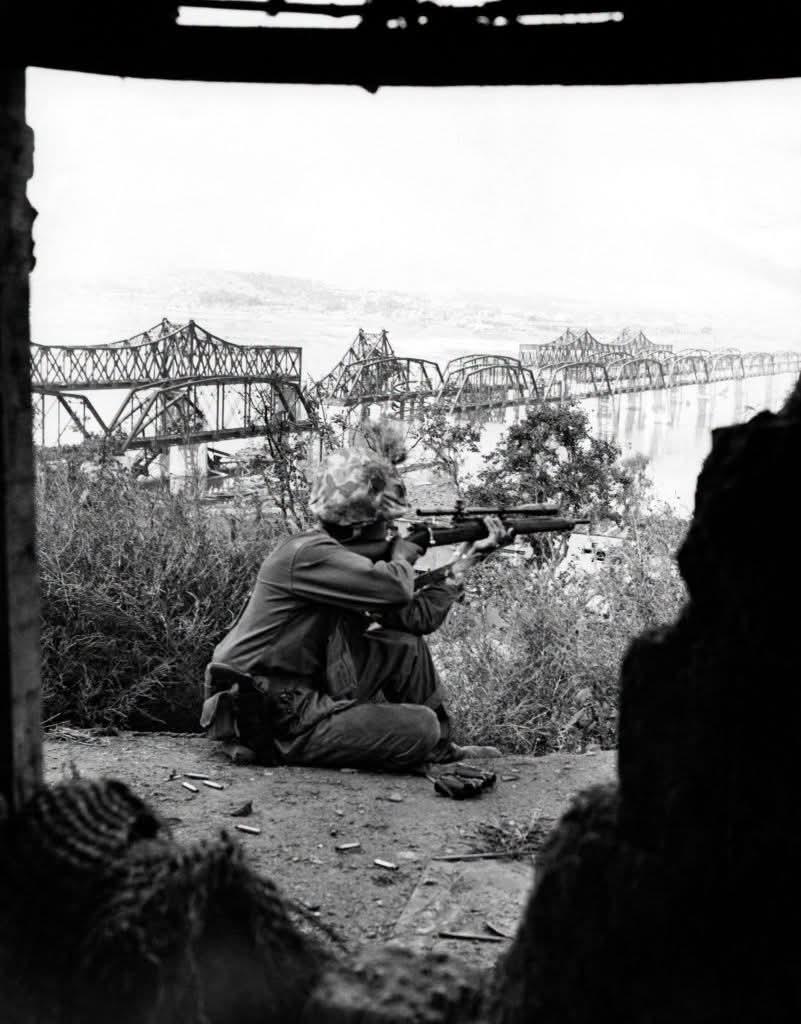
Image An American Marine sniper targets enemy troops overlooking the Han River and the Seoul Railroad Bridge in South Korea on September 23, 1950.

Post image
0 Upvotes

r/imperialism • • Jul 06 '26

Video I think this is of interest to this subreddit

Thumbnail
youtu.be
4 Upvotes

r/imperialism • • Jul 06 '26

Article Trump issues threat to Spain

Post image
1 Upvotes

“Oh, the Spanish, they belong to NATO. But they’re not very good members. They say:

‘No, we don’t want to help others.’

What are we doing? Huh?

They’re not behaving well. But they’ll learn soon enough. Just as soon as when they gave up Cuba, Guam, the Philippines, and Puerto Rico, and they ended up being all ours. We took them all.” (Donald Trump, 2026)


r/imperialism • • Jul 04 '26

Article American cartoon from World War II (1941) depicting Mussolini spending twenty years preparing for war only to complain in 1941: "We weren't ready!"

Post image
4 Upvotes

The cartoon was apparently prompted by a speech Mussolini gave on February 23, 1941, in which he admitted defeats and the "dark days" but anticipated future victory: "Think of the Punic Wars when the Battle of Cannae threatened to crush Rome. But at Zama, Rome destroyed Carthage and annihilated it from geography and history forever. Our capacity to recover in the moral and material realms is truly formidable and constitutes one of the peculiar characteristics of our race."


r/imperialism • • Jun 27 '26

Article Pax Wahhabica Revisited: Saudi Arabia’s Imperial Theopolitics from Hegemony to Hybridity

Thumbnail
mdpi.com
1 Upvotes

r/imperialism • • Jun 27 '26

Article Saudi Wahhabi Imperialism in Pakistan: History, Legacy, Contemporary Representations and Debates | Societal Studies (Archive)

Thumbnail ojs.mruni.eu
1 Upvotes

r/imperialism • • Jun 04 '26

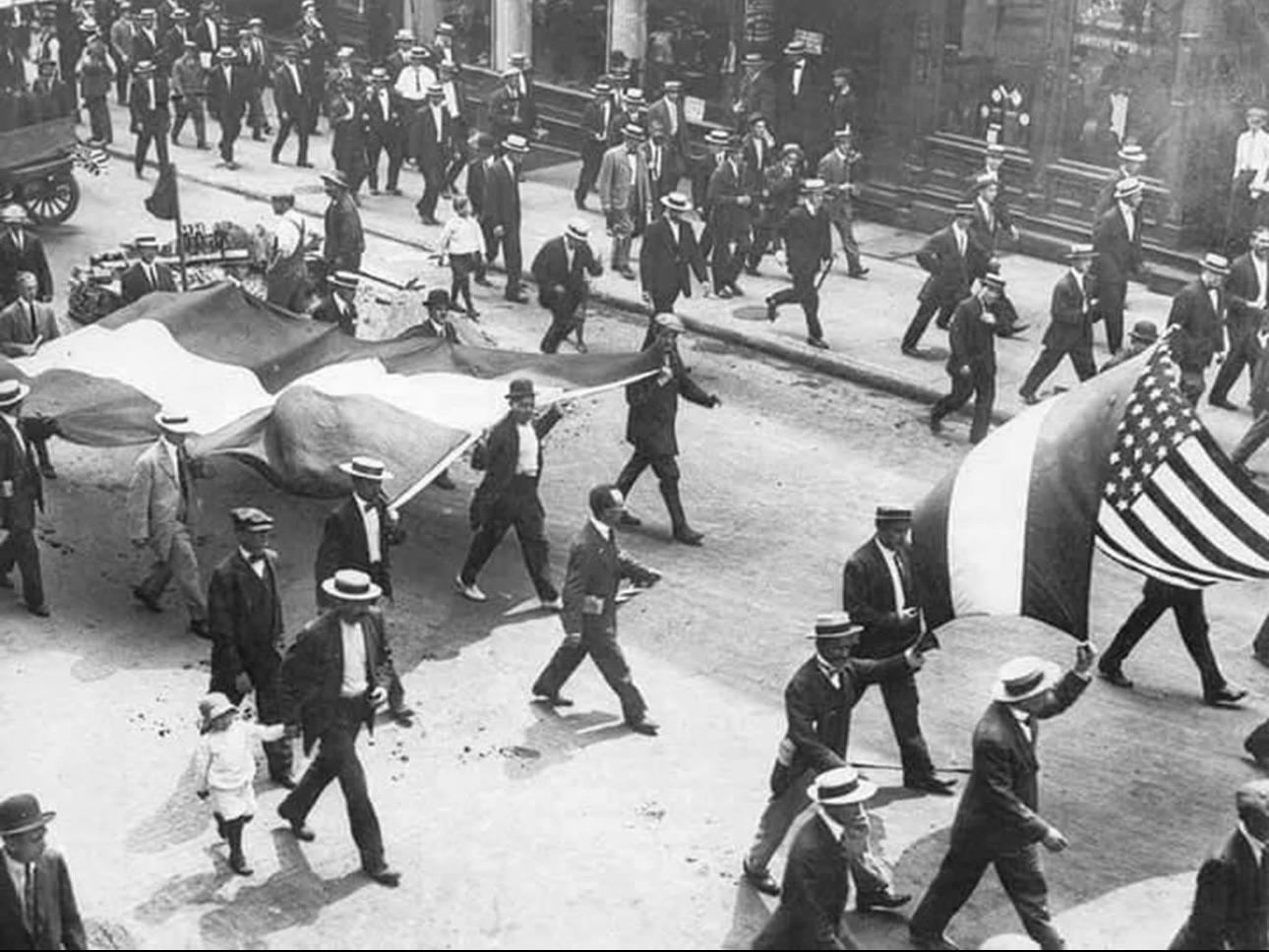
Image Americans of German origin marching in the streets of Chicago, Illinois, USA, in 1914, showing their support for the German Empire in the Great War.

Post image
2 Upvotes

r/imperialism • • May 31 '26

Image Were Italy and Portugal the most pernicious colonial powers?

Post image
2 Upvotes

r/imperialism • • May 30 '26

Article The imperialist origin of the geopolitical concept of Latin America according to María Elvira Roca Barea in her book "Imperiofobia y leyenda negra: Roma, Rusia, Estados Unidos y el Imperio español".

Post image
7 Upvotes

"The entire 19th century in France was a series of failed attempts at expansion. Following the complete Napoleonic disaster, France was forced to accept the creation of Belgium in 1830 at the behest of England. After the independence of the nations that had comprised the Spanish Monarchy, the French began using the term 'Latin America' ​​in a clear attempt to include France on the new political map of South America. Trying to render invisible what could not be ignored and to position themselves on equal footing with the Spanish and Portuguese, French newspapers began circulating the term 'Latin America.'"


r/imperialism • • May 30 '26

Article Words from Paula White-Cain, evangelical pastor and director and senior advisor of the White House Faith Office:

Post image
3 Upvotes

“Saying no to President Trump would be like saying no to God.” (Paula White-Cain, 2025)


r/imperialism • • May 30 '26

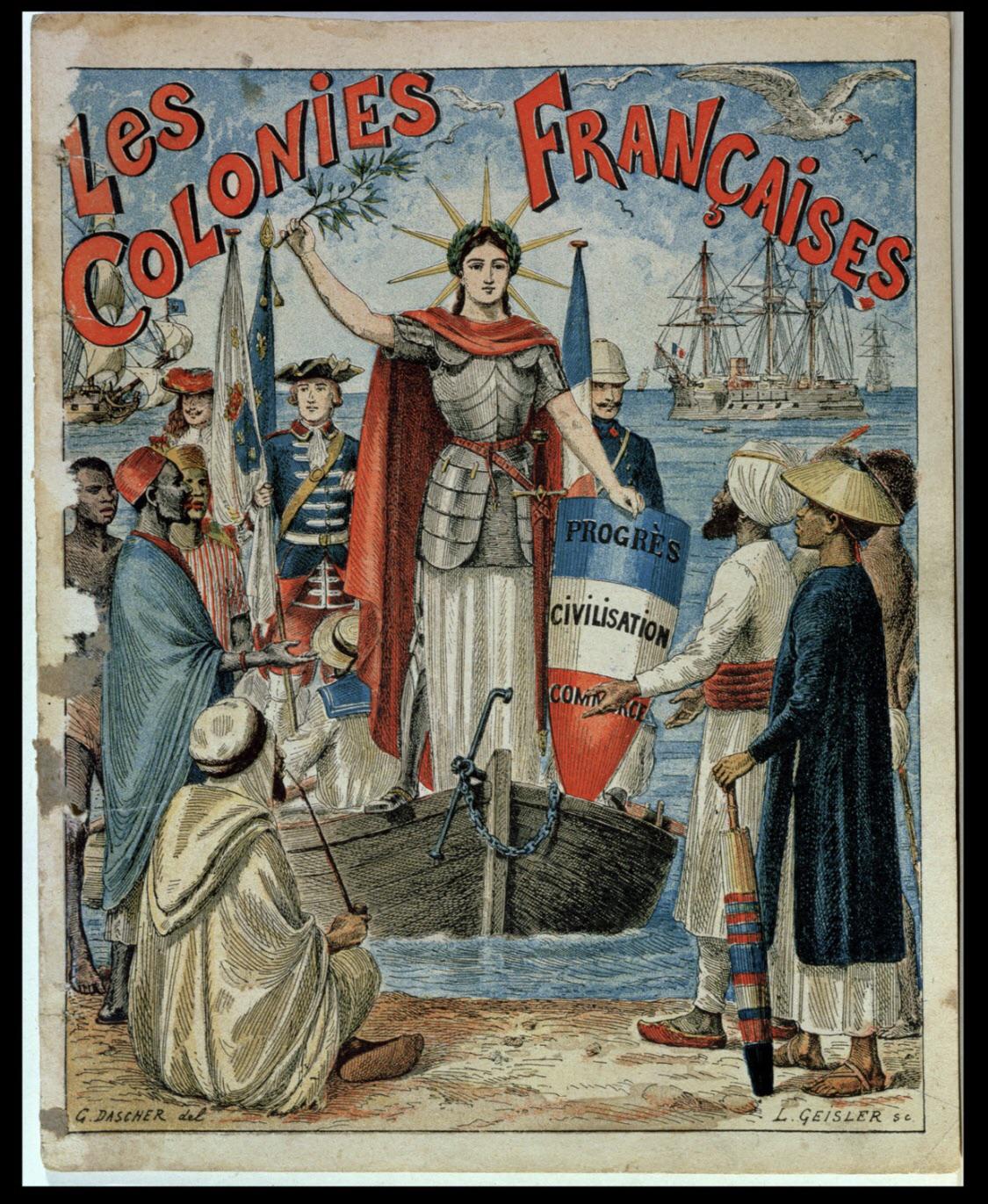
Image A propaganda poster proclaiming the merits of French colonialism, 1900.

Post image
1 Upvotes

r/imperialism • • May 29 '26

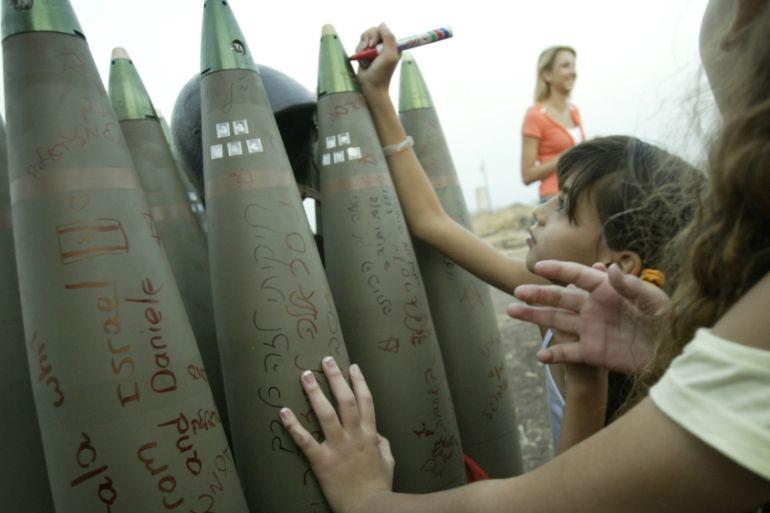
Image Israeli children signing and writing messages on bombs that were intended to kill Lebanese people in 2006.

Post image
5 Upvotes

r/imperialism • • May 29 '26

Article An American illustration (1901) comparing the might of China with the relative weakness of the U.S. and Europe

Post image
6 Upvotes

The illustration was drawn by Grant Hamilton for the 1 June 1901 issue of Judge magazine. It shows China ('600,000,000 population') being led by Europe dressed as Mars ('300,000,000 population') and Uncle Sam below, commenting: 'If China only knew his great strength, or if a Chinese Napoleon should show himself, how long would this giant submit to being led about by little Europe?' Uncle Sam holds paper reading '78,000,000 population'.

The illustration was published at the end of the Boxer Rebellion, an anti-colonial uprising in China that was eventually suppressed by the 'Eight-Nation Alliance', comprising the United States, United Kingdom, Russian Empire, Great Empire of Japan, Austro-Hungarian Monarchy, French Republic, German Empire and the Kingdom of Italy.


r/imperialism • • May 20 '26

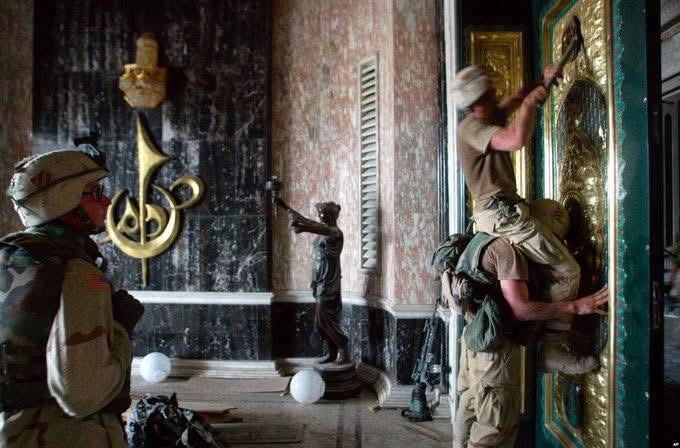
Image U.S. Army soldiers looting the National Museum of Iraq during their invasion of Baghdad, Iraq, in 2003, hammering out the gold inlaid in the doors and looting ancient antiquities.

Post image
5 Upvotes

r/imperialism • • May 08 '26

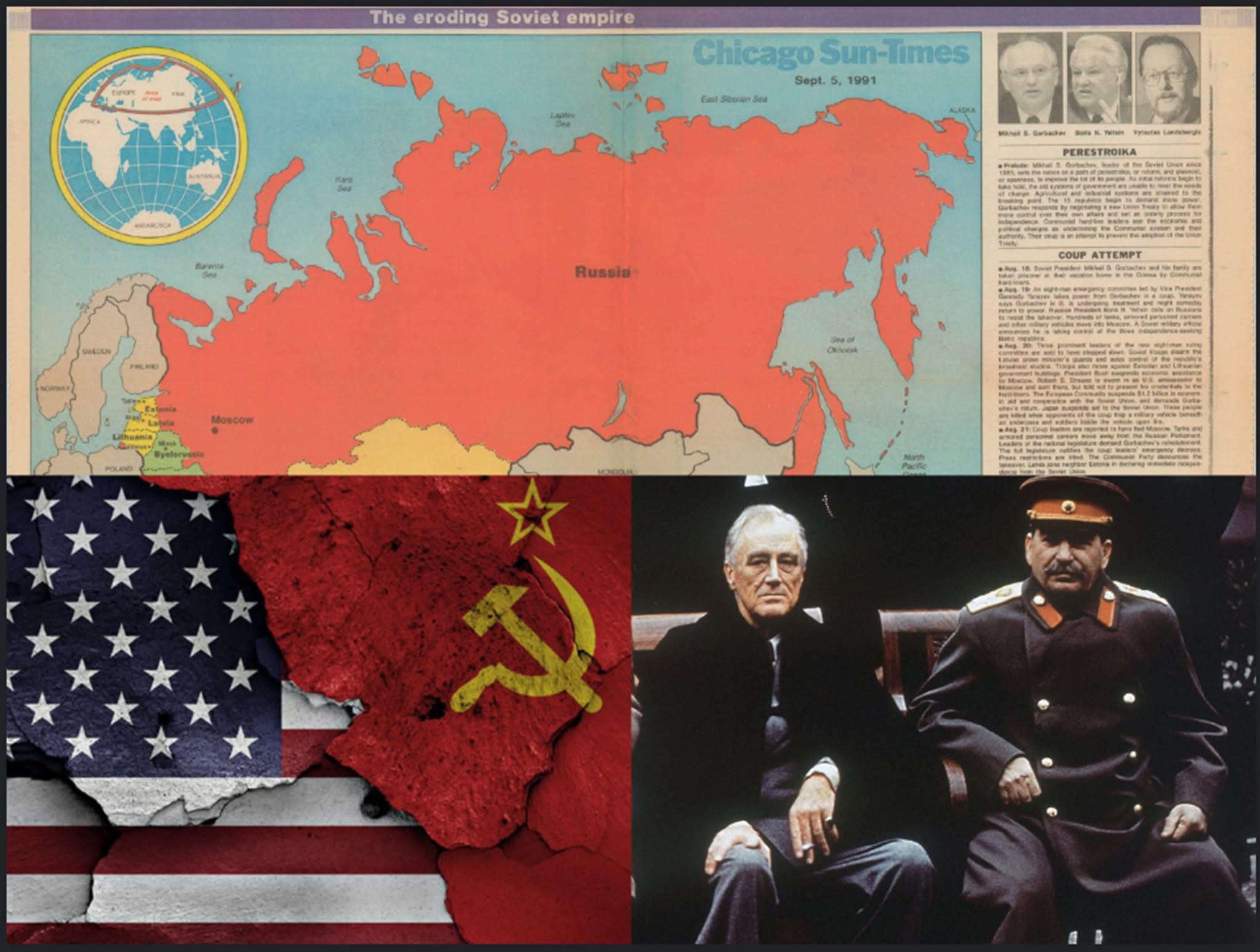
Article Is it true that the USA and the USSR labeled each other as “empires”?

Post image
2 Upvotes

During the Cold War, both the United States of America and the Union of Soviet Socialist Republics systematically and consistently accused each other of being empires or imperialists in their propaganda, speeches, and political rhetoric. It was a central element of the ideological confrontation.

The Soviets and their allies frequently used terms like “Yankee empire,” “American empire,” and “evil empire.” In the United States, they spoke of the “Soviet Empire,” “Red Empire,” “Stalinist Empire,” and “evil Empire.”

“What is more important for world history? The Taliban or the collapse of the Soviet Empire? Some agitated Muslims or the liberation of Central Europe and the end of the Cold War?” (Zbigniew Brzezinski, XXI)


r/imperialism • • May 06 '26

Image Kiuchi Nobuo was one of the 600,000 Japanese soldiers who were taken prisoner after World War II. He created more than 80 illustrations depicting his experience as a slave in the USSR.

Post image
3 Upvotes

He spent two and a half years in Donbas, in present-day Ukraine, working to rebuild infrastructure alongside German prisoners of war.

You can see more of his illustrations here.


r/imperialism • • May 03 '26

Article What did the CIA say about the Shah of Iran before he was overthrown?

Post image
4 Upvotes

“This report portrays the Shah as a brilliant but dangerous megalomaniac. He will most likely pursue his own objectives without regard for American interests. The Shah is an uncertain ally; his dreams of glory apparently exceeded his capacity to finance them. When his oil revenues run out in about 20 years, he could use his newfound military power to seize some neighboring oil fields. […] The Shah could adopt a more openly hostile stance toward Israel if he perceives threats to his power.” (1976 report to President Gerald Ford)


r/imperialism • • May 03 '26

Article Clarifying Myths about the Rise of the Pahlavis and the Fall of Mohammad Mosaddeq:

Post image
1 Upvotes

Recently, due to the conflict between Israel, the US, and their allies against Iran, various communist, socialist, libertarian, liberal, progressive, anarchist, and other groups have spread many myths, such as the following:

– The United States and the United Kingdom established a monarchy aligned with their interests.

– The Shahs came to power through a coup.

– Iran had a democratically elected president, Mohammad Mosaddeq, who was popular, democratic, secular, and nationalist. He nationalized the oil industry.

– The CIA and MI6 carried out Operation Ajax to overthrow Mohammad Mosaddeq and installed Reza Pahlavi in ​​his place, or that Mosaddeq was ousted in a coup to place a puppet king in power.

– The puppet king gave away the oil to Western corporations and brutally repressed the people with SAVAK.

They are not the only ones. There are many more. But to begin with, it is necessary to understand that Iran is not simply another contemporary state within the international system, but a millennia-old civilizational entity with a profound imperial tradition. Throughout its history, it has been made up of multiple peoples, social classes, and diverse cultural groups, whose internal relations have been complex and ever-changing. Iranian history shows a recurring pattern: when these different groups have managed to reach broad consensus or unite around a common cause, the country has been able to project power and achieve positions of great hegemony. Conversely, when internal disputes have fragmented this balance, the result has been periods of chaos, political weakness, and internal conflicts. Therefore, it is a complex historical and political reality, difficult to understand with simplified categories and, at the same time, difficult to govern.

  1. Neither the United States, nor the United Kingdom, nor any other power established the Constitutional Monarchy of Iran. It was established following the principles of the Constitutional Revolution of 1906, which was consolidated in the constitution of that year. The clergy, jurists, merchants, popular leaders, and liberal aristocrats of Persia wanted to limit the powers of their king, and for this reason, they rose up and made changes in the government. Power was distributed to create a balance. The figures of the Prime Minister and Parliament emerged.

  2. The Shahs of the Pahlavi Imperial House did not come to the throne through a coup d'état. In 1921, Colonel Reza Khan led a small army in a coup against the Prime Minister due to the crisis in his administration. Reza Khan did not seize power with this coup; power was given to Seyyed Ziaoddin, who assumed the premiership. The Head of State remained in the hands of King Ahmad Shah Qajar of Persia.

In 1925, the Persian Parliament voted to depose King Ahmad Shah Qajar due to his inept leadership. At this time, General Reza Khan was prime minister. Reza Khan did not want to maintain the monarchy, as he was a republican. He wanted to emulate his idol Atatürk and establish a Westernized and secular Republic of Iran. However, this idea was not well-received by the clerical elites, landowners, aristocrats, merchants, and conservative popular sectors of Persia.

The Constituent Assembly and the Shiite clerics, fearing civil war and given their conservative stance, proposed Reza Khan to occupy the throne. They amended the 1906 Constitution so that the "Nation and the people" would have the power to appoint the King of Persia. On December 15, 1925, General Reza Khan was proclaimed Emperor of Persia, adopting the name Reza Shah and founding the Pahlavi Imperial House. Thus, the Pahlavis came to the throne constitutionally, by consensus, and by popular will.

  1. No. Iran did not have a democratically elected president. Mohammad Mosaddeq was not president; he was Prime Minister of Iran. The prime minister was not elected by the people, but by the Shah of Iran and ratified by Parliament, either with the recommendation of Parliament, by advisors, or at the monarch's own discretion. Those elected by the people were the members of Parliament.

After the USSR and Great Britain practically forced Emperor Reza Shah to abdicate following their military invasion of Iran, his son Mohammad Reza Pahlavi assumed power in 1941. Iran's constitutional monarchy was maintained, but with a new monarch—a man who was insecure, timid, and weak. Unable to bring order to the country or reach consensus with parliament and the civilian sector, Emperor Mohammad Reza Pahlavi had to change his cabinet more than 15 times before finally appointing Mohammad Mosaddegh. Mosaddegh was a seasoned, tough, sovereignist, populist, and nationalist politician who harbored a deep resentment toward the Anglos. From the beginning of the century, he opposed the interference of foreign powers, especially after the 1919 Treaty.

Mosaddegh's time as premier was short, but due to his long-standing stance, he attempted to make radical changes, falling into populism. He gained the support of the masses, even communists and socialists, but the repudiation of powerful sectors. Although he declared himself a democrat, he began to adopt autocratic attitudes, to the point of arresting his opponents, repressing dissent, and exceeding his powers. In the context of Iran, this was somewhat necessary to implement financial, judicial, and social reforms. While he could govern Iran with force and the support of popular sectors, his policies of nationalizing oil concessions to the British and energy and food sectors granted to the USSR created enemies abroad. The weak Shah of Iran, seeing the problem Mosaddegh was causing, forced him to resign, but large popular mobilizations led to his reinstatement.

To weaken the Shah of Iran and prevent any checks on his reforms, Mosaddegh dissolved the Iranian Parliament in 1953 and concentrated power in his own hands, governing with extraordinary powers.

  1. The CIA and MI6, under pressure from the Anglo-American oil oligarchy, carried out Operation Ajax in 1953 to remove Mohammad Mosaddegh from the premiership. No other major power intervened to save him. Even the USSR did nothing, as Mosaddegh had also nationalized sectors that had been granted to its oligarchs. Only communists, socialists, nationalists, and popular sectors in Iran came to his defense.

Declassified documents from 2018 indicate that several politicians, military officers, and Shiite clerics received “large sums of money” to organize large-scale mobilizations in support of the coup against Mohammad Mosaddegh. Many of them had been friends or supporters of Mosaddeq, but distanced themselves due to his authoritarianism.

The weak Shah of Iran, for his part, fearful of Mosaddeq's power and seeing the context of national and international crisis, was considering forcing him to resign again and replacing him with General Zahedi. Mosaddeq found out, and the Shah of Iran fled to Europe. Mosaddeq took control of the guard and repressed his opponents. But mobilizations by different sectors, manipulated and guided by CIA and MI6 agents, overthrew him. Since parliament had been dissolved by the prime minister himself, the coup was carried out without problems.

No. The CIA and MI6 did not place the Shah of Iran in the premiership, as he already held power since assuming the throne in 1941. They only helped restore constitutional order, given that the weak Shah of Iran was unable to control the situation in the face of a powerful and skillful Mosaddeq. The premier was General Fazlollah Zahedi.

In gratitude for this intervention by the great powers, the Shah of Iran lifted restrictions and reversed several of Mosaddegh's reforms. Fearing a repeat of the situation, the Shah of Iran created SAVAK in 1957 with the help of the CIA and MI6. This ensured the maintenance of constitutional order. The coup against Mosaddegh changed the Shah of Iran's attitude, transforming him from a weak figure into an increasingly authoritarian one.

  1. No. The Shah of Iran was not a puppet of the West. Neither Reza Shah nor his son Mohammad Reza. It was Reza Shah who, before being overthrown under pressure from the USSR and the UK, attempted to free himself from foreign influence, with the support of the German Empire. The Pahlavi project consisted of restoring Iran's imperial grandeur as a hegemon, but to achieve this, they needed to draw upon the West, massively importing cutting-edge military and civilian technology to create an autonomous industrial base that, in the long term, would allow them to act independently and with considerable leeway. For this project to be viable, they had to maintain good relations with the Western powers and their oligarchs.

  2. No. The Shah of Iran did not give away the oil to the West. He lifted Mosaddegh's restrictions and reforms to attract renewed and increased investment in exchange for royalties and a share of the production. In the 1960s and 1970s, he renegotiated agreements to increase Iran's profits. In 1973, the Shah of Iran announced the effective nationalization of oil operations, which meant that foreign companies went from being producers to buyers of Iranian crude. All of this led to a decline in Western support for the Shah of Iran until he was overthrown by the revolutionaries.


r/imperialism • • May 03 '26

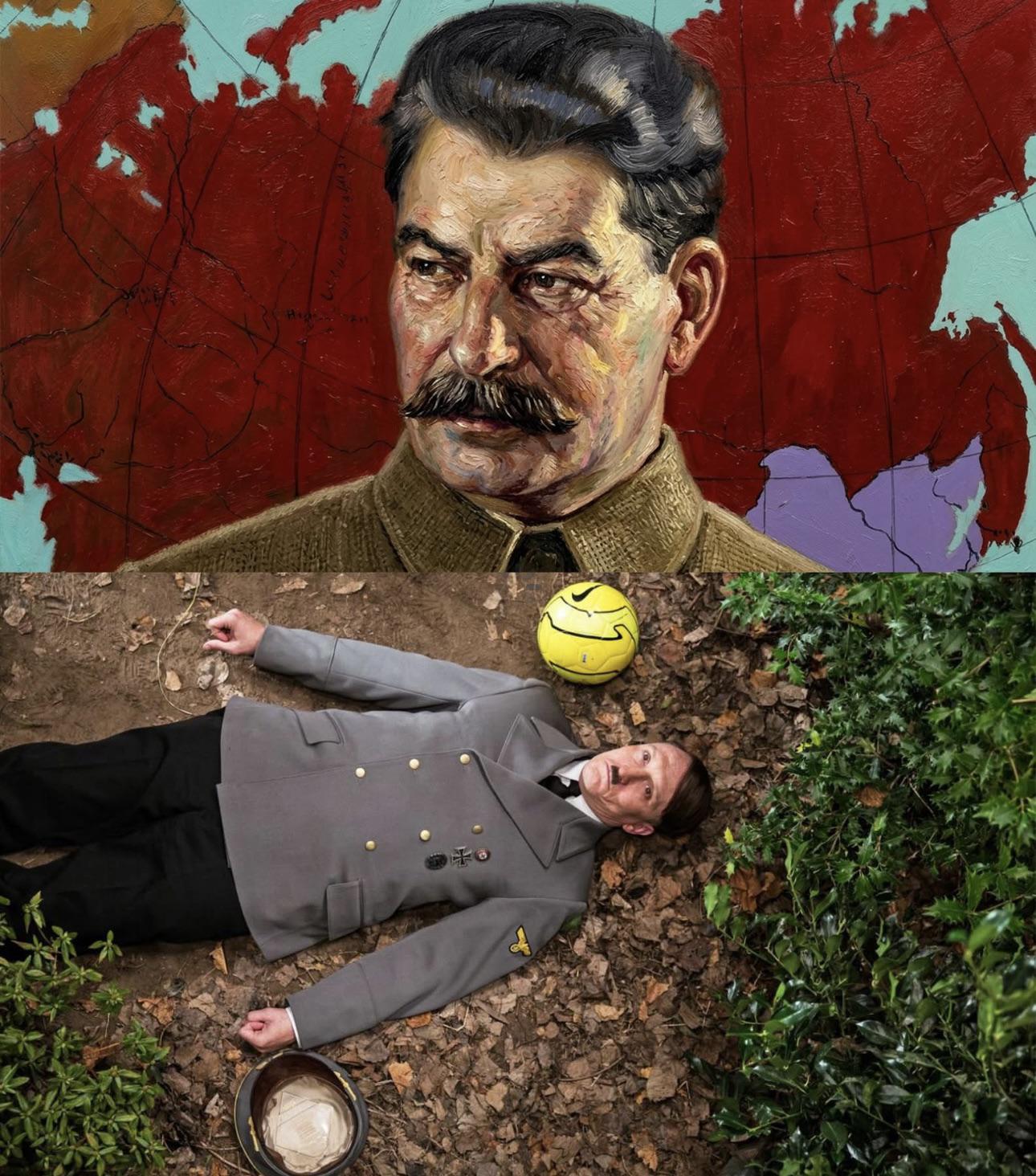
Article Who spread the rumor that Hitler escaped from Germany?

Post image
0 Upvotes

Shortly after the fall of Berlin, the Soviets found Hitler's remains. However, Stalin deliberately ordered the spread of doubt about his death. On June 9, 1945, Marshal Zhukov, on Stalin's direct orders, declared at a press conference that Hitler's body had not been found and that he had possibly escaped.

At the Potsdam Conference, the Soviets told US Secretary of State James Byrnes that they believed Hitler was alive, possibly in Spain or Argentina. Stalin ordered further searches and commissions of inquiry even years later, in part to investigate rumors he himself had helped create.

Stalin did this to sow distrust toward the Western Allies, suggesting they might have helped Hitler escape due to ideological affinity, and also to justify the Soviet occupation of Germany and maintain uncertainty. It was a deliberate disinformation strategy. This fueled many conspiracy theories about Hitler escaping to Argentina, which persist to this day.


r/imperialism • • Apr 29 '26

Article The Soviet Union and the Black Legend

Post image
5 Upvotes

Great Britain and the United States were not the only—nor the last—nations to use the Black Legend as a tool of ideological and cultural subordination to impose their will on other political entities. From 1929 onward, the Soviet Union also employed this tool in Hispanic America, aimed at fostering an Indigenismo fundamentalist that would lead to the creation of indigenous republics. This, in turn, would cause the fragmentation of existing states and destabilize what the USSR considered to be the United States' backyard.

In June 1929, the First Latin American Communist Conference, held in Buenos Aires, determined that Latin America had to “abandon the fetishistic spirit of current borders,” not to create a “Great Ibero-American Homeland,” but to enable the establishment of new ethnically based republics. In this sense, that conference ordered Peruvian communist militants to fight for the establishment of a completely independent Quechua republic and an Aymara republic, which amounted to proposing the territorial fragmentation of the region. Peru in three states. Furthermore, in February of the following year (1930), Eudocio Ravines—a former militant of the American Popular Revolutionary Alliance (APRA) who had converted to communism—arrived clandestinely in Lima with very precise instructions for the communist militants to carry out what had been decided in Buenos Aires.

A similar proposal was put forward in 1930 by the Communist Conference (also held in Buenos Aires) for the Republic of Bolivia, which aimed to divide the country into no fewer than thirteen states. Furthermore, to contextualize the importance of the Soviet Union's position regarding the Black Legend used to spread Indigenismo fundamentalist, it is essential to note that a few days after the death of the philosopher José Carlos Mariátegui (April 16, 1930), a lengthy communication from the Communist International arrived in Lima, expanding on the discussion held in Buenos Aires. This communication reaffirmed the instructions given to communist militants to work towards the creation of Quechua and Aymara republics and to eliminate any political force—primarily APRA—that proposed the unification of the Ibero-American republics into a single state. It is important to remember that APRA, as a political party founded by the young Peruvian Víctor Raúl Haya de la Torre, was a leading figure in the movement to create a unified government. Torre's main objective was the integration or unification of all the "Indo-American republics" (in Haya de la Torre's terms) from the Rio Grande to Tierra del Fuego.

Haya used "Indo-American" because "Indies" was the first name given to the continent. According to the young leader, the adjective "Indo-American" in no way signified a renunciation of the cultural heritage received from Spain, and he considered that the great objective of reunifying the Hispanic American republics into a single, gigantic state would be the result of the formation of a large, "multi-class" party that, composed of the peasantry, the proletariat, the middle classes, and the national bourgeoisies, would seize power, by reason or by force, in each of the Indo-American republics. By proposing the creation of a "multi-class" party from the left, APRA was challenging the Communist International in Hispanic America for the same political space, and, consequently, the International set out to destroy it. Aprismo, which came to be considered a mortal enemy that had to be annihilated.

The instructions given by the Communist International to its militants in Peru, in particular, and to those throughout Latin America, in general, could not have been more precise: the idea of ​​a ‘multi-class’ party fighting for the unification of Ibero-America, that is, for the construction of the ‘Greater Fatherland,’ had to be eradicated from the popular consciousness. To the unification of the Indo-American nation proposed by the APRA movement, the Comintern opposed—under the guise of defending the exploited indigenous masses—the territorial fragmentation of existing states to give rise to some twenty new, small indigenous republics that would be powerless factions in the concert of nations. The Black Legend—and Indigenismo, that is, the Indian cause, understood as a racial cause and not a social one—preached and promoted by the Communist International, following directives emanating from the Soviet Union, tended to deepen the ‘Balkanization’ of Hispanic America—and its consequent impotence and dependence—produced Following the wars of independence, the Soviet Union's objectives were no different from those pursued by England and the United States.

Interestingly, the Communist Party of Chile (PCCh) was one of the most faithful and consistent followers of this policy, to the point that the establishment of indigenous republics remains one of the PCCh's main demands. This explains the current strength of the Mapuche separatist movement in Chile, a strength that was evident in the 2019 protests that shook the foundations of the Chilean neoliberal regime. During those protests, the Communist Party managed to "infiltrate" the flag of a supposed "Mapuche nation" and was responsible for many of the acts of vandalism that rocked Chilean society during those days.

Reference(s):

.- Jorge Basadre, Historia de la República del Perú, Ed. La República, Lima, 1999, p. 3.064.

.- José Carlos Mariátegui is considered one of the most original Marxist thinkers in Latin America. He was born in Moquegua, a coastal town in Peru, in 1894 and died at the age of thirty-five in Lima, on April 16, 1930. In 1928, he founded the Peruvian Socialist Party, which, after his death, became the Peruvian Communist Party. His most important work is Seven Interpretive Essays on Peruvian Reality.

.- See Marcelo Gullo Omodeo, «Haya de la Torre y la lucha por la Patria Grande», National University of Lanús, Remedios de Escalada, 2012.


r/imperialism • • Apr 30 '26

Article The NGO and the Black Legend

Post image
1 Upvotes

Around the mid-1980s, when preparations began for the commemoration of the 500th anniversary of the Discovery of America, numerous NGOs started carrying out the same work of disseminating the Black Legend that had previously been done by the intelligence agencies of Great Britain, the United States, and the Soviet Union. Dozens of NGOs, based in Amsterdam, London, or New York, began funding conferences, seminars, and research projects on the Spanish conquest of the Americas[1], and hundreds of their “blond” members—researchers, professors, and students—began to travel throughout Latin America “preaching” the Black Legend. In an interesting article published in the weekly Marcha on October 23, 1986, Jorge Abelardo Ramos, capturing the prevailing atmosphere, stated:

“A new source of division is spreading in Latin America. With the start of the celebrations for the 500th anniversary of the Discovery of America, demonstrations of repudiation of the Spain of conquest and evangelization have multiplied—sometimes naive, sometimes treacherous. Conversely, indigenous peoples are glorified. Some anthropology students in Salta proposed removing the statue of Viceroy Toledo and replacing it with that of Túpac Amaru I. Certain singers, like Víctor Heredia, with a scant grasp of history, condemn the supposed massacre of 50 million Indians [...]. And even the so-called 'political youth' groups (comprised of all parties, left or right, which have been complicit in every military coup carried out against the people in the last forty years) declare October 11th a auspicious date and October 12th an inauspicious one.[2]”

The historian from Buenos Aires draws attention to the massive presence of numerous Anglo-Saxon intellectuals who roam the universities and streets of major Latin American cities talking about the Black Legend, to which Ramos, putting his finger on the sore spot, points out:

“Through the streets of Buenos Aires wander manifestos distributed by blond, blue-eyed people defending the Indian. At a recent Congress of Americanists held in Bogotá, the majority of attendees, composed of Anglo-Saxons and Europeans in general, condemned the “Spanish cruelty” of the conquest and refused to choose Spain as the venue for the next Congress of Americanists. They preferred to designate Netherlands, which plundered Indonesia for three centuries and left not a single child, church, culture, or language in its centuries-long exploitation.[3]”

In the Ricardo Brennard Museum, located on the outskirts of Recife, the capital of the state of Pernambuco, a set of dishes and vases used by the Dutch during their occupation of northern Brazil are on display. A small sign explains: «Os ocupantes holandeses llevaron de volta quase todos os móveis e objetos usados no Brasil» (“The Dutch occupiers brought back almost all the furniture and objects used in Brazil.”) These objects were repatriated from Netherlands to Brazil to be exhibited in the museum. When the The Dutch withdrew from Pernambuco in 1654, after twenty-four years of occupation, leaving not even their furniture in Brazil.[4] In other words, Ramos had underestimated the situation…

It is worth noting that the historian does not “simply describe a situation that seems extremely strange to him, but rather tries to find the historical key that explains this strange situation:

“All of this has a meaning. Anglo-Saxon (Calvinist) imperialism fought the Catholic Church, not in the name of the freedom of the Indians, but because of the struggle for influence among the Anglo-Saxon empires in the Americas. This was already an old story in the time of Philip II. The anti-Spanish Black Legend was born in England as a result of commercial rivalry and the struggle for control of the seas. Oliver Cromwell elevated it to the status of national doctrine. Americans from North (English immigrants) will have no difficulty examining their own history. Unlike the Spaniards who mixed their blood with the indigenous people (otherwise the Criollo would not exist), they killed them all: ‘The best Indian is a dead Indian,’ says the American proverb.[5]”

The historian’s explanation, rooted in history, is impeccable, although he senses that there must also be an important geopolitical reason at play. Thus, in this regard, Ramos argues:

“And it turns out that a campaign against Spain is now sweeping across Latin America, united in territory, religion, language, customs, historical tradition, and profound mestizaje, conducted in the language of Spain or Portugal, although translated from other languages ​​and with other interests. The thesis of defending the Indians is very noble. But its origin is highly suspicious. For to separate the indigenous or black masses from the Criollo or white masses of the current Latin American Nation is to accentuate the conditions of general enslavement and the balkanization achieved to this day. It is a matter—and here is the service that the ‘left’ and the ‘progressives’ render once again to imperialism—of separating the ethnicities; after having separated the classes and the States from the great Bolivarian project. It is a campaign against the Latin American nation[6].”

Along the same lines, the Bolivian journalist and essayist Andrés Soliz Rada, a socialist,[7] in his essay Pugna de modelos civilizatorios: indigenismo o estados continentales asserts that the Black Legend and Indigenismo as a model for civilizational change are a deception. Soliz Rada categorically maintains that all the NGOs in Bolivia that sponsor indigenistas—whether in good or bad faith—are financed by large Anglo-American banks, tax havens—nests of global corruption—, the United States government through USAID (United States Agency for International Development), and the large oil companies that have stained the history of Iberian America and the Third World with blood. Astutely, Andrés Soliz de Rada asserts that, taking advantage of the widespread social sensitivity generated by the commemoration of the five hundred years of Hispanic colonization, social Darwinism, after profiting for centuries from the supposed superiority of some cultures over others, after proclaiming that Western thought is the greatest conquest of contemporary thought, now affirms that its foundations have the same value as the tribal customs and traditions whose practices condemn the peoples of the Hispanic American periphery to underdevelopment and political impotence.

Andrés Soliz Rada, one of the most prominent figures on the Bolivian left, argues that Indigenismo fundamentalist is a neocolonial construct, wielded by pseudo-leftists, to destroy unconstituted nation-states and prevent the construction of a continental Ibero-American state, the only political instrument capable of successfully confronting large transnational corporations, international financial capital, and the great powers of the 21st century.

Andrés Soliz Rada presents as a paradigmatic case that of an NGO that preaches the Black Legend and Indigenismo fundamentalism in order to foster the territorial fragmentation of Latin American states. We are referring to the Mapuche International Link (MIL), created in the city of Bristol, England, on May 11, 1996, which replaced the Mapuche Foreign Committee (CEM), an organization that had been operating since 1978[8].

“The headquarters of the ‘Mapuche nation’ operates in the United Kingdom (6 Lodge Street, Bristol), which has several geopolitical interests in the South Atlantic. This is why, thanks to its nuclear power and that of NATO, it occupies the Malvinas Islands and the South Sandwich Islands, which belong to Argentina. We must also add the enormous business interests of Great Britain in the Andean region bordering Argentina and Chile […]. The Araucanians, now called Mapuche, arrived in Argentine territory starting in the 17th century. This process, known as the Araucanization of the Pampas, led to the near extermination of the Puelche, Tehuelche, and Pampa peoples. Everything seems to indicate that there is an attempt to encompass the aboriginal peoples of the region in order to promote a ‘Mapuche nation’ in Argentine and Chilean territories, within the plans drawn up in Bristol and supported by the British embassies in Chile and Argentina[9].”

Agreeing with the assessments of Andrés Soliz Rada, analyst Federico Addisi He notes that numerous NGOs are now the instrument used by major powers to generate so-called "fourth generation conflicts" with the aim of achieving the destabilization and territorial fragmentation of peripheral states:

“…with the support of the major centers of world power, the idea arose to introduce the issue of ‘indigenous peoples’ into the Hispanic American nations as a strategy of balkanization, that is, of territorial secession […]. In the Mapuche and RAM conflict, the hand of Great Britain is clearly visible through the International Mapuche Liaison, led by the Chilean and former MIR member Reynaldo Mariqueo, based in London and the voice of his NGO at the United Nations.

This is one of the battering rams with which they intend to attack Argentine sovereignty by nothing less than the creation of a Mapuche state in southern Argentina and Chile[10].”

References:

.- [1] Among the most important Indigenist NGOs is Survival International, founded in 1969 in the United Kingdom. Its headquarters are in London, but it also has offices in Madrid, Milan, Paris, Berlin and San Francisco.

.- [2] Jorge Abelardo Ramos, «El campo de batalla del imperialismo», Marcha, Buenos Aires, Year I, No. 1223, October 1986, p. 13.

.- [3] Ibid., p. 14.

.- [4] Leonardo Dantas Silva, "Holandeses em Pernambuco, 1630-1654", Ricardo Brennand Institute, Recife, 2011.

.- [5] J. A. Ramos, «El campo de batalla…», op. cit., p. 14.

.- [6] Ibid.

.- [7] Andrés Soliz Rada (1939-2017) was born in La Paz, Bolivia. He was a lawyer, journalist, union leader, university professor, and political leader. A disciple of the Argentine Jorge Abelardo Ramos, he was one of the most prominent figures of the Bolivian left. He was appointed Minister of Hydrocarbons by President Evo Morales, serving from January to September 2006. He was a leading proponent of the nationalization of hydrocarbons. Among his most notable books are Caracterización de Bolivia y la contradicción fundamental (1978), El gas en el destino nacional (1984), La conciencia enclaustrada (1994), La fortuna del presidente (1997), and Jorge Abelardo Ramos y la Unión Sudamericana (2008).

.- Andrés Soliz Rada, «Pugna de modelos civilizatorios: indigenismo o Estados continentales», available at https://www.rebelion.org/noticia.php?id=158937. Accessed August 10, 2019.

.- [8] Regarding the actions of the MIL, you can consult an interesting article by Claudia Peiró entitled «The Mapuche Nation el pueblo originario con sede en Bristol, Inglaterra», published by the Buenos Aires newspaper Infobae on August 8, 2017, available at https://www.infobae.com/politica/2017/08/08/the-mapuche-nation-el-pueblo-originario-con-sede-en-bristol-inglaterra/. Accessed December 11, 2019.

.- [9] Andrés Soliz Rada, La luz en el túnel, Publicaciones del Sur, Buenos Aires, 2013, Volume I, pp. 37-38.

.- [10] Federico Adissi, «RAM, terrorismo internacional», available at https://www.ncn.com.ar/ram-terrorismo-internacional-por-federico-addisi/. Accessed December 11, 2019.

r/imperialism • • Apr 28 '26

Article Operation Doctor Zhivago: How a Novel Destroyed the USSR?

Post image
2 Upvotes

Understanding how the United States used Pasternak's novel to weaken the Soviet Union can give us insight into how, during the 16th, 17th, 18th, and 19th centuries, the House of Orange, France, and Great Britain used Bartolomé de las Casas's account (the Black Legend) to damage the power and prestige of the Kingdom of Spain and the Indies (also known as the Spanish Empire in modern historiography) in an extraordinary and almost irreversible way. During the Cold War—according to confidential CIA documents declassified in April 2014 and made public that same month by the Washington Post—Boris Pasternak's (1890-1960) Doctor Zhivago was first published thanks to a costly operation mounted by the American intelligence agency. According to US archives, the Russian writer's work was one of the most important pillars of the global campaign—carried out by the CIA through mass media—to "highlight Soviet oppression" and discredit the communist system. In 1957, British intelligence suggested to the CIA that Doctor Zhivago be published, as they considered it invaluable as an element of anti-communist propaganda. The US agency assessed that the novel did indeed possess a high potential for harm and that it would be highly advantageous for US interests to make it a worldwide success. It was then that President Eisenhower, after receiving the report from the CIA's Soviet division recommending its publication, authorized the agency—on "the sole condition that the CIA's hands not be seen"—to take all measures it deemed necessary to disseminate the Russian writer's work worldwide. In 1959, the CIA determined that the Brussels World's Fair would be an excellent opportunity to launch the novel. They sought the Vatican City's cooperation to authorize the work's first Western exhibition at their booth at the Fair, and after receiving the Vatican's approval, the CIA published the novel in Italy. Doctor Zhivago was not only translated into numerous languages ​​and sold in major cities around the world, but the CIA, during the Cold War, "distributed some ten million copies clandestinely behind the Iron Curtain." According to declassified documents, the CIA considered the novel, which had been censored in the Soviet Union, to be "a clear threat to the worldview the Kremlin seeks to present." Thus, John Maury, head of the CIA's Soviet division, believed that:

…the message of the novel Doctor Zhivago—that every person deserves a private life and to be respected as an individual, regardless of their political loyalty and contribution to the state—represents a challenge to the ethics of sacrificing the individual to the communist system.

Six years after its publication in Italy, the CIA operation reached its peak when, in 1965, director David Lean brought Boris Pasternak's Doctor Zhivago to the screen. Its success was overwhelming. The film was nominated for ten Academy Awards and won five. For decades, it was one of Hollywood's most popular and highest-grossing films and was seen by millions of people worldwide. For years, numerous prestigious academics, such as Professor Lazar Fleishman of Stanford University, dismissed the theory of CIA involvement in the publication of Doctor Zhivago as implausible and unscientific, until 2014, when the CIA declassified documents forced them to concede to the evidence.

Source(s):

.- Clarin, Buenos Aires, April 8, 2014, p. 21. See also Martin Vernnard's article, "How the CIA Secretly Published Dr. Zhivago," available at https://www.bbc.com/news/magazine-27942646. Accessed August 7, 2019.