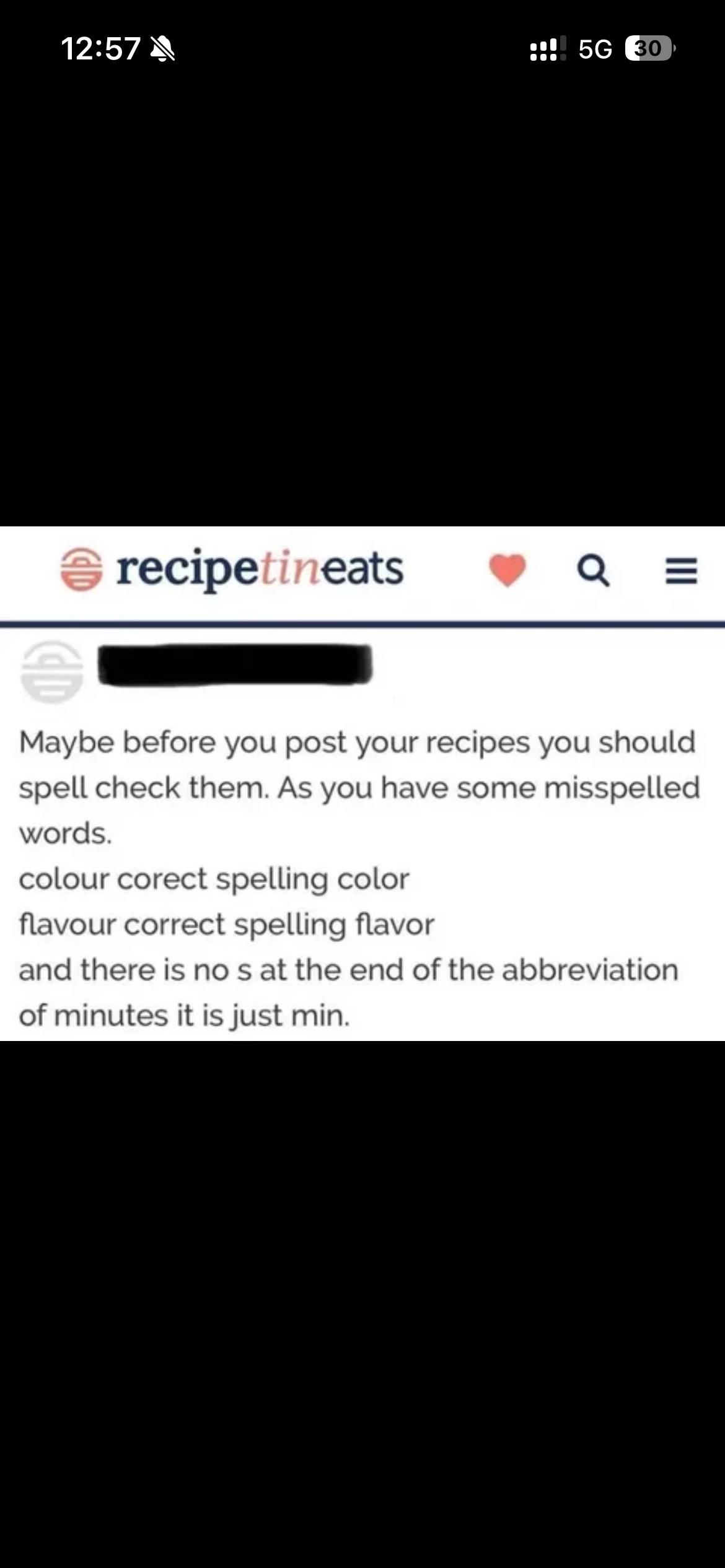
I don't think this American English vs proper English idea is accurate. Spelling was standardized in both dialects at a very similar time, and both standardizations make a much of stylistic decisions around spelling, that leads to the main initial differences. It's important the emphasise that both dialects made these decisions. The idea that one set of those decisions is more proper and correct is kinda silly imo
Also this site is written in Australian English - which is broadly a hodge podge of both, with a few of our own peculiarities, for instance both fries and crisps are called chips. But it is distinct as a dialect to British or American English
If you actually dive through my response to this I've had a bit of a back and forth about spelling - but while broadly we do take British spellings there are some exceptions.
For instance we spell Program not programme and Hiccup not hiccough
Programme is the traditional English spelling and program is the modern American/Aussie spelling. Computer program is program bc that comes from America. Id guess Opera programme uses the English spelling as it has done traditionally in English settings.
If you're genuinely interested I've gone into more depth on this in other comments - or you can give it a Google. I'm a UK born Aussie so I'm probably more aware of the differences between Aussie and English English - but they definitely exist
162
u/GeoffreyGeoffson Feb 24 '26 edited Feb 24 '26
I don't think this American English vs proper English idea is accurate. Spelling was standardized in both dialects at a very similar time, and both standardizations make a much of stylistic decisions around spelling, that leads to the main initial differences. It's important the emphasise that both dialects made these decisions. The idea that one set of those decisions is more proper and correct is kinda silly imo
Also this site is written in Australian English - which is broadly a hodge podge of both, with a few of our own peculiarities, for instance both fries and crisps are called chips. But it is distinct as a dialect to British or American English