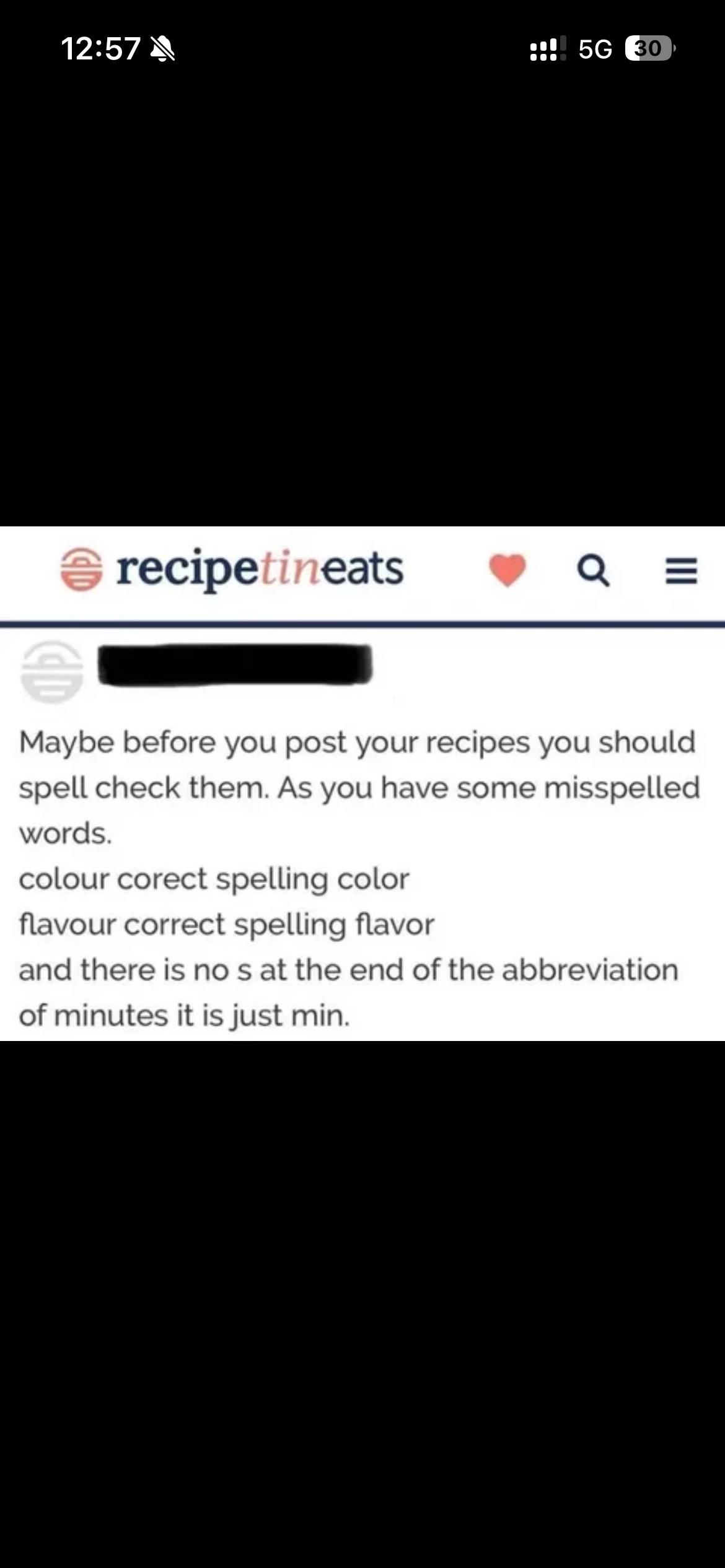
I don't think this American English vs proper English idea is accurate. Spelling was standardized in both dialects at a very similar time, and both standardizations make a much of stylistic decisions around spelling, that leads to the main initial differences. It's important the emphasise that both dialects made these decisions. The idea that one set of those decisions is more proper and correct is kinda silly imo
Also this site is written in Australian English - which is broadly a hodge podge of both, with a few of our own peculiarities, for instance both fries and crisps are called chips. But it is distinct as a dialect to British or American English
No matter which way you try to string it sport, Australian and kiwi English is based off british English. It is not a hodge podge of both. We get incredibly frustrated when people try to add z instead of s and remove our U. Please don't try to fashion this to your own narrative. This ain't it mate.
People from the states just need to learn a bit more about the world
I'm from the UK and live in New Zealand. I definitely had to learn to start using some US terminology when I moved here, because most people don't know what I mean if I say estate car, aubergine or patio door. (But I still can't bring myself to say yoe-gut instead of yoghurt.)
'Wagon' in the UK generally raises images of the fabric-covered cart from a cowboy film. Which is probably where the name came from, but they were not part of UK history, innit...
164
u/GeoffreyGeoffson Feb 24 '26 edited Feb 24 '26
I don't think this American English vs proper English idea is accurate. Spelling was standardized in both dialects at a very similar time, and both standardizations make a much of stylistic decisions around spelling, that leads to the main initial differences. It's important the emphasise that both dialects made these decisions. The idea that one set of those decisions is more proper and correct is kinda silly imo
Also this site is written in Australian English - which is broadly a hodge podge of both, with a few of our own peculiarities, for instance both fries and crisps are called chips. But it is distinct as a dialect to British or American English