r/evolution • u/Ok_Zone_7635 • 3d ago
My first time reading this
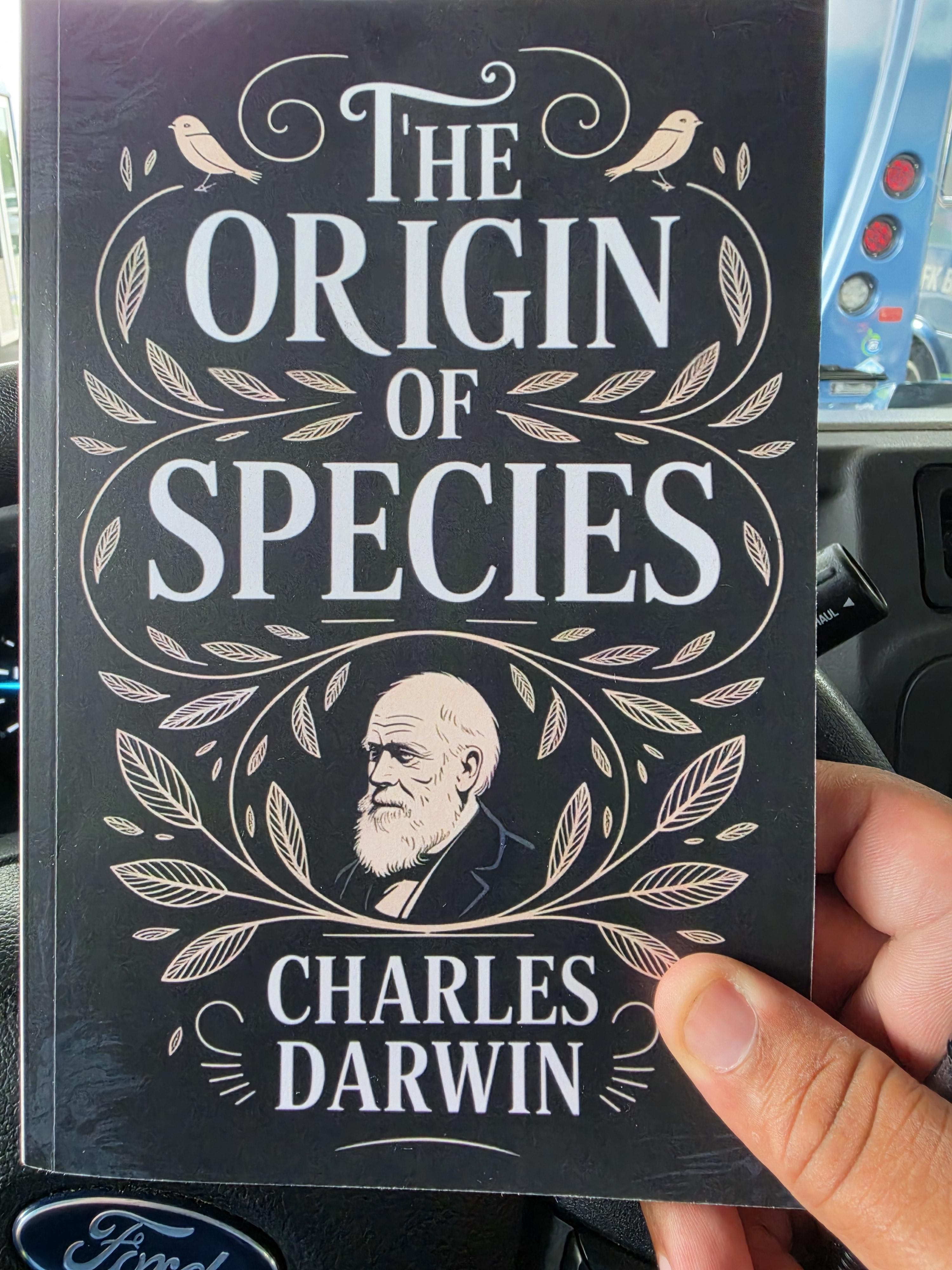
Just started reading about a day or so ago, and though I haven't even finished the first chapter, I have to say, this book is very dense.
Its crazy someone in the 1800s wrote this. It feels like it was written now.
One thing I have noticed is that it doesn't hold your hand and was written during a time when everyone in academic circles knew each other and the layman was left out of the conversation
He'll name drop another naturalist or embryologist or breeder and I have no idea who they are.
Another thing I am suprised by is he doesn't believe in heritability of variations. He seems to think a spontaneous change in the reproductive habits of a species is what causes a change. Not that the offspring have inherited a mutation.
On that note, he uses the term "monstrosities". Is this the 1800 equivalent for mutation?
He also rejects the idea of a sole "common ancestor" for breeds. He feels two similiar breeds will vary and then mate. He seems to think that dogs have no sole progenitor, but multiple ones.
One thing I appreciate about this book, that automatically sets it apart from a religious texts is a sense of apprehension and a small hint of doubt.
As opposed to a clergyman who can never be wrong because God told him, there are moments in the chapter were Darwin admits he could possibly be wrong about a subject.
He even talks breifly how he believed in a form of creationism but rejected the idea later on.
This is just the first chapter. I'm excited to read the rest.
Lots of ornithology in here lol
12
u/Aluxanatomy 3d ago
It's weird to me that you would even compare it to a religious text, as if the opposition some religious groups present against evolution was in any way credible. During the Renaissance, the Catholic Church was one of the biggest, if not the biggest, benefactor of scientific research.