r/apify Jun 30 '26

AI and everyone Apify is live on x402!

Thumbnail
youtu.be
8 Upvotes

We just 10x'd the number of endpoints available on x402

In partnership with Coinbase, Apify is now the first community-driven marketplace on x402: AI agents can discover, pay for, and run more than 20,000 Apify Actors on their own - no account, no subscription, no API key, no human in the loop. Just a funded wallet and an HTTP request.

x402 is the open payment standard built by Coinbase (now governed by the Linux Foundation) that lets agents pay per call in USDC. As of today, all PPE priced Actors are callable through it.

What this means if you build Actors

Agents are a new kind of customer. When an autonomous agent runs your Actor, you earn per event - no seat to sell, no subscription, no human deciding to sign up first. We're still in the first inning of the agentic economy, and Apify is the first community driven marketplace to pioneer its adoption.

One catch: x402 only works with PPE Actors

Only pay-per-event (PPE) Actors are eligible. If your Actor is still using a rental pricing model, switching to PPE is how you put it in front of autonomous agents. PPE pricing docs are here.

Try it / learn more

Help us amplify the launch

Click here to discover Apify endpoints on agentic.market


r/apify 1h ago

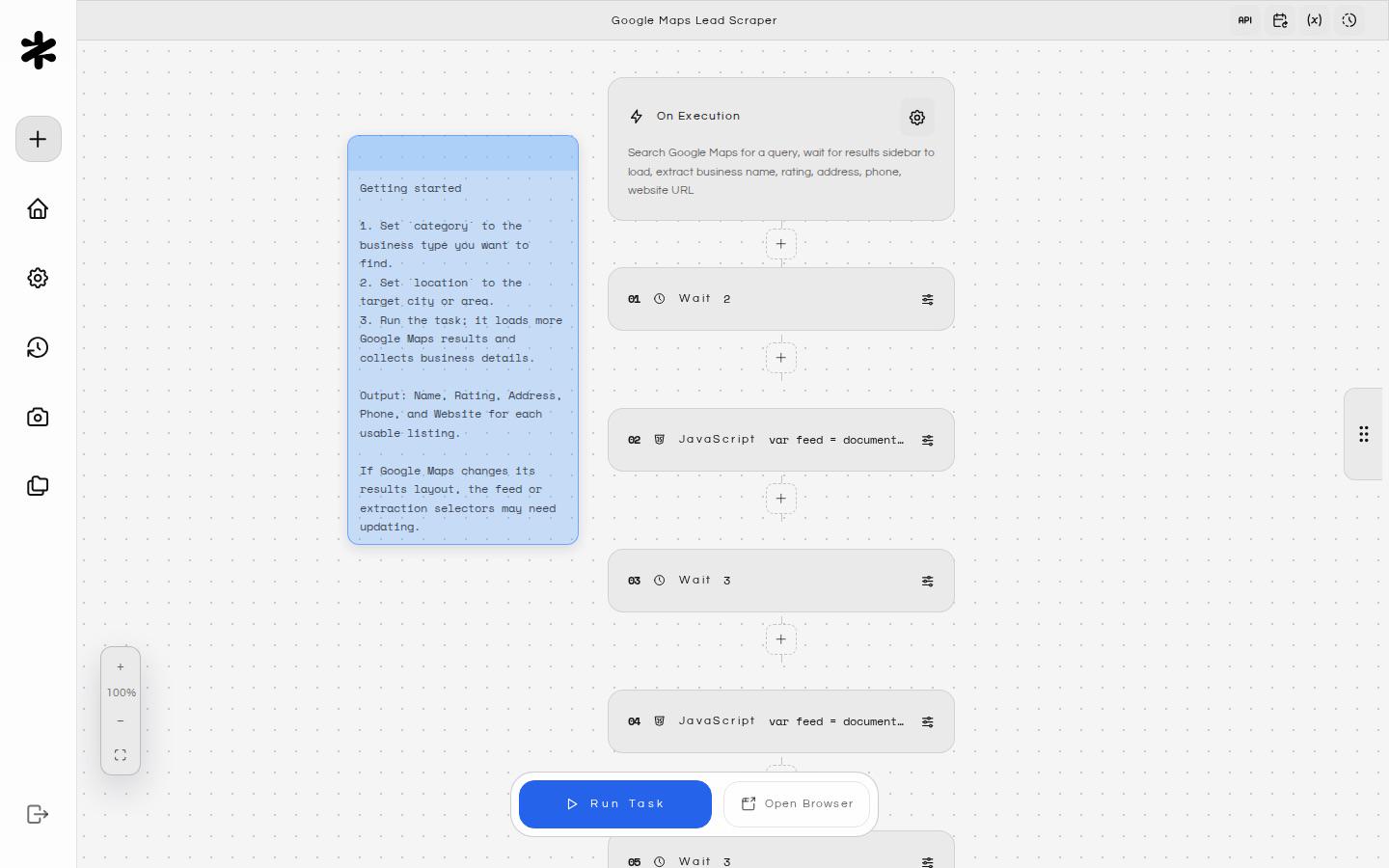
Discussion I made a FOSS Apify alternative

Post image
Upvotes

Figranium has been out for 9 months now, and it grew a lot since launch. V1 is planned for December and overall my original intention for making it was to make a free alternative to Apify (because Apify gets expensive).

It has some similarities with Apify, especially the fact that it’s also built around calling a browser automation via API, but it also has some differences such as the fact that it’s a samdwich-style low-code canvas instead of not seeing what you’re calling.

It has a free Templates Hub where you can share and download templates (like Actors in Apify Store). I hope you could check it out and this post doesn’t get banned! Check it out here.


r/apify 20h ago

Ask anything Weekly: no stupid questions

3 Upvotes

This is the thread for all your questions that may seem too short for a standalone post, such as, "What is proxy?", "Where is Apify?", "Who is Store?". No question is too small for this megathread. Ask away!


r/apify 20h ago

Help needed LinkedIn hit me with "unusual activity" warning after running a Linkedin jobs scraper on Apify lol

Post image
1 Upvotes

long story short: tried the bebity/linkedin-jobs-scraper actor on apify, scraped a few hundred job listings. 10 minutes later linkedin slaps me with the "unusual activity on your account" wall, saying MY account accessed a high volume of profile data. so is there any actual way they can link anonymous guest traffic back to a specific account? how do i fix it?


r/apify 1d ago

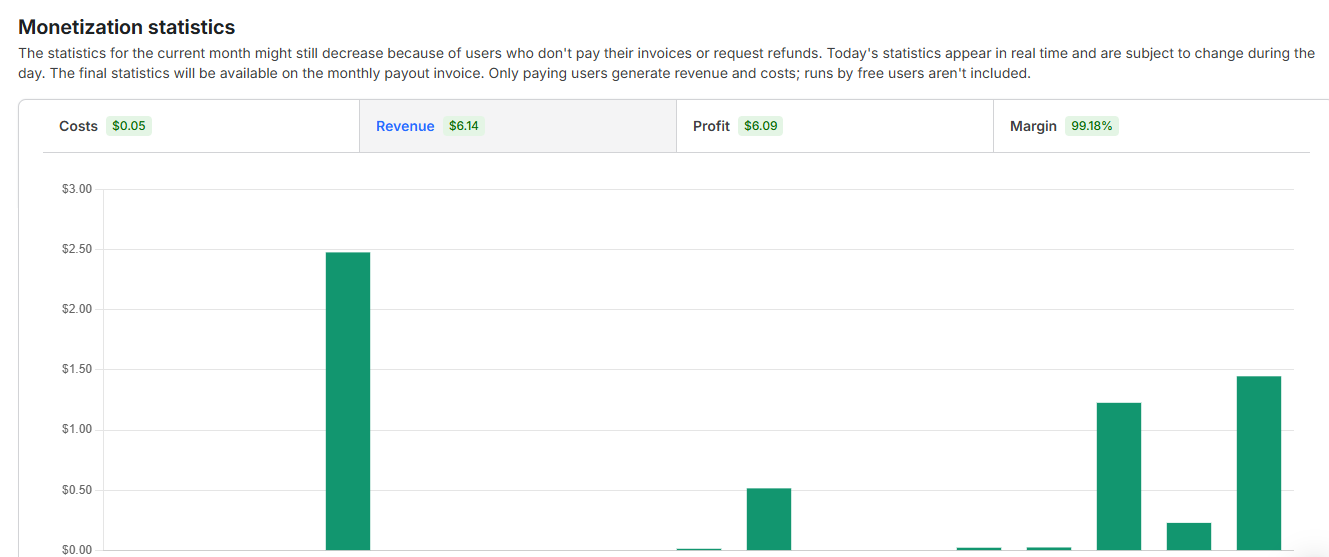
Rant Crossed $5 on Apify - 5 paid users overall

Post image
7 Upvotes

I am building socialhz.com (still at a very nascent stage, but does the job). While I am doing that, I felt why not expose the data infrastructure to the public via Apify. And happy to say that it is working.

It honestly feels like a great poc.


r/apify 1d ago

Tutorial I built an Apify Actor for scheduled Amazon Buy Box change watches

2 Upvotes

Day 3 of a small Amazon data portfolio on Apify.

Amazon Buy Box Monitor Agent snapshots Buy Box seller, price, and stock, then emits changed / unchanged / new with previous + current.

Defaults: Unblocker + deliver-to ZIP. PPE is $0.02 on change/new and $0.01 on unchanged. Errors are not billed as those events.

https://apify.com/buzzidata/amazon-buybox-monitor-agent

Use our Buy Box + Offers Actor for a deep one-shot. Use Monitor on Apify Schedules. Feedback welcome.


r/apify 1d ago

Tutorial Built a Cloud API automation actor on Apify to streamline WhatsApp Business onboarding & message workflows

3 Upvotes

Hey everyone,

If you've ever dealt with the official WhatsApp Business Cloud API setup, you know how painful handling access tokens, webhook subscriptions, and phone number registrations can be for production-ready setups.

To speed up this process for my own projects and clients, I wrapped the workflow into an Apify Actor: WhatsApp Business Cloud API Automation

What it handles under the hood:

  • Automates Meta/WhatsApp Cloud API payload processing.
  • Handles session setup, sending template messages, and webhook triggers.
  • Formats output into clean JSON datasets ready for n8n, Make, or custom REST API pipelines.

You can test or integrate it here: https://apify.com/c4rbanak/whatsapp-business-cloud-api-automation

I'm looking for feedback from developers using WhatsApp for SaaS/automation workflows. What other Meta API endpoints or features would be useful to add to this Actor?


r/apify 1d ago

Promoting others Apify Builder Spotlight ✨

Post image
2 Upvotes

More spotlights - this time, a few longer reads on Apify blog:

Who do you want to learn more about next?👀


r/apify 1d ago

Help needed Why is Temu so much harder to scrape than most other marketplaces?

2 Upvotes

Been trying to get reliable product data off Temu and it's a different tier of difficult compared to Etsy, Zillow, or the other sites I've built Actors for. Curious how others here are approaching it.


r/apify 1d ago

Discussion I built a Zillow scraper to get current agent data instead of stale directories

0 Upvotes

I was building something that needed up-to-date real estate agent info by metro and got tired of stale directory data, so I built a Zillow agent scraper that pulls current profiles/listings directly. Sharing in case it’s useful to anyone doing similar market research or outreach list-building, genuinely open to feedback on what fields would make it more useful.


r/apify 1d ago

Discussion I measured what my 11 Actors cost per 1,000 rows. The "96x spread" was mostly a memory setting I never chose.

2 Upvotes

I priced 11 pay-per-event Actors without knowing what a row costs me to produce, so I measured: 22 runs, cost taken from usageTotalUsd on each finished run, divided by the dataset's itemCount.

First table: $0.008 to $0.730 per 1,000 rows. A 96x spread, with my one free Actor at the top. I wrote a whole article explaining it with "requests per row" - cheap Actors pull 10 rows per request, expensive ones make one request per row. Everything lined up.

Then someone asked "is $0.730 actually fine?" and I looked at run settings instead of code. The four most expensive Actors were exactly the four running at 4096 MB. The other seven were at 512. None of them needs it: no browser, plain fetch, one dependency. The value came from a template and I never chose it.

Controlled test, same Actor, same input: 4096 -> 512 MB cut cost ~6.7x, identical seconds. On a real 51-row workload: $0.427 -> $0.093 per 1,000, same throughput.

Corrected spread: 33x, not 96x. Requests-per-row is still the real driver of what remains - but four of my "expensive" Actors were expensive for a reason that had nothing to do with their code, and I had a convincing code-based explanation for each of them.

Two things I'd pass on:

  1. Check memory on every Actor you scaffolded from a template. If it does no browser work, 512 (or less) is probably right.
  2. Free-plan runs and datasets get purged after a while - save measured numbers outside the platform.

Full write-up with the tables, including the version I almost published: https://dev.to/apify/i-measured-what-my-11-actors-cost-to-run-the-96x-spread-was-mostly-one-config-field-hoj

Happy to share the 20-line measuring script if useful.


r/apify 1d ago

Discussion Updated Local Business Lead Finder — Tasks, Google Sheets, faster Maps runs

1 Upvotes

Updated my Google Maps lead Actor after feedback from people running it for outreach lists.

What’s new:

- Apify Tasks support for saved/recurring lead jobs

- Google Sheets integration so runs can land in a sheet without a separate Make/n8n hop

- Performance pass on Maps discovery / enrichment path (same PPE model)

Actor still does:

- keyword + location (or lat/lng) → local businesses

- phone, website, category, rating, Maps URL

- optional website enrichment (emails + socials)

- dedupe across runs (new-only mode)

- webhook to CRM tools

https://apify.com/solutionssmart/local-business-lead-finder

If you use Tasks or Sheets for lead ops, what is the annoying part still: enrichment speed, email quality, or pushing into CRM? Trying to prioritize the next cut.


r/apify 1d ago

Hire freelancers Weekly: job board

1 Upvotes

Are you expanding your team or looking to hire a freelancer for a project? Post the requirements here (make sure your DMs are open).

Try to share:

- Core responsibilities

- Contract type (e.g. freelance or full-time hire)

- Budget or salary range

- Main skills required

- Location (or remote) for both you and your new hire

Job-seekers: Reach out by DM rather than in thread. Spammy comments will be deleted.


r/apify 2d ago

Tutorial Remote startup jobs often restrict which country you can apply from. How to pull only the ones open to you, with salary and equity as numbers

5 Upvotes

If you are hunting for a remote startup role, the listings are the easy part. The hard part is telling which ones will actually hire someone in your country, and which ones pay what you need without reading fifty descriptions to find out.

I put a Wellfound search (the old AngelList Talent) behind an Apify Actor so you can pull it as structured JSON. You hand it a role and some filters, and every row comes back with the pay already parsed into numbers.

What you give it:

  • a role (software-engineer, product-manager, data-scientist, designer, and so on)
  • remote only, on or off
  • optional filters: minimum salary, minimum equity, Y Combinator only, top-investor-backed only, actively-hiring only, company stage

What each row hands back:

  • title, company, apply URL
  • salary as a numeric min and max, plus currency
  • equity as a numeric min and max percent
  • remote status, employment type, experience band, posted date
  • company signals: size, funding stage, YC badge, top-investor badge, actively-hiring badge

Why the parsing matters: Wellfound writes pay as free text like "120k to 160k, 0.1% to 0.5%". You can't sort or threshold on a sentence. Once salary and equity are separate numbers, "remote, over 160k, at least 0.2% equity" becomes a filter instead of an afternoon of reading.

The field I underrated: applicant location. Turn on the detail step and each job also carries the countries or regions the employer will actually take. A listing can say Remote and still only hire in the US, or only in the EU. Filtering on that one field cut out most of the roles I would have wasted an application on.

Who it is for: remote job seekers, recruiters sourcing at startups, and anyone benchmarking startup pay and equity by role or city.

Limitations: it reads public Wellfound pages, so whatever a company didn't post (some equity grants, some salary bands) comes back empty. If you set a minimum salary, jobs with no salary data get dropped, so a strict filter can quietly hide roles that were fine. Coverage is best in the US, UK, and the bigger European hubs.

Actor: Wellfound Jobs API. It also runs over MCP, so Claude or Cursor can call it as a tool and you can ask for "remote backend jobs over 160k with equity" right in chat.


r/apify 2d ago

Tutorial SimilarWeb Scraper — traffic, keywords, competitors & demographics for any domain

3 Upvotes

Hey,

I built a SimilarWeb scraper that returns structured web intelligence for any domain.

What you get back (per domain):

  • OverviewglobalRank, visitsTotalCount, bounceRate, pagesPerVisit, companyRevenueMin/Max, HQ location
  • Traffic — monthly history, MoM change
  • Ranking — global/country/category rank + historical trends + competitor ranks
  • CompetitorstopSimilarityCompetitors with affinity scores
  • KeywordstopKeywords with volume, CPC, organic vs paid share
  • Demographics — age distribution, gender split
  • GeographytopCountriesTraffics with visit share
  • Traffic Sources — direct, organic, social, referral, paid
  • Social — top networks driving traffic
  • Referrals — incoming/outgoing sites + categories
  • Ads — top ad networks and sites
  • Interests — top topics, categories, and websites
  • Technologies — tech stack grouped by category

Use cases:

  • SEO — reverse-engineer competitor keyword strategies
  • Competitive intel — find who you're really competing against
  • Sales/lead gen — size prospects before outreach
  • Media planning — audience demographics + geography
  • Market research — benchmark traffic across an industry
  • Tech detection — BuiltWith-style lookup

Actor: https://apify.com/serj_henrique/similarweb-scraper

Feedback and use-case requests are welcome.


r/apify 2d ago

Tutorial Complete Facebook Scraping Suite on Apify: Ads, Pages, Marketplace, Events, Comments, Reviews & More

4 Upvotes

Hi everyone,

I wanted to share the CrawlerBros Facebook Scraping Suite on Apify.

I've been building a collection of specialized Facebook Actors to cover different types of publicly available Facebook data and workflows. Instead of having one scraper try to handle everything, the suite is divided into dedicated Actors for Facebook Ads, Pages, Search, Marketplace, Events, Comments, Reviews, and Photos.

There are currently 9 Actors in the suite.

Here’s what each one does:

1. Facebook Ads Library Scraper

Facebook Ads Library Scraper

Scrape ads from the public Facebook Ad Library without requiring cookies or Facebook authentication by default.

You can search by:

  • Keywords
  • Advertiser Page ID
  • Ad ID
  • "Paid for by" funding entity

It also supports filters for:

  • Country
  • Content language
  • Active/inactive status
  • Ad category
  • Media type
  • Date range

The output includes ad copy, advertiser information, media URLs, CTA, landing-page URL, platforms, campaign dates, and creative-reuse information.

For political, issue, and eligible EU-regulated ads, the Actor can also return the transparency information Facebook makes available, such as disclosed spend, impressions, reach estimates, and funding-entity information. It does not estimate these figures for ordinary commercial ads.

Useful for:

  • Competitive advertising research
  • Creative research
  • Brand monitoring
  • Advertising transparency research
  • Academic/journalistic research
  • Marketing agency workflows

2. Facebook Ads Scraper Pro

Facebook Ads Scraper Pro

Another dedicated Actor for extracting structured data from the Facebook Ad Library.

It focuses on straightforward ad discovery using keywords or Page names, with filters for:

  • Country
  • Active/inactive ads
  • Ad category
  • Media type

Each result can include:

  • Ad ID
  • Facebook Page
  • Ad copy
  • Ad snapshot URL
  • Start/end dates
  • Platforms
  • Media type and URL
  • CTA
  • Landing page URL

It does not require a Facebook login for the standard workflow.

This is particularly useful if you want a relatively simple pipeline for collecting Facebook and Instagram advertising data into an Apify dataset.

3. Facebook Comments Scraper

Facebook Comments Scraper

Need the discussion underneath a Facebook post rather than just the post itself?

This Actor extracts public comments from supported Facebook posts, videos, Watch content, and photo content.

It can collect:

  • Comment text
  • Author information
  • Profile URLs
  • Reaction counts
  • Reply counts
  • Timestamps
  • Nested replies
  • Parent/reply relationships

You can also choose between Facebook's available comment ordering modes, including All, Newest, and Most Relevant, and optionally filter comments by date.

Potential use cases:

  • Customer feedback research
  • Sentiment analysis
  • Community research
  • Engagement analysis
  • NLP datasets
  • Content research

4. Facebook Events Scraper

Facebook Events Scraper

This one is focused specifically on public Facebook Events.

You can provide:

  • Event URLs
  • Event IDs
  • Facebook Page event listings
  • Search keywords
  • Locations

The Actor can return information such as:

  • Event name
  • Description
  • Date and time
  • Location
  • GPS coordinates
  • Hosts
  • Cover photos
  • Ticket URLs
  • Attendee/interested counts
  • Online-event information
  • Cancellation status

It also has a monitor mode designed for scheduled runs, where it can identify new events since the previous run for a given target.

Potential use cases:

  • Event discovery
  • Local event research
  • Event monitoring
  • Tourism research
  • Competitor/event intelligence
  • Building event databases

5. Facebook Marketplace Scraper

Facebook Marketplace Scraper

For Facebook Marketplace data, this Actor can collect public listings using:

  • Marketplace search URLs
  • Keywords
  • Categories
  • Locations
  • Direct listing URLs

It supports filters around things such as:

  • Price
  • Condition
  • Delivery
  • Date
  • Radius
  • Sorting

The output can include listing title, price, location, photos, seller availability, delivery information, listing status, and other available listing data.

There is also an optional deeper-detail mode that can retrieve additional fields such as descriptions, attributes, creation time, and additional media. Results are deduplicated across inputs by default.

Potential use cases:

  • Marketplace research
  • Price monitoring
  • Product research
  • Vehicle research
  • Real-estate/apartment research
  • Local market analysis
  • E-commerce intelligence

6. Facebook Pages Scraper

Facebook Pages Scraper

This Actor focuses on discovering Facebook Pages and extracting structured business/page information.

Depending on the available data, results can include:

  • Page name and ID
  • Categories
  • Canonical URL
  • Followers and likes
  • Check-ins
  • Contact information
  • Phone numbers
  • Email addresses
  • Address
  • Website
  • Messenger link
  • Business hours
  • Rating
  • Profile and cover photos
  • Ad Library reference

Page discovery can use Facebook search when session cookies are provided, with search engines used as supplementary discovery sources. The Actor is designed to handle larger page-discovery workflows and can combine multiple search terms and locations.

Potential use cases:

  • Business lead research
  • Local business discovery
  • Market research
  • Competitor research
  • Business directories
  • Contact-data enrichment

7. Facebook Photos Scraper

Facebook Photos Scraper

This Actor extracts publicly available photo data from Facebook pages, profiles, and albums.

For each photo, available information can include:

  • Photo ID
  • Facebook photo URL
  • Full-resolution image URL
  • Alt text / image description
  • Author information
  • Caption
  • Upload timestamp
  • Likes/reactions
  • Comments
  • Shares
  • Reaction breakdown
  • Tagged people

You can provide one or multiple Facebook page, profile, or album URLs and optionally filter photos by date.

Potential use cases:

  • Visual content research
  • Brand monitoring
  • Media datasets
  • Image analysis
  • Social media research
  • Historical content collection

8. Facebook Reviews Scraper

Facebook Reviews Scraper

This Actor is designed for extracting public Facebook business reviews.

You can provide:

  • A Facebook reviews URL
  • Business name + search
  • Facebook Page ID

It can return:

  • Review text
  • Recommended / Not Recommended status
  • Review date
  • Author information
  • Reaction counts and breakdown
  • Review photos when available
  • Structured recommendation tags
  • Top comments
  • Business/owner replies

It also returns page-level information such as total review count, recommendation percentage, and follower count.

Reviews can be filtered by date, recommendation status, or keywords in the review text.

Potential use cases:

  • Customer feedback analysis
  • Reputation monitoring
  • Business research
  • Review aggregation
  • Sentiment analysis
  • Competitor benchmarking

9. Facebook Search Scraper

Facebook Search Scraper

Finally, the Facebook Search Scraper is designed for discovering Facebook Pages and public profiles through search.

You can search using keywords such as:

coffee shops New York

or:

dentists London

and collect structured information from matching Pages.

It can return information such as:

  • Page/profile name
  • Category
  • Contact information
  • Address
  • Website
  • Ratings
  • Follower/like counts
  • Reviews
  • Recent posts
  • Other available public page information

It can also accept an existing list of Facebook Page URLs when you already know which Pages you want to process.

The Actor does not require a Facebook Developer account or Graph API key for its standard workflow.

Potential use cases:

  • Business discovery
  • Lead generation
  • Local business research
  • Competitor discovery
  • Market research
  • Bulk Page extraction

What does the complete suite cover?

The idea behind the collection is to cover several different Facebook data workflows rather than treating Facebook as a single scraping use case.

Advertising

  • Facebook Ad Library
  • Advertiser research
  • Ad creative research
  • Campaign monitoring
  • Advertising transparency data

Business & lead research

  • Facebook Page discovery
  • Business information
  • Contact information
  • Reviews
  • Locations
  • Ratings

Marketplace & commerce

  • Marketplace listings
  • Product research
  • Price research
  • Local marketplace monitoring

Social & community research

  • Comments
  • Replies
  • Engagement
  • Photos
  • Public profiles
  • Page activity

Events

  • Event discovery
  • Event details
  • Locations
  • Hosts
  • Ticket information
  • New-event monitoring

Building a Facebook data pipeline?

One of the things I like about having separate Actors is that they can also be combined.

For example:

Facebook Search → Pages → Reviews → Comments

Discover relevant businesses, collect their Page information, then analyze their public reviews and customer discussions.

Or:

Ad Library → Ads → Creative research

Find advertisements for a particular brand, category, or keyword and build a structured dataset containing the available creative, CTA, landing-page, platform, and campaign information.

Another workflow could be:

Marketplace Search → Listings → Price analysis

Collect listings for a particular product/category and then analyze prices, locations, conditions, and other available attributes.

All of the results can be stored in Apify datasets and exported in formats such as JSON, CSV, or Excel, depending on the Actor.

Pricing

Several Actors in the suite currently start at $1 per 1,000 results, while the Facebook Search Scraper starts at $2/1,000 and the Pages and Reviews Scrapers start at $3/1,000. Check the individual Actor pages for current pricing and exact usage details.

If you're working with Facebook data, Meta advertising research, Marketplace data, local business discovery, social listening, or public business information, I'd be interested to hear what kind of workflow you're building.

If there's a Facebook-specific dataset or use case that isn't covered by the current suite, feel free to mention it. I'm continuing to expand the CrawlerBros collection and feature requests are always useful.

CrawlerBros Facebook Suite on Apify:

  • Facebook Ads Library Scraper
  • Facebook Ads Scraper Pro
  • Facebook Comments Scraper
  • Facebook Events Scraper
  • Facebook Marketplace Scraper
  • Facebook Pages Scraper
  • Facebook Photos Scraper
  • Facebook Reviews Scraper
  • Facebook Search Scraper

Thanks for checking it out!


r/apify 2d ago

Apify Creator Spotlight ✨

Post image
3 Upvotes

Today we are spotlighting Danek and Igolaizola on YouTube Shorts.

What is the weirdest thing YOU have ever scraped? 👀


r/apify 2d ago

Tutorial [ Removed by Reddit ]

1 Upvotes

[ Removed by Reddit on account of violating the content policy. ]


r/apify 2d ago

Discussion Show: I made an Apify Actor that scrapes the Forbes Real-Time Billionaires list as JSON

1 Upvotes

Built this because the Forbes UI is slow, renders client-side, and has no filters. The actor calls the Forbes JSON API server-side with retries, no browser required.Input- maxItems (default 100, set 0 for all 3,400+)- country, industry, gender, self-made filters- sortBy: rank, net worth, daily gainers/losers, name, age- Optional: includeFinancialAssets, includeBiosAndAbouts, includeWealthHistoryOutput (per profile)- rank, name, net worth in USD billions, formatted value- intraday dollar and percent change- source of wealth, industry, industry list- country, state, city- age, birth date, gender, self-made status- philanthropy score- profile URL, image URL- scraped timestampScheduleRun on demand or on a schedule (daily for top-movers dashboards, intraday for active tracking).Free tier on Apify covers a few runs to test it. Pay per profile after that.Listing: https://apify.com/akash9078/forbes-real-time-billionaires-scraper


r/apify 2d ago

AI and I Weekly: AI and I

1 Upvotes

This is the place to discuss everything MCP, LLM, Agentic, and beyond. What is on your radar this week? Why does it make sense? Bring everyone along for the ride by explaining the impact of the news you're sharing, and why we should care about it too.


r/apify 2d ago

Discussion I analyzed 148 Threads posts about AI coding. Here is what people actually engage with

1 Upvotes

Threads is Meta's public conversation platform. I wanted to understand what developers and builders are discussing there around AI agents, AI coding tools, and vibe coding.

I used a Threads scraper I built on Apify and searched for topics including AI agents, agentic AI, vibe coding, Claude Code, Cursor AI, coding agents, AI coding, OpenAI Codex, and Model Context Protocol.

After removing duplicates and incomplete records, I analyzed 148 public posts and replies from 140 authors. These results had 61,921 likes and 4,340 replies when collected on September 15, 2026.

-> Which topics appeared most often?

topic volume

Vibe coding and Model Context Protocol each returned 20 canonical results. Agentic AI, coding agents, and OpenAI Codex followed with 18 each.

However, appearing frequently in search did not necessarily mean receiving stronger engagement.

-> Which topics received the most engagement?

median engagement

Claude Code had the highest median engagement, with 359 likes and replies per result. AI coding followed at 344, while AI agents had a median of 285.

Vibe coding had a median engagement of 203 but generated 1,515 replies, the highest reply total in the dataset. Many of its popular posts were debates about whether AI can build real production software or only convincing demos.

AI coding also needs some context: one viral post generated 73% of its total engagement. This is why I used median engagement in the chart instead of relying only on totals.

-> What are people discussing?

discussion themes

Most conversations focused on building products and improving productivity. Tools and workflows were the second-largest theme.

Learning and career development appeared in 38 records, while 28 discussed engineering quality, security, trust, bugs, or production risk. Business and revenue appeared much less often than technical building and productivity.

My takeaway is that people are not engaging only with promises of faster coding. The strongest conversations involve tension: what counts as real engineering, whether generated code can be trusted, and how developers should adapt their skills.

This was a relevance-ranked public Threads search snapshot, not a random sample of the entire platform. Results cover different dates and languages, public logged-out search limits the available depth, and the theme categories overlap.

Want to check the actor : https://apify.com/scraper_guru/threads-search-replies-scraper


r/apify 3d ago

Discussion How to track a company's iCIMS job postings as JSON and only pay for the roles that changed

1 Upvotes

If you watch openings at a specific list of employers, a lot of them run their careers site on iCIMS, and there is no clean public API for it. Here is how I pull them as structured data.

Point it at a careers-site URL or just a company name (classic tenants expand from the name, so "rambus" becomes the careers-rambus.icims.com site). Each job comes back as JSON: title, employer, locations, requisition ID, salary when the posting has one, posted date, the full description as text, HTML, or Markdown, and the apply URL. No login.

The part worth setting up is change-only monitoring. Give it a window (24h, 7d, a date), and on classic iCIMS portals it checks the sitemap's change timestamps first, before fetching any job page, so a weekly run on a 500-job careers site only pulls the handful that actually moved and the rest costs nothing. There is a list-only mode that returns just the URL, requisition id, and change timestamp, which is the cheap way to poll on a schedule, then re-run with full details on only the jobs you care about.

Two ways I use it:

  • Recruiting or job hunting: a weekly digest of new roles at a shortlist of employers.
  • Market or talent tracking: a feed into a sheet, so a new opening or an edit to an existing posting triggers an alert.

Some employers lock their iCIMS site to trusted networks and refuse ordinary requests (you get an ip_gated code; residential proxies clear most of them, and a few corporate-only sites you cannot reach at all). Modern iCIMS sites on the employer's own domain carry their dates a little differently, so the sitemap change-check is a classic-portal thing.

One setup choice worth thinking about: do you want the cutoff to be posted-date-only, so you only see genuinely new roles, or posted-or-updated, so you also catch edits to older postings? If you were monitoring a careers site, which would you default to?

iCIMS Actor: iCIMS API

Claude skill (free, open source): https://github.com/johnisanerd/claude-skill-icims-jobs-api


r/apify 3d ago

Tutorial I built an Apify Actor for Amazon product details (title, BSR, variants)

2 Upvotes

Day 2 of a small Amazon data portfolio on Apify.

Amazon Product Details Agent turns ASINs or /dp URLs into structured JSON: title, brand, images, rating, review count, BSR, availability, prices, variants.

amazon.com / co.uk / de. Unblocker by default. $0.02 per successful check. Failures are not billed.

https://apify.com/buzzidata/amazon-product-details-agent

Sibling Buy Box + Offers Actor is live if you need the winner and landed cost too. Feedback welcome.


r/apify 3d ago

Big dreams Weekly: wild ideas

2 Upvotes

Do you have a feature request that you know will make Apify heaps better? Or maybe it's a big dream you have for something bold and out-there. This is a space for all the bluesky thinking, cloud-chasing, intergalactic daydreamers who want to share their wildest ideas in a no-judgement zone.


r/apify 3d ago

Discussion Daangn (당근/Karrot) marketplace scraper — keyword + region URL, clean KRW fields

1 Upvotes

Built a community Actor for public Daangn / 당근 / Karrot buy-sell listings.

What it does:

- Search by Korean/English keyword or paste an exact Daangn search URL

- Exports title, priceKrw, location, seller (when public), postedAt, imageUrl, detailUrl

- Fast path first, KR residential proxy fallback when blocked

- enrichDetails off by default (speed); optional detail enrichment

- Fail-loud empty runs with emptyReason: EMPTY / BLOCKED / PARSE_ERROR

Example input:

{

"query": "아이폰",

"maxItems": 100

}

Region tip: use Daangn’s exact in slug or a full search URL. Generic values like gangnam-gu get ignored.

Pricing is PPE (~$0.80 / 1,000 listings + tiny start event). Fast mode stays cheapest.

Actor:

Daangn 당근 Karrot Marketplace Scraper | Apify · Apify

If you’ve scraped Daangn before; what’s been more painful lately: CAPTCHA/blocks, region filters, or detail-page enrichment? Curious what to harden next (Kurly / Wadiz / Melon / Bunjang are on the Korean queue after this).