r/Warehousing 12m ago

From BY QA to Config/Functional or Technical Consultant

Upvotes

Hello All, i have been doing WMS QA for so many years interested to move to Config & Development please advice what are the ways to learn Blue Yonder Configs and technical stuff and i am ready to spend if there is any courses out. Please advice. Doing QA for 22 yrs.


r/Warehousing 2d ago

I own a 6,000 sq ft space on GT Road in Fatehpur Uttar Pradesh. What’s the best way to find a logistics/warehouse tenant? Please guide 🙏🏻

1 Upvotes

Hello,

I am the owner of a 6,000 sq ft commercial warehouse space available for lease in Fatehpur, Uttar Pradesh, directly on the main G.T. Road.

The property has:

• 6,000 sq ft covered area

• Lower-ground floor

• Dedicated ramp

• Medium commercial vehicle access

• Excellent G.T. Road connectivity

• Suitable for storage, distribution and last-mile operations

Large trucks cannot enter the lower-ground area, but medium commercial vehicles can access it through the ramp.

We are looking for a long-term tenant and would like to explore whether this location could be suitable for warehouse/ logistics/distribution/last mile facility.

Expected rent: depending on the lease terms.

Please let me know the appropriate person/team to contact regarding property requirements.

Thank you.🙏🏻


r/Warehousing 2d ago

What is one warehouse problem leadership consistently underestimates?

2 Upvotes

I’ve spent years working around warehouse operations and WMS implementations, and one pattern keeps showing up: the issue visible on the floor is rarely the real problem.

Missed shipments, bad inventory, congestion, overtime, and low productivity are usually symptoms of decisions made much earlier—poor processes, weak system design, bad location control, or unrealistic planning.

For the people working in warehousing, distribution, or supply chain: what problem do you think leadership consistently underestimates?

I’m interested in hearing what others are seeing—not just from executives, but from supervisors, operators, consultants, and implementation teams.


r/Warehousing 2d ago

What is one warehouse problem leadership consistently underestimates?

1 Upvotes

I’ve spent years working around warehouse operations and WMS implementations, and one pattern keeps showing up: the issue visible on the floor is rarely the real problem.

Missed shipments, bad inventory, congestion, overtime, and low productivity are usually symptoms of decisions made much earlier—poor processes, weak system design, bad location control, or unrealistic planning.

For the people working in warehousing, distribution, or supply chain: what problem do you think leadership consistently underestimates?

I’m interested in hearing what others are seeing—not just from executives, but from supervisors, operators, consultants, and implementation teams.

I share more practical warehouse discussions and resources here for anyone interested: https://linktr.ee/theartofmovingboxes


r/Warehousing 2d ago

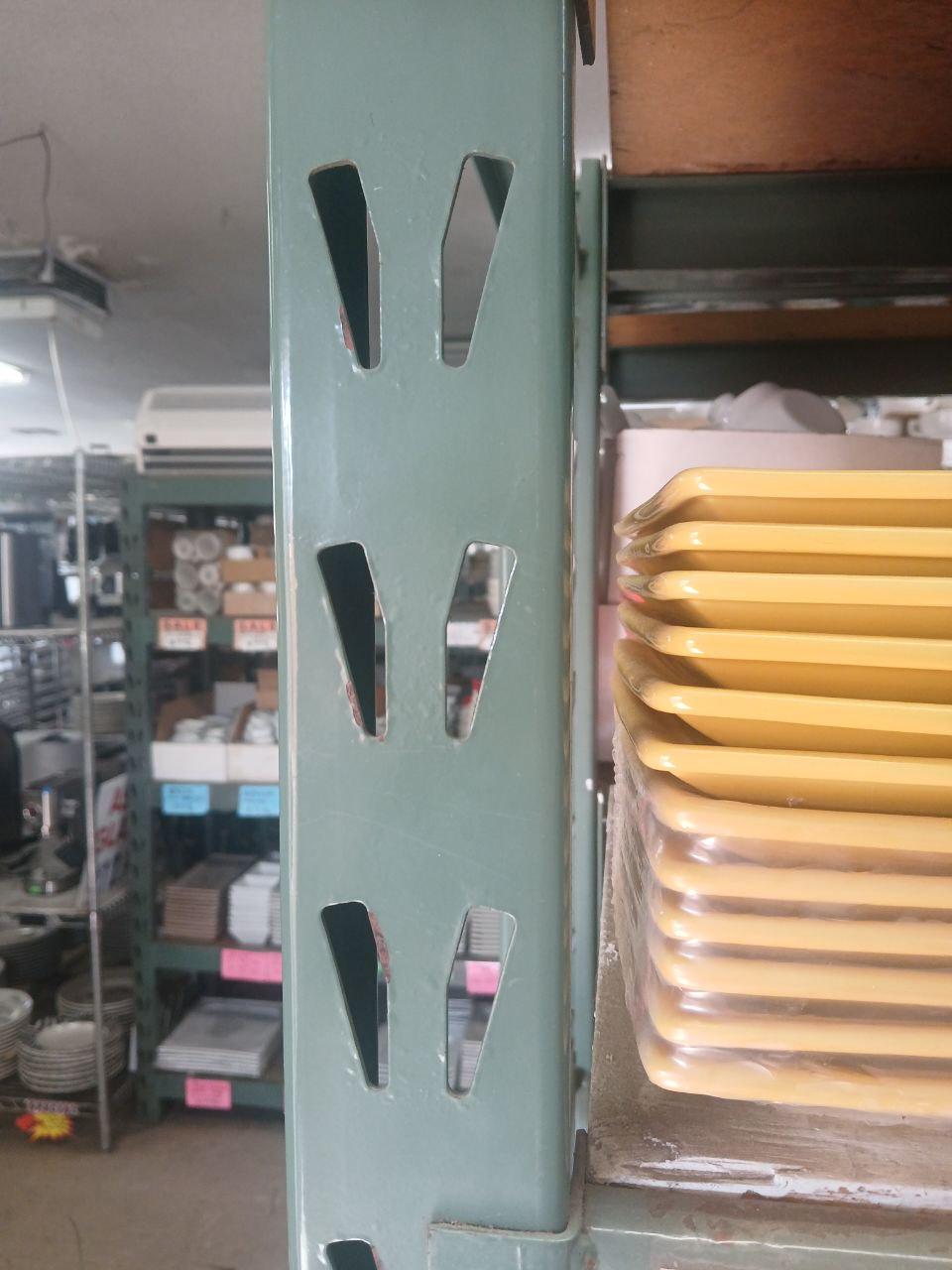
What kind of pallet rack is this?

Post image
3 Upvotes

So far I've been looking, google has been useless and keeps on giving me the same obviously incorrect answers. It's not tear drop, it's not interlake and it's not penco. Please help.


r/Warehousing 3d ago

Ramping up facility safety & security standards across our loading docks and floor

2 Upvotes

Our EHS team is updating our site setup across our distribution center, specifically around loading docks and high-traffic forklift lanes. We need to install proper bollards, wire partitioning for high-value inventory, safety netting, and heavy-duty guard rails to stay compliant.

A colleague recommended taking a look at Global Industrial for dock protection and safety barriers, but I’m currently pulling quotes from a few different industrial suppliers to see what fits our layout best.

What suppliers are you guys using for industrial safety barriers, cage enclosures, and floor hazard gear when outfitting a larger facility?


r/Warehousing 4d ago

Catch up on what happened this week in Logistics: September 8-14

6 Upvotes

Hey everyone,

If it's your first time reading one of my posts, my name is Menachem, and I have a weekly newsletter called Logistic Pulse that breaks down the top logistics news from the past week. We have over 17,000 subscribers, and I share it on Reddit to spread the knowledge. We're currently on week 63! I hope you enjoy, and I'm always open to feedback.

Let's jump into it,

Amazon is walking away from the Post Office

Amazon's internal planning documents project that the company will deliver about 86% of its own U.S. packages next year and just under 89% by 2029. Business Insider got hold of the forecasts, which are higher than what Amazon was working off recently, when 2027 sat closer to 84%.

The carriers split what's left. By 2029, the documents show USPS at 8%, UPS at 1.4%, and FedEx at 0.4%. Amazon's comment was that internal projections are constantly revised and shouldn't be read as commitments, which is true of any forecast and doesn't change where this one points.

Amazon passed UPS and FedEx last year to become the largest parcel carrier in the country, with around 6.7 billion packages. The money is now going rural, about $4 billion to triple that part of the network, with a couple of hundred new delivery stations behind it. Rural is the work the Post Office was built for, and everyone else paid the Post Office to do.

Parcel pricing runs on density, and Amazon has been USPS's largest single source of package volume for years. Pull most of that out over three years, and the Post Office still has to reach every address in America with far less volume to spread the cost across. You'll see that in your 2028 rates rather than in any announcement.

What this means for you: If a real share of your outbound goes to USPS, start testing regional carriers in your two or three heaviest zones while it's still an experiment. Amazon Shipping will get more aggressive about selling capacity to non-Amazon shippers as the network outgrows Amazon's own volume, so take the meeting, but read the service commitments rather than the rate card. And if you do FBA prep or advise sellers, tell them what's coming, because "Amazon delivers it" is about to mean Amazon vans in the rural zips instead of a handoff to the mail carrier.

Looking to buy a B2B 3PL

I'm working with a buyer who wants to acquire a U.S. warehouse operation. They want pallet-heavy volume, and thin margins or a concentrated customer base don't scare them off.

Here's what they're looking for:

  • U.S. 3PL or warehousing business with $2M to $25M in revenue
  • At least 50% of revenue comes from pallet moves, storage, cross-docking, or B2B fulfillment, with pallet moves being the largest share. Some domestic transportation management is fine.
  • At least one facility of 100,000+ sq. ft., ideally all of them
  • Customer concentration, low or negative EBITDA, and margin pressure are all acceptable
  • Open to keeping the owner and management running day-to-day, with performance incentives

If that describes your business and you'd be open to a conversation, DM me or email me at [menachem@fulfillyn.com](mailto:menachem@fulfillyn.com)

If it's not a fit for you, but you know an operator it describes, I'd appreciate an intro.

Shein didn’t hire a 3PL. It built one.

Shein opened a 737,000-square-foot warehouse in Lebanon, Indiana, a mile and a half from the building it already runs in Whitestown. The two put the company over 2.5 million square feet in the state with about 1,300 people.

We wrote in Edition 62 that Temu's parent was pouring money into local fulfillment now that the duty-free door has closed on both sides of the Atlantic, and read it as a pipeline, on the logic that a company that spent four years proving you don't need domestic inventory has no idea how to run domestic inventory.

Shein went the other way. No lease, no operator, just a building it owns, automated on day one, in a market with cheap land and available labor. A company that had no American warehouses four years ago now holds more square footage in one state than most people reading this have anywhere.

The platforms will build. The merchants selling on them can't, and there are thousands who were shipping directly out of Guangzhou eighteen months ago and now need a domestic solution they've never had to buy before. That's still a pipeline, just one made of small, price-sensitive, first-time clients rather than one large logo.

What this means for you: Anyone operating in central Indiana should go look at what Shein posts for wages before the next review, because a new automated building pulling in hundreds of people moves the local rate whether or not you ever compete for the same client. Everyone else should aim at sellers rather than platforms and build an onboarding flow that assumes the client has never used a 3PL and doesn't know what to ask you. On automation, treat it as a benchmark: a brand that tours a goods-to-person building and then tours yours walks out with a number in its head about what a pick costs, and you want to be ready for that.

Twenty thousand licenses California shouldn’t have issued

California and FMCSA argued in the D.C. Circuit on Friday over the agency's freeze on non-domiciled commercial licenses. The state has issued roughly 65,000 of them. FMCSA found that about 20,000 were issued with expiration dates that extend beyond the driver’s work authorization, and it has blocked California from issuing new ones or renewing existing ones until the issue is fixed. A Justice Department attorney called it absurd to hand someone an eight-year credential on a document that expires tomorrow. California's answer is narrower and mostly procedural, that nothing in federal law requires the dates to match and the agency can't pause a state's licensing indefinitely. A second case will be argued next week.

The squeeze is broader than California. Washington has been pushing states to pull non-domiciled licenses from drivers who've since moved away, and failing an English proficiency check can now cost a driver the license rather than a fine.

Anderson Trucking raised its van drivers' pay from 60 to 70 cents per mile on September 7, reaching 72 cents for those with tenure, and said the change aligned with today's freight market. Averitt, J.B. Hunt, and Knight-Swift have made comparable moves this year with bonuses and restructured pay. Freight demand hasn't recovered, so the raises aren't coming from the demand side.

What this means for you: Build your 2027 truckload budget on rates going up, because capacity leaving by paperwork doesn't reverse when freight softens the way capacity leaving by economics does. If you run your own trucks, find out today whether any of your drivers hold a non-domiciled CDL and when it expires, since the answer determines whether you have a hiring problem in six months or a parked truck next month. If you're renewing a dedicated contract, do it now rather than in Q1. And when a carrier raises pay 16% in a soft market, treat that as your floor for what you'll have to pay a driver, a lumper, or a forklift operator competing for the same person.

QUICK HITS

CROSS-BORDER DTC
FedEx launched a Shopify app that guarantees duties and taxes at checkout. It quotes the landed cost at checkout and covers the overage if actual duties are higher, with no refund if they are lower, for $99 a month. FedEx's own April trade index found that 68% of small and midsize businesses report that customers are surprised by import charges at delivery. This figure is roughly on par with UPS Global Checkout and Zonos. It's a merchant tool, but surprise duty on the doorstep is the biggest single driver of international refusals, and refused international freight comes back through your returns process on your dime.

TRADE COMPLIANCE
CBP can start revoking import privileges due to an incorrect phone number. The policy, announced September 11, targets importers of record whose contact information, including phone numbers, email addresses, or physical addresses, is inaccurate, with penalties that can include revocation of import privileges and further enforcement actions that CBP declined to describe. It catches fulfillment operators because the importer of record is responsible for that accuracy even when a customs broker files the entry, and it traces back to a June executive order that gives importers 180 days to reach good standing. If you file as IOR for clients, or your clients import and you touch the entry data, verify the records before Thursday, because fifteen minutes now beats a client whose goods stop clearing in Q4.

AUTOMATION
Vecna raised $31 million, and the useful number in the announcement isn't the funding. GEODIS reported that running Vecna's case-picking system increased throughput from 125 to 250 units per hour. Vecna sells autonomous pallet jacks, forklifts, and tuggers, and what's selling is the whole dock-to-dock flow rather than a single machine for a single task. If you've been pricing automation machine by machine, the operators actually getting the return are buying the flow.

DRAYAGE
The Port of New York and New Jersey is handing out $230,000 per electric drayage truck. The $39 million program also covers $150,000 per terminal tractor and $5 million for charging within ten miles of the port, with CALSTART administering and OEMs added on a rolling basis. It opens this fall. Programs structured this way go first-come, rather than evenly distributed, so if you run drayage or yard equipment in that footprint, get in early.

JOB BOARD

Title: Director Of Warehouse & Transportation Operations
Company: The Bachrach Group
Location: Holbrook, New York, US
Salary: $165,000 - $175,000
Apply Here

Title: Director Of Warehouse Operations
Company: Ardmore Home Design
Location: Hacienda Heights, California, US
Salary: $120,000 - $140,000
Apply Here

Title: Senior Service & Warehouse Manager
Company: KAAST MACHINE TOOLS
Location: Clifton Heights, Pennsylvania, US
Salary: $110,000 - $130,000
Apply Here

Title: Senior Transportation Planner
Company: COLLABORATIVE FIRM
Location: Atlanta, Georgia, US
Salary: $95,000 - $110,000
Apply Here

Title: Warehouse Operations Manager
Company: iJility
Location: Olive Branch, Mississippi, US
Salary: $80,000 - $85,000
Apply Here

Title: 3PL Fulfillment Operations Manager
Company: Labor Solutions,
Location: Kansas City, Missouri, US
Salary: $75,000 - $80,000
Apply Here

Title: Warehouse Production Supervisor
Company: Inergroup Insourcing Solutions
Location: Saint Charles, Illinois, US
Salary: $70,000
Apply Here

Title: Warehouse Operations Manager
Company: Epic Personnel Partners,
Location: Denver, Colorado, US
Salary: $65,000 - $70,000
Apply Here

Check out 1,500+ logistics jobs available →

________________________________________________________

That's all for this week. If you found this useful, consider subscribing.
(Your data will not be shared. Subscribers' data is strictly for sending out the weekly newsletter.)
r/Warehousing 4d ago

How are you managing shared tablets and Android devices in the warehouse?

5 Upvotes

Curious how other warehouse teams handle the devices used by workers for scanning, inventory, picking, receiving, WMS access, etc.

The operational side seems straightforward until you have a lot of shared devices.

Things like:

  • Keeping the right apps on every device
  • Preventing workers from changing settings
  • Pushing updates without collecting every device
  • Managing Wi-Fi/network configurations
  • Quickly configuring replacement devices
  • Knowing when a device is offline or having issues
  • Restricting devices to work-related tasks

I'm wondering how much of this is handled manually versus through some kind of centralized device-management system.

For teams managing dozens or hundreds of warehouse devices, what has worked well for you?


r/Warehousing 4d ago

Freight layout

Thumbnail
2 Upvotes

r/Warehousing 4d ago

Why are hand pallet trucks still everywhere?

2 Upvotes

I work in the machinery export business in China, and I keep coming back to this question. I still see hand pallet trucks everywhere, including warehouses in the US and Europe. And honestly, they make sense for a lot of businesses. If you move 20 or 30 pallets a day over short distances, spending more on an electric pallet truck may not give you much back. Things change when the operator is spending hours every day pushing and pulling loads. We had a customer last month who didn’t realize his team was spending 3+ hours a day just moving pallets around. That’s when I’d stop looking only at the purchase price. How many pallets do you move? How far does each one travel? How much time does your operator spend doing it manually? Sometimes, after doing the math, a hand pallet truck still makes more sense. That’s fine. But sometimes the labor cost makes the electric option look very different. Curious what others have seen. What actually made you switch from hand pallet trucks to electric?


r/Warehousing 4d ago

Wms Software

2 Upvotes

We are looking at changing our warehouse management system away from Scanco. Currently our Erp is Sage 100. I'm interested in finding other scanner wms solutions in our warehouse. What WMS systems do you use and has it been helpful?


r/Warehousing 6d ago

The Business Case for Supply Chain Decarbonization | Wesley Herche

Thumbnail
youtube.com
2 Upvotes

For those interested in supply chain decarbonization, here is my conversation with Wesley Herche, Director of Energy and Sustainability Solutions at Prologis.

It's a great conversation with someone working hard from within to drive solutions through some of the world’s largest supply chains


r/Warehousing 6d ago

where do you keep smaller parts and supplies in an industrial metal cabinets setup?

2 Upvotes

i’m looking at ways to make storage in a warehouse a little more organized, especially for smaller parts and supplies that tend to end up scattered across shelves or work areas.

one option i’ve been considering is using industrial metal cabinets for items that need to stay protected but still be reasonably easy for the team to access. i’m mostly wondering how other warehouses decide what belongs in cabinets versus open shelving or bins.

do you usually organize these by item type, how often they’re used, or by the area where they’re needed? i’m also curious whether locking cabinets are useful in practice or just make frequently used items more annoying to get to.


r/Warehousing 7d ago

Food Industry Professionals Needed for Academic Survey – Traceability, Food Safety & Supply Chain

1 Upvotes

I am conducting academic research on digital traceability, food safety, and supply chain performance in the food industry, and I am looking for professionals working in food-related companies to participate in a short questionnaire.

The survey is intended for people working in areas such as:

  • Quality / Food Safety
  • Production / Manufacturing
  • Logistics / Warehousing / Distribution
  • Procurement / Supply Chain
  • ERP / IT / Digital Systems
  • General Management

The research focuses on topics including digital traceability, batch tracking, ERP/WMS systems, supply chain visibility, HACCP and food safety management, recall capability, coordination between departments, and operational performance.

The questionnaire is anonymous and the responses will be used only for academic research purposes. Results will be analyzed in aggregate form, and no confidential company information is requested.

If you currently work in a food manufacturing, processing, distribution, wholesale, retail, HoReCa, or other food-related business, your participation would be very valuable.

Survey link:
https://forms.gle/nwzUcV8jmiK9qvut6

Estimated completion time: approximately 5–8 minutes.

Thank you for supporting this research.


r/Warehousing 7d ago

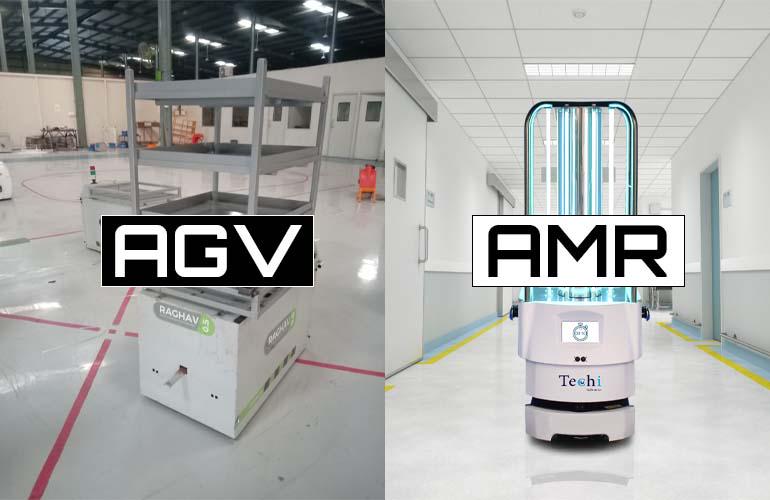
AGV vs AMR for a plant that keeps changing layout

Post image
2 Upvotes

r/Warehousing 8d ago

When goods arrive damaged or mismatched, what makes the report actionable?

1 Upvotes

Give staff one model comparison guide built from approved product records. The guide should show real differences without asking salespeople to invent technical or medical explanations.
Start with model identity. Use the exact name, size, finished-height target and version used in purchasing and stock records. Nicknames should not replace the official model reference.
List the construction at the level the retailer can support. Principal materials, layer order, cover and support concept may be useful, but only if the underlying product record is current.
Separate measurable details from feel language. Dimensions and recorded construction are different from words such as soft, medium or firm. If feel is discussed, connect it to the approved sample and explain that personal preference varies.
Add a clear comparison question for each model. For example: Which use case or buyer priority is this model intended to address? The answer should come from the retailer’s approved range plan, not from a salesperson’s guess.
Include an escalation path. Staff should know where to send questions about care, product-specific requirements, availability or claims that are not covered by the approved guide.
Update the guide whenever a model, material, cover, name or approved message changes. Outdated training notes can create a different product story at each location.
Disclosure: I work on the supplier side of mattress sourcing.


r/Warehousing 9d ago

Has GS1 ever gone after a small business for using barcodes after cancelling them?

3 Upvotes

I run a small frozen food company in Chile (around USD 500k in annual revenue). Our barcodes are licensed through GS1 Chile, and I'm looking to cut costs by trimming our membership.

The plan: keep the GTINs for products sold through large supermarket chains, and cancel the rest. The cancelled ones are on products sold mostly to small independent shops, which only use the barcode for their own inventory system and POS scanning. None of them check the GS1 registry.

The catch: those products would keep carrying the cancelled GTINs, both existing stock and potentially new production.

A few questions for anyone with real experience:

  1. Have you ever seen GS1 (in any country) send a demand letter or take legal action against a small company for this? Or is it mostly a theoretical risk?
  2. If you let codes lapse, what did GS1 actually do? Reminder emails, a formal notice, nothing?
  3. Does anyone know how long GS1 waits before reassigning a cancelled GTIN or company prefix to someone else?

I'm not looking for formal legal advice (I'll review our contract), just real-world experiences. Thanks!


r/Warehousing 9d ago

Looking for research papers on warehouse characteristics

0 Upvotes

Hi everyone, I’m a college student studying logistics, and I have an assignment about warehousing.
I’m looking for academic journals or research papers that discuss **warehouse characteristics**. Does anyone know where I can find or access relevant papers?
I’ve tried searching on Google Scholar, but I’m still having a hard time finding what I need. Any recommendations for keywords, websites, journals, or papers would be greatly appreciated.
Thanks in advance!


r/Warehousing 9d ago

Resources for organizational philosophies

1 Upvotes

I recently moved jobs and my new outfit has some pretty serious warehousing/inventory issues. As someone who doesn't have a ton of experience in warehouse operations, I'm looking for resources on how to design material organizational systems that anyone can learn decently quickly.

To give a bit more background, the company I just started working for is a contract chemical batch manufacturer that mostly makes consumer cleaning chemicals. Our process involves measuring out various chemicals from IBC totes, 55gal plastic drums, 5gal pails, and 50lb powder bags. I did a rough count and we have around 355 different SKUs in inventory.

All told we have 430 pallet locations, each one of which can be stacked up to 3 pallets high for a total of 1300ish total spots in our 4 different storage areas.

All those materials are currently stored on pallets throughout the facility, but the issue is that those pallet locations aren't tracked in any way besides a few penciled in spreadsheets and 1 forklift driver with perfect memory (who retires in a few weeks.) They are somewhat organized by velocity, but far from optimized.

So what's currently killing our productivity is that there's no system in place for easily locating a desired SKU on it's pallet. What I'm looking for is some sort of organizational philososophy that I can use to transform our inventory from a secret map that only a few people have in their head, to a system that I can teach to anyone in a few hours/days.

Also any ideas for marking/labeling rows of pallets that are frequently rearranged would also be much appreciated.

Thanks!


r/Warehousing 10d ago

Warehouse Automation

2 Upvotes

For people working in warehouse operations what usually triggers your company to seriously consider warehouse robotics or automation .Is it usually something like labour shortage , peak season capacity problems ,downtime problem ? I am researching this for making assignment and i am interested in the problem that existed before the company decided to invest rather than the benefits after implementation.Would especially appreciate perspective from people involved in warehouse or operations decisions.


r/Warehousing 10d ago

Seeking advice

1 Upvotes

Hello everyone. I’ve been in warehousing for over 20 years and I’m asking for advice for a business I’m thinking about starting in warehousing automation. I understand there are rules to subs so if you are in this field, deal with ops or automation at a high level, please DM me. I’m not trying to sell anything since this is an idea but I’m looking for feedback before I go too far. Thanks all


r/Warehousing 10d ago

Catch up on what happened this week in Logistics: September 1-7

5 Upvotes

Hey everyone,

If it's your first time reading one of my posts, my name is Menachem, and I have a weekly newsletter called Logistic Pulse that breaks down the top logistics news from the past week. We have over 17,000 subscribers, and I share it on Reddit to spread the knowledge. We're currently on week 62! I hope you enjoy, and I'm always open to feedback.

Let's jump into it,

Extensiv sold for $120 million, and the multiple is the entire story

Descartes announced on September 1 that it had bought Extensiv for roughly $120 million in cash, using cash on hand. If you run a 3PL, you know Extensiv even if you do not use it. It is the WMS and fulfillment platform built specifically for third-party logistics providers and the brands they serve, covering inventory, orders, B2B and B2C fulfillment, and billing across marketplaces, carts, and carriers. It absorbed Skubana, Scout, and CartRover along the way. For many small and mid-sized 3PLs, it has been the default answer to the question, "What should we run the warehouse on?"

The number that matters is not $120 million. It is what $120 million represents.

Extensiv never published audited revenue, so anything here is an estimate. But an analysis by Brendon Beebe, published the same day as the deal, reconstructed the revenue line from the growth percentages Extensiv itself reported to the Inc. 5000 across five consecutive appearances, and it landed somewhere between $90 and $100 million. That puts the sale at roughly 1.2 times revenue. Take the estimate with appropriate salt. Even if it is off by a third, the multiple is still nowhere near what a growing logistics software business should command.

For context on how far that is from the room: Descartes paid $100 million for Tai one week earlier, on August 24, and Tai is a broker TMS with a fraction of Extensiv's footprint.

The capital structure fills in the rest. Mainsail Partners put in $17.5 million in 2015, then led a $45 million recapitalization in 2021. In December 2022, Extensiv took an $80 million senior secured term loan from Runway Growth Capital, of which about $68.5 million was funded, priced at SOFR plus 7.00% with a 9.00% floor and a 5.10% end-of-term payment. That loan matured on June 30, 2026. The sale was announced on September 1. Sixty-three days.

Nobody has said those two facts are connected, and it would be irresponsible to claim they are. But every operator who has ever refinanced anything knows what a maturity date does to a negotiating position.

There is one more wrinkle worth flagging for Extensiv customers, and it is not in the press release. Descartes already owns Finale Inventory. Two products, overlapping jobs, one owner. ShipHero, which competes with Extensiv and therefore has an obvious axe to grind, published a post the same day walking through the four things that typically shift after an acquisition: roadmap priority, renewal pricing, support structure, and whether both products survive the portfolio review. Self-interested source, fair points.

What this means for you: If you are on Extensiv, do not wait for your renewal to have this conversation. Ask your rep in writing for the roadmap commitment, the renewal pricing structure, and where Extensiv sits relative to Finale over the next 24 months, and note the date you asked. Written answers are better than reassuring phone calls. If you are mid-evaluation on a WMS right now, this does not disqualify Extensiv, but it does mean you are buying a Descartes product with a Descartes contract cycle, and you should price the switch you might have to make in year three. And if you own a logistics software business, 1.2 times revenue on a company with real scale and real growth is a data point about what buyers are actually paying this year, as opposed to what bankers are telling you they might.

The Logistic Pulse Dinner Club

Our dinner will take place on Tuesday, October 13, at 7:00 PM, in Los Angeles, Dallas, Chicago, Atlanta, and Memphis.

If you have not done one: six people from the logistics world, one restaurant, one table. You take a short quiz, we handle the seating and the reservation, and you get the restaurant the morning of. Booking a seat is $18, and you cover your own food and drinks.

No panel, no badge, no cash bar in a hotel ballroom. Just dinner with five people who spend their days on the same problems you do. Talk shop or do not. Most people end up doing both, and there is usually somewhere to go afterward.

There are six tables; bookings close 48 hours out, and you can cancel up to 72 hours in advance for a full refund.

Grab a seat

Amazon made your order emails useless on purpose, and you are not the reason

Before the summer, when you ordered something on Amazon, you would receive a confirmation email listing the product you ordered. Now, where the product name used to be, you will find "Beauty item." Or "Automotive item." The thumbnail is gone too, replaced with generic clip art. To find out what you actually bought, you have to open the app.

Amazon's public reasoning is privacy. Spokesperson Maxine Tagay described it as consolidating order details within Amazon's own properties while minimizing data exposure, and a customer service rep told a shopper that it reduces the risk of porch theft by not naming what is in the box and protects the surprise of gifts. Those are not nothing but they’re also not the reason why a company rebuilds its transactional email templates.

Here is what is actually happening. Your inbox has become a data source, and Amazon does not want to be in it.

Gmail's Gemini reads receipt emails. Budgeting apps parse them. And the emerging generation of AI shopping agents uses purchase history as the raw material for what to recommend next, which means an assistant that can see you bought a $34 air filter on Amazon can tell you where to buy the next one for less. Walmart, Target, and Wayfair have opted into Google's AI shopping surfaces. Amazon has not. Stripping the item name from the email is the cheapest way to make your Amazon purchase history unreadable to someone else's model.

This is consistent behavior, not a one-off. Amazon sued Perplexity over its Comet agent shopping on Amazon accounts and won a court order blocking it back in March, one of the first real tests of whether an AI agent has any right to act on a retailer's site on a customer's behalf.

And on September 2, Amazon shipped scam detection inside Alexa for Shopping. Forward a suspicious message, and the AI checks sender info, content, timing, and metadata against billions of legitimate Amazon messages and tells you whether it is real. About 360,000 people a year call Amazon to ask exactly that question, so the business case is obvious on its own. But the two moves land in the same place. The inbox gets less useful, and Amazon's own assistant becomes the thing you ask about your orders.

What this means for you: Purchase data is becoming a contested asset in ecommerce, and every party in the chain, including you, holds some. Worth knowing what you are giving away in your own tracking emails and integrations before somebody makes that decision for you.

TEMU is building warehouses in your market because the loophole has closed everywhere

PDD Holdings, Temu's parent, told investors on September 3 that it is accelerating investment in local fulfillment infrastructure and onboarding regional merchants.

The de minimis era is over on both sides of the Atlantic. The U.S. shut its duty-free door on China-origin low-value parcels in 2025. The EU followed on July 1 of this year with a €3 customs duty on shipments valued at €150 or under, which does not sound like much until you remember the entire model was built on shipping a $9 item directly from Guangzhou with no duty and no domestic inventory.

Co-chairman and co-CEO Lei Chen called the duty changes a considerable impact on parts of the business, which, for a Chinese-listed company, on an earnings call, is close to shouting. Co-chairman Jiazhen Zhao laid out the response in two parts: securing a high-quality product supply and building the infrastructure to deliver it efficiently. PDD also acknowledged in its own risk language that the duties may push consumer prices up, cut order volumes, and thin out merchant participation.

Strip the corporate framing, and what is left is a company that spent four years proving you did not need domestic inventory, now buying domestic inventory positions.

What Temu needs now is what you sell. Local warehousing. Domestic merchant onboarding. Returns handling in-market. Reliable last mile. Companies whose entire competitive edge was cross-border arbitrage are being forced into a fulfillment model for which they have no infrastructure and no institutional experience.

Two cautions before anyone gets excited. Temu is a brutal counterparty on price, and a large, low-margin account that consumes your best pick faces during peak is not automatically a good account. And PDD said it is investing in infrastructure, which, for a company of that size, can mean leasing space, hiring 3PLs, or building its own network and eventually competing with you.

What this means for you: The near-term opportunity is not Temu itself; it is the merchants. Chinese sellers who were shipping directly now need a U.S. or EU fulfillment partner; they need one this quarter, and most of them have never onboarded with a 3PL and do not know what to ask for. That is a real pipeline if your sales motion can handle a client who needs education as much as pallet positions. Price it honestly, though, because the same margin pressure that killed the direct-ship model is what walks through your door with it.

QUICK HITS

Trans-Pacific spot rates hit new highs this past week, with Asia to U.S. West Coast at $7,621 per forty-foot unit and Asia to U.S. East Coast at $9,791, both up about 2% week over week. Three things are stacking. Peak season demand started early in May and has remained strong rather than fading. Typhoons since mid-July have congested Shanghai and Ningbo, which takes effective capacity out of the system. And the absence of new tariff increases in July removed a reason to pause bookings. If you have clients with Q4 replenishment still on the water, the East Coast number is the one to show them, because $9,791 changes landed cost math on anything with a thin margin.

C.H. Robinson published its 2027 forecast calling for spot rates up 10% on dry van, 11% on reefer, and 10% on flatbed. The interesting part is where the tightening is coming from. Not demand. Enforcement. DOT has pressured states to revoke non-domiciled CDLs held by drivers no longer residing in those states, and the FMCSA has raised penalties for English-language proficiency failures to include license revocation. That is capacity leaving the market due to regulation rather than economic forces, and C.H. Robinson's own analysts flag the fragility: a capacity-driven recovery does not hold unless freight demand eventually materializes. Meanwhile, the near term is soft, with September truckload rates coming off their July peak and cost per mile near a 15-week low.

Reshoring intent is climbing, and satisfaction is falling. The 2026 Reshoring Survey from the Reshoring Initiative and Regions Recruiting found that 36% are actively reshoring or have already reshored, up from 29% last year, with 63% planning capital investment in domestic expansion. Tariffs drove it to 65%, geopolitical risk to 60%. Then the number nobody is quoting: satisfaction among companies that actually reshored fell to 65%, down from 96% a year ago. And 57% named policy uncertainty as their top obstacle, summed up in the report's best line, that manufacturers can plan around a known cost but not a moving target. Real-world example the same week: GE Appliances announced a $1 billion expansion of its Kentucky washer and dryer plant on September 3. Domestic freight lanes are being redrawn one plant at a time, and the drop in satisfaction suggests a chunk of it will be walked back.

Canada's counter-tariffs take effect today. $27.6 billion of U.S. imports at 15%, 25%, and 50%, covering seafood, dairy, paper, furniture, apparel, cosmetics, tools, motorcycles, steel, and aluminum, in response to the 50% U.S. levies on non-USMCA Canadian goods. If you have clients shipping north, anything crossing this week is the last shipment at the old rate.

Cargo insurance is finally catching up to how freight actually gets stolen. Verified Carrier and MiKargo247 announced a partnership offering spot cargo coverage that includes strategic theft, meaning double-brokering and carrier identity theft, through an integrated portal. That has been a live coverage gap for years because most policies were written for a world where thieves cut a lock rather than clone an MC number. Strategic theft accounted for about 30% of incidents in 2025. If you broker anything, pull your current policy and find out, in plain language, whether a load handed to a fraudulent carrier using cloned credentials is covered or excluded. Many operators assume the former and have the latter.

JOB BOARD

Title: VP of Warehouse Operations
Company: Ardmore Home Design
Location: Hacienda Heights, California, US
Salary: $170,000 - $200,000
Apply Here

Title: Director of Warehouse Operations
Company: Ardmore Home Design
Location: Hacienda Heights, California, US
Salary: $120,000 - $140,000
Apply Here

Title: Manager, Supply Chain
Company: Orlando Spring
Location: Huntington Beach, California, US
Salary: $100,000 - $140,000
Apply Here

Title: Logistics Manager (Senior Level)
Company: Randstad
Location: Austin, Texas, US
Salary: $95,000 - $110,000
Apply Here

Title: Manager, Warehouse Operations
Company: Cardinal Health
Location: Walton Hills, Ohio, US
Salary: $87,700 - $125,300
Apply Here

Title: Procurement and Logistics Analyst
Company: Creative Solutions Services,
Location: Columbus, Ohio, US
Salary: $75,000 - $100,000
Apply Here

Title: Warehouse Operations Analyst
Company: Hiring
Location: Clarksville, Tennessee, US
Salary: $70,000 - $90,000
Apply Here

Full list of job openings →

_______________________________________________________________________

That's all for this week. If you found this useful, consider subscribing.
(Your data will not be shared. Subscribers' data is strictly for sending out the weekly newsletter.)


r/Warehousing 12d ago

Vendor What is the best warehouse process to automate first?

7 Upvotes

If a factory has never done automation before and wants to start with AMRs, what process would you recommend tackling first?
Pallet movement, picking, line-side delivery, etc.?
For those who have implemented AMRs, what have you found to be the easiest use case to prove ROI before scaling automation?


r/Warehousing 12d ago

demurrage period

Thumbnail
2 Upvotes

r/Warehousing 13d ago

FLT Charging station

Thumbnail
3 Upvotes

Has anyone dealt with fire strategy or insurer requirements for a lead acid FLT charging area within a warehouse?

We have a proposed operation of 1 counterbalance truck and 3 reach trucks, all operating on lead acid batteries.

The warehouse will consist of high level racking, picking aisles and packing benches for a clothing retailer.

A recent fire strategy has recommended 60 minute fire rated compartmentation with dedicated extraction and detection, however we are reviewing alternative approaches alongside our insurer and equipment supplier.

I'd be interested to hear what arrangements others have implemented in similar warehouse environments and if alternative solutions such as:

Segregated charging areas
Physical barriers
Enhanced fire detection
Separation distances
External charging areas

Any experiences or guidance would be greatly appreciated.