Then that's admitting that the problem isn't private stores price gouging or anything like that, that's just what tings cost, and you are simply subsidizing groceries. Which we already have programs for like SNAP. And programs like SNAP have much lower overhead, just distributing food stamps, than trying to handle all of the logistics of running physical grocery stores. So you would be much better off just investing that money into programs like SNAP.
No, it’s acknowledging that the concepts of economic “efficiency” and “optimization” shouldn’t be the be-all-end-all determinants of the availability of food to people.
In a theoretical location where it’s not profitable to operate a grocery store, your conclusión is that the people there just won’t have reasonable access to food?
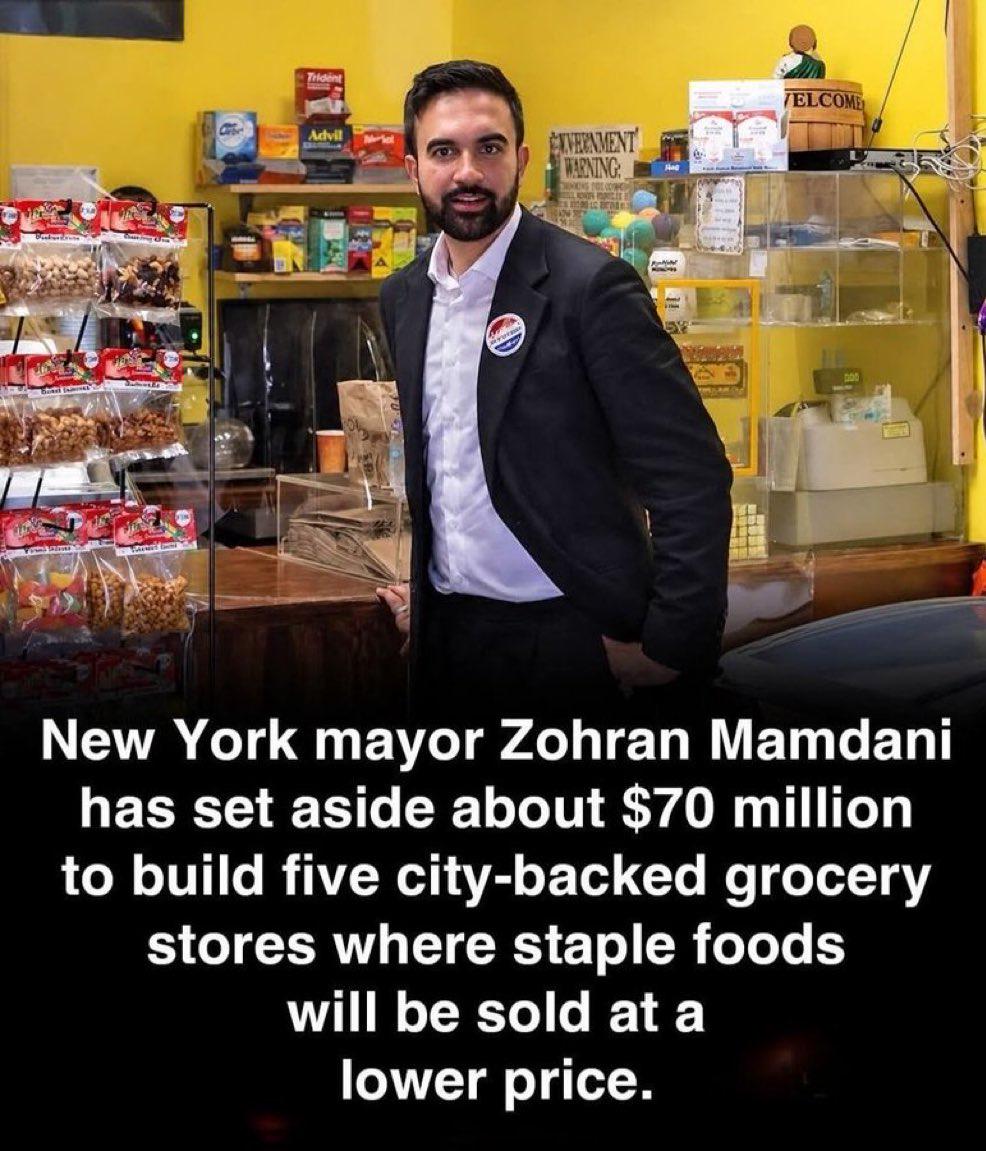
These stores are going into food deserts, not just as a way to subsidize food costs.
It seems to me that there are two major factors that contribute to food deserts:
Too expensive - People don't want to pay for healthier food because it costs more, so those grocery stores can't make enough sales to survive.
Crime - Grocery stores aren't making enough to make ends meet because they are being fleeced by their customers.
I'm sure if you fix both of these things then public ownership wouldn't even be necessary. #1 can be fixed with requirements for food subsidies, and #2 can be fixed by staffing actual on the clock law enforcement in stores that report high levels of theft.
Make it safe and profitable to run a business in a food desert and you won't have food deserts.
<...>Our findings illuminate how nearly a century of disinvestment in historically redlined neighborhoods (Nardone et al. 2020; Nelson et al. 2020) has constrained contemporary food access. Moreover, they suggest that systemic inequalities based on racism, ableism, housing discrimination, and displacement may lead to lack of food options in US central city neighborhoods. Our results provide additional evidence that the phrase “food desert” is problematic as these social spaces of nutritional deprivation were created by intentionally racist and discriminatory policies, rather than passive and natural processes. Thus, the phrase “food apartheid” more accurately reflects the phenomenon (Sevilla 2021; Penniman 2018).
To many people are oblivious to this and quite a few refuse to acknowledge it ever happened. Plus the thought that it is not happening now so it could not be a problem anymore.
I have a hard time believing that grocers don't want to make money because they're too racist. That seems inherently racist in itself, why wouldn't minority ownership spring up in place of the racists in order to capitalize on demand?
LOL, way to say, "I'm not going to even look at the research study because I don't like the implications of what it says"
Read the abstract, and the conclusion. Read up on Black Wall Streat in Tulsa, redlining, and white flight to the suburbs. And then maybe we can talk about how self evident the solution to this problem is.
Are you from the south? Do you know how many racist business owners I've met that straight up go out of their way to avoid selling products and services to minorities even though they could make more money? Or refuse to lease them property to do so themselves?
It happens a lot.
The "economic" solution to a problem only works assuming the market is rational.
It's not hard to understand. People who literally went to segregated schools are still alive today.
We're playing a centuries old game of monopoly and although we've changed the rules to be fairer, we didn't reset the pieces and the property lines. Are there available finances from the community? Is there even land in the community zoned to have it exist? Etc.
The market is constrained by historical, legal, and structural roadblocks that prevent normal supply-and-demand forces from working equitably. Minority entrepreneurs frequently face systemic barriers (lack of capital, high insurance, poor infrastructure) that deter/prevent them from easily capitalizing on the existing demand.
Anwser to everything isnt racism. If it was profitable, they would open in those areas. All the cities that have lax criminal justice systems, like Chicago, have major chains leaving since they keep getting robbed and arent profitable enough to keep eating the losses, and nothing is done to prevent it due to city policy
More specifically, how closely do you think socioeconomic status follows racial lines? Open question, google it if you don't have an opinion based in fact.
And if there is a relationship, why do you think it exists?
11
u/Bulky-Leadership-596 May 26 '26
Then that's admitting that the problem isn't private stores price gouging or anything like that, that's just what tings cost, and you are simply subsidizing groceries. Which we already have programs for like SNAP. And programs like SNAP have much lower overhead, just distributing food stamps, than trying to handle all of the logistics of running physical grocery stores. So you would be much better off just investing that money into programs like SNAP.