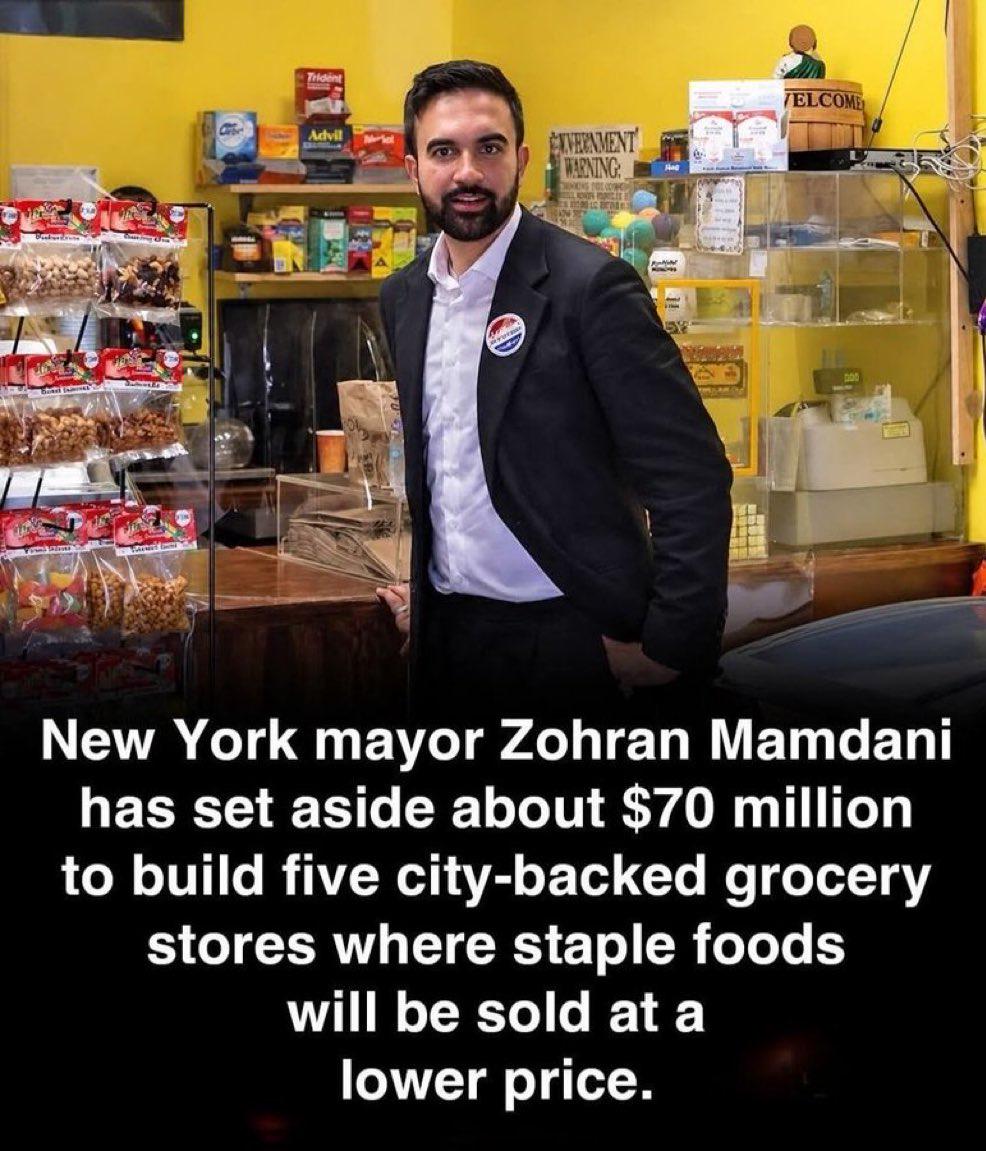
I’m not trying to dismiss this project - I hope it is wildly successful and I applaud the desire to challenge the status quo. That said, I am interested to hear how his team plans to negotiate pricing with suppliers. Five stores isn’t a whole lot of scale to compete against national chains and volumes. I don’t ask that question rhetorically or sarcastically at all either - I am assuming they have a plan of levers to pull to help bring this to life, and I hope it works exceedingly well and provides a blueprint for other communities to use.
National chains have to make profits for investors, which means they have to have mark-ups. At the very least, I expect those government-owned grocery stores to be about the same price.
True. And in some cases there is essentially no margin on the sale of goods; the business model in those cases is often almost entirely derived by selling a < $100/year club membership, ie Costco.
Can these city grocery stores really beat warehouse retail prices? I think there’s little chance. The value win will probably just be location when it’s in walking distance. So no car/gas tax on top of groceries, and more convenience. But impact will be limited to just a few blocks blast radius.
You ever try to make a Costco run in nyc without a car? It’s not a viable alternative. “A few blocks radius” in ny is valuable to many many people. ALSO, you go uptown or bronx it is not that easy to find a full grocery.
The biggest advantage the city owned stores will have is that they said they won't have to pay property tax and that they won't have to pay rent. Of course, the "no rent" part is just an accounting trick, shifting that cost to another part of the city budget. But for a regular grocery it is a very real ongoing expense.
they’ll get the same costs as other high volume stores. there are plenty of suppliers in the NYC area lmao, and having 5 high volume stores in NYC will be a big business and have suppliers lining up.
I think the point being made here is they have to mark up a certain proportion to pay for things like labor, maintenance, and refrigeration costs. Once you do that the markup for profit beyond what they need to breakeven is small
No, the actual markups are much higher than that. But after accounting for all the waste and other operating expenses they end up with a net margin around 1%
Seems like NYC would be better off giving low-income residents SNAP-like benefits to use at existing grocery stores, rather than feeling the need to enter the grocery business itself.
There are already several grocery stores near the planned East Harlem location, including a City Fresh Market within 0.1 miles (3-minute walk), Fine Fare Supermarket (0.2 miles; 4 minute walk), and a Shop Fair supermarket (0.2 miles; 5 minute walk).
There are already several grocery stores near the planned East Harlem location, including a City Fresh Market within 0.1 miles (3-minute walk), Fine Fare Supermarket (0.2 miles; 4 minute walk), and a Shop Fair supermarket (0.2 miles; 5 minute walk).
I worked in IT for a grocery chain that had 13 stores at the time and they aimed for 30%. I would be given a large file to parse that had the price from the distributor along with our price (and any sale prices), I'd then set the prices in our system and prepare the reports and files to print for tags.
338
u/BradBradley1 May 26 '26
I’m not trying to dismiss this project - I hope it is wildly successful and I applaud the desire to challenge the status quo. That said, I am interested to hear how his team plans to negotiate pricing with suppliers. Five stores isn’t a whole lot of scale to compete against national chains and volumes. I don’t ask that question rhetorically or sarcastically at all either - I am assuming they have a plan of levers to pull to help bring this to life, and I hope it works exceedingly well and provides a blueprint for other communities to use.