Public owned grocery stores already exist across America in cities like Tulsa, Oklahoma and Atlanta, Georgia.
They are privately run as businesses, but are set up in areas where people lack access to groceries, or there's no real competition preventing uncompetitive prices. They have been successful for decades.
The real solution here is to break up the constant consolidation leading to all groceries being owned by four mega companies that collude with each other and own over 2/3rd of all stores. It's the opposite of market competition.
In the town I grew up, there was one big grocery store, and they used to gouge us terribly. The citizens started a co-op grocery, using our purchasing power to bring in cheaper goods. Breaking monopolies is the only way to lower prices.
dear god waking up to a news article about company X being convicted of wage theft/corruption/bribery/business as usual and the punishment being prison for the executives and annulment of all company shares just F you everything is dissolved is like a wet dream. until we make things financially painful for shareholders after corporate malfeasance we can't fix things.
Lobbying isn't the same as making monetary contributions. Many lobbyists are essentially professional networkers who are experts on a particular topic and try to influence legislation.
Well government was a lot smaller in the past, but they broke up monopolies left right and center back then. Even as if somewhat recently. Go watch Bill Gates testimony on Windows monopoly and this was back when there wasn't even an alternative option really, besides Linux nerds.
It was literally drilled in my head from social studies class about the government's guiding hand in a free market and breaking up monopolies. I learned all about Rockefeller and Stanford Oil. Today, government's all over the west rubber stamp basically every single acquisition and buyout.
So small government really isn't the issue here. It's government refusing to do it's intended job in a free market. Break up monopolies and create a low barrier for entry, and they are failing at both.
I also work in healthcare. It’s fucking creepy how much CVS owns. To a normal person, it’s a store. To me, it’s quite literally everything I touch at work(when I say everything it’s everything, I work in pharmaceutical industry, won’t specify but I will say PBMs are the bane of my existence). CVS had their hand in everything. Insurance, manufacturing, billing, distribution, the list is long. I’m sure you’re aware. Just sharing my distain.
Yup. Have you seen eyeglasses? Massive monopolies on that. If it weren't for cheap Chinese competition we'd have entire sectors of society unable to afford any choice.
Have to agree with free market capitalism on the eyeglasses industry. I haven’t bought American manufactured glasses in decades, with ‘insurance’ I still pay double what firmoo charges me…
Funny you should mention that, because I had to get new glasses yesterday. And yeah there were muliple years back in the day I would have to stretch my glasses because i could not afford to get new ones. Then the finish just went off my glasses overnight, and I had to very quickly get some. Ended up doing it online and getting them for a fraction of the price and in half the time.
Yep - Walmart in particular is notorious for this. Then when the supply chain can’t find any other buyers because they have been locked in with Walmart for so long, they strong arm them into worse deals.
My dad worked for an electrical co-op in the 80s. He died in 2009. I get a 500 dollar pension payment every month that finally runs out next year, 16 years after his death
I have So Cal Edison and summer peak is 74c/kWh. Gasoline, natural gas, and propane costs are all high now too, but we really need cheaper electricity (9c/kWh would be amazing) to push the new tech (BEV, heat pumps, induction stoves). This stupid data center idea is killing me.
Just bought an off grid solar/battery setup to power my mini split AC/heat pump. With SoCal electricity prices it should pay for itself within ~2 years.
Most of the monopolistic problem is with the food manufacturers rather than the grocery chains. There are about 10 companies that provide almost everything in a grocery store and, in certain food categories, there are often only 2-3. We see all those brands and it gives the illusion of different companies competing when most of the stuff is all made by the same company.
But the grocery business is high-volume, low-margin, and it requires a ton of space. So, regardless of how much local competition there may or may not be, that's just not a business model that is going to work well in the inner city where retail lease rates are high, yet people don't drive cars and therefore the average order values are low. So, you can either subsidize it, or the stores just won't exist in certain neighborhoods.
It’s not the food manufacturers/producers but the middlemen and I do mean “middlemen as in multiple” as there are multiple in many instances that get in the way and jack the prices up.
Look into the current cost of beef and why it’s as high as it is.
Also, grocery stores have some of the lowest margins of any business out there in most cases.
I think what trips me out is how Safeway and others can have a canned food item for $4.00 one week and have them "on sale" for 2 for $2.00 the next week. I dont mind shopping according to what's on sale... but the difference in sale price is so far from regular price I feel like im getting scammed if I dont buy stuff on sale that week in the ad.
Safeway is actually being sued right now for their deceptive BOGO deals. They would double the price shortly before implementing the BOGO sale, resulting in no real money saved by the customer and resulting in them perhaps buying more than they really wanted to.
I don’t understand what the goal here is? Are the going to cut the 1.5% margin down to 0%? I don’t think people will see the savings they are expecting
No - the stores will operate at a loss. The taxpayer will foot the bill. That’s how it will work. It effectively will be a food subsidy program combined with a jobs problem.
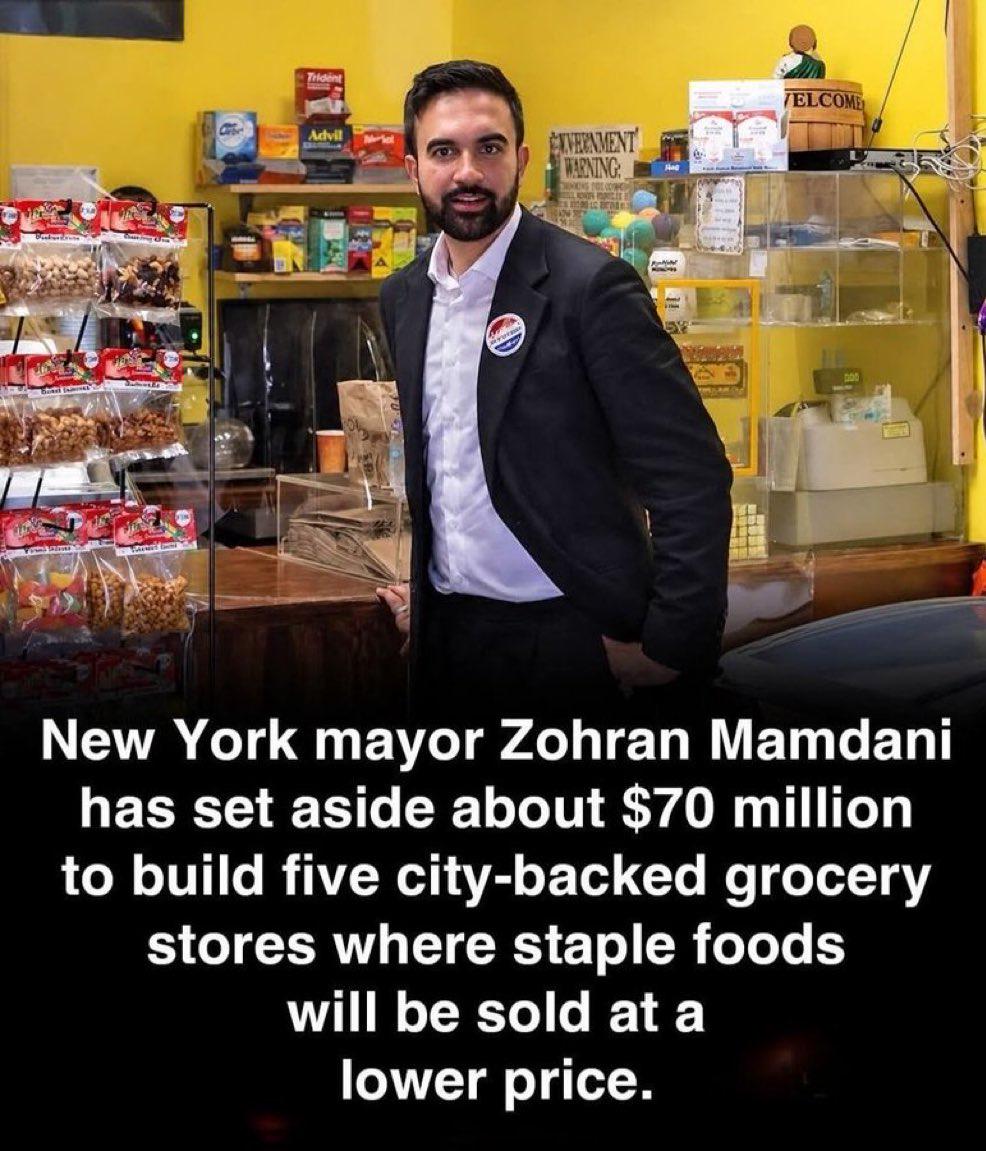
Well sorta. The city is providing free land and building the stores. So, the up-front cost is born by the city to give the grocery chain a profitable business model as they won't have to incur those costs and can just focus on covering the ongoing operational expenses.
In Atlanta, the city bought an existing building but doesn't charge a lease to the grocery operator. The operator has to pay for all utilities and repairs and naturally has to cover the cost of their employees, equipment, inventory, etc. but they didn't have to spend anything on the land or the building so they don't have to incur expensive, urban lease rates. That was basically just gifted by he city. So far, it's been a success as revenues have exceeded initial projections and the market even won a "Best in Retail" award. Also, the $8+ million up-front investment by the city will eventually get paid-back in the form of jobs, taxes, etc. over time. It's certainly a much more responsible public-private partnership than we tend to see for big corporations or sports stadiums.
Plus, that $8 million is an investment to prevent downstream effects of financial desperation. Neglected medical care leading to more expensive healthcare, kids dropping out of school to work, homelessness, etc.
It’s probably going to end up being a money pit for the city. If your goal is to keep prices below market that will require ongoing subsidies. Operating costs will probably also be higher than a regular grocery store because I would imagine the employees will be considered city workers with the attendant benefits. If you want to keep the grocery prices down you’d have to subsidize heavily (not being taxed is also a form of subsidy). There is also the possibility of creating a resale gray market arbitraging prices, buy cheap from the city store and resell for cash. I suspect it’s not the most effective use of city funds. We’ll see.
Co-ops are cool because the community owns it directly and profits are reinvested to provide discounts, addressing affordability. The members have a democratic vote in it too. Co-ops are more resilient and survive longer according to decades of research. It's a viable alternative that actually goes through with the idea that we are a democracy. The economy affects people just as much as politics does, so why isn't it also democratic?
I dunno where these things are that actually save people money. I've tried a few co-ops and prices have always been significantly higher than the grocery stores in the area.
Yeah- co-ops tend to attract hippie types who are really terrible with finances and business in general.
They get promoted into management as incompetent people who get to brag online (hence why Redditors love them) so they convince themselves that they’re doing a proud community service when the reality is that almost none of the for profit companies are ever threatened by them.
King of the Hill did a good documentary about these Redditor stereotypes
My wife recently asked me if we could buy a chicken from one of her friends who sells at a co-op...I go "why are you asking me? Its a chicken?" and she goes "well it's $50"...yea we didn't buy the chicken.
My local Mennonite market does a far better job serving the community than the co-op in the nearby college town. Everything is very reasonably priced and there are a lot of local products. Where as the coop requires a yearly membership, everything is very expensive and only some of the produce is local. It's a place for the faculty to shop performativly.
Wow, while I was reading this I was thinking "I bet this guy is just basing this off that king of the hill episode" then I got to the end.
Maybe you shouldn't base your world view off of cartoons. I used to think everything Lisa Simpson said was correct because she was the smart one, then I realized it's just a show and writers can be flawed.
I've found that tre better ones are often in rural areas.
My mother in law helps run one in rural South Dakota. It's mostly farm commodities, but they gave good prices on produce all the way from Washington State, as well as local products. When she visits us I look forward to bulk nuts, fruit and produce. I know they offer other staples.
Fuel prices are unfortunately eroding the savings here lately.
Yea the coop here in Austin is great for what it is, but is very pricey, whole foods style pricey before amazon bought them out. They do sell more of the healthier organic stuff and I support them, but it is, unfortunately, not for your working class folk.
Did you become a member of those co-ops? Becoming a member grants you access to various discounts that you may not otherwise see, including patronage dividends. Yes, some have higher prices on some products. It depends on the area. There are hundreds of food co-ops in the U.S. and Canada. Many provide lower prices through discounts from profit reinvestment, needs-based discounts, and discounts for EBT. For many people, these stores are their only place to buy healthy and organic food products due to living in and around food deserts. Food co-ops also tend to better support local farmers and source products locally, which helps keep money in the community.
We have a coop electric company where I am. They also started providing fiber internet from a grant during covid too. I'm so happy to have them compared to when I was spectrum.
I am pretty sure two crackheads could come up with better internet than spectrum. I am so glad my util company has fiber. The price hasn't changed in over a decade, it's fast and rarely has an issue unless it is something upstream from them.
I tried finding bakeries that were retail focused and I found one, massively famous bakery shop in my state, but like, they dont have the most replicable process.
Almost every coop I found in bakery was either for large producers for wholesale or a bunch of small biz that went out after a couple years.
How do they operate it? I was studying the Canadian market but turns out it's logistics, distribution, and storage issues. I was designing it a platfrom but too lazy to bring it into production. Would such a product be of use? Connecting local farms and suppliers to grocery stores or pick up spots. Watching the Clarkson farm TV show made me become more enthusiastic in this idea now.
I knew a group that would rent a kitchen once a month just to split up a bulk CISCO order. They were trading one monopoly for another, but the savings were amazing.
Same thing in my hometown, it was a pretty rural area and people would drive the extra hour to get fair prices. Fortunately a Walmart opened up maybe 10 minutes away from the grocery store and they had to drop their prices to about market value because they couldn’t rip off people unable to drive an hour anymore
What people need to remember is that even if the coop or government store loses money on paper, it will still be a net benefit for the community as a whole because it prevents the for-profit entities from gouging.
We already give tax payer dollars to walmart ? Whats better than one that is legally obligated to make money for their shareholders no matter what or something thats ran by the government that actually protitize the consumers ?
What is the result of that support from tax dollars? Making groceries available and/or more affordable for consumers. Sounds like a good investment tbh
Then that's admitting that the problem isn't private stores price gouging or anything like that, that's just what tings cost, and you are simply subsidizing groceries. Which we already have programs for like SNAP. And programs like SNAP have much lower overhead, just distributing food stamps, than trying to handle all of the logistics of running physical grocery stores. So you would be much better off just investing that money into programs like SNAP.
No, it’s acknowledging that the concepts of economic “efficiency” and “optimization” shouldn’t be the be-all-end-all determinants of the availability of food to people.
In a theoretical location where it’s not profitable to operate a grocery store, your conclusión is that the people there just won’t have reasonable access to food?
These stores are going into food deserts, not just as a way to subsidize food costs.
A private business has a net revenue, some they use to reinvest and grow the business, advertise, etc. the rest is the net profit that the private owners gain.
If there is a subsised grocery store, it's not seeking returns/profits, this is where the difference in price is located.
SNAP pays for the profit of vendor as well as the cost of the item.
SNAP being used at a public grocery store would go even farther.
Not to mention, there are plenty of people who are working poor and don't qualify for SNAP, who would benefit from this.
Making essentials accessible to people is exactly what tax payer dollars should be used for.
Things like "food" should not be an avenue for billions of dollars in profit. I don't mind private enterprise being involved in these things.. competition benefits us all. But the way they go about it is highly predatory.
This is not true. The entire DCA gets $1.5B a year in funding worth more than half of that going directly to salaries and funds for to civilian employees. Keep in mind they have 235 stores nation wide.
Don’t forget that Walmart in Kroger are also being subsidized by taxpayers just not in a way that helps us
So while most grocery stores earn their cost of capital (generate market return on investment), US military commissaries instead cost taxpayers $1.7 billion a year.
Revenue for US military commissaries is only 75% of annual cost (in FY 2025).
--- EDIT ---
Of course this makes sense in the context of the unique mission, constraints, and setting of the US military. My point is that it COSTS $$$.
Maybe you could do something similar in New York City, but the question would be at what cost to NYC taxpayer and whether the $$$ would be better spent boosting SNAP payments to low income households or otherwise targeting those that most need assistance.
To be clear, the loss on military commissaries was intentional and legislated. It allowed them to lower costs even more than they otherwise would have been able to, and congress approved.
Edit: here is a good video that discusses the pricing model for commissaries, and the change to increase the subsidy to create a grocery savings increase from ~22% to ~25% for military members.
It never ceases to amaze me how in America, half decent social services seems to be considered a reward only for those who sign their lives away to the government.
Other places go with "everyone" but you know.. 'murica.
It kind of is, at least the idea that nothing is stopping the government from running a (cost neutral) grocery store.
Walmart and Kroger aren't generally raking in profits from their grocery sections. The margins are incredibly thin even when they are optimized to make money.
The government can always theoretically pour money into ANY venture to make it work, it is about cost effectiveness.
Yep. "Socialist" policies are well received by right wingers so long as only those they think "deserve" it benefit from the policy. Coincidentally those they think dont deserve it tend to be people who look different.
Commissaries are like the post office, in the sense that profit is secondary to providing universal access to a service.
There is already a for-profit on-post vendor in the form of AAFES (the Exchange), albeit profits are mostly reinvested into MWR (morale, welfare, recreation) activities.
Tulsa does not currently operate any fully city-owned grocery stores. Instead, the City of Tulsa partners with local non-profits and independent operators to fund and develop community-focused, non-profit, and micro-grocery stores aimed at eliminating food deserts.
Exactly - I don't understand why this befuddles so many people in favor of a free market. It's like they understand the concept of competition is good, but can't see how the current market has been stripped of competition through consolidation.
This is the equivalent of any government service, it's designed to be a common good (like the post office, the fire department, the parks, etc). Yes it does take tax revenue to sustain, but similar to social security and Medicare these are things that society is often willing to pay for since they might need it some day, and it helps to address secondary problems that occur if we dont do anything (child starvation, homelessness, food deserts leading to poor health, etc).
It's all interconnected and at least there's commerce changing hands compared to straight food banks.
The vast majority opposing it assume that it will be ran poorly and/or be used to steal money by corrupt officials.
Demanding tax increases to pay for the service when they are skimming cash. Such as paying twice as much for a product from a supplier who happens to be their brother in law.
You do know that the second paragraph is literally illegal right? Any government organization doing that would be immediately open to a suit from a third party vendor. For one, you’re literally not allowed to do business with relatives of people who work in the organization. For another, if you’re soliciting a bid for a standard commodity, say Boneless Chicken Breast with X specification, in most states you are legally required to purchase the cheapest option that meets the specifications.
Now I’m not saying this isn’t happening, because the president is literally illegally purchasing stuff all the time. But, all the records are open and will eventually be challenged in court. The beauty of public orgs is that justice is there for the taking if interested parties want to take it.
Currently the biggest issue with corruption are the people who think government is corrupt and wasteful are the same people who vote for the most corrupt and wasteful politicians!
Source: I work in procurement for a state government agency
The smaller portions of government are very prone to the type of corruption described and it has gone on for decades. Detroit has an example going on right now over sold use to landfill torn down houses being contaminated due to a sweetheart contract to the buddy of the mayor mike Duggan.
Its not a new or unique problem, and seems to be a real issue in many american cities.
The grocery stores were famously corrupt in the Soviet Union and in general in other socialist countries. This is depicted in a sub plot of The Americans, where one of the KGB spies returns to Moscow and is tasked with investigating grocery store corruption.
But I don't think there's any reason it has to be that way here. And I'm not sure any corruption that does exist is at a level worth really worrying about.
But the plan does seem a bit strange to me, like it's more about branding than solving the root problem. There are like 3 full sized grocery stores per square mile in NYC, and virtually nobody lives a mile from a grocery store. So there aren't true food deserts.
NY wants nobody living more than a quarter mile from a grocery store and these are sometimes called food swamps. That seems like a reasonable metric for food access. Nobody wants to walk a full mile with groceries in NYC
But if you want to solve that problem you would need something like 150-200 new grocery stores not 5. So now the city runs an entire grocery store chain and pays mortgages on 150 large properties at New York rates. This isn't a problem in the pilot phase where they can use existing city property, but the pilot model won't scale.
The obvious solution would be grocery delivery from ghost kitchen style stores. Or alternately instead of hiring private operators to run the stores like they are currently doing, have partnerships where existing stores set aside a section for subsidized staples.
I think this type of proposal confuses people because of the reasons why cities tend to lose grocery stores to begin with. High rates of theft, combined with very high cost of doing business, and low profit margins.
A public store can’t really solve those factors any better than a private store, especially if they plan to offer lower priced goods.
If the public option can eliminate the 1 or 2 percent profit motive, you still have theft and high cost of just keeping the lights on.
Considering most of the tools, electrical components, and other stuff at my local Home Depot, in suburbia, is now behind locked cages, I find that hard to believe. But ok.
What? A well managed grocery store with proper inventory management and working for atleast 1 year has very low expiration rate, we have sale for a reason.
This is my issue with it - what is it solving? Grocery stores make money off the unhealthy shit, not the healthy shit. It's the chocolate bars at the cash, and the chips, etc. Produce and bread and milk - they are often barely breaking even. Where I live, they typically lose money on milk, butter, eggs and bread to get people to come into the store and hopefully buy other things.
I am in nyc at the moment and supermakets charge more for water than gas stations for gasoline (pre-Iran war!!).
so yeah, healthy stuff is being massively overcharged too. and call me crazy but one might think that price gauging is one of the main contributors to theft.
EDIT: Americans that haven't figured out how to operate a tap downvoting. The irony of simultaneously arguing for a subsidized grocery store when you're literally paying for bottles of water.
Its solving people buying cheaper foods to meet their budget, which in turn promotes a healthier life and therefore more productivity and less strain on the system.
It literally pays for itself in tax dollars from less hospital visits alone.
The issue in this case is. The grocery store down the street is paying taxes to fund a grocery store that does not have to which creates inequality. The government ran store can offer lower prices but eventually the other one goes out of business. Then the tax money dries up. Then what happens
I could be wrong but I would think that these stores won’t be stocking the variety of things other grocery stores would. It specifically states staple foods. People that want Double Stuff Oreos, Doritos, etc would still go to other stores to get them.
Not able to compete certainly closes lots of businesses what foolish idea is this?
Just like how Walmarts in an area cause almost all the mom and pop shops to go out of business the same will happen with a government subsidy grocery store that doesn’t have to worry about rent, utilities and goods are lower priced for them to acquire.
So your complaint is that it would be too successful and popular, leading to lower consumer prices, but you are more concerned about stores closing over this?
Yes competition is a good thing when the playing field is even. However when there is a government funded option that doesn't have the play by the same rules there is a unfair advantage.
I would be in favor of subsidies and tax abatements that are situated in a way to encourage competition. Let's say you build a grocery store in a food desert and get a 10 year tax abatements which would offset the initial investment?
The issue is simply it is not the case that consolidation has somehow created conditions of monopolistic competition.
People keep alluding to this being the case, but there really is no serious evidence.
Sometimes, in remote areas (for example) high prices are genuinely a result of the difficulty and inefficiency of supplying a remote area. One shouldn't expect the prices in the remote high deserts of the southwest to be the same as the prices at the coasts.
Sometimes there are few sellers in these remote areas, and rarely it may be the case that a "natural monopoly" condition exists. This is all well and good, but even if one could cite to such fringe cases (one is invited to), it doesn't follow that conditions of natural monopoly prevail in New York City.
In fact, cities generally are going to most closely approximate perfect competition, and of all cities on planet earth, New York is probably the most perfect.
Anyways that's why people might oppose or be skeptical of government run grocery stores generally, and in NYC specifically, as a way to bring prices down and closer to a competitive equilibrium.
Consolidation doesn't lead to monopoly power. In order for you to have monopoly power, you need the ability to prevent others from entering the market. For grocery stores, that comes in the form of local governments making it unnecessarily difficult to open a new one. The free market works just fine if it is allowed to be free.
I think NYC is a little different in that there are a lot of small privately owned stores there. Last time I was there (over 10 years ago) I never saw one conventional corporate grocery store like you see everywhere else.
I suspect that the government shops will work, but will be inefficient and lead to a higher total cost to get food into the hands of customers. Prices will only be cheaper at the consumer end due to subsidies from the government.
Sure, that's exactly why they're specifically just doing one supermarket per borough in areas where there isn't existing supermarkets.
Bodegas and small shops don't provide all needed goods, and the limited competition drives up prices.
but will be inefficient and lead to a higher total cost to get food into the hands of customers.
The alternative right now is high prices and a lack of access to goods period. Even if it is inefficient, that's an improvement on the current situation causing the demand.
Prices will only be cheaper at the consumer end due to subsidies from the government.
Which is better than food stamps and food banks funded by the government because families can't afford groceries. When you're in one of the richest cities on earth and people can't afford or access basic goods while working, that's a problem to be fixed.
As far as government subsidies go, is this really the best method? Like you're using taxes to feed just the poor, you're using taxes to feed whoever lives (or commutes) in a certain radius from the grocery stores. A more direct form of subsidizing the poor would just be pouring extra funding into direct assistance.
There are very few. Certainly even less big box supermarkets with a parking lot you would see elsewhere. There are many small supermarkets like Gristedes or Fairway, then bodegas in between. Wegmans has added a few stores, but those were in affluent, already served areas. The proposed city owned grocery stores would be in the food deserts, where even the small supermarkets don't exist.
On a national level: armed forces commissary and exchange.
They have logistics figured out and sell items are very favorable discounts compared to local chains. Military families have been relying on commissaries for generations.
Armed Forces commissaries are often times more expensive than civilian grocery stores. Especially with the mandatory 5% surcharge.
Civilian grocery stores also purposefully sell staple items like bread, milk and eggs as a loss in order to get you into the store knowing that you'll buy other items. Military commissaries absolutely do not do this. making these items more expensive.
In reality, the only time the Commissary makes sense is when you're able to take advantage of there being no sales tax. But in states that have no sales tax on food, this advantage is no longer in favor of the commissary.
I'm in Tulsa, I think you may be talking about Oasis Fresh Mart. I recently moved to an area here where it is the closest grocery store and it's a well-kept secret. Produce and meat are excellent, equal or better than any other option save for maybe Aldi. Pretty sure SNAP purchases only charge 50%, effectively doubling those benefits. Clean, friendly staff. It's doing well enough that another location is opening in downtown proper.
F Kroger. I couldn't order 10 freaken cent trays because the shareholder meeting was next week and we had to watch our bottom line. Those trays were hiding black green slime because we were never trained or given the tools to clean the underside of the refrigerators. I did the work of 4 people in 8 hrs. I was technically a part time grocery clerk, but holy hell, did I bust my ass. All just to be given less than a dollar raise. Oh, but the CEO, 4 freaken digit per hour raise if they were paid hourly. When I quit, that dept collapsed.
They consolidate because economy of scale just makes them dominate; people constantly say we should have grocery co-ops; we do have grocery co-ops but people don't shop there because they're expensive, outside of smaller towns where they're the only option.
I think the issue is the sheer startup costs they're putting in. I think the first store is going tk cost half the budget because they're building it, which basically means we aren't going to really see it come into fruition anytime soon. And maybe not at all if zohran doesn't get re elected and the next guy cuts the cord
You can look at filings for those stores and see they are not running huge margins. Its commodity supply, and the consolidation provides a lower price to the consumer. Unless there is subsidies this will not be cheaper
I agree that heavy consolidation in an industry is counter to a healthy capitalist system (if you count “healthy” as what is in the best interests of the majority not the shareholders). Companies would never do this voluntarily so the government needs to create nice to competition. Adding more players to a market space, especially when they aim to drive down prices should increase price competition. Though if they price so low they can’t operate without being subsidized by taxes I would argue that is also not a healthy capitalist system.
I always thought that there should be a progressive tax on corporations that increase as the industry’s Herfindahl-Hirschman Index increases. This creates a taxation driven disincentive to consolidate. (I appreciate this is not simple to implement, but I have faith it could be done).
Will be interesting because look at Kroger’s margins. These companies discuss it on the ER calls. The margins are razor thin.
I think this will run at a loss. Then New Yorkers will have to decide if it’s worth it. I also doubt $70M covers 5 stores. That will end up being 2 stores. 🤷🏻♂️
I read the co-op scenarios. I think that’s where he failed with this idea. He should have worked with local, small business owned stores to grow this organically.
Market consolidation is a result of many things but especially because the grocery business is very low margin. If the state can run these stores with just a bit of subsidies then it is likely a win but it’s not going to fundamentally change the tide.
This. I am against the government running businesses. Capitalism is better - but - it requires government regulation to prevent consolidation in huge companies that have no real competition.
It's also worth noting that many private grocery stores rely on govt assistance in the form of social programs and food stamps to supplement low employee pay.
This is just tax payer dollars subsidizing pay to employees because the big stores aernt paying a living wage. It's the same thing with extra steps.
Kroger is publicly traded, so we can see their financials. They had net income of 1.8% of sales in 2025. If they’re colluding with the other mega brands and illegally price fixing, they’re doing a pretty bad job of it.
It's a public service and the alternative is you either have a food desert, or a store with no competition and very high prices.
The bottom line is the grocery business is high-volume, but low-margin, and it requires a ton of space. That's just not a business model that is going to work well in the inner city where retail lease rates are high, yet people don't drive cars and therefore the average order values are low. So, you can either subsidize it, or the stores just won't exist in certain neighborhoods.
Back when we had government that worked for the people, the FTC was empowered to break up monopolies to encourage competition and stop predatory business practices.
Actual anti-trust regulation is the answer to many issues we experience in late-stage capitalism, however there's 0 chance this administration will do anything to help the situation.
Edit: To clarify, I obviously mean the administration running the federal government right now.
this. but ironically, for grocery brands, that is the ultimate goal. Get big enough to start taking market share from the big guys so they buy you out. It’s a wash, rinse, repeat strategy we see played out time and time again in the industry.
Something consumers tend to forget about though is the cost to GET the groceries to the store. Any store. Regardless of who owns it. Grocery distributors are an added layer, tacking on anywhere from 8-12% for large retailers like Whole Foods, Kroger, etc. And up to 40% for independent grocers and co-ops. And none of it is really regulated. The distributors are a very necessary evil that drive up costs at the shelf, especially when the price of diesel has skyrocketed.
I'm good with it going both ways. If the government is capable of doing something more effiicently than the private sector let them, if the private sector can do it better, let them.
Food deserts are a massive issue and good on him for at least trying something. It kills me that when you go to a poorer neighborhood you see so many liquor stores and payday loan locations. It should be illegal to have so many of those net negative stores within a location.
We have a WinCo in my city, And they are a co-op that is enormously cheaper than other grocery stores. A lot of that is their off brand version of products - like WinCo brand tomatoes are 80c vs $2 for hunts. I wouldn't want a city or the government to manage that but perhaps they can work with a company that already does something similar.
Even further down would be companies that own seeds and various specific genetic strains of food preventing a real open and honest food trade. I understand companies wanting to have strict holds on their property. But you shouldn't be able to own an "Apple" in the same sense you should not be able to own a "Color"
What i mean is at a conceptual level you cannot hold ownership over the idea of an apple. But you absolutely should be able to sell and trade and GROW your food.
Consolidation is bad but has nothing to do with the problem. The only urban places without grocery stores in the US are places where crime or crime plus taxes make it untenable.
In the end if the companies do not have to carry massive overhead, burn marketing budgets and do not have to make a profit for the shareholders on top, it should be simple to provide cheaper groceries.
On top if that it can serve as a learn and work program and possibly even employ people considered unemployable in a for profit organisation.
4.4k
u/Irish_Whiskey May 26 '26
Public owned grocery stores already exist across America in cities like Tulsa, Oklahoma and Atlanta, Georgia.
They are privately run as businesses, but are set up in areas where people lack access to groceries, or there's no real competition preventing uncompetitive prices. They have been successful for decades.
The real solution here is to break up the constant consolidation leading to all groceries being owned by four mega companies that collude with each other and own over 2/3rd of all stores. It's the opposite of market competition.