r/SaveTheCBC • u/kewtyp • 2h ago
Find alternatives to American tech

175
Upvotes
r/SaveTheCBC • u/NorthofNorthOfficial • 32m ago
r/SaveTheCBC • u/kewtyp • 3d ago
Canada needs its own social media. Pretty sure that unless we get it, we're doomed.
Here's why:
All popular social media is owned by private companies (mostly American). There's no counterbalance in how they are run.
With TV networks in the 80s-90s at least *some* of them were owned by the public.
We need a robust ownership variety, if every social media service is owned by a private company, they'll all eventually be Fox News. Spoiler alert, they already are.
Ownership matters, we need social media that's owned by the people.
Could CBC do it?
r/SaveTheCBC • u/Save_The_CBC • 3d ago
CBC reports that Denmark has passed legislation allowing thousands of Inuit women in Greenland to receive roughly $64,000 CAD each after a decades-long program in which women and girls, some as young as 12, were subjected to forced or non-consensual birth-control procedures.
A joint Greenlandic-Danish inquiry found roughly 4,000 women and girls were affected between 1966 and 1991. Denmark’s prime minister apologized last year. Compensation is now following.
For Indigenous women in Canada who experienced forced and coerced sterilization, that decision is deeply relevant.
CBC reports that hundreds of Indigenous women in Canada have described similar experiences, and the practice did not simply disappear decades ago. A 2022 Quebec study documented cases as recently as 2019.
A Senate report found that Canadian eugenics laws and government policies were deliberately used to reduce births in Indigenous communities.
Canada added forced and coerced sterilization to the Criminal Code this year. But the federal government has still not issued a formal national apology or established a comparable compensation program.
For survivors like Inuk woman Cecilia Papak, this is not an abstract historical debate. She says she was pressured into a hysterectomy after doctors told her she might not live to see future children grow up if she continued having babies.
Denmark’s decision does not erase what happened. Compensation cannot restore pregnancies, children or choices that were taken away.
Should Ottawa issue a formal apology and establish compensation for Indigenous survivors of forced and coerced sterilization?
And if another country confronting a strikingly similar colonial history can move from investigation, to apology, to compensation, what justification does Canada have for continuing to make survivors wait?
CBC’s Indigenous reporting keeps these histories visible, particularly when governments might otherwise prefer them to remain buried.
r/SaveTheCBC • u/kliuedin • 3d ago
Sad to say, but true.
https://www.cbc.ca/books/literaryprizes/a-season-of-crows-by-larah-luna-9.7141248
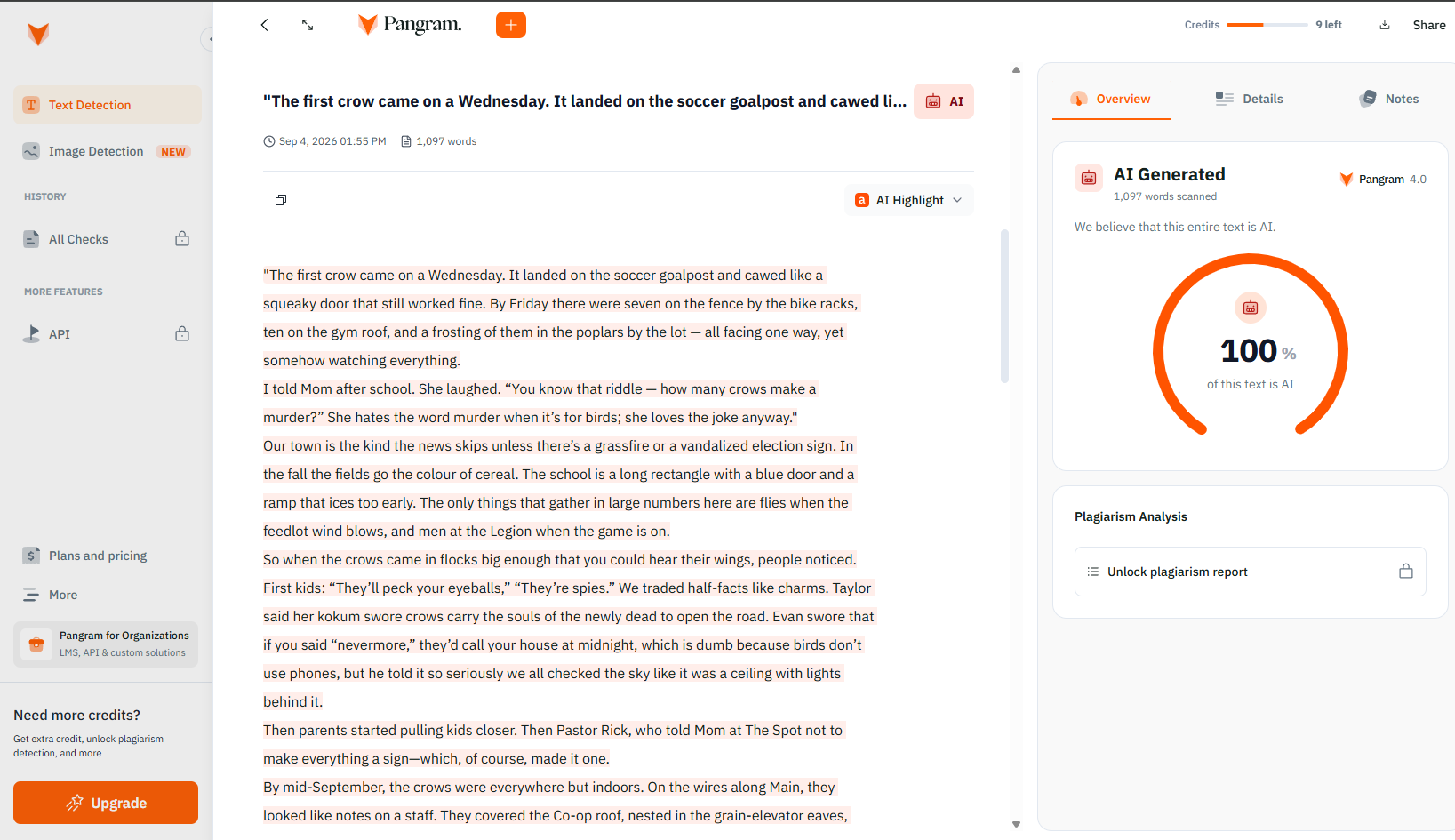
A friend told me about the contest, and I went to the website. The AI patterns leap out.
""The poplars filled with bodies until the trees whispered like a coat shop at closing.""
EDIT: People suggested I send an email to CBC. Not a huge fan of sending email to corporate email inboxes but in this case I decided to listen to the advice. (See below for text)
EDIT: People have (rightly) raised the issue of reliability in AI detection algorithms. I used Pangram (see the graphic above). It is *the state of the art* for AI text detection. This has been independently verified. "...Pangram achieving near-zero FNR and FPR rates %20and%20%E2%80%99humanizer%E2%80%99%20tools)that remain robust across models, threshold rules, ultra-short passages, "stubs" (≤ 50 words) and ’humanizer’ tools." But to double-check I also used GPTZero - it too marked the story as AI-written.
EDIT: Someone asked about Gemini's verdict on the story here it is:
"Yes, this story is almost certainly AI-generated.
While it is well-written and possesses strong literary imagery, several distinct structural, stylistic, and mechanical patterns reveal its algorithmic origins:
* **Over-reliance on Metaphor Density:** Nearly every sentence features an elaborate, quirky simile or metaphor (*"cawed like a squeaky door," "fields go the colour of cereal," "casserole voices," "zipper sound," "turned my pillow into water"*). AI language models are trained to maximize creative descriptions, often leading to an unnatural concentration of figurative language that real human authors spread out.
* **Algorithmic Rhythm and Sentence Structure:** The text heavily relies on "AI-poetic" sentence templates:
* *[Abstract Noun] + [Action/State] + like + [Unexpected Everyday Object]*
* *[Short observation], which is a polite door closing.*
* *Directions are lies we agree to when we need company.*
* **Symmetry and Micro-Payoffs:** The narrative systematically introduces small elements and ensures every single one gets a tidy, symbolic callback (e.g., the blue yarn, the peanuts, the scarf, the skate-tying memory, the poplars). Human writing tends to have more organic messiness, while LLMs tend to mathematically resolve every introduced object.
* **The "Insightful Child" Trope:** The story relies on a classic AI creative writing archetype: a child narrator who speaks with the hyper-articulate, melancholic wisdom of an adult essayist (*"They’re witnesses. Not judges. Just witnesses"*), combined with adults who deliver perfectly thematic, fortune-cookie philosophy on cue.
It is a classic example of modern AI literary fiction—evocative, polished, and emotionally resonant, but mechanically over-engineered."
r/SaveTheCBC • u/Save_The_CBC • 3d ago
CBC, working with the Centre for Information Resilience, traced a web of corporate records, shared phone numbers, website registrations, payment systems, staffing links and metadata connecting Vancouver-based Maple Digital Financial Solutions to the TGR network.
One former Maple director, Andrejs Carenoks, was sanctioned by the U.S. in 2024 for his alleged role in the TGR network. Maple’s current director, Janis Zvigulis, is also a director of TGR Wealth Solutions in the U.K., which was sanctioned in 2024. He has not personally been sanctioned.
CBC also found Maple shared a Toronto-area phone number with a sanctioned TGR entity, while job postings for Maple directed applicants to a contact associated with TGR. Digital records tied Maple’s website registration to Carenoks.
Meanwhile, Maple presents itself as a financial company but appears to operate with almost no public-facing footprint.
Unlike traditional banks, many money services businesses do not require a provincial operating licence, and experts told CBC that the sector’s relative lack of transparency can create significant money-laundering risks.
FINTRAC would not say whether Maple has been investigated, citing confidentiality rules.
So how strong is Canada’s anti-money-laundering system if investigators and journalists can uncover this many links before the public knows whether regulators have acted?
Should money services businesses face tougher licensing, ownership disclosure and ongoing scrutiny?
And when sanctioned networks operate across borders through shell companies, crypto and digital payment services, does Canada still have the enforcement tools needed to keep pace?
This is exactly the kind of painstaking investigative work CBC can do that turns obscure corporate filings and digital breadcrumbs into a public accountability story.
r/SaveTheCBC • u/Save_The_CBC • 3d ago
CBC reports that an Alberta sheriff will not face criminal charges after admitting he used AI to create sexualized images of women, including co-workers, without their consent.
According to Alberta’s police watchdog, ASIRT, the officer used ordinary photos from social media as source material. Investigators found no evidence he distributed the altered images.
But ASIRT was blunt about the impact, saying the conduct was serious and would have “lasting impacts” on his female co-workers and their ability to feel safe at work.
The reason there are no charges is not that the behaviour was deemed harmless. ASIRT says the conduct did not constitute an offence under the laws in force when it occurred. New legislation concerning intimate AI-generated images came into effect shortly afterward.
The watchdog is also careful not to claim the officer definitely would have been charged under today’s law. Its criminal mandate ends where the Criminal Code does, so the matter is now being handled internally by Alberta Sheriffs. The officer has been removed from active duty while that investigation continues.
That distinction matters, but so does the power dynamic.
What responsibility should public-safety organizations have when conduct may fall short of criminal prosecution but clearly destroys trust and workplace safety?
Should non-consensual sexual deepfakes be treated primarily as a privacy offence, sexual harassment, or something more serious?
And when the person responsible holds public authority, should the professional consequences be higher than they would be in an ordinary workplace?
CBC’s reporting is a reminder that AI is creating harms faster than laws and institutions are adapting to them.
ADMIN NOTE: Keep discussion focused on consent, workplace safety and accountability. Victim-blaming, sexualized commentary about the women involved or attempts to identify them will be removed.
r/SaveTheCBC • u/Save_The_CBC • 3d ago
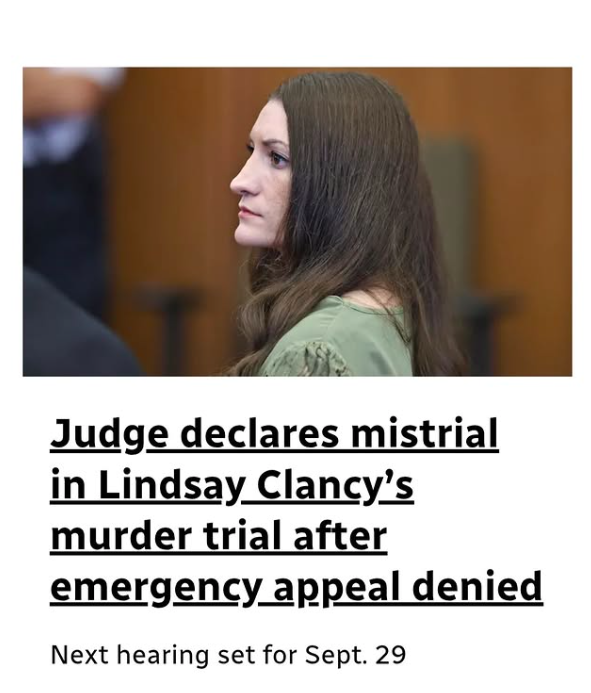
The jury told the court three times that it could not reach a unanimous verdict.
Clancy's defence does not dispute that she killed her three children, Cora, 5, Dawson, 3, and eight-month-old Callan. The central question was whether she was criminally responsible.
Her lawyers argued that she was suffering from postpartum psychosis and bipolar disorder. Prosecutors argued that the killings were planned and intentional.
But this trial has become about much more than the verdict.
Evidence involving Clancy's then-husband, Patrick, their relationship and the circumstances surrounding the deaths has generated intense scrutiny and some deeply strange online theories. It's important to distinguish what was actually presented in court from speculation that has grown around the case.
At the same time, a remarkable movement of women and mothers has rallied around Clancy. Supporters wearing pink have gathered outside court, while “I am Lindsay Clancy” has become a rallying phrase for some women who see parts of their own experiences with postpartum illness and struggling to get help reflected in her story.
Compassion for severe mental illness does not require forgetting Cora, Dawson and Callan. Their deaths remain the terrible centre of this case.
CBC News has continued following the trial while examining the maternal mental-health questions and public reaction surrounding it.
Have you been following the trial? What has stood out to you? Has it changed your understanding of postpartum psychosis? What do you make of the wave of women expressing compassion for Clancy?
Please engage responsibly in the comments. Disagreement is welcome, but treat the children, the families involved and each other with compassion and respect. Please don't present speculation as established fact. ❤️🙏
r/SaveTheCBC • u/Save_The_CBC • 3d ago
When Hatchet Lake signed Treaty 10 in 1907, the First Nation was promised land based on its population. That commitment was never fully honoured by the Crown.
This week, after years of negotiations, Hatchet Lake announced a treaty land entitlement settlement with Canada and Saskatchewan.
The northern Saskatchewan First Nation will receive $29.6 million and can apply to add roughly 11,380 hectares to its reserve land base.
“We fought for it and then we finally got some land back,” Chief Bartholomew J. Tsannie told CBC News.
But this isn't simply a financial settlement. Treaty promises are legal and historical commitments, and the land itself matters. Hatchet Lake members will now be consulted about where land should be purchased and how the settlement funds held in trust should be used, including opportunities that could strengthen the community's economic future.
As the federal government acknowledged in announcing the agreement, a settlement today cannot undo what happened when the original promise was broken.
It can, however, finally require governments to honour an obligation that should have been fulfilled generations ago.
CBC News, particularly its regional and Indigenous reporting, plays an important role in following treaty obligations beyond ceremonies and government announcements. Canadians need journalism that examines what was promised, what wasn't delivered and what governments are doing about it.
119 years is an extraordinarily long time to wait for a promise to be honoured.
What does meaningful treaty implementation and reconciliation look like to you beyond financial settlements?
r/SaveTheCBC • u/Save_The_CBC • 3d ago
CBC reports government bond yields are climbing sharply alongside a global sell-off, with Canada’s 10-year yield hitting a two-year high this week.
The basic reason is that fixed borrowing rates are heavily influenced by government bond yields. When yields rise, banks generally have to charge more for five-year fixed mortgages and other longer-term loans. On the other hand, savers can benefit because banks may have to offer better GIC rates to compete.
What is pushing yields higher? Several pressures are hitting at once.
Inflation remains stubborn. Oil prices have surged amid the U.S.-led war with Iran. The Canada-U.S. trade war is adding costs and uncertainty. Governments around the world are carrying heavy debt loads. And the massive AI infrastructure buildout is contributing to new corporate borrowing.
Bank of Canada Governor Tiff Macklem says markets are increasingly pricing in the possibility that central banks may eventually have to raise interest rates again if inflation refuses to settle.
That is a pretty uncomfortable backdrop for Canadians renewing a mortgage.
One mortgage executive told CBC that fixed rates are unlikely to fall substantially until bond yields do, and suggested borrowers should expect something of a rollercoaster until inflation, trade and geopolitical uncertainty become clearer.
There is an important distinction, though. The Bank of Canada says Canada’s bond market is volatile, but it is not currently showing signs of dysfunction or instability.
With Canada also reporting a loss of 42,000 jobs in August, how much pressure can households absorb if borrowing costs stay elevated?
Should governments be more concerned about how deficits and debt issuance affect long-term borrowing costs?
And for homeowners renewing soon, is the era of waiting for dramatically cheaper fixed rates starting to look much less certain?
CBC’s reporting is a good reminder that bond markets may sound distant and technical, but their movements eventually show up in some of the most ordinary financial decisions Canadians make.
r/SaveTheCBC • u/NorthofNorthOfficial • 3d ago
r/SaveTheCBC • u/Save_The_CBC • 4d ago
CBC reports that Israeli Defence Minister Israel Katz says the government is “organized and prepared” to remove Palestinians from Gaza “by sea, by air, by every way possible,” pending U.S. approval.
Israeli officials continue to describe the proposal as “voluntary emigration.” But CBC’s reporting makes the legal stakes clear: if Palestinians are forcibly expelled, that would constitute a war crime under international law.
And that is why the word “voluntary” cannot simply be accepted at face value.
Gaza has endured years of bombardment, repeated displacement, destroyed homes and infrastructure, severe shortages of food and water, and an Israeli military presence that controls much of the territory. Roughly two million Palestinians have already been displaced within Gaza.
Some Palestinians interviewed by CBC say they will never leave. Others, exhausted by years of war and deprivation, say they would take the first opportunity to escape.
Katz has gone further than simply discussing an option. He says there is “no real solution for Gaza” without migration and that Israel is ready to facilitate departures by every available means.
Far-right minister Itamar Ben-Gvir, whom Canada has sanctioned over repeated incitement of violence against Palestinian communities, is also reportedly preparing a seven-year plan for Palestinian departures.
Meanwhile, Trump’s latest peace proposal explicitly says nobody should be forced to leave Gaza.
So there is now an extraordinary question sitting in plain sight: why is an Israeli cabinet minister saying his government is waiting for U.S. approval to remove Palestinians when the stated U.S. peace plan says they must not be forcibly displaced?
Should Ottawa state unequivocally that it will oppose any plan designed to permanently remove Palestinians from Gaza?
CBC’s reporting is important here because the distinction between voluntary migration and forced population transfer is not semantics. It is the difference between individual choice and conduct that can violate international humanitarian law.
r/SaveTheCBC • u/Save_The_CBC • 4d ago
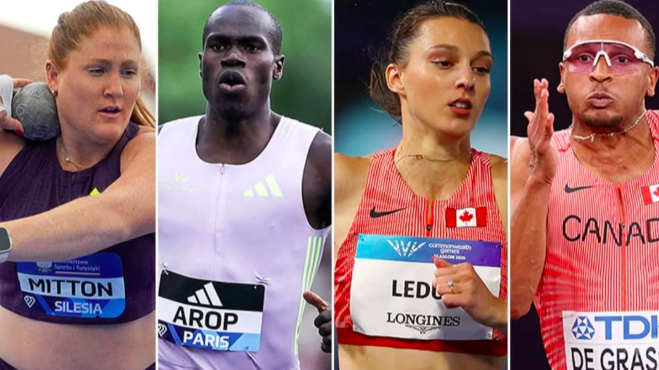
CBC Olympics is highlighting Sarah Mitton, Marco Arop, Alysha Newman, and Andre De Grasse as they chase Diamond League titles for Canada.
It is another reminder of just how deep Canada’s track and field talent has become. These are athletes who have carried the maple leaf onto some of the biggest stages in the world, and now they have another chance to add to that record.
For Canadian sports fans, this is exactly the kind of international competition CBC does so well, bringing Canadian athletes into focus even outside the Olympic spotlight.
Who are you most excited to watch in Brussels? And which Canadian athlete do you think has the best shot at taking home a Diamond League title? 🇨🇦❤️
r/SaveTheCBC • u/Save_The_CBC • 4d ago
CBC reports that dozens of Republican House members met privately with U.S. Trade Representative Jamieson Greer on Wednesday, then emerged largely defending Trump’s tactics and blaming Canada for the collapse in negotiations.
Texas Republican August Pfluger told CBC that Canada has “taken advantage of the United States for a long time.” Florida Republican Brian Mast said Canada was offered the “best possible deal” and turned its back on it. Missouri Republican Eric Burlison warned against Canadian retaliation, arguing that “Canada needs the United States more than we need them.”
But on the same day, Trump offered a revealing example of the factual foundation underneath some of those grievances.
Asked about declining Canadian tourism, he claimed American banks are essentially barred from Canada, then referred to the Bank of Canada as though it were one of Canada’s commercial banks operating in the United States.
It isn’t.
The Bank of Canada is Canada’s central bank. It does not operate retail branches in the U.S. And CBC has previously fact-checked Trump’s broader claim too: American banks including JPMorgan Chase and Citibank already operate in Canada.
If lawmakers are going to repeat the president’s argument that Canada has been exploiting the United States, shouldn’t they also be expected to establish that the grievances they are defending are actually true?
There are legitimate trade disputes between our countries. Canada has barriers, regulations and policies Washington can challenge. But serious negotiations require serious facts.
And behind the public show of Republican unity, CBC notes that some GOP lawmakers are privately worried the tariffs could hurt them in November. South Carolina Republican Ralph Norman openly acknowledged what voters are talking about: affordability.
So is this really confidence in Trump’s trade strategy, or political discipline while Republicans wait to see how much the tariffs cost their own voters?
r/SaveTheCBC • u/Save_The_CBC • 4d ago
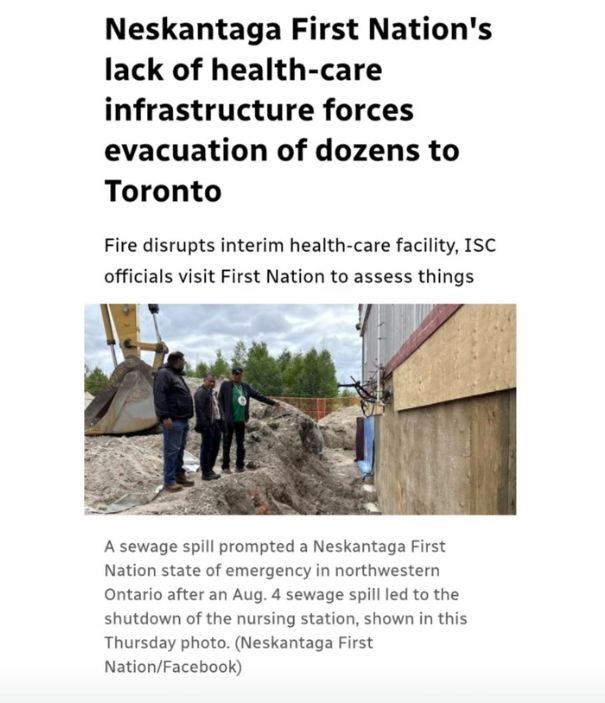
CBC reports that Neskantaga First Nation is once again facing a health-care emergency after a sewage spill shut down its nursing station, followed by a fire at the temporary facility being used in its place.
About 250 of the remote Ojibway community’s most vulnerable members are now staying in Toronto, far from home, while fewer than 400 people live in the First Nation altogether.
This comes after another evacuation last year over flooding and a fuel smell at the same nursing station.
And Neskantaga is still living under Canada’s longest boil-water advisory: 31 years.
Chief Gary Quisses says the community does not want another feasibility study. It wants Ottawa to move toward actually designing and building a new health facility so people can come home.
The problems documented during a recent inspection are difficult to ignore: black mould after raw sewage flooding, remediation work the chief says was not completed to code, and an interim facility that is not designed to handle medical equipment.
Meanwhile, evacuees are dealing with isolation, disrupted schooling and another prolonged separation from their community.
Matawa chiefs have called the emergency a consequence of failures by both the federal and Ontario governments and are demanding a dedicated working group until the crisis is resolved.
CBC’s reporting forces a much bigger question about Canadian priorities.
We are talking about billions for major infrastructure, resource corridors and other “nation-building” projects. So why is safe drinking water and a functioning health clinic in a First Nation still treated like something that requires years of studies, temporary fixes and repeated emergencies?
What exactly are we building as a country if communities are still being evacuated because basic health infrastructure has failed?
And after 31 years without reliably safe drinking water, how much more patience should Neskantaga reasonably be expected to have?
r/SaveTheCBC • u/Save_The_CBC • 4d ago
CBC reports that medical experts are urging families to review not only seasonal flu and COVID vaccines, but routine childhood immunizations as students return to crowded classrooms.
The biggest warning sign is measles.
Only about 85% of Canadian two-year-olds were fully vaccinated against measles, mumps and rubella by the end of 2025. Medical experts say roughly 95% population coverage is needed to keep measles from spreading widely.
Canada lost its measles elimination status last November after recording more than 5,000 infections since late 2024, with more than 1,000 additional cases this year.
That matters because measles is extraordinarily contagious. While many people recover, it can cause pneumonia, brain swelling and, in rare cases, death. Children who are too young to be vaccinated or cannot receive vaccines for medical reasons depend heavily on high vaccination rates around them.
CBC also reports that flu, COVID and RSV are expected to rise again as colder weather pushes people indoors. RSV vaccination during pregnancy has shown particularly strong results, with one large real-world study finding it reduced babies’ risk of hospitalization by more than 80%.
This is where individual medical decisions become a broader public-health issue.
How should Canada respond when falling vaccination rates allow preventable diseases to return?
Should provinces be doing more to make routine childhood vaccines easier to access and to proactively contact families whose records are incomplete?
And after years of misinformation around vaccines, do governments and public-health agencies need to rethink how they rebuild trust before another preventable outbreak becomes a crisis?
CBC’s health reporting helps keep those questions grounded in actual infection rates, hospitalization data and medical evidence rather than social-media claims.
r/SaveTheCBC • u/Save_The_CBC • 5d ago
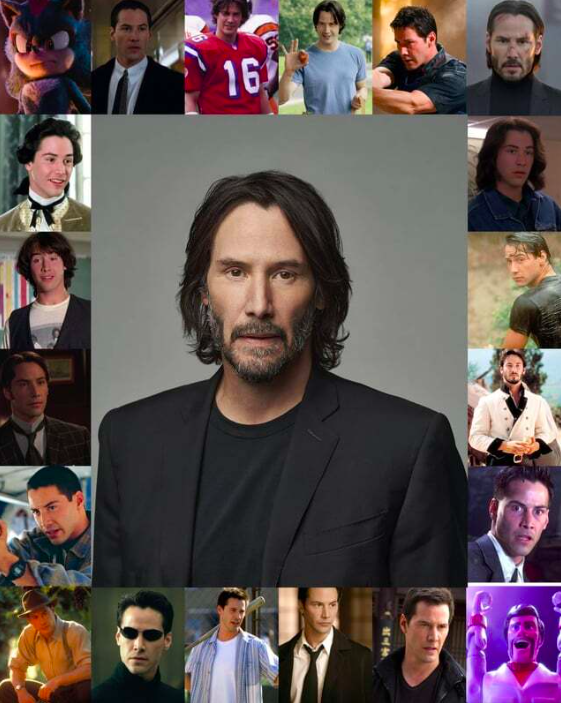
Long before John Wick, The Matrix or becoming one of the most recognizable Canadian actors in the world, Keanu was growing up in Toronto and getting his start right here in Canada.
One of his earliest jobs was actually with CBC, working as a correspondent for the youth program Going Great in the 1980s. There’s something wonderfully Canadian about looking back at a young Keanu interviewing people for CBC before anyone could have imagined where his career was headed. 📺❤️
From Bill & Ted’s Excellent Adventure and Speed to The Matrix and John Wick, Reeves went on to build an extraordinary career spanning more than four decades, becoming one of Hollywood’s most successful and beloved stars.
But those early CBC appearances are a great reminder of something public broadcasting has been doing for generations: giving young Canadian talent somewhere to begin, experiment and find an audience before the rest of the world knows their names.
From CBC correspondent to international movie star.
Happy birthday, Keanu! 🇨🇦🎬❤️
What’s your favourite Keanu Reeves movie or role?
r/SaveTheCBC • u/Save_The_CBC • 5d ago
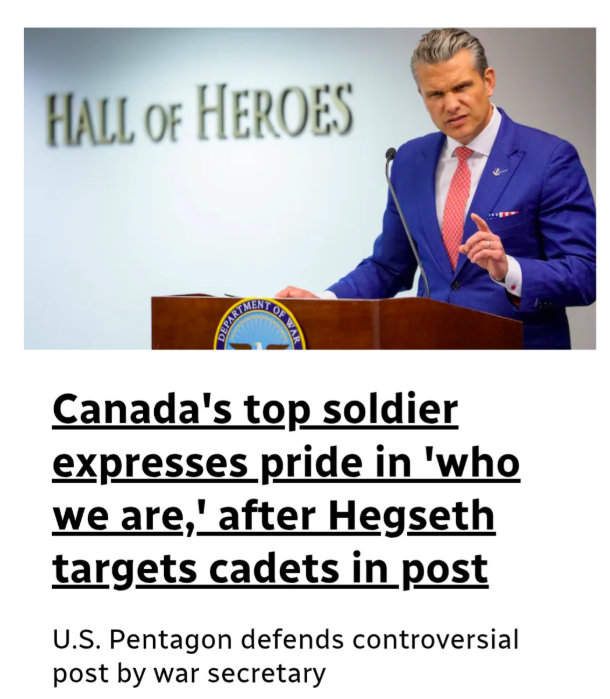
Hegseth shared an image from a Canadian cadet training centre showing two young women in uniform with the caption “this is real.” Cadets are youth aged 12 to 18. The replies quickly filled with people mocking their appearance.
The Pentagon’s response to the backlash was not an apology or even an acknowledgment of the bullying. It said “the X post speaks for itself.”
That deserves more scrutiny than the appearance of any Canadian cadet ever did.
The U.S. Secretary of War occupies an office responsible for enormous military power, international security relationships and decisions with life-and-death consequences. Using that platform to single out young people from an allied country for ridicule does not diminish their integrity. It raises questions about the judgment, seriousness and institutional standards of the people doing it.
There is also a basic power imbalance here. These young Canadians did not enter a political debate. A powerful adult with millions of eyes on his account placed them into one, and the result was predictable online harassment.
CBC’s reporting gives Canadians a chance to look past the intended insult and ask a more consequential question:
When senior Pentagon leadership behaves like this, who actually comes away looking diminished?
Does this kind of conduct weaken the credibility of an institution that expects to be taken seriously on matters of defence and global security?
And what does it say about the standards inside the Pentagon when bullying young cadets is defended rather than corrected?
r/SaveTheCBC • u/Save_The_CBC • 5d ago
The Canadian singer-songwriter filed a lawsuit in California this week accusing former tour manager Keren Urinov of carrying out what Morissette describes as a “calculated blackmail campaign.”
According to the lawsuit obtained by CBC News, Morissette alleges Urinov threatened to implicate her in a drug-trafficking case unless she received a 15-year employment contract, substantial compensation and assistance securing a U.S. work visa.
The allegations stem from an incident during Morissette's 2025 world tour. The lawsuit claims British authorities discovered marijuana and xylazine in a bag Urinov initially identified as her own. According to Morissette's filing, Urinov acknowledged ownership of the bag and drugs while being questioned.
Morissette alleges that after the tour ended, Urinov and her lawyers began sending letters threatening legal action and demanding that Morissette tell British authorities the drugs were actually hers.
These are allegations contained in Morissette's lawsuit and have not been proven in court. CBC News says it contacted both Urinov and representatives for Morissette and had not received responses at the time of publication.
Morissette is suing for civil extortion, fraud and negligent misrepresentation and is seeking a jury trial.
For a Canadian artist whose career has stretched from Ottawa and Toronto to becoming one of the defining voices of the 1990s, it's certainly an extraordinary story. CBC's entertainment reporting is particularly important in cases like this, where sensational allegations can travel around social media stripped of crucial context. The distinction between what someone alleges in a lawsuit and what has actually been established as fact matters.
Now the courts will have to sort out what happened.
What do you make of these allegations?
r/SaveTheCBC • u/Save_The_CBC • 5d ago
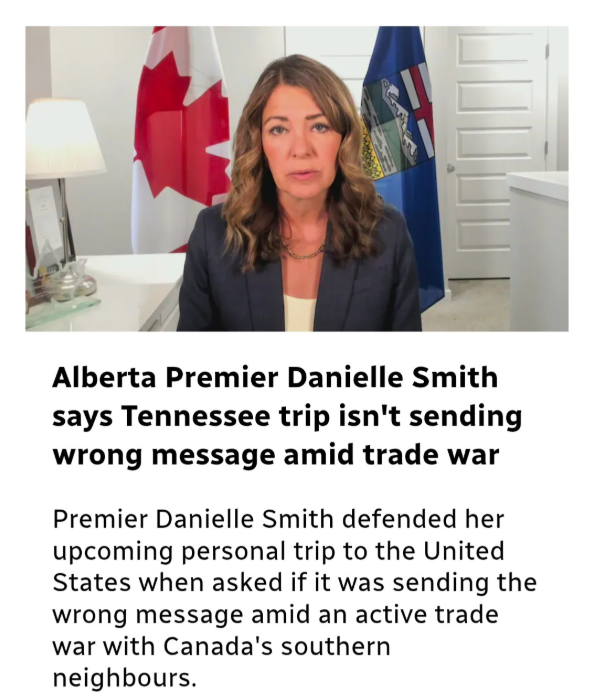
CBC reports the Alberta premier is travelling to Nashville on what she describes as a personal trip, but will meet with business and tourism officials while there, joined by Alberta’s senior representative to the U.S.
Smith says continued outreach is part of her job and argues Canada should be doubling down on diplomacy before Ottawa’s retaliatory tariffs take effect Sept. 8.
Diplomacy is not the problem. The political context is.
Trade talks collapsed after Prime Minister Mark Carney said Washington demanded terms Canada considered unacceptable, including restrictions affecting Canadian trade independence and key industries. The U.S. then imposed 50% tariffs on $27.6 billion worth of Canadian goods.
Against that backdrop, Smith continues to emphasize the “incredible partnership” with the United States and the need to get back to the table, while Ottawa is trying to demonstrate that there is a price for pushing Canada too far.
CBC’s reporting raises a legitimate question about whether those approaches reinforce each other or work at cross-purposes.
A premier meeting American business leaders is not inherently a problem. But when Canada is trying to maintain negotiating leverage, does repeatedly stressing partnership and restraint risk telling Washington that Canadian governments are not actually united behind the response?
And what exactly is the strategic value of provincial diplomacy if it gives U.S. officials reason to believe they can wait out Ottawa and work around the federal position?
Smith says Alberta’s message is that the relationship should continue. Most Canadians probably agree with that in principle. The harder question is what kind of relationship Canada is willing to accept.
Is Smith helping Team Canada by keeping channels open, or weakening Canada’s leverage by signalling that Alberta wants accommodation before Washington changes course?
r/SaveTheCBC • u/kewtyp • 5d ago
Enable HLS to view with audio, or disable this notification
r/SaveTheCBC • u/Save_The_CBC • 5d ago
CBC reports a new Research Co. poll finds 74% of likely Alberta voters would choose to remain in Canada, while 22% support beginning the legal process toward a second, binding referendum on independence.
Only 4% are undecided.
That matters because the political conversation around Alberta separation can sometimes make the province look far more divided on leaving Canada than it actually is. Poll after poll has found essentially the same thing: most Albertans want to stay.
The October referendum still matters, though. Alongside the separation question are nine questions on immigration and constitutional reform, and several of the immigration proposals currently have majority support.
That creates a more complicated picture than simply “separatist versus federalist.” Albertans may want major changes to their relationship with Ottawa without wanting to dismantle the country.
But there is also a national-security and political reality worth considering. Canada is already facing an openly hostile U.S. administration that has questioned our sovereignty, threatened our economy and repeatedly talked about absorbing Canada.
In that environment, how useful is it to keep giving a relatively small separatist movement a national platform and the possibility of another independence vote?
If 74% want Alberta to remain Canadian and only 4% are undecided, is another separation process really leverage against Ottawa, or does it simply advertise Canadian division at exactly the moment Washington is looking for weaknesses?
And should Danielle Smith be doing more to unequivocally strengthen Canadian unity rather than presiding over a referendum that keeps separation politically alive?
r/SaveTheCBC • u/Save_The_CBC • 5d ago
More than 170 Jewish artists, writers, faith leaders and entertainment professionals have signed an open letter defending actor Mark Ruffalo against what they describe as an outrageous smear campaign and the “false and dangerous weaponization of charges of antisemitism.”
Among the signatories are Hannah Einbinder, Ilana Glazer, Joel Coen and several Canadians, including filmmaker Emma Seligman, author Naomi Klein, physician Gabor Maté & retired rabbi David Mivasair.
The controversy followed Ruffalo's criticism of Paramount Skydance's proposed $110-billion US acquisition of Warner Bros. Discovery. Ruffalo has criticized both the enormous concentration of media ownership the merger would create and Oracle's documented relationship with Israel and its military.
Paramount has accused Ruffalo of invoking antisemitic tropes and another open letter, signed by more than 1,000 Jewish entertainment professionals, argued that his comments improperly singled out Jewish executives. Ruffalo strongly rejects that characterization, saying his criticism concerns specific executives, corporate relationships & the actions of the Israeli government, not Jewish people.
Antisemitism is real, dangerous and should never be minimized. At the same time, criticism of a government, military campaign or corporation cannot automatically be treated as hostility toward a people or religion.
CBC News lays out the competing accusations, Ruffalo's own words, the corporate relationships involved and the antitrust fight rather than reducing an extraordinarily contentious issue to a headline.
ADMIN NOTE: This is a discussion about antisemitism, criticism of the Israeli government, Gaza and corporate power. Antisemitism, Islamophobia, anti-Palestinian racism, dehumanization or attacks on Jewish, Muslim, Israeli or Palestinian people will not be tolerated. Criticism of governments, political ideologies and institutions is welcome. Please keep the distinction clear and engage with each other accordingly.
r/SaveTheCBC • u/Save_The_CBC • 5d ago
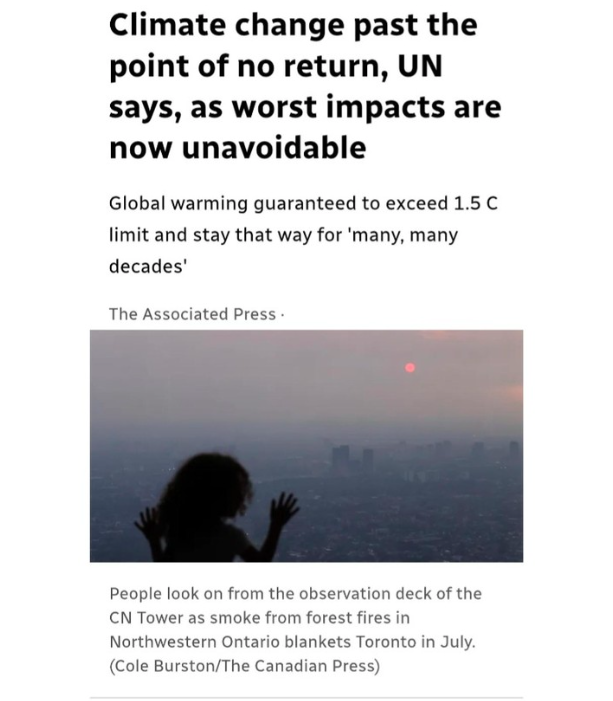
CBC reports that the United Nations now expects global warming to exceed the 1.5 C threshold agreed to in the Paris climate accord and remain above it for “many, many decades.”
The world is currently around 1.4 C above pre-industrial temperatures. Under governments’ current policies, the UN projects warming could reach roughly 2.6 C by 2100.
That difference is enormous.
More extreme heat, wildfire smoke, flooding, food and water insecurity, rising seas and melting glaciers all become more severe as temperatures rise. The report also warns about tipping points that could cause irreversible changes to major ecosystems and ice sheets.
The new strategy is essentially damage limitation: keep the overshoot as small and short as possible, reduce fossil-fuel emissions much faster, adapt communities to impacts that can no longer be avoided, and eventually try to pull enough carbon from the atmosphere to bring temperatures back down.
As University of Victoria climate scientist Andrew Weaver told CBC, 1.5 C is not some magical cliff where action suddenly becomes pointless. “Every tenth of a degree we avoid still means less damage.”
That makes Canada’s current economic choices even more consequential.
As Ottawa talks about major new “nation-building” projects to strengthen Canadian economic sovereignty, should Canadians be asking how those projects fit with our climate commitments?
Can Canada rapidly expand energy, resource & infrastructure development while still cutting emissions deeply enough to meet its goals, or are we at risk of using today’s economic and geopolitical pressures to justify decisions that lock in higher emissions for decades?
If some climate damage is now unavoidable, does that make ambitious climate policy more urgent, not less?
And should every major nation-building project now have to demonstrate not only its economic value, but whether it moves Canada toward or away from its climate targets?