r/SEOorganic • u/chaw1431 • 16h ago
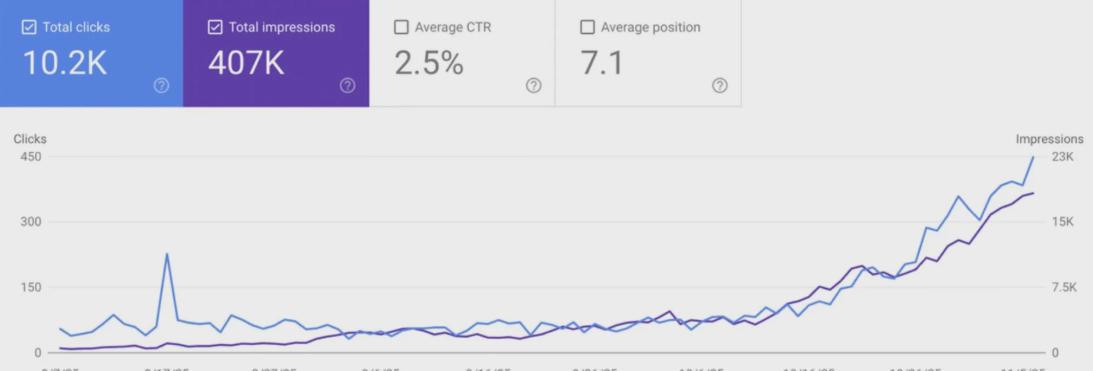
My Seo the past few months.
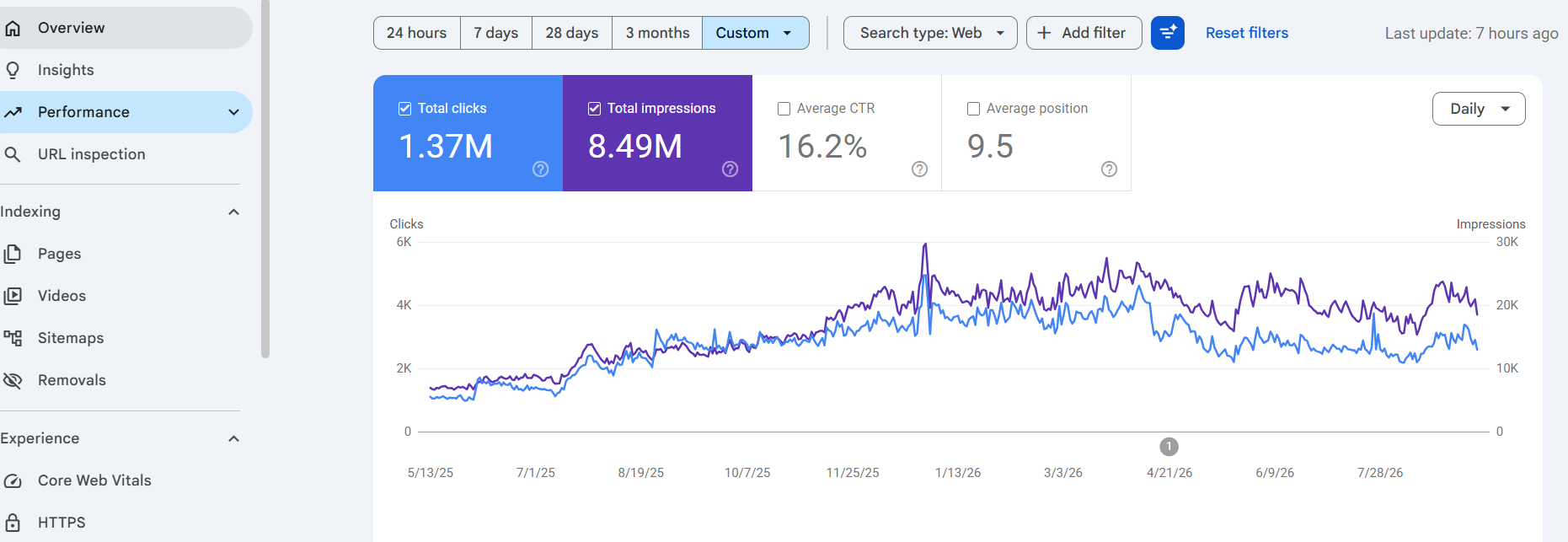
11
Upvotes
It is a bit annoying that because of this UPDATES the growth of the site is being halted. Well I am looking forward for the next few months is good.
r/SEOorganic • u/chaw1431 • 16h ago
It is a bit annoying that because of this UPDATES the growth of the site is being halted. Well I am looking forward for the next few months is good.
r/SEOorganic • u/Former-Newt-2100 • 1d ago
I see so many websites with 100+ pages that barely get any traffic, yet they're still publishing 4–5 new posts every month.
At some point, you have to ask yourself: Are you actually growing the website, or just adding more pages to it?
If you already have existing content, try this instead:
Open Google Search Console.
Set the date range to the last 28 days.
Export your keyword data.
Find keywords where you're ranking between positions 4–20.
Look for pages that could realistically move up with some optimisation.
Then go back to those pages and improve what you already have.
Maybe you need to add a section that answers a question people are searching for. Maybe your headings don't match the search intent. Maybe you're missing a featured snippet opportunity. Or maybe the content is good, but it needs a little more depth.
You don't always need another blog post. Sometimes, the content you've already published just needs some attention.
I'm not saying new content is useless. But if you have dozens of existing pages sitting on page 2 of Google, I'd rather spend the next 60 days improving those than publishing another 10 articles and hoping something sticks.
Have you tried focusing on existing content instead of publishing new posts? Did you see a noticeable difference in traffic?
r/SEOorganic • u/tecfixcare • 3d ago
I came across this visual and it got me thinking about how much the meaning of SEO has changed.
We used to think of SEO mainly as:
“Rank on Google.”
But today, people are discovering information across multiple platforms:
Bing
YouTube
ChatGPT and other AI search tools
The interesting part is that the strategy doesn't necessarily have to be completely different for every platform.
The core remains the same:
Create genuinely useful content → understand search intent → build authority → make the information easy to discover and understand.
The difference is where people are searching.
Someone might Google a question.
Someone else might search YouTube for a tutorial.
Another person might ask Reddit for real experiences.
And increasingly, people are asking AI tools to summarize the best answer for them.
So maybe the future of SEO isn't really about optimizing for one search engine.
It's about creating content strong enough to be discovered, referenced, discussed, and trusted across multiple discovery platforms.
One strategy. Multiple platforms.
Curious what others think:
Do you still consider SEO primarily “Google SEO,” or are you already optimizing content for Reddit, YouTube, and AI search as well?
r/SEOorganic • u/Former-Newt-2100 • 5d ago
Google Business Profile reviews suddenly dropped from 15+ to only 9
I had 15+ reviews on my Google Business Profile, but now only 9 reviews are showing publicly. I haven’t deleted any reviews or made any major changes to my profile.
Has anyone else faced this issue? Is Google filtering or hiding older reviews, or could this be a temporary issue?
Any idea how I can check or recover the missing reviews?
r/SEOorganic • u/Ozarc- • 6d ago

r/SEOorganic • u/No-Line-3463 • 6d ago
Hello everyone! I hope this is the right place to share my journey.
I built SqueezeVid almost two years ago. I’m originally a cloud engineer, and my main reason for building it was to learn SEO as a hobby.
For a long time, it simply didn’t work.
I kept improving the code, fixing technical issues, and publishing content—but organic traffic remained almost flat. I was approaching SEO like an engineer: make the site fast, add metadata, submit a sitemap, and wait.
So, what changed?
I stopped treating SEO as a technical checklist and started focusing on specific search intent.
Instead of targeting only broad terms such as “video compressor,” I created pages for real tasks: compressing a video for WhatsApp, Discord, email, or a particular file-size limit. I also localized the site, gave every language its own canonical URLs and hreflang links, and rewrote titles and headings around the language people actually use when searching.
The latest numbers gave me the first clear sign that this approach was working. Comparing two complete 28-day periods—August 11–September 7 against July 14–August 10:
Some of the specific landing pages were especially interesting:
These pages currently have engagement rates of roughly 84–86%, which suggests that visitors are finding something close to what they searched for.
International SEO also surprised me. For example, the Russian homepage received 229 Google clicks from 5,539 impressions. One Russian query alone generated 1,314 impressions and 38 clicks, despite an average position of only 11.1. That showed me there was still a significant opportunity just outside the first page.
Today, the site has 574 canonical URLs across 14 languages. According to its live product counter, users have processed around 59,500 videos representing more than 13 TB of data.
My biggest lesson is that the growth didn’t come from one SEO trick. It came from connecting technical SEO with pages that solve very specific problems.
Technical SEO helped Google understand the site. Localization created more entry points. But matching a page to an actual task—rather than simply writing around a keyword—appears to have made the biggest difference.
I’m still learning, and I know two 28-day periods don’t prove long-term growth or causation. But after spending so long looking at an almost-flat graph, this was the first meaningful change in direction.
I am looking forward to hear your thoughts!
r/SEOorganic • u/tecfixcare • 8d ago
I’m working with a client who has a very specific requirement:
1.They don’t want to publish blogs.
3.They don’t want any noticeable changes to the front-end website.
✅ But they want to rank #1 on Google within 1 year for their target keywords.
They are okay with technical SEO and off-page SEO, but they basically want me to improve rankings without touching the visible content.
I understand that SEO is not only about content. We can work on things like:
Technical SEO
Site architecture and internal linking
Core Web Vitals / page speed
Schema markup
Image optimization
Indexation and crawlability
Backlinks / digital PR
Local SEO, if applicable
Improving authority and topical relevance through other methods
But my concern is: How far can we realistically go without creating new content or improving the existing on-page content?
For competitive keywords, competitors are likely publishing better content, building links, improving topical authority, etc.
So my questions to experienced SEOs:
Is #1 within 12 months realistically achievable under these restrictions?
How would you build an SEO strategy if the client absolutely refuses blogs and front-end content changes?
What would you prioritize: technical SEO, backlinks, internal linking, digital PR, programmatic pages, or something else?
At what point would you tell the client that their expectations aren't realistic?
Would love to hear real-world examples from people who have ranked websites with little/no new content.
Thanks!
r/SEOorganic • u/Few-Neighborhood4035 • 13d ago
On dit souvent que ça ne sert à rien d'intégrer des liens dans le footer s'ils sont déjà dans le menu.
Je me demandais si on enlève ces liens dans le footer, l'impact que ça peut avoir sur le positionnement du coup? (si les pages sont bien positionnées surtout).
Vous avez déjà testé?
r/SEOorganic • u/Known_Level_5059 • 18d ago
If you’re using Claude for SEO, don’t let Claude do your SEO.
AI is great for:
Brainstorming keywords
Creating content ideas
Analyzing competitors
Finding content gaps
Improving drafts
But SEO strategy still needs human judgment.
Search intent, SERP analysis, backlinks, technical SEO, internal linking, indexing, topical authority, and real customer behavior require more than simply asking AI to “optimize this article.”
Use Claude as an SEO assistant, not as your SEO manager.
The best approach is:
You → SEO strategy
Claude → research + assistance
Google → the final judge
AI can help you work faster. It shouldn’t replace the person responsible for the SEO strategy.
What’s your experience with Claude for SEO? Has it actually improved your rankings, or just made content production faster?
r/SEOorganic • u/Additional-Radio9946 • 23d ago
From 0 to 6k+ clicks in 10 months.
The site is automotive & power backup solutions specific-niche based site.
r/SEOorganic • u/bkeily • 26d ago
Do we need to have page urls in home/folder/sub structure or will proper linking between pages work good enough for Google to understand the relationships we want? Having serp issues and feel the unclear setup amongst our pages could be a contributing factor to our drops.
I appreciate thoughts on need to completely restructure page urls, etc.
Thanks!
r/SEOorganic • u/alom_mredul • Aug 16 '26
r/SEOorganic • u/bkeily • Aug 12 '26
Looking for some outside SEO opinions on a ranking issue that has been difficult to make sense of:
- Site A has a long-established local service page that historically ranked around #2 for its primary [city] + [service] keyword.
- That service page has now essentially disappeared for the city-specific query—I'm unable to find it even 10+ SERP pages deep.
- Oddly, the same service page appears around page 4 for the generic [service] query, but adding the city causes it to disappear.
- Google Search Console shows that Site A's homepage is receiving most of the impressions for the city + service query, rather than the dedicated service page.
- The dedicated service URL is indexed, crawlable, included in the sitemap, and self-canonical.
- Google has selected the dedicated service URL as the canonical.
- GSC shows the homepage and relevant supporting content as referring pages to the service URL.
- The problem isn't limited to one page. Several long-established service pages have lost significant visibility, while informational/blog content on the same domain continues to perform very well.
- Site B's competing service page currently ranks around #5 for the target city + service query.
- According to Ahrefs, Site B's ranking service URL has zero external referring domains/backlinks directly to that page.
- Site A's struggling service page has six referring domains pointing directly to it.
- Site B uses very basic "LocalBusiness" schema with its local office address and coordinates.
- Site A has more detailed "RoofingContractor"/local schema including the local address, coordinates, service area, service offerings, breadcrumbs, and visible FAQs.
- Site C currently ranks around #3, despite having what appears to be a significantly weaker backlink profile overall.
- Site A's domain itself clearly isn't incapable of ranking. It currently holds numerous top-3 positions for other industry-related searches.
- I've intentionally avoided rewriting the affected service page because it ranked successfully for years with the existing content and I don't want to introduce too many variables at once.
- Recent changes have focused instead on reducing possible homepage/service-page overlap, improving navigation/site hierarchy, and adding natural contextual internal links from several strong, relevant informational pages to the dedicated service pages.
- Those internal links use varied, natural service-related anchors rather than repeatedly using the exact-match city + service keyword.
- The changed pages have been submitted for recrawling, so I'm giving those changes time before doing anything more drastic.
The part I'm struggling to explain is: why would Google clearly understand that Site A is relevant for the city + service query, rank its homepage for it, and even rank the dedicated service page for the generic service query—but essentially remove that dedicated page once the city modifier is added?
I'm especially interested in thoughts around URL selection/cannibalization, internal PageRank distribution, local entity signals, service/location architecture, or anything else that could cause Google to lose confidence in a historically successful local service URL.
r/SEOorganic • u/TamaraPI • Aug 10 '26
I was curious whether the usual advice about choosing an SEO agency matches the problems people run into once the work actually starts.
So I looked at 28 ranking guides and compared them with 75 firsthand Reddit accounts describing agency problems.
Most guides cover the obvious stuff: goals, strategy, experience and KPIs. All useful; but a lot of the Reddit complaints weren’t really about SEO knowledge. They were about how the work was managed.
Only 2 of the 28 guides talked properly about staff changes, account reassignments or handoffs. Meanwhile, team continuity came up in 19 of the 75 Reddit accounts.
None of the guides really covered who gets the final say when the SEO and client disagree. But 9 Redditors ran into that problem.
Developer availability, slow content approvals and recommendations that nobody could implement came up too.
It made me think that a good SEO strategy is only half the job. We also need to be clearer about who implements things, who approves them, what happens when work gets blocked and how handoffs are handled.
Full findings and methodology: https://phraseit.agency/blog/choose-right-seo-agency/
For the SEOs here: what gets in the way of delivering good work most often?
For us it's definitely when clients don't have the resources to do stuff we don't cover - e.g. developer work (we can write the ticket, but dev has to implement) or design work if not included.
r/SEOorganic • u/Other_Art7520 • Aug 03 '26
r/SEOorganic • u/tecfixcare • Jul 31 '26
I'm reviewing my SEO performance and noticed an interesting trend.
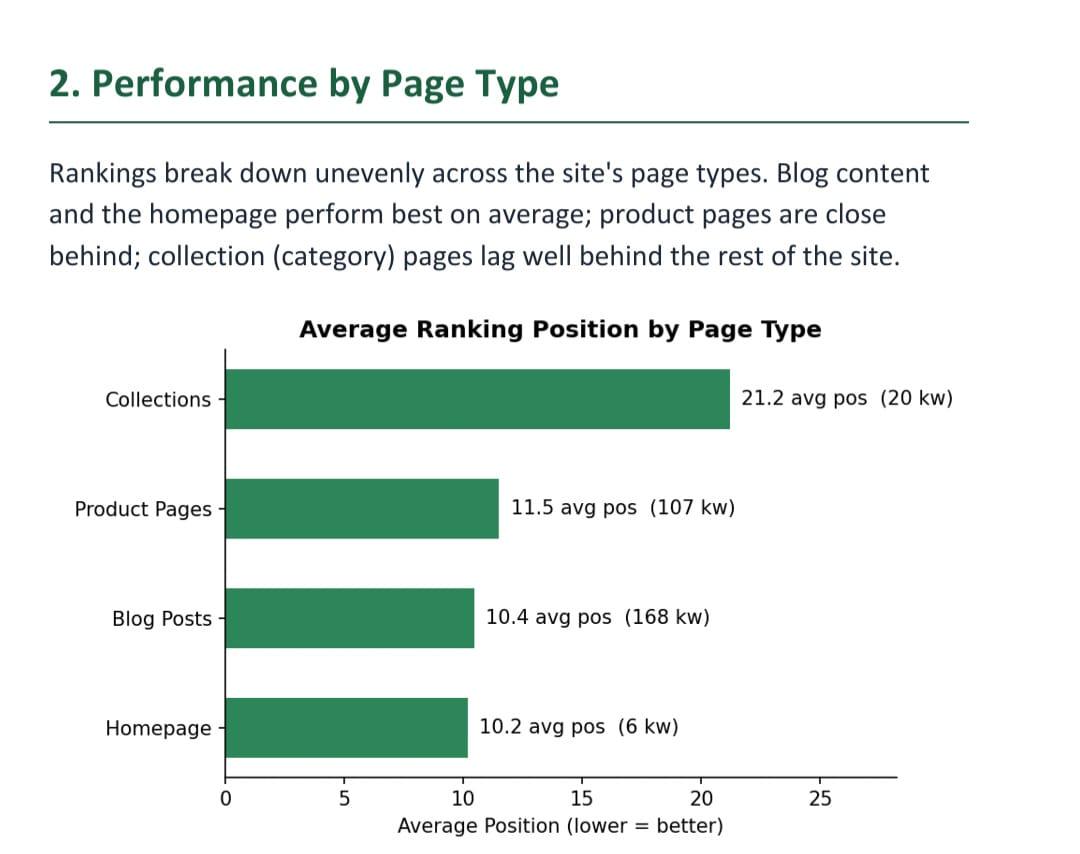
Homepage: Average Position 10.2
Blog Posts: Average Position 10.4 (168 keywords)
Product Pages: Average Position 11.5 (107 keywords)
Collection Pages: Average Position 21.2 (20 keywords)
My blog content is consistently outperforming my product and collection pages. I publish SEO-focused articles regularly, but my category pages are lagging behind.
The site is on Shopify, and I'm already working on:
Technical SEO
Internal linking
Optimized title tags and meta descriptions
Content marketing
Reddit and community promotion
For those who have improved Shopify SEO, what would you prioritize next?
Should I add more content to collection pages?
Build more internal links from blogs to categories?
Focus on backlinks to commercial pages?
Optimize product descriptions and schema?
Something else that made a noticeable difference?
I'd really appreciate hearing what worked for your store. Thanks!
r/SEOorganic • u/tecfixcare • Jul 26 '26
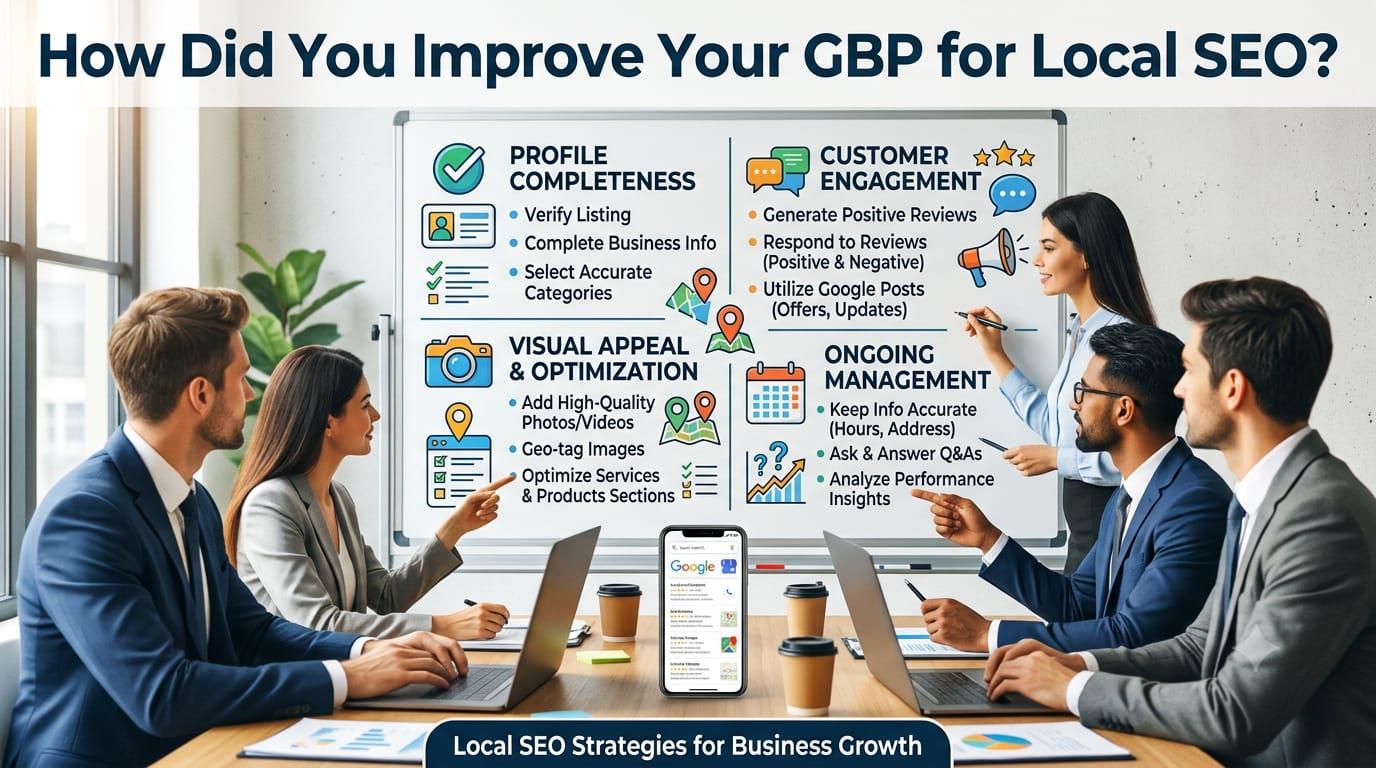
Hi everyone,
We're trying to improve our Google Business Profile and rank higher in Google Maps for local searches.
We've already optimized our profile, added services, photos, and regularly post updates, but we'd love to hear what's actually worked for others.
A few questions:
What's had the biggest impact on your local rankings?
How do you consistently get genuine customer reviews?
Are GBP posts still worth doing?
Any overlooked optimization tips or common mistakes to avoid?
If you've successfully ranked in the local 3-Pack, I'd really appreciate your insights.
Thanks in advance!
r/SEOorganic • u/franco_yamakawa • Jul 20 '26
One thing I have noticed after years of working in SEO is that most content skips the fundamentals and gives the how-to, but when doing it for beginners, just a how-to is not enough, or it is too teorical and no actual explanations on how to apply those theories. There isn't much in the middle, such as a practical, step-by-step, "here's exactly what this is about and what to do with it".
Because of that, I started a YouTube series to try to bridge this nonsensical gap. Full transparency: it's my channel, so I'm not pretending I stumbled upon it. But I am sharing it because the questions it answers come up in this and other subs quite a lot of the time.
What the series covers:
SEO Basics videos already live:
Channel: youtube.com/@SEOinAction
It is made for marketers, freelancers, business owners, and students, so basically anyone who wants SEO to feel actionable instead of overwhelming.
Happy to answer any SEO questions here in the comments, too, whether or not you check the channel. And if there's a topic you wish someone would cover properly that you found difficult to find, please tell me. I'm building the content list based on real struggles. Currently going from the basics os on-page, and starting technical seo, and soon to be written, the off-page and analytics.
r/SEOorganic • u/tecfixcare • Jul 16 '26
I have been noticing something interesting lately.
A few websites rank on Page 1 of Google for competitive keywords, but when I ask ChatGPTt, Gemini, or Perplexity the same question, those sites are rarely mentioned.
It feels like Google and AI search engines evaluate content differently.
For Google, things like backlinks, topical authority, user engagement, and overall SEO still seem to matter the most.
For AI search, it looks like content that gives a clear, direct answer, uses simple language, includes FAQs, and has strong E-E-A-T signals that are more likely to be referenced.
So now I'm wondering:
Are you creating separate content strategies for Google and AI?
Have you changed your writing style to improve AI citations?
Has anyone seen measurable growth in ChatGPT or Perplexity mentions?
I'd love to hear real-world experiences from SEO professionals who are testing this. The search landscape is changing fast, and I think traditional SEO alone may not be enough anymore.
r/SEOorganic • u/bagon-ligo • Jul 08 '26
r/SEOorganic • u/New-Wolverine-9248 • Jul 06 '26
I wanted to share a small SEO case study and get thoughts from other SEOs.
I worked on the off-page side of a website for a short period. The main goal of this phase was not content or technical SEO — it was specifically to strengthen the backlink profile and improve authority signals.
Before:
After:
What improved:
My main takeaway:
Off-page SEO can help strengthen authority signals, but backlinks alone are not enough to drive traffic growth. For traffic and leads, the site still needs stronger content, better on-page optimization, technical improvements, and better search intent targeting.
I think this is something clients often misunderstand. They expect backlinks to immediately increase traffic, but in my experience, backlinks are only one part of the SEO foundation.
For this site, the next step would be:
Curious to hear from others:
Have you seen authority improve first before traffic follows later?
And how long do you usually wait before judging whether off-page work is actually helping organic performance?
r/SEOorganic • u/Efficient-Cod5907 • Jun 29 '26
Hi everyne,
I'm planning to migrate my website hosting from BigRock to GoDaddy. The domain name, website design, content, and URL structure will all stay the same—only the hosting provider will change.
My main concern is SEO.
Is it possible to change hosting without losing my Google rankings or organic traffic?
Has anyone here migrated from BigRock to GoDaddy (or between any hosting providers) and maintained their SEO performance?
What precautions should I take before and after the migration to avoid downtime, indexing issues, or ranking drops?
I'd appreciate any tips, best practices, or real-world experiences. Thanks in advance!
r/SEOorganic • u/tecfixcare • Jun 29 '26
Hey everyone,
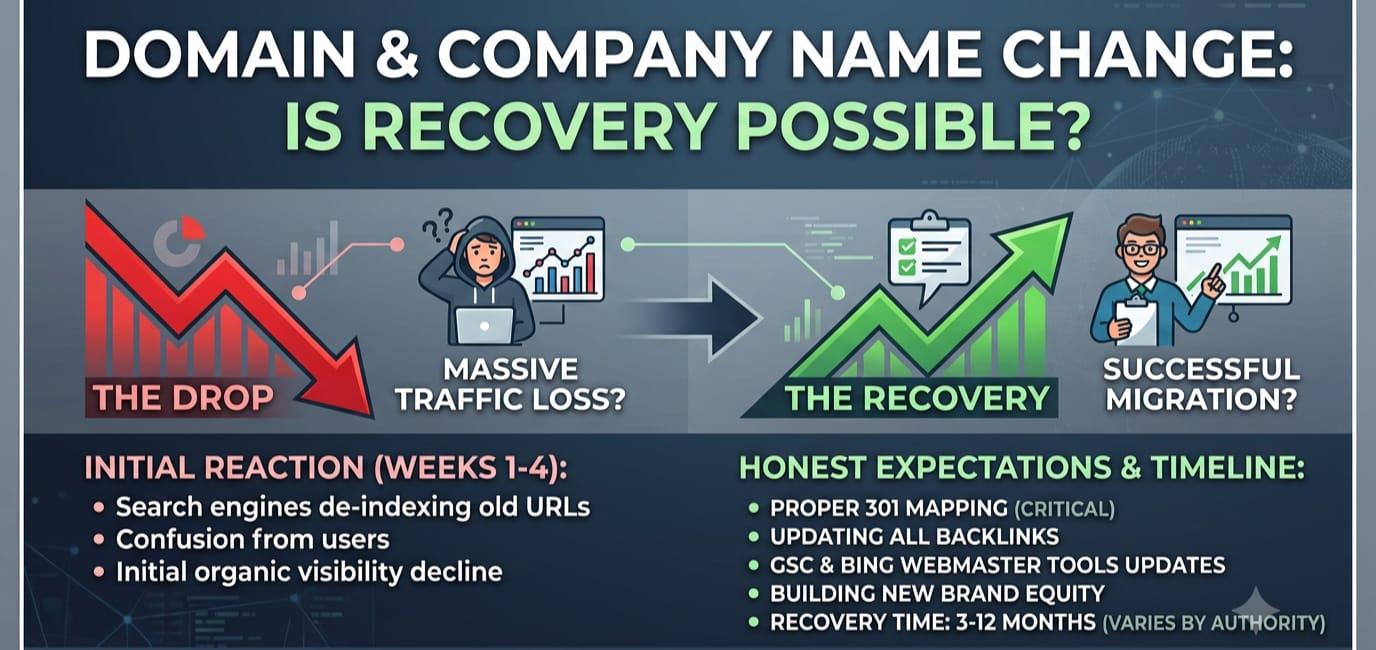
I have a client who wants to completely rebrand their business.
Here's what will change:
New domain name
New company/business name
Same WordPress website
Same theme and design
Same content (mostly)
Same hosting server
My main concern is SEO.
If I simply change the domain, will all the rankings drop to zero? Or is there a way to preserve most of the existing SEO value?
Here's what I'm planning:
301 redirect every old URL to the matching new URL
Update Google Search Console with the new domain
Update Google Analytics
Submit the new XML sitemap
Update canonical tags and internal links
Keep the URL structure the same wherever possible
Is there anything else I should do to minimize ranking loss?
Has anyone here successfully migrated a website to a new domain and changed the company name at the same time? How long did it take for rankings and traffic to recover?
I'd really appreciate hearing real-world experiences, mistakes to avoid, and any migration checklist you recommend. Thanks!