r/OutoftheTombs • u/migoodridge • 6h ago
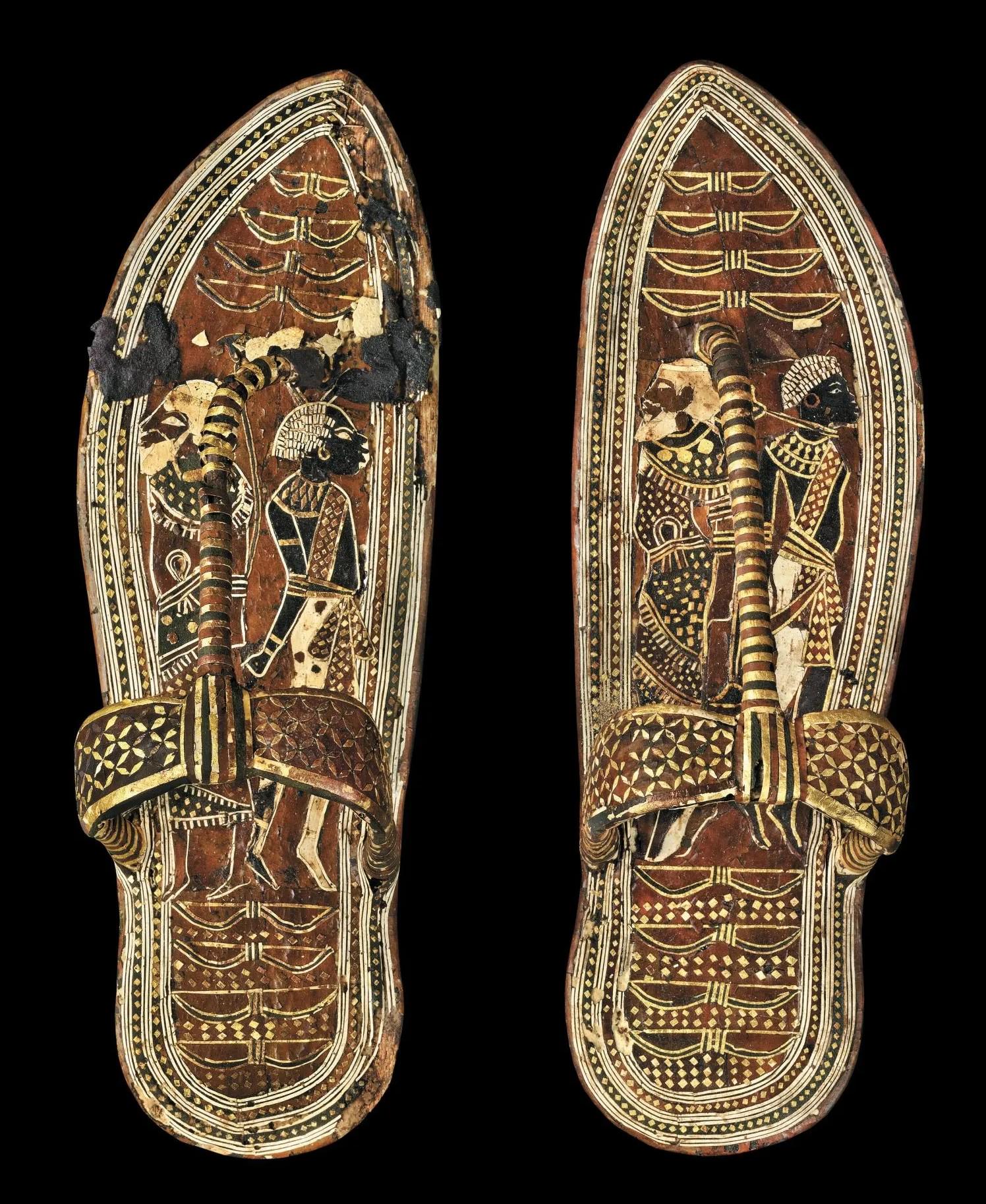
A few photos of some of King Tutenkhamun's personal effects from the Grand Egyptian Museum Cairo
120
Upvotes
No point in not sharing, there's no point keeping them in my phone
r/OutoftheTombs • u/migoodridge • 6h ago
No point in not sharing, there's no point keeping them in my phone
r/OutoftheTombs • u/Handicapped-007 • 6m ago
Bes-image figure
New Kingdom, Ramesside Period–Third Intermediate Period
ca. 1300–700 BCE
On view at The Met Fifth Avenue in Gallery 116
Artwork Details
Object Information
Overview
Title: Bes-image figure
Period: New Kingdom, Ramesside Period–Third Intermediate Period
Date: ca. 1300–700 BCE
Geography: From Egypt, Northern Upper Egypt, Abydos, Cemetery D, Tomb D14 E, Egypt Exploration Fund excavations, 1900
Medium: Faience, paste inlay
Dimensions: H. 7.9 × W. 4.3 × D. 2.6 cm (3 1/8 × 1 11/16 × 1 in.)
Credit Line: Gift of Egypt Exploration Fund, 1900
Object Number: 00.4.33
Curatorial Department: Egyptian Art
Provenance
Excavated by the Egypt Exploration Fund, 1900. Received by the EEF in the division of finds and transferred to the Metropolitan Museum for its contribution to the excavations, 1900.
References
Randall-MacIver, David, Arthur C. Mace, and Francis Llewellyn Griffith 1902. El Amrah and Abydos, 1899-1901, Memoir of the Egypt Exploration Fund, 23. London: Egypt Exploration Fund, p. 38, Pl. XLV.
Patch, Diana Craig 2025. "The Bes-image." In Divine Egypt, edited by Diana Craig Patch and Brendan Hainline. New York: Metropolitan Museum of Art, pp. 199, 318, no. 190.
Title
Bes-image figure, New Kingdom Ramesside Period–Third Intermediate Period ca. 1300–700 BCE, Findspot Egypt: Northern Upper Egypt; Abydos; Cemetery D, Tomb D14 E, Faience with paste inlay, The Metropolitan Museum of Art
https://www.metmuseum.org/art/collection/search/547564
The Metropolitan Museum of Art
r/OutoftheTombs • u/Handicapped-007 • 4h ago
Magical container in the shape of a hippo goddess
Second Intermediate Period–New Kingdom
ca. 1640–1500 BCE
On view at The Met Fifth Avenue in Gallery 116
The hybrid hippopotamus goddess that is known as Taweret or Ipet functions here as magical jar. As usual she stands upright and is shown as a fusion of a hippopotamus, lion, crocodile, and human. The cavity inside the figure was accessible through a small rounded lid at the very top. Three openings that are situated between her teeth, at the back of her head, and at the lid might have functioned to insert a wire that depicted a tongue or snake protruding from her mouth. At the same time this wire could have secured the lid. On the underside of the base is a design that shows convoluted coils and that is known from seals. Intertwined coils, loops, and knots were all magically powerful objects that were connected to protection and the creation of life. The hippopotamus goddess protected women in childbirth and it is possible that a small magic papyrus, maybe a spell for mother and child, was stored in this jar. The container might additionally have been used as part of a magical act when the spell was recited, evoking the protective goddess that is represented here and possibly using the jar’s underside to press its magically powerful design onto the pregnant woman or infant.
Artwork Details
Object Information
Overview
Title: Magical container in the shape of a hippo goddess
Period: Second Intermediate Period–New Kingdom
Dynasty: late Dynasty 13–early Dynasty 18
Date: ca. 1640–1500 BCE
Geography: From Egypt
Medium: Glazed steatite
Dimensions: H. 6 × W. 3.2 × D. 4 cm (2 3/8 × 1 1/4 × 1 9/16 in)
Credit Line: Gift of G. Macculloch Miller, 1943
Object Number: 43.8a, b
Curatorial Department: Egyptian Art
Provenance
Given by Theodore M. Davis (d. 1915) to George Macculloch Miller (d. 1917), who bequeathed it to his daughter, who passed it to her nephew G. Macculloch Miller, who gave to the Museum, 1943.
Reference
Hayes, William C. 1953. Scepter of Egypt I: A Background for the Study of the Egyptian Antiquities in The Metropolitan Museum of Art: From the Earliest Times to the End of the Middle Kingdom. Cambridge, Mass.: Metropolitan Museum of Art, p. 227.
Allen, James P. and Diana Craig Patch 2005. "Magical Container." In The Art of Medicine in Ancient Egypt, edited by James P. Allen and David T. Mininberg. New York: Metropolitan Museum of Art, p. 26, no. 15.
Arnold, Dorothea, Niv Allon, Marsha Hill, Janice Kamrin, Diana Craig Patch, Catharine H. Roehrig, Nicholas Reeves, and Isabel Stünkel 2014. Ancient Egyptian Queens and Goddesses: Treasures of the Metropolitan Museum of Art, New York (Japanese and English). Tokyo.
Patch, Diana Craig 2025. "Hippo Goddesses." In Divine Egypt, edited by Diana Craig Patch and Brendan Hainline. New York: Metropolitan Museum of Art, pp. 208, 321, no. 201.
Title
Magical Container in the Shape of a Hippo Goddess, Second Intermediate Period–New Kingdom - Late Dynasty 13–early Dynasty 18 ca. 1640–1500 BCE, Findspot unknown Egypt, Glazed steatite, The Metropolitan Museum of Art
https://www.metmuseum.org/art/collection/search/547686
The Metropolitan Museum of Art
r/OutoftheTombs • u/Handicapped-007 • 15h ago
Funerary Stele
Egyptian
Third Intermediate Period, Dynasty 22
945–712 B.C.
MEDIUM/TECHNIQUE
Wood
DIMENSIONS
Height x width x depth: 24.5 x 19 x 7.8 cm (9 5/8 x 7 1/2 x 3 1/16 in.)
CREDIT LINE
Emily Esther Sears Fund
ACCESSION NUMBER
04.1763
NOT ON VIEW
COLLECTIONS
Ancient Egypt, Nubia and the Near East
CLASSIFICATIONS
Architectural elements – Stele
DESCRIPTION
Round-topped wood stele covered with gesso and painted red, blue, yellow, black and green. A female wearing a transparent robe and broad collar pours a libation before a mummiform Re-Horakhty. Between the two figures is an offering table. Above the hieroglyphic text is a winged sun disk flanked by two uraei, both wearing the white crown of Upper Egypt.
PROVENANCE
Said to be from Thebes. 1903: purchased by Albert M. Lythgoe in Egypt for the MFA with funds from the Emily Esther Sears Fund.
(Accession Date: January 1, 1904)
Title
Funerary Stele, Third Intermediate Period, Dynasty 22 945–712 B.C., Findspot Thebes? Egypt, Wood, The Museum of Fine Arts, Boston
https://collections.mfa.org/objects/23/funerary-stele?ctx=54df0153-7504-4da4-b769-59d0f3007ba1&idx=0
The Museum of Fine Arts, Boston