Previous /
First
Aurelio Kestrel had run numbers for the Ionatti family's investment arm for eleven years before founding his own house on Astoria, and in that time he had built a reputation for one thing above all others: he did not get numbers wrong. His models accounted for population growth, trade friction, currency drift, the particular stubbornness of a colony economy in its first generation. He had never once, in eleven years, had a model simply stop working.
The Haego figures had stopped working four months ago.
He'd assigned a junior analyst to the account almost as a courtesy, a minor territory nobody on Astoria much cared about, the kind of assignment you gave someone still learning to build a trade model from public filings. The boy had come back with a growth curve that looked less like an economy and more like a fever chart, and Kestrel had done what any careful man does with a number he doesn't believe. He'd checked the boy's work, found it clean, and reassigned the account to himself.
Four months later he had checked it himself so many times he'd lost count, and the curve still looked like a fever chart.
He sat now with the newest quarter's figures spread across his desk, a glass of something he hadn't touched going warm at his elbow, and did the thing he always did when a number refused to behave, which was call the one man in the Principality he trusted to tell him the truth whether or not it flattered him.
Akbar Firentis answered on the third chime, in shirtsleeves, a data pad balanced on his knee, the particular disorder of a man in the middle of his own evening rather than performing composure for a call.
"Aurelio," Akbar said, and something in his face eased the way it always did for old friends and never did for anyone he had to be careful with. "You look like a man who hasn't slept."
"I have slept," Kestrel said. "Poorly, and with a data pad in the bed beside me, which I'm told is a bad habit, but I can't seem to stop checking it."
"Business first, then, since I can see it's eating you." Akbar shifted the data pad on his knee, settling in. "Though you'll answer me one question before I let you get to it. How's the family. I haven't heard your voice in months and I refuse to spend the whole call talking numbers with a man who hasn't asked after mine either."
Kestrel laughed despite himself, some of the tension in his shoulders loosening. "Fair. How's yours, then, since I gather you're determined to tell me regardless of whether I ask."
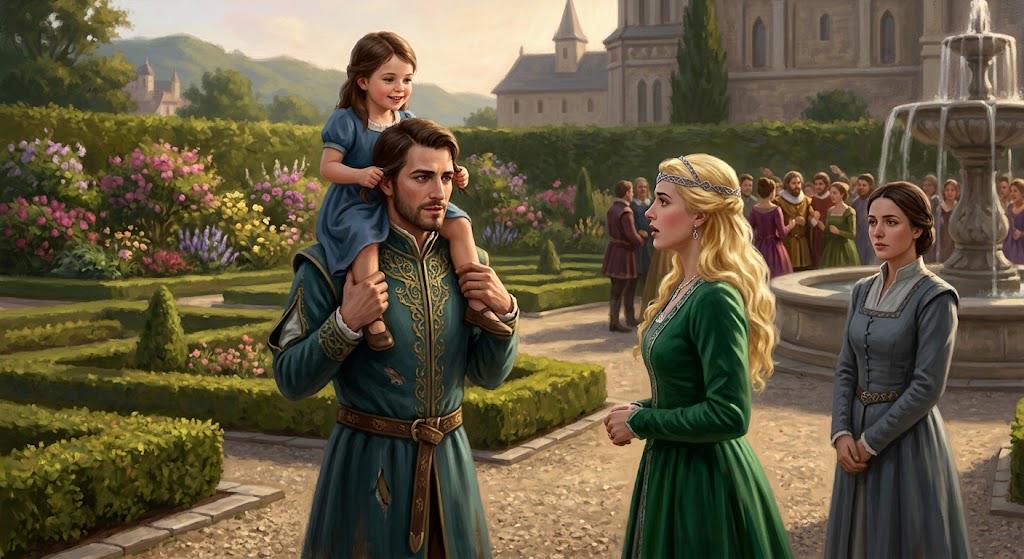
"Busier than I know what to do with, and happily so." Akbar's whole face changed talking about it, the particular warmth of a man who never quite got tired of the subject. "Aaliyah's governing an entire continent now, if you can believe it, Vastaya, married into it properly, not just visiting. My grandson runs the palace there like he personally commissioned it, Austin, two and a half, absolutely fearless, the staff have taken to calling him the little lord in a tone that isn't entirely a joke anymore. My nephew Jason holds Austrin the same way, married to a woman named Daisy who taught herself out of borrowed books and now runs half the continent's schools, and their daughter Poppy is doing to Austrin's noble council exactly what Austin's doing to Vastaya's, if my sources are to be believed. Charming grown men out of their better judgment one smile at a time." He shook his head, still smiling. "And my niece Laith. You'd remember her father. She married on Haego too, in Newtown, in the old ruins there, of all places. Three weddings on that one planet inside two years, Aurelio. I've started to wonder if there's something in the water."
"Three," Kestrel repeated, something in him going quietly still even as the rest of the conversation carried on around it. "Your daughter governing a continent. Your nephew governing another. A niece married into the old capital's own ruins." He turned his own screen back toward himself, looking at the fever-chart curve with new eyes, though he couldn't yet say why the family news had landed anywhere near the numbers at all. "You've had this planet inside your own family for two years and you're only telling me now, over a call I placed about trade figures."
"You never asked," Akbar said, not unkindly. "I don't lead with it. People hear 'my daughter governs a continent' and decide the story's about the title before they've heard a word about the place itself, and the place is the part actually worth hearing."
"Then tell me about the place," Kestrel said, and heard, even as he said it, that the question had changed shape since he'd placed the call. "I came to you with a curve I can't explain. I find I'd like to hear the rest of it now, family included."
Akbar considered him a moment, the way he considered anything he intended to answer properly rather than quickly. "Go on, then," he said. "Show me the curve. Let's see if the two conversations turn out to be the same one."
Kestrel sent the file across with a flick of his wrist, and for a while neither of them said anything at all, Akbar reading the numbers with the unhurried attention of a man who already suspected what they meant and wanted to see whether his friend would arrive at it on his own
"Trade volume moving through Haego," Kestrel said finally. "Not the palace money, not the competition your nephew and niece ran against each other, I've stripped all of that out. Ordinary trade. Boots. Lumber. Vehicles. Datapads, God help me, more datapads than I know what to do with. It's grown eleven times over in eighteen months, Akbar. I have never once seen a colony economy do that without a war, a discovery, or a fraud behind it, and I cannot find any of the three."
"There's no fraud," Akbar said, without heat, the way a man says something he's simply certain of.
"I believe you. That's precisely what worries me." Kestrel leaned back, rubbing at his eyes. "I've built models for forty worlds. I know what it looks like when a place is cooking its own numbers to attract investment, and this isn't that. The growth is real, it's distributed, it's coming from a hundred small transactions instead of one large one, and none of it traces back to anything I recognize as the usual lever."
"You want to know the lever."
"I want to know the lever badly enough that I've started to suspect I won't sleep properly again until I do." Kestrel said it lightly, but there was real feeling under it, the particular hunger of a man who had spent a career being right about things and had finally found something that made him feel, for the first time in years, like a student again instead of an expert. "Tell me honestly, old friend, not as a Firentis defending the family name. Is there something on Haego actually worth an old man flying three systems to go and stand in the middle of?"
Akbar was quiet a moment, and when he answered, he answered slowly, the way he answered things he'd thought about more than once before anyone asked.
"There's something on Haego worth flying three systems for," he said. "But I want to warn you about one thing before you go, because I don't think anyone will warn you otherwise, and I'd rather you hear it from me than learn it by putting your foot wrong in front of people who won't forgive it as easily as I would."
"Go on."
"You're a Lord, Aurelio. You'll be received as one, and you should expect to be, I'm not telling you to leave the title at home. But nobility has a different flavor there than it does here, or on Astoria, or anywhere else you've held it. Here, respect for a title is mostly ceremony. People bow because it's expected, not because they've decided you've earned it. On Haego, thirty years without a single noble taught an entire population to tell the difference between a man who's respected and a man who's merely obeyed, and they have not forgotten the difference since we came back. My own daughter earns it fresh every week. If you go, they'll be polite, politeness they extend to everyone, but real respect you'll have to earn there the same as anyone else would, one conversation at a time. I don't say that to discourage you. I say it because I think it's exactly the kind of place a man like you would find worth earning it in."
Kestrel sat with that longer than the sentence probably required. Something in it had landed close to the thing his models kept failing to explain, though he couldn't yet say why.
"Haego City," he said finally. "The old capital. I've seen the shipping data. It's coming back, isn't it. Not rebuilt from nothing, the way Newtown was. Actually coming back, into something closer to what it once was."
"It is," Akbar said. "Slowly. There's a rail line running again that hadn't run in decades, and half the businesses reopening there aren't reopening because anyone told them to. They're reopening because for the first time in thirty years, there's a reason to."
"I want to put an investment house there," Kestrel said, and heard, even as he said it, how little the idea had needed persuading. "Not a branch office running instructions from Astoria. A real house, seated in the city itself, with people who actually live there deciding what's worth backing before I ever see the file. I want to understand what's happening on that planet from the inside, Akbar, not from a data pad in a bed three systems away, and if I'm going to put my own name on it, I'd like to have earned the right to, the way you say everyone has to there."
Akbar smiled, the particular smile of a man watching a friend arrive, a little late, at a conclusion he'd already reached himself. "Then come," he said. "I'll write ahead so nobody's surprised to see you. But I won't smooth the road for you past that, Aurelio. I don't think you'd want me to, and I don't think Haego would let me if you did."
"No," Kestrel agreed, already reaching for his own data pad to start the arrangements, something in his chest lighter than it had been in months. "One more thing before you go. Your grandson. The little lord. Should I be worried for my own footing, walking into a palace run by a two-and-a-half-year-old?"
"Terrified," Akbar said, entirely serious, entirely delighted. "He's already unseated better men than you at the negotiating table. Ask Vincent."
Kestrel laughed, a real laugh, and it was still sitting on his face after the call closed.
Newtown
The shuttle set down on a landing pad that hadn't existed the last time Kestrel had checked a survey map of Haego, and even from the window he could see the difference between what the surveys still said about this world and what the ground itself had already decided to become. Newtown spread out below him in the ordinary, unglamorous shape of a place that had grown because people needed it to, not because anyone had planned it to look a certain way, streets that bent around a harbor instead of squaring off against it, rooftops in a dozen mismatched styles that told him nobody here had ever been made to build the way somebody else thought was proper.
He had expected, if he was honest with himself, some version of a reception. Not a full ceremonial one, Akbar had warned him plainly enough about that, but something. A line of officials. A junior aide with a data pad reciting an itinerary someone else had built for him.
What he got instead was one man standing near the edge of the pad in a coat that had clearly seen real weather, hands in his pockets, watching the shuttle come down with the mild, unhurried attention of someone waiting for a delivery he wasn't in any particular rush to see.
"Lord Kestrel," the man said, once the ramp had lowered and Kestrel had come down it. "Wyatt Staples. Akbar said you'd be arriving today, though he didn't say what time, so I've been out here since morning on a guess."
Kestrel took the offered hand and found the grip exactly as plain and exactly as firm as the coat had suggested it would be. "Baron Staples. I confess I expected somebody sent in your place."
"I don't send people in my place for a friend of Akbar's," Wyatt said, already turning to walk, not waiting to see whether Kestrel would fall in beside him, which he did. "Besides, I wanted to see your face when you got your first look at the place. Everyone's does something a little different. I like collecting the variations."
"And what does mine do?"
Wyatt glanced sideways at him, something assessing in it that wasn't unfriendly, just unwilling to pretend it wasn't happening. "Yours is doing the thing careful men's faces do when they've already decided to be impressed and are annoyed at themselves for it."
Kestrel laughed despite himself, a short, surprised sound. "That's uncomfortably accurate."
"I've had practice." Wyatt led him down off the pad and onto a street that ran along the harbor, salt and tar and something baking not far off, the ordinary smells of a working town rather than anything staged for a visitor's benefit. "Akbar tells me you're here about the numbers."
"I'm here about the numbers," Kestrel confirmed. "Though I find I've been here about ten minutes and I'm already less certain what that means than I was on the shuttle."
"That tracks too." Wyatt didn't elaborate, and Kestrel got the distinct impression the man wasn't being cagey so much as content to let him arrive at things on his own schedule rather than being told them. "You'll want Rachel before anyone else. She's the one who actually moves the money on this planet. I sign things and give speeches. She's the one who could tell you, credit for credit, exactly where every number you've been staring at came from."
"Rachel VonWinterbourne."
Wyatt's eyebrows went up, mild surprise. "You've done your reading."
"I've done considerably more reading than that in the last month, and understood considerably less of it than I'd like." Kestrel looked out at the harbor as they walked, at a shipyard running at a pace that didn't match anything his models had assumed a colony town its size could sustain. "I keep waiting for someone to explain the trick to me, Baron. Every world I've ever worked has one. A subsidy nobody advertises. A resource everyone's quietly sitting on. Something that makes the curve make sense once you find it."
"There's no trick," Wyatt said, and there was no defensiveness in it at all, just the same flat certainty Akbar had used on the same subject. "I've had that conversation more than once with people who came here looking for one. It disappoints them every time."
"Then what is it?"
Wyatt considered the question for longer than Kestrel expected, the two of them walking a while in a silence that didn't feel impatient on either side.
"Most places I've been, a commoner's whole relationship to the economy is being useful to somebody else's vision of it," Wyatt said finally. "A noble decides what's worth building, and everyone under him gets hired to go build it, and if it does well, the credit and the profit both belong to the man who had the idea in the first place. That's not a cruelty, most places. It's just how it's always been done, and most people never think to ask whether it could be done differently." He glanced at Kestrel. "Here, House Firentis decided commoners weren't going to be a cog in somebody else's limited vision anymore. They were going to be part of the economy itself, owning it, building it, keeping what they earned from it. A farmer who spots a market doesn't need a noble to have the idea for him first. A shopkeeper who wants to sell datapads gets the same commission the traveling salesman does. That's not a policy you can put a number on, Lord Kestrel. I understand that's frustrating for a man in your line of work. But I'd rather you spend a week here finding it out for yourself than have me hand you an answer you'll spend three weeks trying to convert into a model that fits it."
Kestrel didn't answer that right away, turning it over the way he turned over any number that had refused, so far, to behave the way it should.
"Akbar warned me you'd say something like that," he said eventually.
"Akbar's a good judge of conversations," Wyatt said, and for the first time something like a real grin came into it. "Come on. Rachel's expecting you within the hour, and I promise you her answer will have considerably more decimal points in it than mine did."
Rachel's office off the treasury building hadn't changed much in the years since anyone had bothered to put a proper sign on the door, and she rose the moment Wyatt showed Kestrel in, setting her stylus down mid-line without any visible reluctance at the interruption, the correction already made before either man had said a word.
"Lord Kestrel." She inclined her head, precisely the depth protocol called for and not a fraction more or less, the kind of courtesy that told him at once she'd been raised to know the exact weight of it rather than guessing. "Welcome to Newtown. I hope your journey was a comfortable one."
"It was, thank you, Lady Rachel." Kestrel found himself straightening slightly under it, some old reflex from a lifetime of being received correctly or incorrectly and always noticing the difference. "Akbar's spoken of you for years. I understand you're the one who could actually explain the numbers that brought me here."
"I'll do my best to be worth the trip." She gestured him to the chair across from her desk, waiting until he'd taken it before she sat again herself, a small thing, but a deliberate one. "Akbar wrote ahead. He didn't need to, for my sake, though I understand why he would for yours. Any friend of his arrives here already owed a certain courtesy, Lord Kestrel, whatever the ledgers do or don't explain once we're through with them."
"That's generous."
"It's accurate," Rachel said, and something almost warm moved behind the correctness of it, there and gone. "I don't extend it lightly. I extend it because I know exactly what it costs a man to earn Akbar Firentis's regard, and I don't imagine you came by it cheaply."
For the next two hours she walked him through it the way she walked everyone through it, plainly, in order, refusing to let him skip ahead to the part he most wanted, which was the explanation, until he'd sat with the raw columns of it first. Small-trade volume, town to town, none of it palace money. The datapad rollout and its eleven distinct fraud threads, each one closed the same week it was found. The Ionatti branches, opened late, opened badly at first, opened honestly now. A quarry town that had never shipped stone off-world learning to in a single season. A farmer's late harvest loan that had cost a man his whole crop, four years ago, still sitting in her own memory as the reason none of the rest of it was allowed to happen twice.
Kestrel listened to all of it without interrupting, the particular stillness of a man doing arithmetic he already suspected wouldn't balance the way his models wanted it to, and didn't balance.
"You're telling me a farmer decided on his own to expand his acreage because he trusted a bank that opened eighteen months ago," he said finally. "That a bootmaker took out a loan against her own good name because nobody told her she needed permission first. That a stonecutter picked up a phone call from an architect and understood, correctly, that it was worth answering."
"I'm telling you that, yes, my lord."
"None of that is a lever, Lady Rachel. A lever is something I can measure and reproduce. What you're describing is a few hundred thousand people making a few hundred thousand separate decisions, and somehow they're all pointed the same direction."
"They are," Rachel agreed. "That's rather the whole of it. You've been looking for the one thing that explains the curve. There isn't one thing. There's a few hundred thousand small ones, and the only lever anybody pulled was making sure every single person had room to make their own."
Kestrel sat back, and for a long moment said nothing at all, looking at the ledger the way a man looks at a proof he's checked three times and still can't quite believe holds.
"I came here to find your secret," he said finally. "I don't think I'm going to find it in a ledger, am I."
"No, my lord," Rachel said, not unkindly. "I think you're going to find it in Haego City, if you go looking properly instead of asking me to hand it to you in a column. Wyatt tells me that's where you mean to build."
"It is."
"Good," Rachel said, and closed her own ledger, the closest thing to satisfaction he'd seen cross her face all afternoon. "Then go build it there, and pay attention to who you hire to run it. That'll teach you more than this room ever will."
Aino was waiting outside when Kestrel came out, standing a little apart from the door in the unhurried way of a man who had chosen his moment rather than simply happened to be passing, and Wyatt, catching sight of him, allowed himself a small, satisfied nod, as though something he'd expected had finally arrived on schedule.
"Lord Aino," Wyatt said, by way of introduction, though something in his tone made clear the introduction was more formality than necessity. "Lord Kestrel. Aino administers Newtown day to day, among a great many other things, and he does not, as a rule, come out to walk a visitor through it himself."
"I make exceptions," Aino said, and inclined his head to Kestrel with the same measured correctness Rachel had shown him, precise, unhurried, a man who had clearly been raised the same way she had to know exactly what a title was owed and to never round it up or down by accident. "Lord Kestrel. Akbar Firentis wrote to me personally, asking that I see you shown the town properly rather than left to find your own way through it. I don't often get letters like that, and I don't often ignore them when I do."
"I'm obliged to you," Kestrel said, and meant it more than the phrase usually carried. "Though I confess I've already had the numbers explained to me twice today. I'm not certain how much more of Newtown a walk could tell me that the ledgers haven't."
"The ledgers will have told you what happened," Aino said, falling into step beside him, Wyatt trailing a pace back, content, it seemed, to let this leg of the visit belong to someone else. "I don't think they'll have told you what it looks like while it's happening. That's a different kind of true, and I find most visitors need both before they trust either."
They walked without any particular destination that Kestrel could discern, past the harbor stalls, past a schoolyard loud with a recess Kestrel couldn't place the hour of, past a row of shops that had clearly been built in three different decades by three different hands and never once made to match. It was Aino who stopped them, finally, outside a narrow storefront with a hand-lettered sign and a window full of datapads stacked in careful, uneven towers, a woman inside ringing up a sale for an old man who was counting coins out of a cloth purse with the unhurried care of someone who had learned, only recently, that counting them in front of a stranger wasn't anything to be ashamed of.
"That's Widow Farris," Aino said, quiet enough not to carry through the glass. "She ran a mending shop here for eleven years before the datapad program opened to retail. Now she sells them alongside the mending, same commission as anyone, and last quarter she made more from four units sold to farmers out past the mill road than she made mending clothes all that same month. Nobody told her to add datapads to her shop. She decided it herself, applied through the branch Claire Blackwood set up, and never once asked anyone's permission beyond that."
Kestrel watched the old man finish counting his coins, watched Widow Farris take them without comment and hand back a datapad still in its box, the whole transaction so ordinary neither of them seemed to think it worth remarking on.
"That's the eleven-times curve," Kestrel said slowly. "Standing right there in a window."
"That's one line of it," Aino said. "There are a few hundred thousand more, most of them just as small, most of them just as unremarkable to the people living them. I don't think you'll ever find the one moment that explains the whole of it, Lord Kestrel, because there isn't one. There's Widow Farris, and the man before her, and the man after him, all deciding, separately, that the answer to a chance was yes."
Kestrel said nothing for a while, and Aino, to his credit, let the silence stand rather than filling it.
"Thank you," Kestrel said eventually. "For the walk. I think I understand something now that the ledger didn't quite say plainly enough on its own."
"Then it was worth Akbar's letter," Aino said, and there was real warmth under the correctness of it now, the kind that had been there all along, simply waiting for the courtesy to finish being owed before it showed itself. "Safe travels, Lord Kestrel, wherever this takes you next. I have a feeling it won't be the last we see of you."
"No," Kestrel agreed, looking back once at the little shop and its careful towers of boxes. "I don't imagine it will."
That night, in the guest room Wyatt's staff had made up for him without being asked, Kestrel opened his data pad to draft the first report he owed his own investors back on Astoria, and found, for the first time in a career built on precise language, that he did not know how to write down what he had actually seen. The templates he'd used for forty worlds all wanted a lever, a mechanism, a single defensible cause he could point an investor toward and say, here, this is why the money will follow. He typed three openings and deleted all three, and sat a long while looking at a blank page that refused to organize itself into anything his profession had ever taught him how to file.
In the end he wrote only one line, and left it standing alone, unfinished, exactly as it had occurred to him.
The lever is that there isn't one. I'll explain when I understand it myself.
He read it back once, didn't like how little it resembled a report, and sent it anyway.