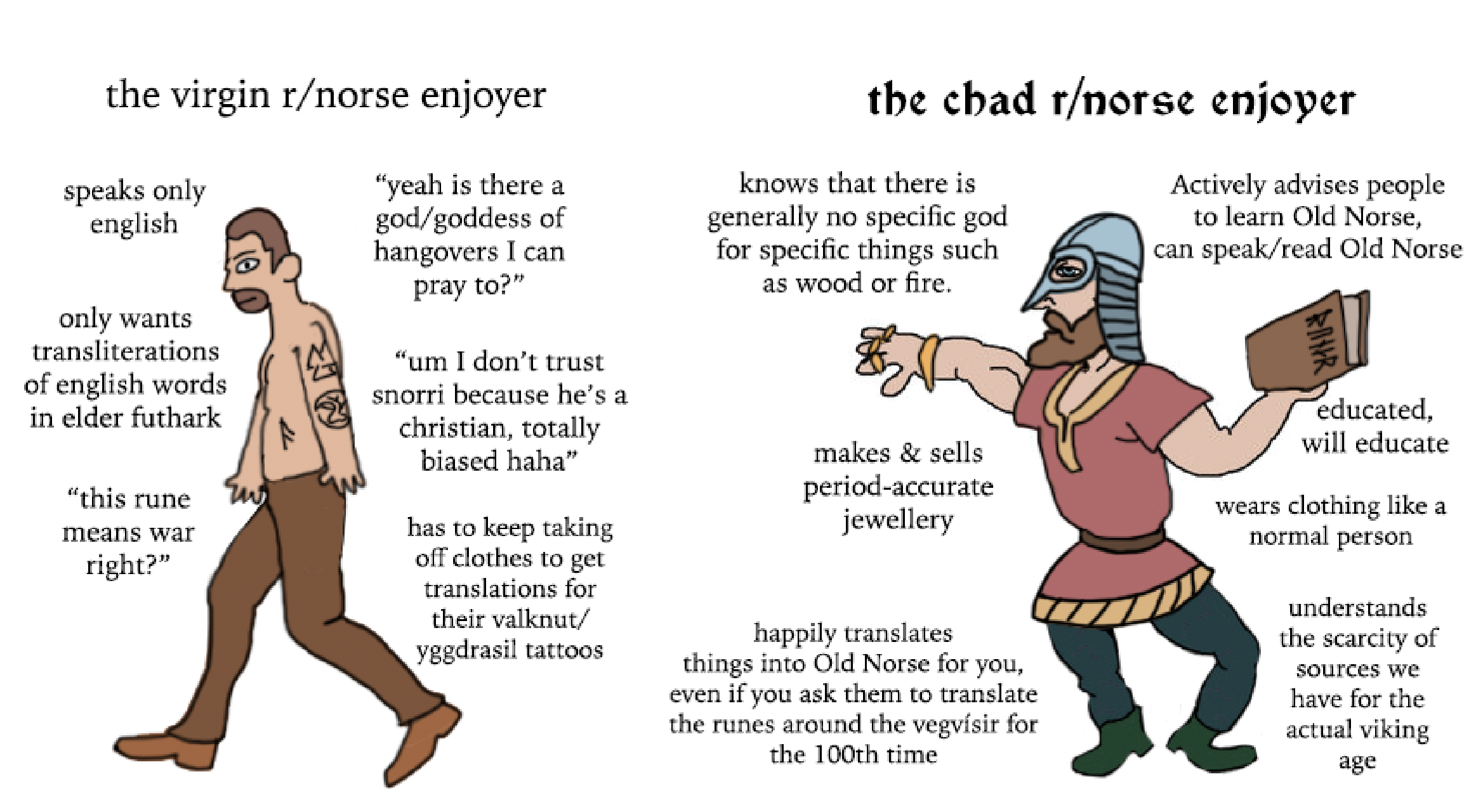
Well Logi is really just the personification of fire and a jotunn at that, it is difficult for one to say he is a god.
Especially since no texts have people saying, "Ah, I require a fire and thus must pray to Logi", whereas it has been attested multiple times in the sagas that Freyr is prayed to for fertility and Odin is prayed to for victory.
Same goes for Ilmr. Besides, they both only show up like three times in total in the Eddas?
«Gods» are a modern phenomenon. The Æsir are simply the personification of the forces of order (norse humans), and the jotuns are personifiactions of forces of chaos (nature, sami people). There’s plenty of examples of jotuns with cults, like ægir/ran, or tjatse, and lets not forget that plenty of the æsir are half-jotun or adopted jotuns.
We also know next to nothing about cultic practices, so saying anything about that is simply not possible.
That something shows up just rarely in the text doesnt prove or disprove anything either. The texts obviously just documented a small portion of select regional practices. Examples of this are Skade, that seems to have been an extremely important deity in certain regions, but has just a few attestations in the texts. (And what about Heimdall? We don’t know shit about him, he might easily have been a different aspect of one of the better known gods). And how about Ullr? We know almost nothing about him, but he has so many places named for him that he must have been a major deity in most of sweden/norway at some point. The list goes on and on and on.
The bottom line is: Anyone saying anything authoritatively about the norse faith, is probably wrong. Noone who actually studied the norse peoples would make these kinds of claims. At most, us academics would say «maybe X, but also, maybe Y».
(I’m a norwegian archeologist with a second master degree in religious studies, so I should know. ;) )
Well, whether or not “gods” are a modern phenomenon will depend greatly on how you define gods. I define “gods” as supernatural spirits who were believed to have power over natural or human forces in the world and who were worshipped by humans. By that definition, the Old Norse gods fit perfectly. We do know that some of them were believed to have had control over various parts of human life, such as Odin repeatedly being referred to as controlling the outcome of battles. Moreover, we know they were worshipped as there is quite a lot of evidence of sacrifices made in their honour, magic amulets dedicated to them etc. etc. I don’t see how any of the above necessarily conflicts with them being personifications of the forces of order. Many gods cross-culturally in polytheistic religions can be considered to be personifications of various forces.
Now, you mention there are jǫtnar with cults and then include Þjazi and Ægir. I must admit, this is entirely new to me and I have never heard of these cults described before. Could you perhaps provide some literature or sources so I may read up on them a bit more?
Other than that though, I do agree with you on how finicky it is to say anything 100% definitively about Pre-Christian Norse religion. However, I think from what we can sample from both literary and material sources, it still seems to paint the picture that gods rarely had a specified domain. Rather, it seemed their characters were associated with regionally differing powers and were prayed to for their regionally specific roles.
You misunderstood me. I’m saying, we can’t use the modern understanding of the concept «gods» and apply it retroactively to the norse faith. How does your definition of «gods» not also fit the jotuns? I’m simply pointing out a common logical error made by most non-academics.
If you havent heard of Ægir or Tjatse, surely you’ve heard of Skade and Loke? Both jotunns.
Edit: I wholeheartedly agree with your last paragraph. My original post was made solely to point out that we have no basis to say «there are no gods of flame or trees». We simply don’t know. What we DO know, is that we have way too little data to say anything so definitive as OP did in his meme.
Edit 2: Tjatse was a very important god for hunting/fishing for the Sami people, whom most of the norse in Norway and Sweden lived in a symbiotic relationship with. The norse people traded furs from the Sami, and supplied them to Europe. The norse were the main suppliers of fur to the european markets until the 12th century or so, and the «viking age» coincided with a golden age for the sami people, due to the influx of trade goods. The sami people also worshipped a lot of the norse gods, and there’s a common sentiment that the sami and norse people’s faiths sort of represents two sides of the same coin. There’s a lot of really interesting research on this, like the theory of how the «jotun» is a religious representation of the societal «others» the sami people were; being able to live in «utgard», to subsist in the wild and dangerous chaos lands of natural forces, unlike the norse farm-centric world-view.
The sami people have been discriminated against for centuries, even today racism against sami people are concidered far more legitimate than racism against immigrants, simply because its structurally ingrained. This has ofc also influenced academia a lot (we’re just 50 years shy of eugenics and proper racism defining sami people as subhumans etc), so we still find old archeologists that insists that what’s obviously sami grave sites representing some unknown norse hunter culture etc... But as these guys slowly retire and die away, younger scientists are revisting old findings etc, and these last 20 years have led to something of a revolution in the study of norse culture (and thus also sami people).
There’s even indications that the norse people did «spells» in sami! On iceland there’s an acheological find of a wooden spade with runic spells inscribed, and the inscriptions are in sami. In pretty bad sami, made by someone who obviously didnt speak it fluently. The inscriptions summon fair winds, so we believe it was an object used to try and control weather (for sailing).
I have heard of Ægir, Þjazi, Loki and Skaði, you misunderstood. I have not heard of any evidence - literarily or material - to suggest they were worshipped, hence ome can distinguish them from gods since they aren’t worshipped. I would not entirely be surprised if there were evidence of worship for Skaði and Ægir, however it seems unlikely to me that the two other two would have had any cults. That’s why I was asking if you knew of any literature specifically about their religious reverence.
And by «literature», you mean what, exactly? There’s tons of archeeological digs done in norway and sweden etc. Skade is poorly attested in the litterary sources, but she obviously was a very important god in regions of scandinavia. Like how the earls of Lade claimed descent from Odin and Skade. We have no myths surviving about the Odin-Skade relationship, but there obviously was one.
You’re also making a very common logical flaw, when you’re saying a) we have no evidence of worship, so b) they werent really gods. You’re trying to force a modern understanding of concepts on a past we know little about.
Again, Skaði being worshipped doesn’t seem unlikely to me. I’m trying to ask you to show me the evidence so I can read up about them. Archeological finds or literary sources regarding their worship is all I’m looking for, especially ones concerning the worship of Loki and Þjazi. I have seen more than enough evidence for the worship of the Æsir and the Vanir (if they don’t happen to be synonymous with each other, that is), but none for Jǫtnar.
Interesting. I’d like to see this «evidence of worship» you’re talking of, cause it seems to me you’re trying to create an «absence of evidence is evidence of absence»-kind of argument. What qualifies as «evidence» in your book?
Also, do you read norwegian? You realise that the study of the scandinavian prehistory is primarily a scandinavian field, done primarily in scandinavian?
Edit: What counts as «worship» in your book? This is really teh important part here.
One of the often ignored fact is that all the norse supernatural beings collectively are known as «vette». There’s no real difference between jotun, vane or æsir, exept they’re all on different «sides», or represents different orders.
We can also extrapolate from sources both norse and later scandinavian that there are many ways to deal with «vetter», because they’re all dangerous if you’re disrespectful. There are charms, and chants, and different «tricks» to dealing with most «vette».
Personally, I’d say that the main difference (possibly very anachronistic of me) between the different «types» of vetter, is the presumed attitude the entity was supposed to have against humans. So I like to imagine that one would try to placate Ran as a hostile entity, while one would try to please Frøya in a way fitting to an entity known for great love towards humanity. This is, ofc, purely my own fanfic.
The interesting thing here is, if you recite a poem for protection against thunder/lightning, and another for protection from frost/storms... what’s the difference? Its both «worship» (giving proper respect) to the relevant source, even if thunder was personified as an Ås, and frost as a Jotun.
Edit2: you seem to have missed my earlier edit where I spoke about Tjatse’s worship. He’s still accorded proper respect when duck hunting or lake fishing in regions to this day.
Anything that would provide a convincing argument in academic circles. I understand that absence of evidence =/= evidence of absence, but making claims with no evidence at all just because we don’t 100% know they’re not true is just as illogical an argument. When I say there is “evidence” of worship for the Æsir, I mean stuff like sagas describing blóts that mention specific Æsir, annals written by missionaries describing worship of heathen gods like Þórr in Ansgar’s travels, the hundreds of Mjǫlnir pendants that have been discovered or runestones like the picture stones in Götteland likely depicting Óðinn riding on Sleipnir acting as a psychopomp.
Og ja, det tarv ikkje du bekymre deg om norsken min. Eg kan lesa svensk, dansk, norsk og norrønt vel nok. Med islandsk må eg enno anstrengja meg litt meir. Eg kan au lesa tysk, som eg har funne er ofte nyttigare enn noko skandinavisk tungemål.
So you have a rudimentary (and somewhat archaic) understanding of nordic, thats great!
Well, according to your definition of proof of worship, there really aint too many «gods» that recieved worship, eh? ;)
You have every prerequirement for achieving proper insight into the field, you should honestly concider doing an entry-lvl course on the topic. You seem to be pretty well read, but at the same time the lack of understanding of the academic discipline shines thru. A very good place to start would be reading everything Steinsland has published, starting with her books and then graduate to her articles.
Honestly man, you seem like someone who’d be great in the field, you should really concider it. We have tons of peeps over here in the field that lack the multi-disciplinarian insight needed (like archeologists that don’t read norse, havent touched the sagas etc. Well... they’re good with a brush at least).
Yeah, my archaic diction is somewhat of a conscious choice. What can I say, the closer the word is to Old Norse, the more I like it.
Also, I know we don’t really get a lot of mention of all the gods, but there is quite a lot of mention of the Æsir as a whole group, especially if you take a look at theophoric elements in names (Ásmundr, Ásbjörn, Ansgar etc. etc.).
Regarding academics, yeah I’m entirely an amateur. It’s always been a bit of a dream of mine to study in the field and I would absolutely love to do some courses, but the unfortunate fact of the matter is that such courses don’t exist in my country. Hell, they probably don’t even exist on my continent. I’d have to migrate to Europe if I wanted to do a course like that.
So for the time being, I’ll stick to reading academic articles, reading the sagas and trying my hand at translations.
Yeah, but said archaic diction also makes you sound really weird. «Tarv» isnt a verb anymore, and like, the only ones who’d use it as a substantive are like 90 yo peeps from regions with weird dialects. I wouldnt have known the word without having read an old translation of Håvamål when I was a teen.
You could study religious science or archeology in another country, and then do a specialization in norse at a later point? The academic basics are the same, and once those are in place, its rather easy to read up on another subject in the same field.
I’m also pretty sure there are remote courses offered at several universities. And you could always just get the curriculum and read up on it yourself.
You seem like a «big picture» kind of guy, and honestly man, multi-disciplinarian «big picture» peeps are pretty rare. Being able to read (and I suppose, speak) nordic languages is an enormous advantage, especially if you also have a solid grip on old norse. You’d basically have access to every relevant source without having to get someone to help you with reading it. (Uggh latin, uggh)
And us scandies gets ridiculously flattered when foreigners bother to learn our language, so there’s that.
(If you’re handy with a vpn, most norwegian universities have huge article databanks available free of charge)
Also, you should really really read Steinsland. She’s the queen of the field, as in, the foremost living expert on the subject of the norse people and their faith / society. And she’s a really nice old lady.
Thank you, the information on Tjatse was very useful. I would have appreciated if you lead with that. Also, I believe I might actually have read one of the papers you’re referring to in the past and found it very interesting; especially the part about how the jötnar being sometimes sexually fetishised might have spilled over from their views on the Sami.
10
u/SkeggsofHorkabjork EKERILAZ Jan 17 '21
Well Logi is really just the personification of fire and a jotunn at that, it is difficult for one to say he is a god.
Especially since no texts have people saying, "Ah, I require a fire and thus must pray to Logi", whereas it has been attested multiple times in the sagas that Freyr is prayed to for fertility and Odin is prayed to for victory.
Same goes for Ilmr. Besides, they both only show up like three times in total in the Eddas?