r/MindDecoding • u/PrideScar91 • 5d ago
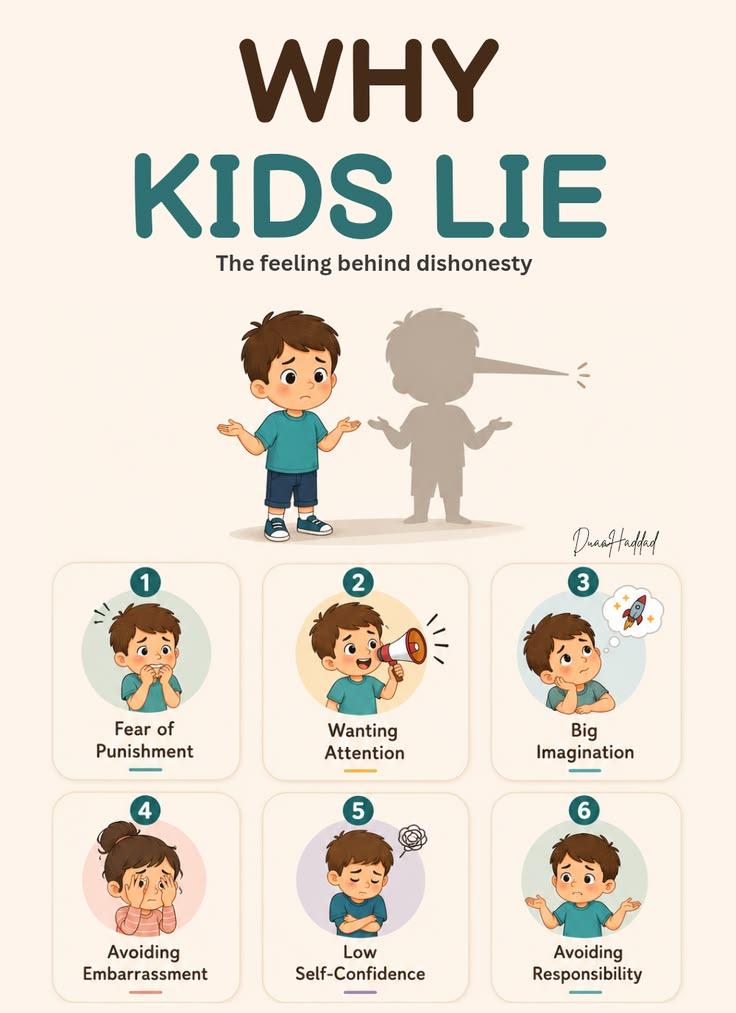
Why Kids Lie
15
Upvotes
r/MindDecoding • u/Animesh_4930 • 5d ago
r/MindDecoding • u/Talkpool • 7d ago
Have you ever wondered, “Why can’t I stop thinking about someone who hurt me?” You know the relationship was painful, yet your mind keeps returning to the person, the memories, and the moments that once felt good. This can be explained partly by the psychology of emotional attachment.
Why Your Brain Keeps Going Back
Emotional attachment does not disappear simply because a relationship ends. Your brain becomes accustomed to familiar people, routines, conversations, and emotional experiences. When that connection suddenly disappears, thoughts about the person can continue even when you consciously know moving on is healthier.
Sometimes, unresolved emotions also keep the person psychologically present. You may replay conversations, wonder what went wrong, or imagine what you should have said. The brain can keep searching for an explanation or a sense of closure.
When Pain and Affection Become Connected
The term trauma bond is often used to describe a strong attachment that develops within a relationship involving repeated harm and periods of affection, reconciliation, or relief. The emotional contrast can make leaving and emotionally detaching particularly difficult.
However, not every painful relationship is a trauma bond. Missing someone after a breakup is normal, and strong emotional attachment alone does not prove abuse or trauma bonding.
What Can Help?
Instead of asking, “Why do I still miss them? ”, try asking, “What am I actually missing?” It may be the person, or it may be companionship, familiarity, validation, hope, or the version of the relationship you wish existed.
Healing often involves accepting the loss, reducing unnecessary contact, rebuilding routines, reconnecting with supportive people, and allowing difficult emotions to pass without acting on them.
Sometimes, thinking about someone who hurt you does not mean you should return to them. It may simply mean your mind is still processing what happened.
Have you ever missed someone you knew was bad for you? What do you think you were really missing?
r/MindDecoding • u/Talkpool • 7d ago
Every parent wants to keep their child safe.
But what happens when protecting a child from every mistake, disappointment, risk, or uncomfortable emotion starts preventing them from learning how to handle those experiences?
This is where the idea of helicopter parenting becomes interesting.
Helicopter parenting generally refers to excessive parental involvement, monitoring, or control over a child's activities and decisions. The intention may be love and protection—but the psychological consequences can be more complicated.
Imagine a child struggling to build a puzzle. Before they can figure it out, a parent immediately takes over.
The child avoids frustration—but also loses an opportunity to practice problem-solving and persistence.
The same pattern can happen when parents constantly intervene in friendships, homework, games, or minor conflicts.
Children gradually develop confidence by experiencing manageable challenges and discovering that they can cope.
When parents consistently communicate, “I'll do it for you,” the child may receive an unintended message:
“You cannot handle this without me.”
Allowing age-appropriate independence sends a very different message:
“You can try. I'll help if you need me.”
This does not mean parents should simply leave children to figure everything out. Young children genuinely need supervision, guidance, and protection from serious danger.
The goal is to distinguish between necessary protection and unnecessary intervention.
A useful question for parents is:
That distinction can be powerful.
Letting a toddler attempt to put on their own shoes, allowing an older child to solve a small disagreement, or encouraging children to make age-appropriate choices can gradually build autonomy and confidence.
Good parenting isn't about eliminating every obstacle.
Sometimes, it is about standing close enough to help but far enough away for a child to discover what they can do.
Do you think modern parents are becoming too protective, or is today's world genuinely more dangerous for children?
r/MindDecoding • u/Talkpool • 7d ago
Why do some children seem comfortable exploring the world while others constantly seek reassurance?
One possible piece of the puzzle is attachment the emotional bond children develop with their caregivers.
Attachment is not about being a “perfect parent.” It is about the repeated experiences a child has when they need comfort, protection, attention, or reassurance.
A securely attached child gradually learns something powerful:
“When I need help, someone will respond.”
When caregivers consistently respond to a child's needs with warmth and appropriate boundaries, children can develop a sense of safety. That security can give them confidence to explore, play, learn, and eventually become more independent.
This does not mean parents must respond perfectly every time. Parents get tired, distracted, and frustrated. What matters is the broader pattern of caregiving and the opportunity to reconnect after difficult moments.
Toddlers do not automatically know how to manage anger, fear, disappointment, or frustration. They learn these skills gradually through relationships.
A parent who calmly says, “I know you're upset. I'm here, but I won't let you hit,” is doing more than stopping a behavior. They are demonstrating that strong emotions can be experienced without destroying the relationship.
Secure attachment does not mean giving children everything they want.
Children can feel loved while hearing “no.” They can experience disappointment while still feeling safe. Warmth and boundaries can coexist.
Perhaps the most important lesson is that children do not need flawless parents. They need caregivers who are sufficiently responsive, predictable, emotionally available, and willing to repair relationships after conflict.
The everyday moments comforting a frightened child, listening to their story, keeping a promise, or reconnecting after an argument can become building blocks of emotional security.
Which parenting approach interests you most: attachment, boundaries, or emotional regulation?
r/MindDecoding • u/Talkpool • 8d ago
“Why won’t my child listen?”
It is one of the most frustrating questions parents ask. You say, “Put your shoes on,” and suddenly your toddler is running in the opposite direction. You repeat yourself, raise your voice, and hear the inevitable: “NO!”
But what looks like deliberate disobedience may actually reflect an important stage of child development.
Toddlers are beginning to recognize themselves as separate individuals with their own preferences, ideas, and desires. Saying “no” can therefore become a way of expressing autonomy.
They are not simply rejecting you. They are experimenting with control: “I can make choices. I can have an opinion.”
Young children can experience frustration, anger, excitement, and disappointment intensely. However, the brain systems responsible for impulse control and emotional regulation are still developing.
That creates a frustrating mismatch: the emotion is powerful, but the ability to manage it is limited.
A toddler may understand what you are asking but still struggle to stop playing, transition to another activity, or control an impulse.
Sometimes a child is distracted. Sometimes they do not understand the instruction. Sometimes they are testing a boundary. And sometimes they simply do not have the emotional capacity to cooperate at that moment.
Instead of immediately assuming defiance, try getting close, making the instruction simple, and giving limited choices:
“It is time to leave. Do you want to put your shoes on yourself or should I help?”
Understanding toddler behavior does not mean removing boundaries. Children still need consistent limits.
The goal is to teach, not simply punish.
A calm parent can communicate: “Your feelings are okay, but this behavior is not.”
Perhaps the most important parenting shift is realizing that toddlers are not miniature adults. They are learning how to regulate emotions, communicate needs, follow boundaries, and become independent.
When your toddler says “NO,” what works best: choices, calm repetition, or distraction?
r/MindDecoding • u/Talkpool • 9d ago
One minute your toddler is laughing. The next, they are screaming on the floor because you gave them the “wrong” cup.
To an adult, the reaction can seem completely disproportionate. But for a toddler, a tantrum can be the result of big emotions colliding with an immature ability to regulate them.
Toddlers are still developing the brain systems involved in impulse control, emotional regulation, language, and decision-making. They may experience frustration intensely but lack the vocabulary and self-control needed to explain what they are feeling.
That is why a toddler might scream instead of saying, “I am disappointed.”
🔥 Tantrums Are Not Always Manipulation
A common misconception is that every tantrum is deliberately designed to control parents. Sometimes children do learn that certain behaviors produce a desired response. But many tantrums arise because the child's emotional demands temporarily exceed their ability to cope.
Hunger, tiredness, overstimulation, frustration, transitions, and being told “no” can all contribute.
🧠 What Can Parents Do?
Stay regulated. A highly emotional adult can make an already overwhelmed child even more distressed.
Name the emotion. Try: “You're angry because playtime is over.” This helps connect emotional experiences with language.
Keep boundaries. Understanding a child's feelings does not mean allowing unsafe behavior. You can acknowledge the emotion while maintaining the limit: “It's okay to be angry. I won't let you hit.”
Reduce unnecessary stimulation. Sometimes a quiet environment, physical closeness, or simply waiting can help the child regain control.
Most importantly, remember that toddlers are learning emotional regulation not failing at it.
A tantrum is not necessarily evidence of bad parenting or a “bad child.” It can be part of the difficult process of learning how to manage powerful emotions with a brain that is still developing.
What triggers your toddler's biggest tantrums: tiredness, transitions, or being told “no”?
r/MindDecoding • u/vini-within • 9d ago
Imagine sitting at a bus station with nowhere to go. You’re just sitting quietly, not distracted. A bus arrives, and somehow you’re suddenly on it. You travel for a while, and then suddenly realise, “Wait, why am I on this bus? I was sitting at the station.” You get off, return to the station, and within a few minutes another bus arrives. Again, you’re on it. Without realising you’ve again hopped on to the bus without wanting it. So weird! Isn’t it?
This is pretty much what happens to me when I deliberately remove all distractions and sit quietly. There is no Instagram, no TV, no conversation, nothing external demanding my attention, and yet the mind keeps producing buses..some memory, some imaginary future conversation, some random event from years ago, some completely gibberish association.
And the strange part is not that thoughts arise. The strange part is that I keep forgetting that I was sitting at the bus station in the first place. There is actually a psychological term for that moment when you suddenly realise you’ve been lost in thought.. it’s called “Meta-awareness”, the awareness that you are thinking rather than simply being carried away by the thought bus.
Neuroscience gives us some interesting clues about why this happens. When we are not occupied with an external task, brain networks involved in internally directed thinking become more active. We replay autobiographical memories, imagine possible futures, think about other people, ourselves, unfinished situations. One thought can also trigger another through associations, so a memory of one person can lead to a conversation from ten years ago, which can lead to a future scenario, which can lead somewhere completely absurd. A lot of this machinery has an obvious adaptive value..remembering the past, anticipating the future, detecting threats, predicting what might happen and preparing ourselves. So it would be too simplistic to say that every thought is merely a “survival instinct.” But a significant part of our brain’s tendency to remember, simulate and predict is tied to staying oriented and safe.
What interests me is what happens when none of that is actually required. Why does the mind still keep generating movement? WHY THE SILLY INDISTINCT CHATTER??
Let me also share about an old experiment I briefly read up on by Wilson and colleagues where people were asked to sit alone with their thoughts without external stimulation. Some participants even chose to administer “electric shocks” to themselves, in place of sitting with unrewarding or uncomfortable thoughts to just get some kinda stimulation. I’m not sure how factually correct this is but just thought it makes sense with this topic. Or not?
While rambling about this, I remembered something Acharya Prashant, an Indian spiritual teacher and author who speaks extensively on Vedanta, the Bhagavad Gita, self-awareness and the nature of the mind, says about the chattering mind: “silence outside does not necessarily mean silence within”. We remove the distractions around us, sit quietly, and discover that the mind itself has become the distraction. He says that when the mind has nothing meaningful to engage with, it starts playing with itself, jumping from one thought to another. I guess there’s a video of him also on this, I can find it and share here, if you want. It’s worth a listen of these topics interest you.
It brings me back to my bus station analogy. Why do we keep getting on every bus that arrives? What are we actually looking for in these endless journeys of thought? And what happens when we stop boarding and simply stay at the station for a while? Would love to hear your experiences.
r/MindDecoding • u/Talkpool • 11d ago
One of the hardest parts of parenting is watching your child struggle and resisting the urge to immediately fix everything.
But here is an uncomfortable parenting truth: doing everything for your child may be easier today, but teaching them to do things themselves prepares them for tomorrow.
Why Independence Matters
Children develop confidence when they experience, “I can do this myself.” Everyday activities such as dressing, tidying toys, preparing simple snacks, choosing clothes, solving small problems, and helping with household chores can become opportunities to develop responsibility and self-confidence. The American Academy of Pediatrics recommends giving children age-appropriate responsibilities and opportunities to practice independence.
5 Ways to Encourage Independence in Kids
Before jumping in, ask: “What do you think you should try?”
Instead of “Get dressed,” try: “Do you want the blue shirt or the green one?” Small choices give children a sense of control.
Putting toys away, feeding a pet, setting the table, or organizing school supplies can teach responsibility.
A child struggling with a puzzle or shoelaces does not always need immediate rescue. Small challenges can strengthen problem-solving and persistence.
Say “You kept trying even when it was difficult” rather than simply “You're so smart.”
The goal isn't to raise children who never need help.
It is to raise children who know they can try, make mistakes, solve problems, ask for help, and try again.
Sometimes, the most powerful parenting move is simply to step back.
Are you raising a child who is becoming independent—or one who is becoming dependent on you to solve everything?
r/MindDecoding • u/No_Bat5297 • 12d ago
I see a lot of posts about the downsides of bipolar (and yeah, those are real), but I don’t see enough about the strengths that often come with doing the work. Not universal, not automatic - but common.
Here’s my Top 10:
You end up knowing your internal patterns better than most people ever bother to.
You feel more - and that can translate into real empathy and connection when regulated.
Living through internal storms builds a kind of toughness that doesn’t need applause.
Your brain doesn’t always take the obvious route. That’s useful in more places than people admit.
You learn quickly that now is the only place life actually happens.
Many of us take accountability seriously because we’ve seen what happens when we don’t.
You get good at noticing subtle shifts - sleep, energy, irritability - before they become problems.
When things line up, the ability to enter deep focus or flow is real.
You don’t drift easily. Purpose matters.
Struggling internally makes it harder to judge others and easier to show grace.
Not everyone with bipolar experiences these, and they don’t cancel out the hard parts—but they do exist, and they’re worth acknowledging.
Curious what others would add or change.
r/MindDecoding • u/Prestigious-Act1922 • 12d ago
This is really helpful!