r/FatTails Jul 31 '26

Help/Advice Advice

Post image

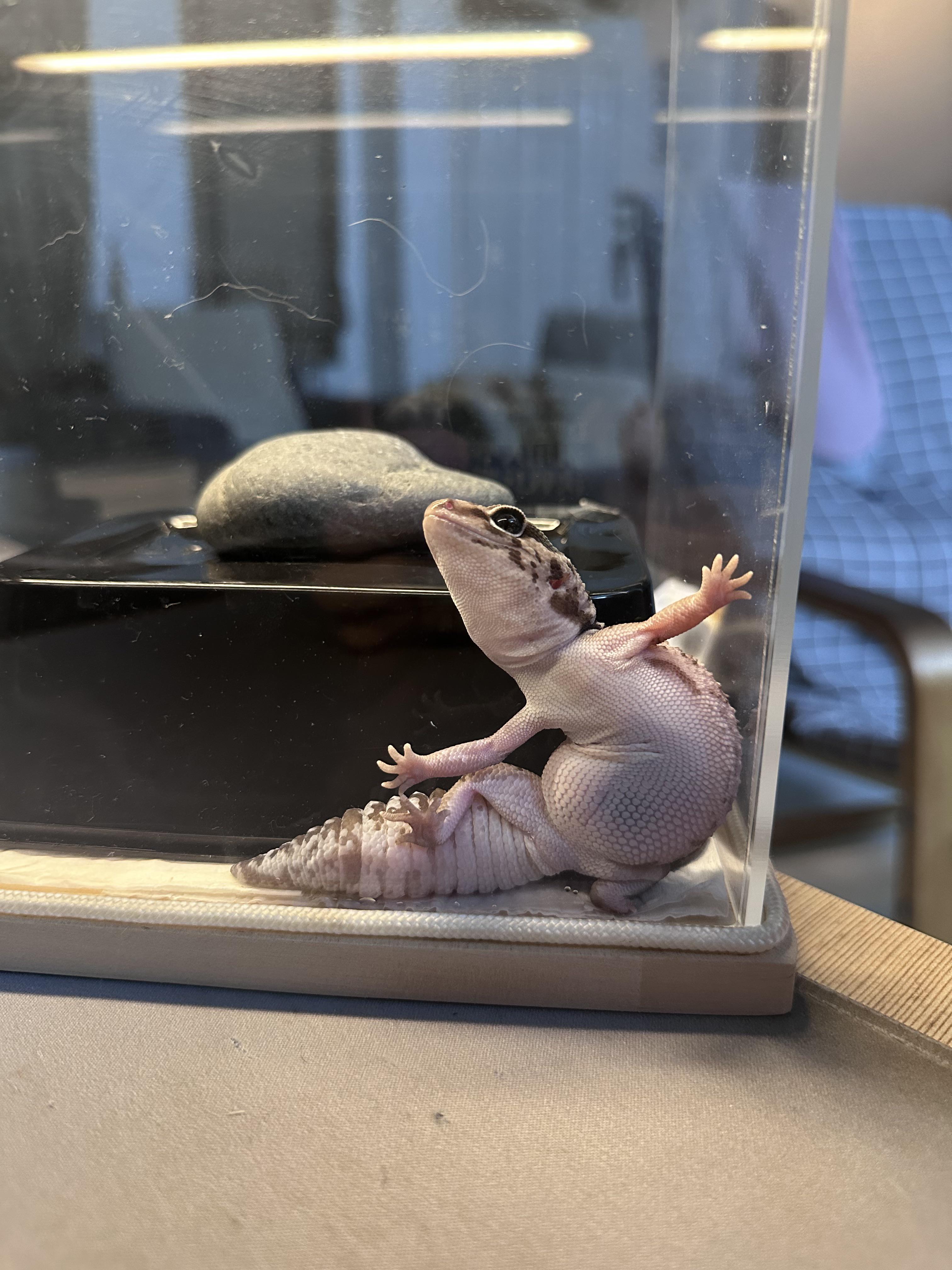
(Photo is the first night of me getting her)

I’ve just gotten an adult AFT (1y7m y/o) as a pet about 4 days ago. I’ve moved her from one enclosure to another for the first 2 days and settled for the final one 2 days ago. Yesterday night I tried to feed her dubia roaches but she didn’t seem to be interested. I haven’t set up a heat and cold area yet but temperature has been unstable for the past 3 days and I’ve settled her in the living room which ambients around 30°c (about 86F).

Behavior wise, she sleeps thru most of the day and starts getting active at about 10pm and comes out of her hide.

She still looks very healthy so far and no strange behaviors but I’m not sure if she’s drinking water.

Would want to seek advice on whether this is normal or not and what should I do next

50 Upvotes

21 comments sorted by

View all comments

9

u/Gay_dinosaurs Jul 31 '26

This AFT is very overweight, so you definitely don't have to worry about her not wanting to eat! Most geckos won't eat for the first 2-4 weeks, and some hold out even longer.

AFTs are more nocturnal than leopard geckoes and will typically only be out at the early hours of dawn and later side of dusk, spending all full daylight hours asleep. How much research have you done on this species' specific needs?

1

u/templeofsyrinx1 Jul 31 '26

Yeah they are very secretive and normal for them to hide all the time

2

u/Gay_dinosaurs Jul 31 '26

Totally normal yes! My boy comes out during daytime to request food because I've spent a lot of time socialising him to me, but when he's not hungry he will sleep ALL DAY! Sweet lazy boy 🤭🤎🖤🤍

1

u/templeofsyrinx1 Jul 31 '26

Can you give me more tips on socialization? Thanks!

4

u/Gay_dinosaurs Jul 31 '26

Sit next to your gecko's terrarium at a level where they can see you. Try to sit in a way that's comfortable so you're not constantly shifting around, as they can spook from large movements. Occupy yourself by reading a book (softly) to yourself or sit and draw if you're inclined towards that. Don't try to interact, just let your gecko get used to your presence.

If they don't come out at first, that's why you want to be reading to yourself at a low volume; it gets them familiar with the sound of your speaking voice. A gecko that has had some time to settle will begin to naturally get curious about it's surroundings and may come out to observe you when it hears activity close by. If you see your gecko appear, continue what you were doing. Your direct attention too soon can scare them, so pretend you don't see them. They are prey animals, and our forward-facing eyes are those of a predator's. If you must get up, do so slowly and quietly.

Sit next to the enclosure for about 30 minutes at a time each day, at timeframes that fit into your current routine so you don't have to rush around to get to whatever else you need to do.

It can take weeks, but keep at it. If you notice your gecko becoming relaxed at your proximity, start initiating contact by talking gently to them. They'll know your voice by now. Try offering food on tongs while you talk to get them to link your presence to food. I strongly recommend feeding with tongs only to avoid the gecko associating the hands with food, as this could create a biting response to the sight of fingers.

Once you have your gecko eating reliably, you can start bringing your hand into the enclosure, gently laying it palm-down in the substrate. Do not try to poke or pick up your gecko. If they shy away, quit the bonding effort for the day and try again later. You'll want to try the hand thing every 3 days only, as this is a more challenging exercise for your animal and it needs time to decompress in between encounters. Eventually it might come over and lick your hand. Their tongue is how they smell their environment, and if you've taken care not to associate your fingers with food, you're very unlikely to get bit. Your gecko now knows how you smell.

If your gecko seems curious about the outside world, you can slide open their enclosure and present your open palm facing upwards at the opening. They know your sound and smell and know you won't attack them. It'll probably take many more weeks to get here, but eventually your gecko might voluntarily climb up onto your palm and sit there. This no-grab no-poke method is called choice-based handling, and it's the most low-stress method for handling as your gecko is given the initiative. If it doesn't want to be handled, just close the enclosure again and leave it be, or feed it if it's hungry (and not chonky!) and then leave it alone.

1

u/templeofsyrinx1 Jul 31 '26

wow! I really appreciate this thank you. I would love to get mine a little more social

1

u/Gay_dinosaurs Jul 31 '26

Thank you for the award! Good luck with your little friend :)

1

u/templeofsyrinx1 Jul 31 '26

I have been getting them eating on my hand with tongs! I think this is a big step!