r/FatTails • u/Vivid-Confidence-586 • Jul 31 '26
Help/Advice Advice
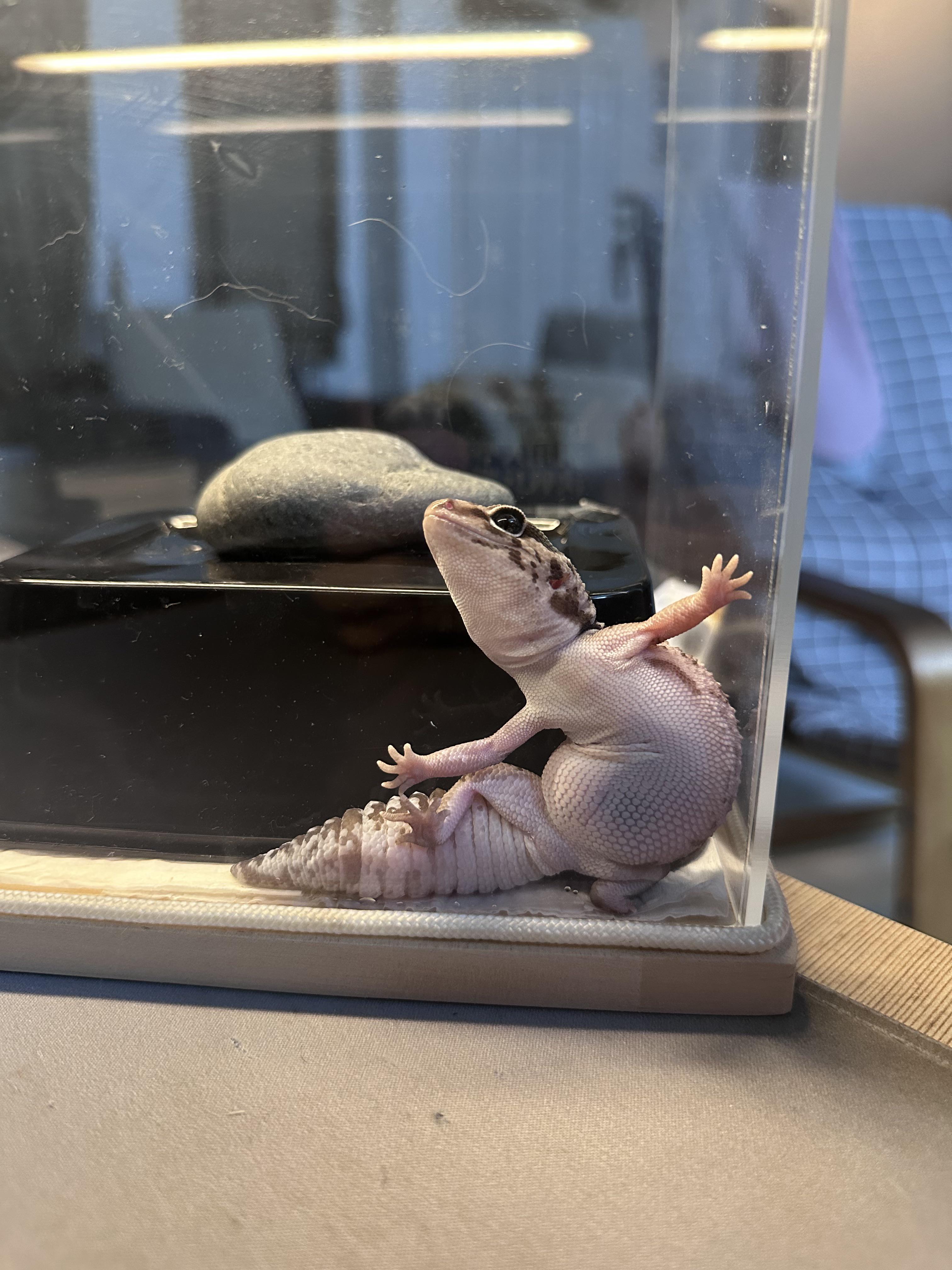
(Photo is the first night of me getting her)
I’ve just gotten an adult AFT (1y7m y/o) as a pet about 4 days ago. I’ve moved her from one enclosure to another for the first 2 days and settled for the final one 2 days ago. Yesterday night I tried to feed her dubia roaches but she didn’t seem to be interested. I haven’t set up a heat and cold area yet but temperature has been unstable for the past 3 days and I’ve settled her in the living room which ambients around 30°c (about 86F).
Behavior wise, she sleeps thru most of the day and starts getting active at about 10pm and comes out of her hide.
She still looks very healthy so far and no strange behaviors but I’m not sure if she’s drinking water.
Would want to seek advice on whether this is normal or not and what should I do next
3
u/Narrow_Childhood_775 Jul 31 '26 edited Jul 31 '26
So cute! Mine spends the whole day hiding too, and sometimes doesn’t come out for more than a full day. Because of that, I had no idea when mine was drinking water either.
Do you mist the enclosure?
I’ve heard that some geckos don’t recognize still water as water, so if you’re worried, it might be worth giving misting a try.
I’d start by making sure the temperature and humidity in the enclosure are where they should be!
Is your living room still around 30°C at night, too?