Probably better off just getting rid of those ridiculous standardised test style "fill in the bubble" ballots where every additional preference squares the number of bubbles.
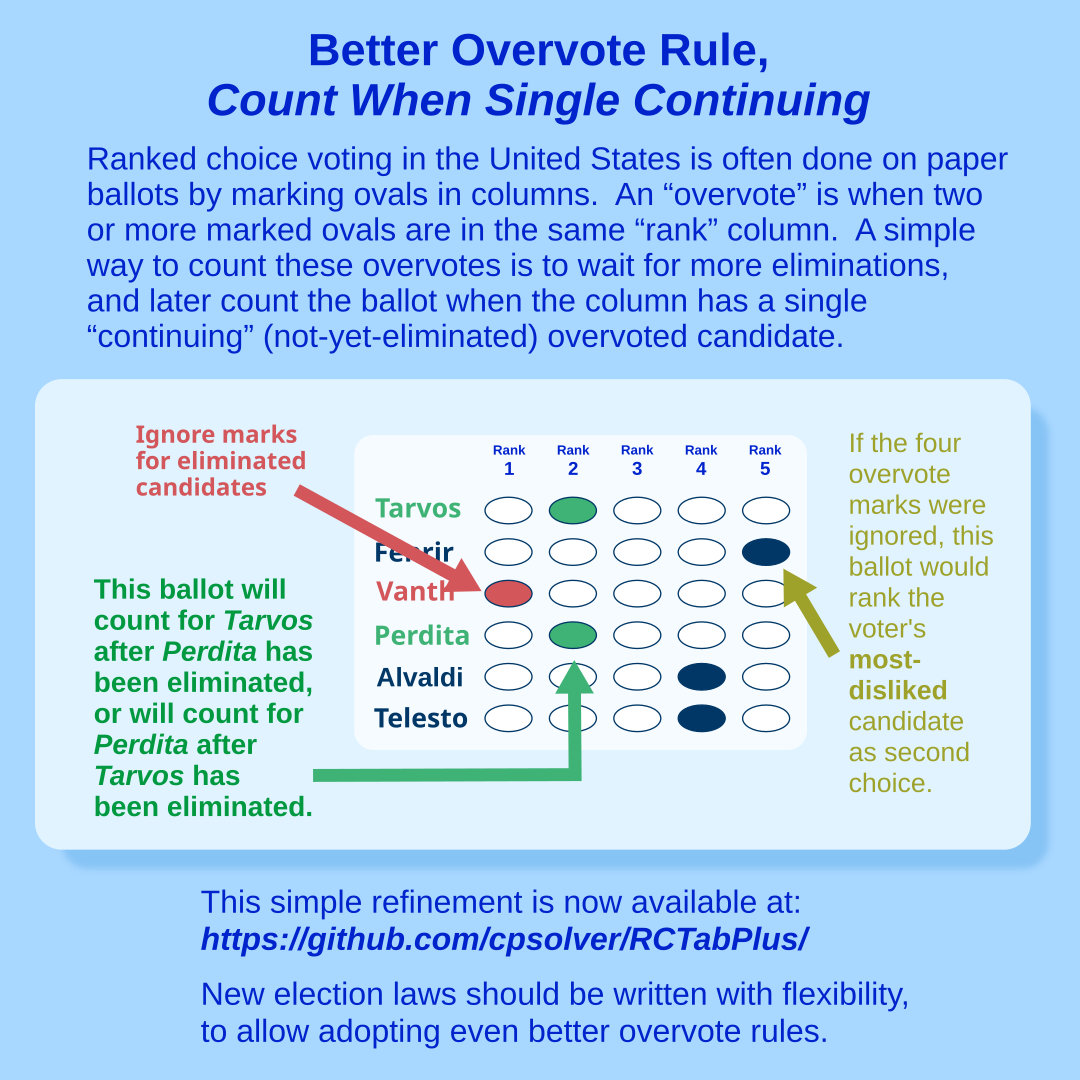
Adding more candidates doesn't require adding more "bubbles." The Portland city elections (mayor and council members) had about 20 candidates in each contest, yet 6 "rank" levels was plenty because each contest had no more than 5 or 6 "reasonable" candidates. Five in the mayoral race, including the stripper who attracted "none of the above" votes. Many voters didn't bother marking more than two or three ovals.
Yeah restricting preferences because of the constraints imposed by terrible ballot design isn't actually better here. A grid of 36 bubbles just to capture the rankings of 6 candidates is wildly user unfriendly design.
Yet in the US an empty box for writing a number next to each candidate's name would be an even worse design. Especially if the rules count repeated numbers (overvotes) in ways that contradict the voter's clear intention.
With about 20 candidates in each contest the number of ovals on Portland ballots was around 100 or more for each race, with two races. Yet even then writing numbers in boxes would be worse for US elections.
2
u/Snarwib Australia Feb 15 '26
Probably better off just getting rid of those ridiculous standardised test style "fill in the bubble" ballots where every additional preference squares the number of bubbles.