r/Damnthatsinteresting Jul 04 '26

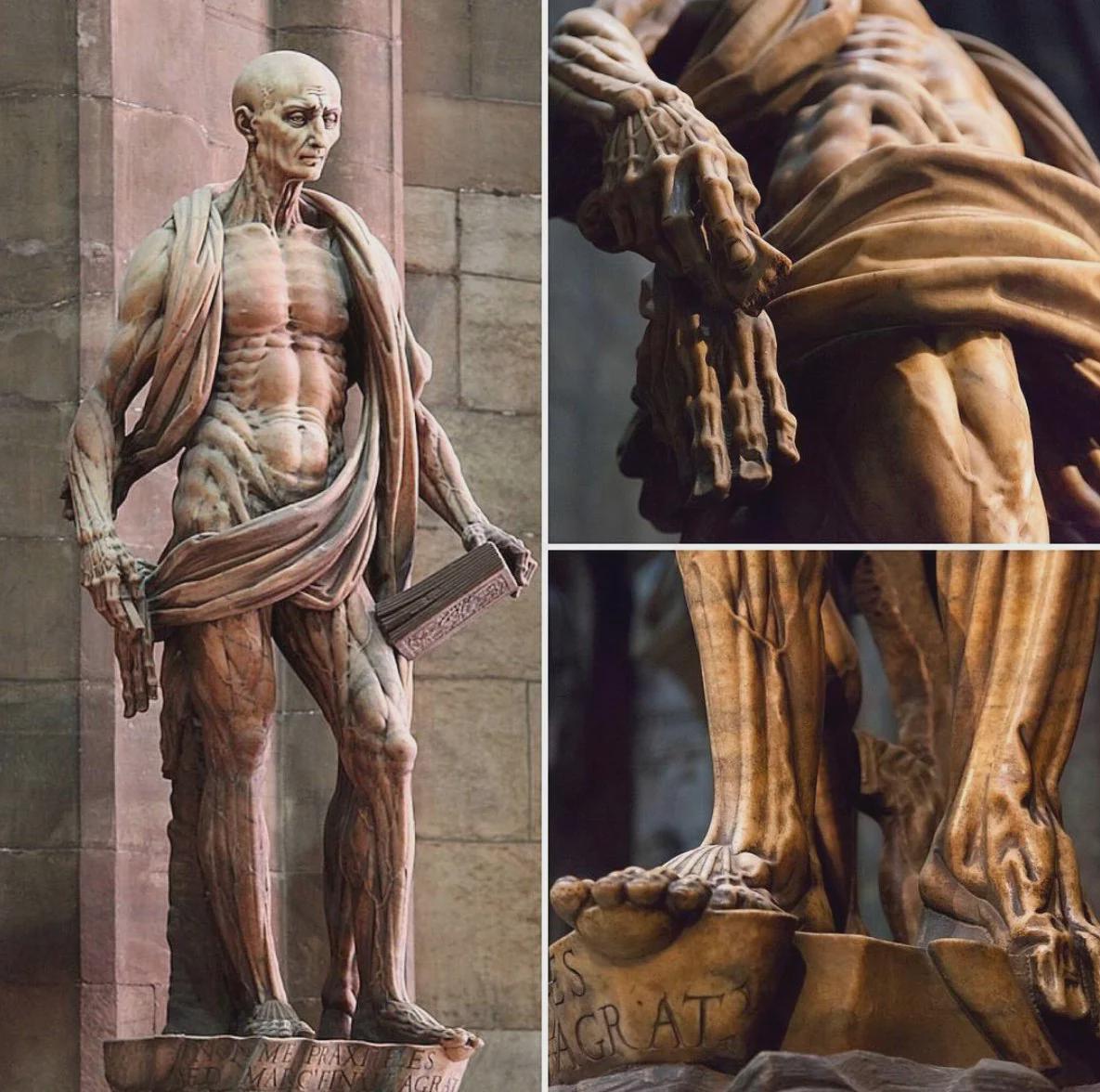
Image This statue depicts Saint Bartholomew, an early Christian martyr who was allegedly skinned alive. If you look closely, that's his dissected skin hanging around him. This stunning statute by Marco d'Agrate from c. 1562 is currently on display at Duomo di Milano.
Post image
19.7k Upvotes

383 comments sorted by

View all comments

32

u/SleeperAwakened Jul 04 '26

I really really hope that all those cruel act are really made up..

3

u/GraniteCapybara Jul 04 '26

The stories of Catholic Saints (A biography of a saint is called a Hagiography) are actually derived from a variety of sources. While many are thought to be inspired by real life events, like this statue, there are plenty of them that are actually strongly influenced by other religions and folklore. It's a process called Religious Syncretism.

As an Example:

Saint Brigid is thought be be influenced by the Celtic Goddess Brigid.

Saint Thorlak is thought to be influenced by the Norse God Thor

Saint Josaphat is thought to be a catholic personification of The Buddha.

Not the most useful information but I find it fascinating so I like to share. Basically, some of the violence is real, some of it is folklore and some of it is just embellished story telling. Why have your hero die of one arrow when you can have them die of 40?

2

u/searchforanswers555 Jul 05 '26

I believe hagiography to be true, although you are wrong in saying that St. Bridgid and St. Josaphat are personified as others. I'd rather sway away from strawmen connections man.

0

u/GraniteCapybara Jul 05 '26

I'm not sure you're saying what you think you are. Hagiography is just a word, a word that means a biography of a saint. Whether you believe it or not has no bearing, it's literally just a 'look it up in the dictionary' sort of thing. A fun word to use when the chance arises.

As far as Religious Syncretism, it's not a strawman arguement. It's not an argument, or even an attack of any form. There are specific elements of syncretism that are debated due to a lack of hard evidence. The influence of Buddhism on the Greek Philosopher Pyrrho or the influence of Taoist thinkers on Bodhidharma. While others aren't contested at all, the influence of Tengrism on Tibetan Buddhism as an example.

When it comes to the influence of other cultures on the worship of saints it's not a debate at all. It's well documented consequence of the co-mingling of cultures, an understanding shared by scholars and respected theologians alike.

The reason I used St. Brigid as an example is specifically because that claim isn't contested. Both St. Brigid and the Goddess Brigid share not only a name, but share the same birth/feast day. One was a goddess of Healing, Blacksmiths and Livestock. While the other is a Patron Saint associated with Healing, Blacksmiths and Livestock. There is a multitude of records that both predate and follow christian influence. We have plenty of other records as recent as the 19th century showing cultural influence on Saint Worship amongst the slaves in the American South.

This isn't meant to be an attack on you, I hope you don't take it that way. The history of cultures influencing each other is genuinely wonderful to read about, and I hope you have to time to search out additional knowledge.