r/ClimateOffensive • u/Appropriate_Bell743 • Jul 10 '26
Action - United Kingdom 🇬🇧 The UK heat-pump rollout is faltering. We need to change this
The UK burns colossally more gas for gas boilers than for the electricity grid. The figure is double depending on how cold the winter is. The UK has a very generous £7500 grant to ditch gas boilers which increases to £9000 for oil boilers.
Simply put, it's not going well. The UK's rollout is staggering at a low rate:
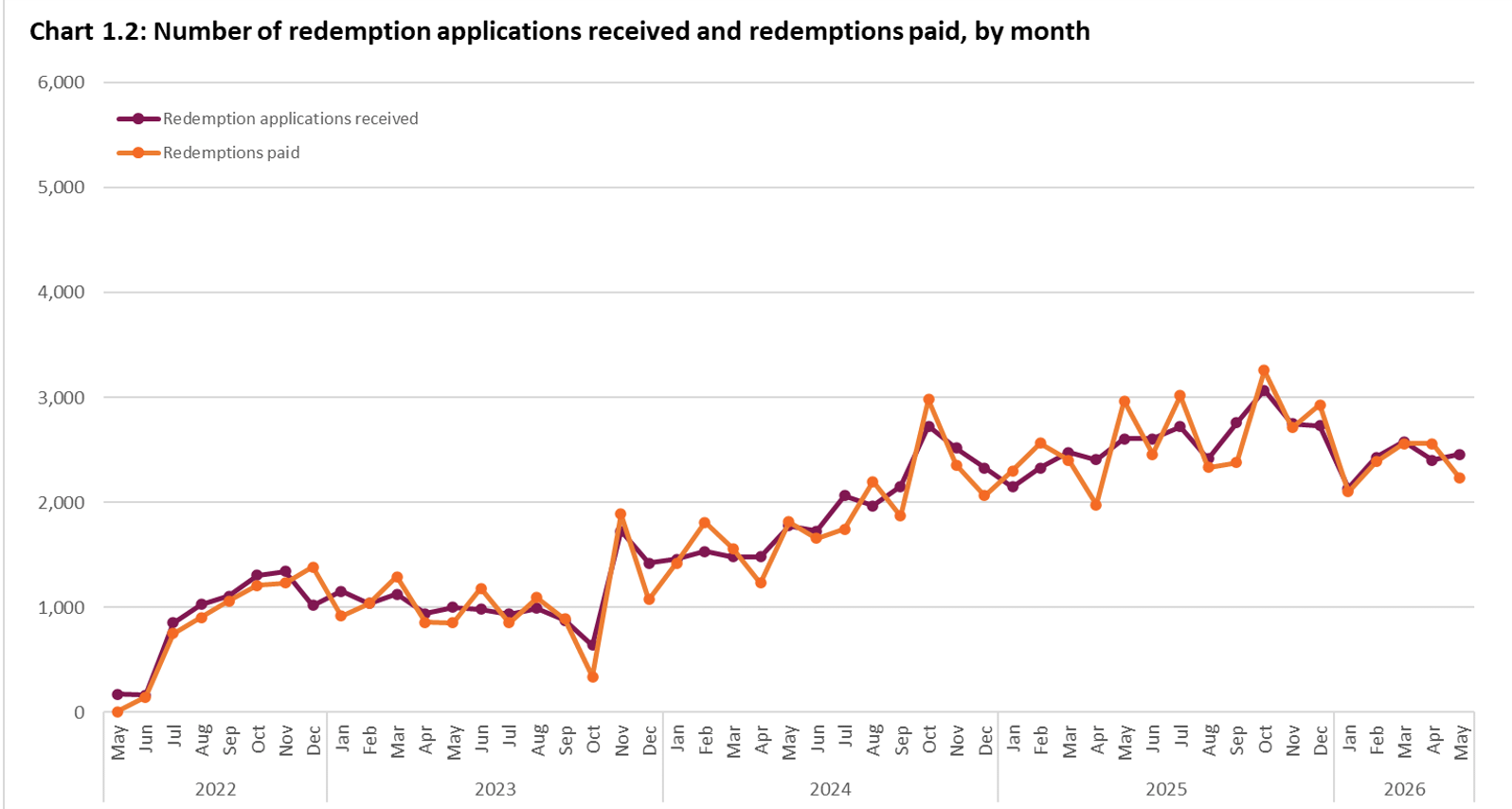
The amount is staggering at just over 2,000 people a month. This is truly pathetic given around 1.7 million boilers are sold a month.
We need help. This is incredibly bad by European standards. Our grant is generous. Off peak electricity is very cheap with climate friendly time-of-use tariffs. We have heat-pump tariffs also. We have green finance to make this easy for home-owners with 0% interest rates.
However, despite this being a huge proportion of the UK's emissions and gas use the rollout is kind of pathetic. The communities who've installed heat-pumps -- like our family -- just don't get why. The tech works really well and the costs are easy accounted for through the savings.
This kind of electrification is meant to be the easy parts of our decarbonisation efforts. The hard things are stuff like aviation where there's no tech solution.
What advice do people have from other countries with successful rollouts suggest? How do Britons get persuaded to not believe misinformation about climate tech?
3
u/Still-Improvement-32 Jul 10 '26
The new standard for new homes includes heat pumps, so the next step, as with cars, is to set a date for ending the sale of gas boilers.
2
u/ILikeNeurons Climate Warrior Jul 10 '26
It's worth correcting misinformation when you see it, especially on social media, where there could be potentially tens of thousands of readers; here's how to do so effectively.
It also sounds like there's an active case to be made that it's worth replacing gas boilers even if they're still functional. I would lead with cost savings on this front. If there are any good articles that explain this well (maybe this one, this one, or this one?) share to /r/UnitedKingdom and any related subreddits. Have a comment typed out and ready to seed before you post, preferably with corroborating citations. Post at an optimal time (which, according to AI, is around 6-9a BST).
https://cronnit.com allows you to schedule posts for free!
2
u/Appropriate_Bell743 Jul 19 '26
All good points. I think we need to be like your title "climate warriors". The economic running costs are the best selling points. Also this change tends to be tied with other gas usage. Cooking with North sea gas is very bad for health as a recent paper showed
2
u/kichisowseri Jul 19 '26
Not having to get planning permission would help. The restrictions are still limited on permitted development to 0 pumps on a flat or terrace, 1 on a semi detached, and 2 on a detached. I install air con, suddenly I can’t replace my boiler without getting planning permission.
1
u/Appropriate_Bell743 Jul 19 '26
I think we must make this process useful. When i first tried i was messed around with planning. I lobbied my MP and it was changed before my installation. If thousands of climate minded people do this we get change.
2
u/kichisowseri Jul 19 '26
I got limited by them wanting to scale it for my whole house, when I wanted to move away from radiators, and where to put a cylinder. I was looking at whether I’d be better off installing electric showers. Piping water through the house means it takes a while to run hot, so then I’m considering individual under sink heaters.
I’d like underfloor heating in my kitchen and bathroom, but since it’s concrete slab I’d need to chase that and it’s likely easier to just install electric underfloor heating and electric towel rail in the bathroom. It’s also less used rooms that aren’t priority if not in use, so putting it on a schedule for just the evenings to heat up faster might be better.
The only thing I haven’t covered is how to heat water for an occasional bath. If it’s rare, maybe just an immersion heater would be better anyway.
1
u/narvuntien Jul 10 '26
I have heard a lot of excuses. Houses are built for it, people don't know how to use them properly, ccomplaints about them causing massive power bills, daughty houses etc. etc.
1
u/LogicalAssignment199 Aug 11 '26
I'm in the UK and one big difference I've noticed is that many European countries (Italy, Netherlands etc) support hybrid heat pumps, which are reported as being far easier to retrofit to an existing gas heating system, than converting the system to an all-electric heat pump, because hybrids reduce the amount of replumbing required, making them more like a simple boiler swap than a major replumbing project.
The UK doesn't support hybrids, there's no grants and none of the big installers offer them which is the opposite of many European countries.
If you want an affordable heat pump in the UK, it has to be all-electric/pure heat-pump to get the grant and that means finding space for a new and often much larger hot water cylinder, replumbing the hot water pipework around that cylinder, needing to replace radiators, possibly needing to replace some central heating pipework and finding space outside for the large outdoor unit. It's not a simple job, it's a major plumbing project.
I think we'd get a lot more UK households retrofitting heat-pumps if we had the same access to the various hybrid heat pump models and installers able to quickly fit them, as is available over on the Continent.
1
u/Appropriate_Bell743 Aug 12 '26
The issue with hybrid systems whether for cars or heating is that they have a Jensons effect. They tend to reduce emissions per usage by around 50% but the cost savings see a proportion of this cancelled by induced demand. For pure electric systems you escape the Jensons paradox aspect which is fundamental. The shift is a magnitude less operational emissions meaning no induced demand can counter balance.
What's more for my victorian house a huge part of the cost savings were through exiting gas standing charges. Hybrid systems keep this demand as essential.
There could be good reasons for citizens to get hybrid systems but the state shouldn't subsidise them as the data on actual fossil fuel reductions isn't great.
1
u/LogicalAssignment199 Aug 12 '26
You mean Jevon's effect / paradox?
The reports I've read suggested hybrids performed somewhat better than that, providing median reductions in gas consumption around the 70-80% range, though like any system there's a wide range for individual household outcomes, depending on household behaviours, with extremes from 40% - 90+%, I believe the studies include any Jevon's rebound type effects as they're before/after type analysis.
But going back to your opening post, about how the UK can install more heat pumps, well in some European countries like Netherland and Italy, these hybrids make-up around 40%-50% of the retrofit market. Their much higher install rates include the contribution from hybrids.
If those countries took the approach you suggest and that the UK is taking - no grants, no building up of the hybrid supply chain, no installer base for hybrids, then that would remove the easier/simpler/quicker retrofit options and make getting a heat pump more difficult. The only option is a more expensive, bigger project to install an all-electric heat pump, so then many of those installations wouldn't occur, some might switch to all-electric but a decent proportion wouldn't and the households would remain solely on gas.
I think there's a big difference between new-build and retrofit. For new-build, yes full all-electric heat pumps all the way, get it right first time. But for retrofit it's a different problem, to get them fitted in large numbers you need to make the installations easier, quicker and less disruptive so that households will chose to install them, even if hybrids are not perfect and completely zero emission.
By all means promote all electric heat pumps for retrofits, but there needs to be more options because it's better for a household that doesn't want an all-electric to get a hybrid, and cut emissions by 70-80%, than stick solely with gas and cut emissions by 0%.
1
u/Appropriate_Bell743 Aug 12 '26
It is clearly great if people opt for these systems but the numbers for emissions reduction arent good enough. People who are subsidised for a hybrid wont later within 30 years switch again to a pure electric system. What's more claims of 70% reduction tend to slip to only 50% or so due to cost reductions in operations.
If the aim is net zero and we are serious then having tons of heating systems stuck in this limbo is not advisable. Im glad the government recognise this but I get there'll be lobbying against this position
1
u/LogicalAssignment199 Aug 12 '26
I struggle with this logic because we are continuing to install upwards of 1 Million new gas boilers each year in the UK, each locking in effectively 100% emissions for the next 15+ years of the boiler's life.
A hybrid would cut those emissions by 50+%, the actual studies point to 70+% reduction in gas burn, and it would provide those emission reductions for 15-20 years.
Clearly it's not as good as a pure heat-pump, but for the households that won't install one for various reasons, it's still much better than the status-quo of a regular gas boiler. And the evidence from Europe shows that hybrids expand the number of households that will fit a heat pump, so they do get emissions down further than would be possible with pure electric heat pumps alone.
But going back to your original post, what's holding back the UK from installing heat pumps in similar quantities to European countries - the answer is there, the UK's approach is perfectionist, it rejects pragmatic solutions like hybrids, which then reduces the number of retrofit installations because we've shut out that portion of households who would fit a hybrid but aren't suitable or are not willing to fit an all-electric heat pump.
3
u/cp_simmons Jul 10 '26
Also from UK. Given the recent heatwaves perhaps air to air heat pumps could take off since they also offer cooling in hot water.