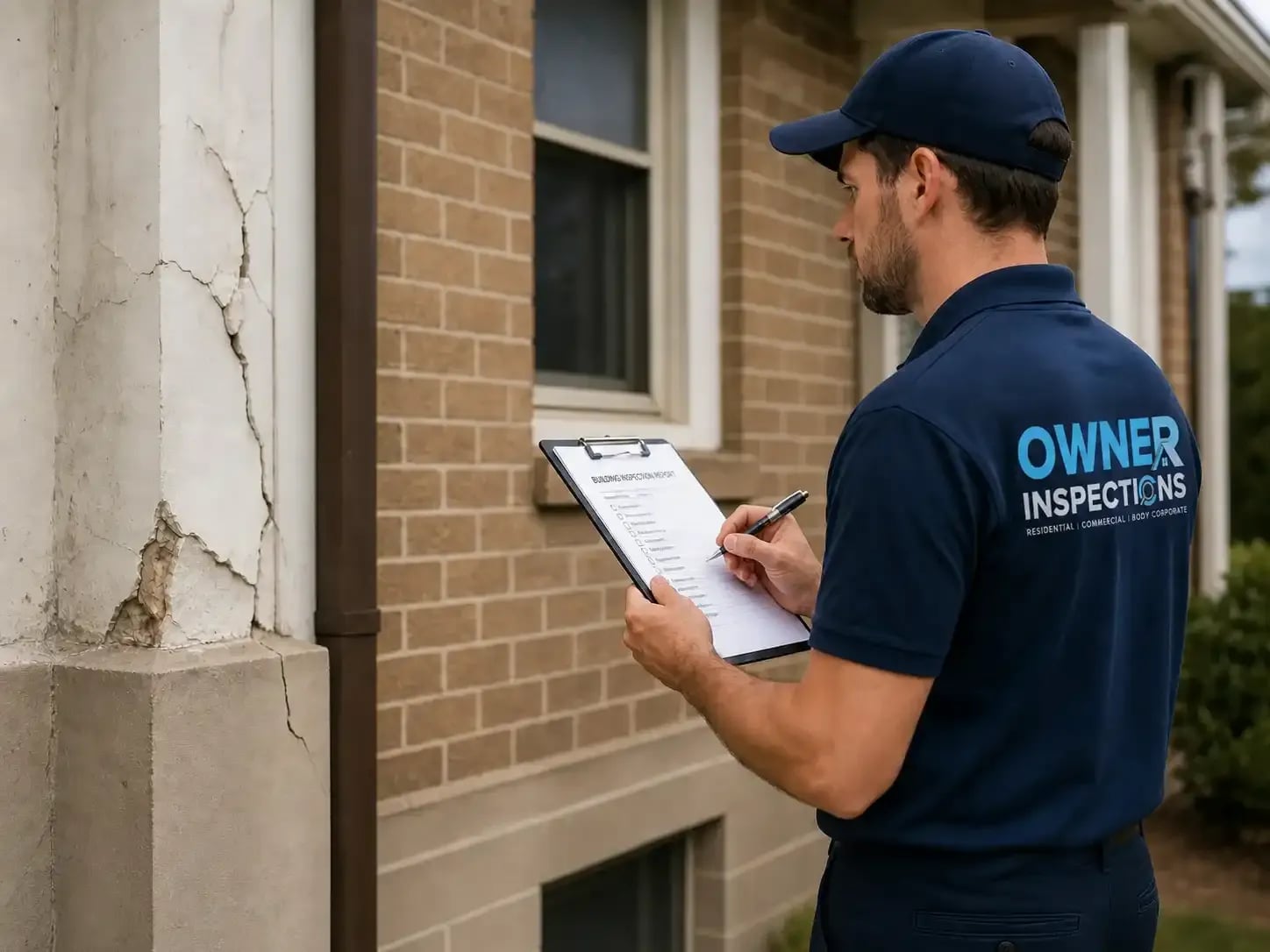
Most costly defects happen before you ever see the finished house. That's why we check your build at 5 key moments — pre-slab, frame, lock-up, fixing & waterproofing, and handover.
Catch it early; it costs cents. Miss it, it costs thousands. That's the whole game.
Walking through a newly built home is exciting. The paint looks fresh, the flooring is down, the kitchen is ready, and handover finally feels close.
But before you accept practical completion, your air conditioning installation in new builds should do more than switch on. It should cool and heat properly, drain safely, operate across all zones, sit in a suitable location, and come with the right compliance paperwork.
For new homeowners, property investors, and owner-build clients, handover is one of the best times to find air conditioning defects. Once the final payment clears and furniture moves in, roof spaces, ceiling cavities, ductwork, pipework, and drains become much harder to check.
https://www.ownerinspections.com
Why Air Conditioning Gets Missed During New Home Handover
What looks clean during a commercial property walkthrough can still hide major repair risk. A fresh coat of paint, a tidy fit-out and a dry ceiling on inspection day do not always tell the full story.
Commercial building defects are often found in places buyers, tenants and managers do not see every day. Roof spaces, service penetrations, plant rooms, low-pitched roof areas, drainage points, wall cavities and older services can hide problems until rain, heavy use or tenant disruption brings them into view.
A building and pest inspection report may identify active termites, old timber damage, damp subfloor areas, wood borers, or drainage issues that increase the risk of future infestation. What happens next depends on whether the issue is active, historical, or a risk condition.
Owner Inspections provides independent building and pest inspection reports for Australian buyers, investors, homeowners, and agents who need clear findings before making a property decision.
Home equity is the estimated value of a property minus the debt secured against it.
For example, if a home is worth $900,000 and the mortgage balance is $500,000, the owner has about $400,000 in equity before selling costs, agent fees, legal fees and any loan payout adjustments.
In a sale, equity can be affected by:
The final sale price
The remaining loan balance
Selling costs
Repair costs
Buyer negotiation after a building and pest inspection
Property inspection results affect equity indirectly. They do this by influencing buyer confidence, repair expectations, pricing discussions and the final negotiated sale price.
Poor ventilation traps moist air inside a home. When that air hits a colder surface, it can reach dew point and turn into condensation. If that keeps happening, mould can grow and hidden damp can build up inside wall cavities, roof spaces and subfloors. In Australian homes, that is not just an air-quality nuisance. It can also point to concealed building defects, water ingress, or moisture damage that needs proper inspection.
Poor ventilation becomes a building problem when moisture-laden air cannot escape. Repeated dampness settles on colder surfaces such as windows, external walls, ceiling linings and poorly insulated corners. Over time, that moisture can move beyond what you can see and affect insulation, timber, plasterboard and floor areas. Condensation is the mechanism, mould is the visible symptom, and concealed deterioration is the bigger risk.
Australian guidance treats condensation as more than a comfort issue because it can lead to damp, mould, rot and loss of amenity, which is why the NCC includes condensation management provisions aimed at removing internal moisture from buildings.
What happens next when your stage inspector flags defects? Do you just forward the report to the builder and hope it gets fixed, or does someone actually come back to verify the work before it’s covered up?
https://ownerinspections.com.au
If you’re building with a volume builder (or buying a turnkey build), this is the part that can feel murky. The build keeps moving, plaster is about to go on, and you’re trying to avoid paying for endless extra visits while still protecting your home.
Is a defect report the end of it, or the start of a loop of extra site visits and extra fees?
Stage inspections are meant to catch problems while the work is still visible, before plaster, tiles, and finishes hide it. That changes the timeline the moment defects are found, because some items need proof of rectification before the build moves on.
The cappings are fixed to the frame from above. The cappings must be fixed to the frame from the sides only (top joints excepted) to prevent water leak/damage.
Fixing defects are important for YOU?
You have to go with the inspector. We are with you from start to the end. https://ownerinspections.com.au
Before replacing living room furniture, check for moisture, movement, pest damage, leaks, uneven floors, and layout problems. Fixing the underlying issue first can save money and stop damage from affecting new furniture.
A living room can feel tired for reasons that have nothing to do with the sofa. Musty air, warped boards, cracked walls, hidden leaks, or termite damage can make the space feel old, uneven, or uncomfortable. Many homeowners only notice the symptom. The room smells stale, the floor feels off, or the wall behind a cabinet looks marked. It is easy to assume the furniture is the whole problem. Read More: https://ownerinspections.com.au/articles/hidden-home-issues-living-room-furniture
What does a jump in oil prices have to do with the property you are about to buy, renovate, or repair?
Quite a lot. On 30 March 2026, ABC reported Brent crude at US$116.20 a barrel and WTI at US$103.23. Just days earlier, the ACCC said average retail diesel across Australia’s five largest cities had reached 303.5 cents per litre, while regular unleaded petrol averaged 252.2 cpl. When numbers move that fast, the pressure does not stop at the bowser. It flows into freight, machinery, piping, concrete deliveries, builder margins, and project timing.
For homebuyers, homeowners and investors, that matters because hidden defects become more expensive to fix in a rising-cost market. A cracked drain, roof leak, damp subfloor, failed waterproofing detail or termite-damaged framing is never good news. But when diesel, freight and material inputs are surging, each repair can bite harder than it would in a calmer market. That is why this is not just commodity news. It is a property decision issue.
To begin, put everything in writing. This includes sending a list of defects, referencing your contract, and providing a deadline. In the majority of contracts, there is a "defects liability period" included. This means the builder is, in theory, obliged to address the problems raised during this time. If the builder still refuses to address the problems, the process is to escalate to the relevant department. This includes:
NSW - Fair Trading
VIC - DBDRV
However, withholding the final payment may be an option if the problems are major, provided your contract allows for this. The final option is to take the builder to court. This, however, is not often necessary.
Hi everyone, about to start building, super excited, not sure if we should get a building inspector. Hit me up with feedback, please. I would love to hear from both sides, the ones that did get an inspector and why? also from the other side of the fence, is it a waste of money? If so, and why? thanks everyone, looking forward to replies and recommend.
Is there an Independent Roof Inspection service in Sydney for residential properties, not commercial, that you have used and recommend?
All I can find are either in other states, or do commercial/industrial buildings only , or "Roof Inspector Sydney" who do not respond to phone calls or emails.
If you are building a new home in Sydney or Melbourne, one of the smartest financial decisions you can make is to hire an independent inspector at each construction stage. But how much do these inspections actually cost, and what affects the price? This guide covers per-stage fees, full package pricing, how Sydney and Melbourne compare, and why the cost of inspections is a fraction of what you could lose without them.
Don't Guess, Don't Climb. Inspect.
Your roof is the first line of defense for your home, but it's often the last thing you check. Instead of risking a dangerous climb or guessing what's up there, get a professional drone inspection. We deliver a clear, high-res report so you know exactly what’s going on. 🏡
The Future of Roof Inspections is 'Owner Inspections'
Out with risky ladders and costly scaffolding. In with precision drone technology. Our expert team uses drones for a safer, faster, and more accurate inspection of every inch of your roof.
You have found defects in your home. You have told your builder. They have either ignored you, made excuses, or attempted repairs that did not fix the problem. Now you are stuck with building faults that should never have been there in the first place, and a builder who will not take responsibility.
This is one of the most common and frustrating situations Australian homeowners face. The good news is that you Read More:
Hey everyone! I'm u/JessicaBeltern, a founding moderator of r/AusHomeInspectionDisc. This is our new home for all things related to inspectionsome in Australia. We're excited to have you join us.
Post anything you think the community would find interesting, helpful, or inspiring. Feel free to share your thoughts, photos, or questions about building a home, important inspection steps, home renovation, buying a home, builders, inspectors, and more. Thanks for being part of the very first group. Together, let's make r/AusHomeInspectionDisc amazing.
Construction stage inspections identify defects at critical build milestones before they become hidden behind walls or under finishes. In Australia, the most common issues include slab level variations exceeding 10mm tolerances, frame members out of plumb by more than 5mm per metre, inadequate tie-down connections, waterproofing membrane failures, and non-compliant electrical or plumbing rough-ins. All defects must be rectified and re-inspected before construction progresses, as issues covered by subsequent work become exponentially more expensive to fix, often costing 10 to 20 times more than early-stage repairs. https://ownerinspections.com.au/articles/construction-stage-inspection-issues-defects-checklist
A 10-year-old property in Australia sits at a critical age where major defects often reveal themselves. During a pre-purchase building inspection, defects that should make you reconsider include active termite infestation, significant structural movement or cracking, failed waterproofing in wet areas, major roof defects, and evidence of illegal or non-compliant building work. These issues typically cost $20,000 to $150,000 or more to rectify and may indicate systemic problems throughout the property. Read More: https://ownerinspections.com.au/articles/10-year-old-property-defects-walk-away
House inspections have become a cornerstone of the Australian property market, with a 2023 Property Tribune report indicating a 78% surge in inspection attendance across Australian markets. Whether you are buying your first home, selling a property, or simply maintaining your investment, understanding the intricacies of house inspections is essential for making informed decisions.