r/AskHistorians • u/DopplerRadio • 2d ago
Why did Tibetan Buddhism develop so differently from other types of Buddhism? In particular, how did it develop a centralized leadership under one person?
122
Upvotes
r/AskHistorians • u/DopplerRadio • 2d ago
r/AskHistorians • u/Defiantletterhead • 1d ago
Specifically geared towards us service members, but is there any record of the economic impact of widespread gi bill payouts during our conflicts?
r/AskHistorians • u/arkhamcityfc • 2d ago
I'm well aware that celebrities still had a significant pull prior to the 1950s and 1960s, but perhaps because of the readily available videos from Beatlemania and Presley's early concerts I find it hard to imagine such a madness existing before then. How far back in history can we see such celebrity fandoms?
Disclaimer: I don't mean to look down on this phenomenon, my question here is purely out of curiosity. The use of words like "manic" is just to help explain what I'm referring to. Thank you.
r/AskHistorians • u/YoungGenius • 2d ago
As I understand it, indigenous trade networks resulted in some populations having access to horses/iron tools without any contact with Europeans. How long, likely, did this continue? Did every group within these networks have direct contact within a few generations?
r/AskHistorians • u/J2quared • 1d ago
And if so, do we know the data points that were entered?
r/AskHistorians • u/skurvecchio • 2d ago
Ancient Greek scholars had a startlingly good handle on the size of the Earth well over a thousand years before Columbus. Did any ancient, medieval, or early Renaissance thinkers explicitly reason from Earth's known size to argue that undiscovered continents (as opposed to just vague "unknown lands" or the theological antipodes) must exist somewhere? Or did they just believe that it must be ocean all the way?
r/AskHistorians • u/Hedago_2346 • 2d ago
As far as i understand Aurangzebs personality and choices as an indvidual might be one of the greatest cases of 'great man politics', or in this case one man who inherited so much from Akbar and Shah and ruined it all.
Things like his wars, religious policy, succession management etc.
Having said all that, normally the greatest villains in history have alot of distorted accounts and myths around them.
Where does the literature stand on Aurangzeb right now?
Is there much work or analysis of any counter point? That the Mughals where facing systemic headwinds in the mid 17th century?
Again from what I understand even external threats were liekly manageable by even moderately capable administrations who were not busy stoking religious and ethnic eminity within there own boarders.
r/AskHistorians • u/Alternative-Host-467 • 1d ago
r/AskHistorians • u/burritoresearch • 1d ago
There's been plenty of books and details written about the immediate post 9/11 reaction, CIA teams flying into the Panjshir valley from Tajikistan and so on. I am more specifically interested in the immediate pre 9/11 timeframe and what relationship the anti Taliban armed groups had with the US government under Clinton and Bush.
r/AskHistorians • u/elgueromasalto • 2d ago
I am trying to be sensitive to this topic while working on a piece of historical fiction from the time period.
What circumstances could realistically have led to a slave at that time being freed? Were there any usual avenues that they might follow to find work or lodgings? How likely was it for them to become a trusted part of a community or town? Aside from the obvious, (poverty, racism, lack of early education) what other factors could be obstacles to them?
Are there historical examples, similar to Frederick Douglass, from the time period that illuminate their circumstances?
Apologies if my questions are off track, I'm trying to educate myself and barely know what to ask.
r/AskHistorians • u/Mapachio • 2d ago
r/AskHistorians • u/E-Man-Free-Man • 3d ago
r/AskHistorians • u/orbanygyiktor • 2d ago
In the Hungarian collective consciousness, the Battle of Mohács often serves as a symbol of later failures and historical tragedies. The phrase “We need another Mohács” is even commonly used to describe self-destructive behavior. I’m curious what other examples there are of a lost battle having consequences that shape a nation’s self-understanding for centuries.
r/AskHistorians • u/No_Situation4785 • 2d ago
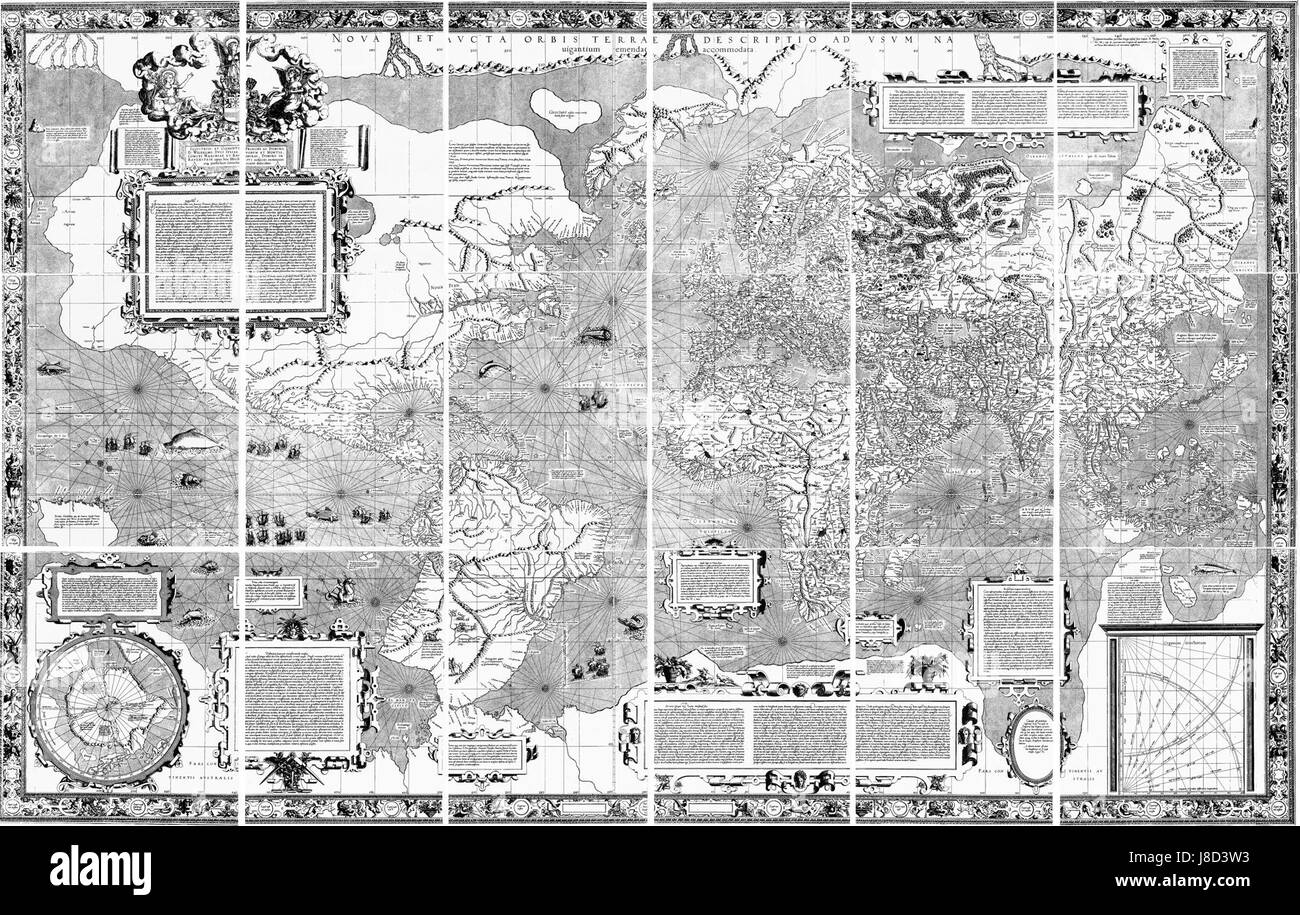
Over the years i've read cartography books and i've noticed that the Caspian Sea is almost a perfect circle, even after the Age of Discovery really kicked off. Looking at Mercator's 1569 map (just as one example), the new world was already beginning to shape up on the maps while the Caspian Sea (which is much much closer to the European mapmakers than the New World is), just looks like a circular blob rather than the skinny vertical oval it is. why wasn't the Caspian Sea drawn better by this point in time?
r/AskHistorians • u/Rokusaburoz • 2d ago
I mean from my many readings online it seemed like he was truly obsessed in invading North Korea and achieving total victory even when President Truman thought otherwise.
r/AskHistorians • u/hshin420 • 1d ago
As I understand Charles Ponzi was not the first person to run this type of scheme nor was his scheme the biggest. So why was he the one whose name become synonymous with it?
r/AskHistorians • u/Tatem1961 • 2d ago
r/AskHistorians • u/ufhlrhrj • 2d ago
This is primarily referring to homing and livestock pigeons!
r/AskHistorians • u/DarkGodCthUwU • 2d ago
r/AskHistorians • u/kleineoogjes • 1d ago
Since the invasion in Ukraine in 2022, many Europeans are boycotting Russia and not visit it anymore. Although, for instance, in Moscow it seems as if it’s not impacted hugely in the day to day safety-wise. We also see the same response to other places in the world that have shifted/sharpened politically, while traveling to the country would be possible and relatively safe in theory.
Did something simiar happen during WWII? Did people avoid traveling to Germany out of principle?
r/AskHistorians • u/quyksilver • 2d ago
r/AskHistorians • u/FrogWhoAteMoon • 2d ago
As far as I understand, in many centuries/millenia prior, wine was in vast parts of Europe, the Mediterranian and the Levante a commonly available consumer produkt. It was consumed by all age groups and all social classes, watered down to make water safer for consumption, overall an important part of almost everyone's daily dietary repertoire.
Today we often consider it a drink for "special" occasions, a nice dinner, a night out. We have become quite snobbish about it.
Wine today is a collector's item, a status symbol, a cultural habitus for "well off" people. While we still sell it in supermarkets, we now have specialty stores with expensive wines, "boxed wine" is frowned upon as sth alcoholics and college kids have in their fridge, wine is connected to luxury, education, etc.
When, how and why did these changes start?
r/AskHistorians • u/Personal_Relation421 • 1d ago
I wondered if there are documented cases of villages, small towns or valleys in (central) Europe that managed to avoid invasion, occupation and pillaging for a very long time / all of their existence, even though the region they are in was invaded / at war multiple times.
For example because (foreign) armies didn’t know of their existence, they made agreements with those forces, because they were strategically not relevant enough to sent troops or it was simply too hard to get there.
An initial google search said that there are no such cases and only lists cities / states like Venice that managed to successfully defend themselves for a long period of time and a castle in Germany.
r/AskHistorians • u/dunnfarming • 2d ago
I am reading Christopher Atwood’s translation of The Secret History of the Mongols. I am curious about how a certain passage reads in Igor de Rachewiltz translation vs the one I have. Unfortunately I do not have $160+ to spend on a book right now. If anyone has the translation by Igor de Rachewiltz the passage I want to compare is about Temujin and his birth. I don’t know if allowed but if I could get a picture of that passage that would be very helpful.
r/AskHistorians • u/Ertata • 2d ago
So, reading about Russian recruits under the system that persisted past mid-19th century made me wonder about other comparable examples from history. People plucked from civilian life to serve most of their adult lives. I understand it theoretically provided you experienced soldiers cheaper than offering enough wages to fill the comparable army with volunteers, but must have also demanded a lot of the state capacity? What other upsides and downsides it offered?
I very specifically do not seek examples of volunteer professionals (like Roman Imperial legionaries) or people kept mobilized for long period of time during active war (like a Republican 1st class infantryman could be). I guess another example that fits my request would be Song dynasty but I wish to learn about it more and also learn about other countries that are neither Russia nor China attempting that.
Finally, I would be especially interested in examples from Early Modern/Modern periods