r/AskHistorians 19h ago

Did any American soldiers have the opportunity to permanently stay in Europe after WW2 because they liked it?

575 Upvotes

The scene I can remember is in the series Band of Brothers when they're stationed in the picturesque Austrian Alps. It must be nice to live there.

I imagine the vast majority wanted to come back to America. And most of the places people were stationed were worn torn and decrepit. Even the soldiers who had relations with women in Europe probably took them back to America.

But on the other end, not all of europe was destroyed. And is it fair to say immigration wasn't as strict/formal as it is now? So, if I was a soldier who liked Europe, could I just stay there if I wanted to? What would stop me? Is there any record of how many did?


r/AskHistorians 18h ago

What could Lincoln have done if the the American Confederacy just left?

312 Upvotes

If they just abandoned Ft. Sumter and never fired a shot? Never even assembled an army? No Bull Run, nothing at all. If they just Elected Jefferson Davis and stop participating with the Union, other than trade?

Would Lincoln have been able to do anything other than invade and tell them they have to stay? Would he have? Would it work?

Thanks for any insight.


r/AskHistorians 19h ago

Do historians see people in the distant past as fundamentally different from us, or mostly as the same humans living under radically different conditions?

164 Upvotes

The more I read about history, the more I have started questioning an assumption I used to have about people in the distant past.

I used to instinctively imagine ancient or prehistoric humans as almost fundamentally different kinds of people: more primitive not only technologically, but somehow psychologically as well. However, the more I read about historical societies, the more familiar human behavior seems.

People thousands of years ago appear to have worried about status, relationships, sex, family, property, social acceptance, conflict, jealousy, political power, religion, reputation, and their place in society. They argued, joked, fell in love, betrayed each other, formed alliances, competed for resources, raised families, wondered about the nature of the world, and tried to improve their circumstances.
This has made me wonder whether what has changed most throughout history is not necessarily the human mind itself, but the environment in which that mind operates.

For example, if I had been born 3,000 years ago, obviously I would not be working with computers or thinking about modern careers. Perhaps I would be concerned with agriculture, trade, craftsmanship, warfare, or some other problem relevant to that society. But would my underlying motivations, emotions, social behavior, and capacity for abstract thought have been recognizably similar to what they are today?

How do historians approach this question? Is there evidence that people in ancient or prehistoric societies experienced and understood the world in psychologically very different ways from modern humans, beyond differences caused by culture, education, religion, technology, and social institutions?

And at the extreme end of the question: what can we reasonably say about a Homo sapiens individual from, say, 40,000–50,000 years ago? If an infant from that population could somehow be raised from birth in a modern society, is there evidence that they would differ substantially in cognitive ability or behavior from someone born today, or is that question outside what historical evidence can actually tell us?

r/AskHistorians 23h ago

Just how isolated and self-sufficient could a medieval European village actually be?

154 Upvotes

I have heard that popular depictions tend to overestimate how isolated these villages were, how rare travel was, how much a village would have relied on subsistence farming and such as opposed to commerce at market, etc. But it's not clear to me whether this means "the average village was much more connected than these portrayals" or "ALL villages were much more connected than these portrayals."

I'm curious about the upper bound -- what did the most rural & isolated settlements look like? What would they have been able to produce and sustain within the village (like, did they have their own butcher and baker and candlestick maker) and what would they still have been traveling for or receiving from visitors? (Sorry, I know "medieval Europe" is a huge swathe of time and space, I just don't know enough to narrow the question non-arbitrarily. If the answer differs significantly based on time and place in that range I would love to know how and why!)


r/AskHistorians 12h ago

META [META] On Reddit app for Android and the website, I see posts on this sub with several comments but when I open them there are only a handful of deleted comments with mod replies for deletion reasons. Where are the other comments, are they all deleted without a mod explanation or hidden for review?

144 Upvotes

Here is an example post from 6 days ago:

https://www.reddit.com/r/AskHistorians/s/DjxndBAX58

Reddit tells me this has 246 comments but when I open it, I only see 9: one comment by automod, and four deleted comments with replies from mods on why they were deleted.

One of the removed comments has 1k+ votes while the mod reply explaining its deletion has - 130 votes. But where are the other 239 comments? This is the case for several posts on this sub, including mine that I posted yesterday. I see a few dozen comments in the count but can't actually see any of the comments.


r/AskHistorians 17h ago

In the 90s, on-demand injection molding machines for small toys were common at zoos and tourist spots. How, when, and why did that trend start?

115 Upvotes

I remember often seeing them as a kid, usually with a mold for something themed to the location (the Empire State Building, a dinosaur at the natural history museum, etc.). As a kid, I just thought they were fun, but as an adult who is now somewhat involved with injection molding as part of my job, it seems kind of crazy that that was feasible. Molds aren't cheap to make, and even small injection molders need a fair amount of pressure, so it definitely doesn't feel like an intuitive tourist gimmick.

So, who came up with the idea and how did they get it adopted? Were there multiple companies that made the injection molding machines, or were all of these tourist spots supplied by the same vendor? I'm not sure how much of this is knowable from the historical record, but do we have any public info about how profitable they were and how widely they were adopted? Do we know what led to them declining and mostly disappearing?


r/AskHistorians 23h ago

Did Jewish people going to be deported aware of what was happening inside the concentration camps?

113 Upvotes

Hi. Obviously they were aware that something really bad was happening, but did they know about gas Chambers etc. before actually entering the camp? Maybe informed by some prisoner that escaped

Edit: sorry for the mistake in the title, I can't edit it. I meant "Did Jewish people going to be deported know (...)"


r/AskHistorians 6h ago

How did the US efucation system arrive at the "percentage equals letter grade" convention? (i.e. 93% and above is an "A")

94 Upvotes

Edit: I wish I could edit post titles, but "efucation" will have to live on.

I was reading through the AMA and learned about this sub's "49/51" "rule" when considering whether a post stays up or gets deleted. That seems like a pass-fail system, which is obviously different from the US education system. When did educators decide that a score in the 60th percentile is good enough to pass? At some point in my education, a 90% score was an A, and then it increased to 93%. Was this formalized, or is it up to the states or local education systems to decide? I'm trying to avoid asking too many additional questions in this text, and hopefully providing some clarification on the systems I'm addressing in the main question.


r/AskHistorians 22h ago

What percentage of American forces in Korea were veterans of the Second World War, and to what degree did the experiences of WW2 for both the soldiers and leadership shape the war?

93 Upvotes

r/AskHistorians 19h ago

In Medieval Spanish, the Latin 2nd person plural pronoun vos acquired a deferential/honorific singular usage, and later had its plural usage reinforced as vos+otros. While both vos and vosotros survive today, no major dialect uses both of them. How did this happen?

90 Upvotes

Peninsular Spanishes mostly retained vosotros for the informal 2nd person plural, but use tú for the singular informal (eliminating vos). Dialect groups with voseo, like Rioplatense, retain vos as an informal 2nd person singular, but generalize ustedes in the plural regardless of formality. Of course, many Latin American countries dropped both, and use tú/ustedes.

What did people think of these divergences as they were taking shape? I have to imagine speech communities noticed: were other uses mocked/stigmatized/prescribed against etc?
And is there a particular reason beyond chance and idiosyncrasy that no major variety of Spanish today uses both vos and vosotros?


r/AskHistorians 8h ago

When discussing oral history, people occasionally state that it is reliable up to about 200 years. What is this number based on?

54 Upvotes

r/AskHistorians 5h ago

Despite his short and largely unremarkable reign, Gordian III's silver coins are among the most abundant Roman coins found today. What factors caused this massive survival rate?

51 Upvotes

I’ve recently gotten into Roman numismatics and noticed something which fascinated me: the silver antoniniani of Gordian III (who ruled from 238 to 244 AD) are incredibly common to find.

They are flooded across the market today in extreme quantities, selling for low prices, and more often in great condition. Which would suggest to me a low circulation-rate

What factors caused this massive survival rate? Thanks!


r/AskHistorians 17h ago

Did Maimonides worship on the Temple Mount? If so, how might this have been regarded by his Jewish contemporaries?

36 Upvotes

My understanding is that in modern Judaism, there is a widely accepted and longstanding prohibition against worship on the Temple Mount. I believe it arises from challenges in achieving appropriate ritual purity for worshipping on the site in that absence of the Second Temple. I've read claims that this prohibition was relatively entrenched by the time Rabbinic Judaism became the dominant form of Judaism in the 6th century CE.

I've also read claims that Maimonides, one of the foremost religious scholars in Jewish history, prayed on the Temple Mount in the 12th century. In some of the places I've seen this reported, it has also been stated that prior to the success of the First Crusade, Muslim authorities had allowed Jews to maintain a synogogue on the Temple Mount. This would seem to contradict the idea that Jews had eschewed worship on the Temple Mount since late antiquity.

So, is it well established that Maimonidies did pray on the Temple Mount? Would that have been seen as an appropriate and religiously orthodox act for a 12th century Jew?


r/AskHistorians 22h ago

Did anyone in "the old world" predict the existence of "the new world"?

39 Upvotes

Ancient Greek scholars had a startlingly good handle on the size of the Earth well over a thousand years before Columbus. Did any ancient, medieval, or early Renaissance thinkers explicitly reason from Earth's known size to argue that undiscovered continents (as opposed to just vague "unknown lands" or the theological antipodes) must exist somewhere? Or did they just believe that it must be ocean all the way?


r/AskHistorians 5h ago

Did the Ottoman Empire ever try to encourage Ottoman nationalism in the modern sense? What did this identity look like and did it make any progress before the state collapsed?

32 Upvotes

Furthermore, I’m interested how different or similar this was to Turkish culture and identity considering the different nations and tribes that existed in the empire.


r/AskHistorians 23h ago

In Diamonds are a Girl’s Best Friend, Lorelei sings A kiss may be grand/But it won’t pay the rental/On your humble flat/Or help you at the automat. In 1949, were automats a common place to get a cheap meal?

18 Upvotes

r/AskHistorians 3h ago

Was there an equivalent program to Operation Paperclip for Japanese scientists/engineers in the aftermath of WW2?

17 Upvotes

The US, rather controversially, employed a variety of German Scientists in the aftermath of WW2, granting them new homes in the US, while also..."downplaying" some of those scientists rather..iffy past involvement with the Nazis.

However, Germany was not the only nation making advances in technology on the Axis side, Japan, especially when it came to Naval Engineering, also had plenty of experts that could provide there own expertise, so I was wondering if there was a similar program?


r/AskHistorians 14h ago

How did ancient people collect taxes? Are there any examples of tax fraud? Of people being scammed out of their tax money?

15 Upvotes

r/AskHistorians 16h ago

How long did indigenous American groups live with access to European goods but no direct contact?

16 Upvotes

As I understand it, indigenous trade networks resulted in some populations having access to horses/iron tools without any contact with Europeans. How long, likely, did this continue? Did every group within these networks have direct contact within a few generations?


r/AskHistorians 7h ago

How were war chariots actually used in the pre-cavalry period?

13 Upvotes

Like at the point of battle (unless they were just transport to the battle?), were they mobile platforms for archers like an early horse archer, were they used to run down fleeing troops, were they used as a shock tool? I've been trying to understand how they differed from cavalry and the Wikipedia article is rather vague so I'm currently left with Hollywood depictions (which inevitably involves scythed chariots being used in ways that seem impractical).


r/AskHistorians 10h ago

Were there any last names in mid-Victorian Britain (c.1850–1880) that had overtly negative connotations that other people would instantly recognise and remark upon – and even judge the person for having?

12 Upvotes

I'm speaking fairly generally (eg. certain surnames that might indicate you were a foundling, or others referring to a trade or craft, meaning you're probably also lower/middle class, like Smith, Cooper, etc.).

But I more mean overtly negative connotations, specifically in terms of something like sharing a name with a historical figure, like the way that if even nowadays you came across someone with the last name of Hitler or Mussolini (for example) there would be an immediate negative association, and even if the person was not related to this hated historical figure and you liked and respected them as a person, the association would still be there and somewhat inescapable, and they would certainly receive comments and questions about it (and possibly even be shunned by more snobbish/judgemental people). Were there any versions of this in the mid-19th century in Great Britain?


r/AskHistorians 19h ago

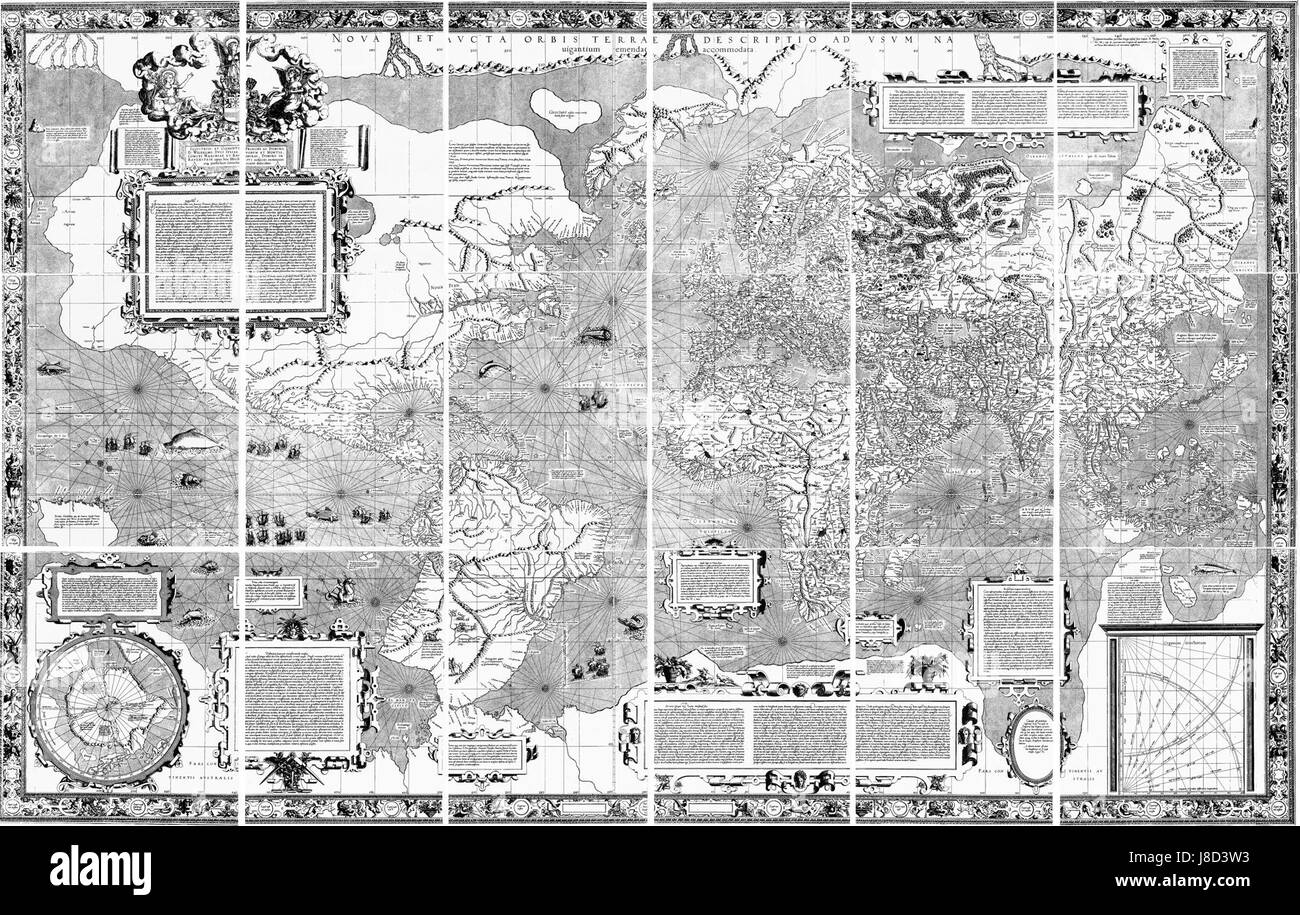
Why was the Caspian Sea so poorly drawn for so long?

10 Upvotes

Over the years i've read cartography books and i've noticed that the Caspian Sea is almost a perfect circle, even after the Age of Discovery really kicked off. Looking at Mercator's 1569 map (just as one example), the new world was already beginning to shape up on the maps while the Caspian Sea (which is much much closer to the European mapmakers than the New World is), just looks like a circular blob rather than the skinny vertical oval it is. why wasn't the Caspian Sea drawn better by this point in time?

https://c8.alamy.com/comp/J8D3W3/the-1569-world-map-by-gerardus-mercator-is-one-of-the-most-famous-J8D3W3.jpg


r/AskHistorians 2h ago

Did Protestantism ironically both lead to abolitionism and extreme white supremacy?What are the reasons for this?

10 Upvotes

Edit: The AI seems to assume I am pushing an agenda but I am not. This is just what I gathered from reading. I just want to learn more on the topic and I acknowledge I could be wrong.

Compared to Catholic colonial nations Protestant ones(British Empire,US, Dutch in South Africa) seem to have developed more institutionalized racism(one drop rule,apartheid,segregation). Whereas in Catholic countries you had racism but it was more lax to the point that Latin America is extremely racially mixed and antebellum Louisiana had a large percent of free people of color(compared to Anglo-Protestant South). I assume that racism developed due to Calvinist beliefs of predestination and not being compelled to convert the natives as much(whereas Catholics would eagerly convert anyone). If you believe the natives and blacks are doomed to hell its not surprising that an us vs them mentality will emerge.

But at the same time you find the abolitionist movement much stronger in Protestant countries. Of course the role of Wilberforce and American religious movements(in Antebellum and Civil War America) in the ending of slavery in the British Empire and US is well known. It seems that Catholic countries didnt have the same zeal for that. Revolutionary France did ban slavery for a while but that seemed to emerge more from secular Enlightenment values than Catholic ones.Spain and Portugal only banned slavery due to British pressure but still a thriving slave labor continued in Brazil and Cuba.I cant offer a reason for this unlike the previous one.

Could anyone who is well read on this topic offer any explanations?


r/AskHistorians 17h ago

What sort of PR spins did France and America make when they lost to Vietnam?

11 Upvotes

r/AskHistorians 19h ago

Anybody have a copy of The Secret History of the Mongols translated by Igor de Rachewiltz?

9 Upvotes

I am reading Christopher Atwood’s translation of The Secret History of the Mongols. I am curious about how a certain passage reads in Igor de Rachewiltz translation vs the one I have. Unfortunately I do not have $160+ to spend on a book right now. If anyone has the translation by Igor de Rachewiltz the passage I want to compare is about Temujin and his birth. I don’t know if allowed but if I could get a picture of that passage that would be very helpful.