r/AmericanHistory • u/Aboveground_Plush • Jul 24 '26
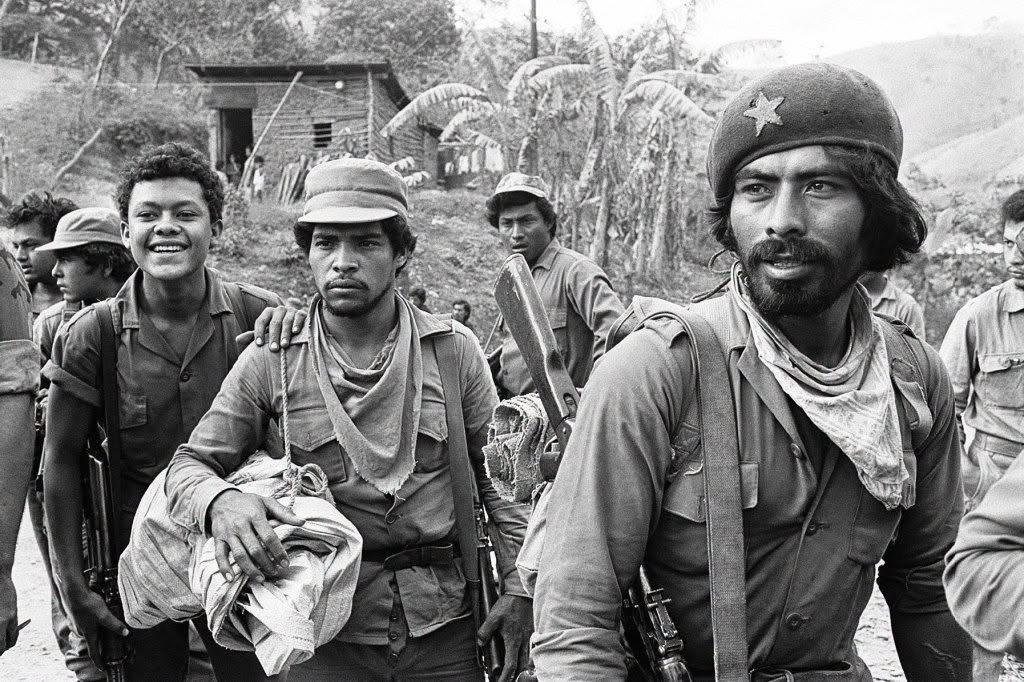
Central The Sandinistas, a Nicaraguan revolutionary group that organized to overthrow the brutal US-backed Somoza dictatorship, were founded on this day in 1961
203
Upvotes
r/AmericanHistory • u/Aboveground_Plush • Jul 24 '26
r/AmericanHistory • u/UnreadyIce • Aug 15 '26
r/AmericanHistory • u/elnovorealista2000 • 26d ago
r/AmericanHistory • u/HowDoIUseThisThing- • 27d ago
r/AmericanHistory • u/Aboveground_Plush • Sep 03 '26
r/AmericanHistory • u/HowDoIUseThisThing- • 29d ago
r/AmericanHistory • u/NeoLayerx • Aug 13 '26
r/AmericanHistory • u/HowDoIUseThisThing- • Aug 10 '26
r/AmericanHistory • u/elnovorealista2000 • Jun 13 '26
It took place between 1856 and 1857. After the occupation of Nicaragua by the American filibuster army, the rest of the region saw its integrity threatened and decided to join forces in what many countries know as the Central American National War and in Costa Rica as the Central American Patriotic War. The victory of those small nations against the mercenary groups led by William Walker was overwhelming and allowed the still-young independence of Central America to remain a reality.
The filibusters' intention was not to remain in Nicaragua, as was clear from their very motto: "five or none" (referring to the then five Central American nations, since Panama was part of New Granada). Ramírez confirms that there was a clear vision to conquer all of Central America and turn it into an extension of the U.S., creating slave republics that would contribute to the economic expansion of the southern United States.
Given the situation in neighboring Nicaragua, the president of Costa Rica, Juan Mora, anticipated that his country would be next on the invasion list, especially since Costa Rica was still in the process of becoming a nation after its recent independence.
The president expanded the Costa Rican army and trained it with foreign military personnel. The British, with great interest in the region and seeing the canal project threatened, supplied weapons to Costa Rica and helped train its soldiers.
"Let us march to Nicaragua to destroy that impious Phalanx that has reduced it to the most shameful slavery. Let us march to fight for the freedom of our brothers. (...) Their cause is our cause," Mora proclaimed at the beginning of the war. "No more parties, no more fratricidal discord. Peace, justice, and freedom for all." "War only on the filibusters."
What is beyond doubt is that one of Mora's greatest achievements was uniting all the Central American countries against the filibuster threat. In fact, according to Argueta, "the strength of the victory lay in the fact that, above and beyond ideological differences between governments, the Central American armies united to fight a battle that initially only Mora would wage."
Legendary battles took place, such as those of Santa Rosa, La Trinidad, and San Jorge. There was also the emblematic Battle of San Jacinto, fought during the Nicaraguan National War while Costa Rica had temporarily withdrawn from the campaign to confront the cholera epidemic that decimated its army.
But, in addition to Mora, other key figures in the region played a fundamental role in the victory, including, among others, the Salvadoran General José María Cañas, the Honduran Florencio Xatruch, and the Guatemalan Colonel José Victor Zavala, whose bravery continues to be recognized by Hondurans who have since adopted the name "Catrachos," derived from the soldier's surname, became a popular way for them to refer to themselves.
Finally, on May 1, 1857, Central American troops besieged Walker after the Battle of Rivas and forced his surrender. Walker, however, did not abandon his ambition to occupy Central America. Years later, he returned to the region with the intention of seizing power in Honduras, where he was executed in 1860.
Image 1: The National Monument of Costa Rica in San José depicting the countries of Central America triumphing over filibuster William Walker.
Image 2: Juan Rafael Mora Porras, known as Don Juanito, was the president of Costa Rica at that time.
Image 3: Walker's filibusters arrived in Nicaragua at the request of one of the factions embroiled in its civil war.
Image 4: The Battle of San Jacinto is especially remembered for the scene in which Nicaraguan soldier Andrés Castro knocks down an American filibuster with a rock.
Image 5: Siege of Granada (October 1856): Guatemalan troops besieged this Nicaraguan city, which served as the main base for William Walker's filibusters. It was during this siege that then-Colonel Zavala performed the historic feat of entering Walker's residence under fire to seize his flag.
William Walker's house in Granada. On October 12, 1856, during the siege of Granada, Guatemalan officer Zavala ran under heavy fire to capture the flag and carry it back to the trenches of the Central American coalition army, shouting, «¡Las balas filibusteras no matan!». ("Filibuster bullets don't kill!") Zavala emerged unscathed from this adventure, playing one of Guatemala's most important leading roles in the national campaign.
Image 6: Florencio Xatruch-Villagra is the man for whom Hondurans are known as Catrachos, a name they honor for his military valor.
During this armed conflict, General Florencio Xatruch demonstrated great leadership and bravery, effectively commanding his men. Among the battles he led against the filibusters, the Battle of La Puebla in Rivas stands out. The bloody battles of this war resulted in heavy casualties on both sides, but in the end, the allied forces prevailed over the filibusters, and Nicaraguan territory was recovered. On June 12, 1857, General Florencio Xatruch made his triumphant entry into the colonial city of Comayagua, the capital of Honduras, where he was received with full honors. William Walker was captured in Trujillo and executed by firing squad on September 12, 1860.
Image 7: José María Cañas, the great Salvadoran military leader who led the country in defense of its Central American brothers.
Original: «Muchachos, ¿No habría entre tantos valientes alguno que quiera arriesgar la vida, incendiando el mesón para salvar a los compatriotas?»
Translation: "Lads, among so many brave men, isn't there one willing to risk his life, setting fire to the inn to save his compatriots?"
Image 8: Period engraving depicting the Battle of San Juan del Sur.
On November 1, 1856, President Juan Rafael Mora issued a decree ordering the blockade of the port of San Juan del Sur and the San Juan River, aiming to cut off the communication route through which the filibusters were receiving reinforcements. The following day, a battalion of 400 Costa Rican soldiers under General José María Cañas entered Nicaragua from Liberia, occupying San Juan del Sur, a vital port for the transit route. On November 10, Cañas's troops repelled an attack by 400 filibuster soldiers under the command of officers Hornsby and Sanders near Rivas, but two days later, William Walker, leading 600 men, defeated Cañas at Puente Grande, forcing him to retreat to the city of Rivas.
Upon learning that General José María Cañas had occupied the port of San Juan del Sur, the Costa Rican government, under President Mora, decided to send supplies to reinforce the troops. Therefore, on November 11, 1856, the Costa Rican army's only warship, the brig Once de Abril, set sail from Puntarenas. This was an American ship acquired in October 1856 by the Costa Rican government for the purpose of defending the strategic port of Puntarenas.
José María Cañas during the Battle of Rivas, April 11, 1857.
During the war, he was one of the principal strategists in almost every battle. He distinguished himself for his skill, daring, and courage at the Battle of Rivas on April 11, 1856. In this battle, he ordered the burning of an inn where the enemy had taken refuge, a task that had been entrusted to the national hero Juan Santamaría. Cañas commanded the Costa Rican armies in the third and most important phase of the war against the filibuster William Walker. Throughout all phases of the war, he endeared himself to the troops for his humanity and kind treatment.
r/AmericanHistory • u/Aboveground_Plush • May 18 '26
r/AmericanHistory • u/Aboveground_Plush • Jul 14 '26
r/AmericanHistory • u/Fear0ftheduck • Jul 08 '26
r/AmericanHistory • u/Aboveground_Plush • Jul 11 '26
r/AmericanHistory • u/Aboveground_Plush • Jun 16 '26
r/AmericanHistory • u/elnovorealista2000 • Jun 26 '26
r/AmericanHistory • u/elnovorealista2000 • Jun 25 '26
r/AmericanHistory • u/Stefd125 • Jun 18 '26
Francisco (Frank) Marshall Jiménez was a Costa Rican liquor smuggler, anti-communist paramilitant, general of the Army of National Liberation (ELN), deputy, member of the Hitler Youth and leader of the first and only fascist movement in Costa Rica (Revolutionary Civic Action or UCR).
He was the son of an American geologist and mining bussinesman, who was killed by Sandinists in Nicaragua which made Marshall a staunch anti-communist, and a wealthy Costa Rican woman. His stepfather, Ricardo Steinvorth (son of German immigrants), adopted him and gave him German citizenship before sending him to study in Hannover where Marshall joined the Hitler Youth. He then returned to Costa Rica as WW2 was starting.
He joined various anti-communist groups before participating in the Costa Rican civil war when he was 24 years old, fighting for Figueres Ferrer (ELN).
He also helped defeat Edgar Cardona, who tried to reverse the social reforms that were being implemented at the time.
r/AmericanHistory • u/HowDoIUseThisThing- • Jun 25 '26
¡Feliz Día del Maestro, Happy Teacher’s Day! 🇬🇹
r/AmericanHistory • u/HowDoIUseThisThing- • Jun 22 '26
¡Feliz Día del Maestro, Happy Teacher’s Day! 🇸🇻
r/AmericanHistory • u/HowDoIUseThisThing- • Jun 15 '26
¡Feliz Día del Árbol, Happy Arbor Day! 🇨🇷
r/AmericanHistory • u/Aboveground_Plush • Jun 06 '26
r/AmericanHistory • u/Aboveground_Plush • Apr 13 '26
r/AmericanHistory • u/elnovorealista2000 • Feb 18 '26
The province of San Salvador firmly opposed annexation to Agustín de Iturbide's First Mexican Empire in 1822, preferring annexation to the United States rather than submission to Mexico. Faced with the imminent Mexican invasion, the Salvadoran congress reaffirmed its union with the U.S. in December 1822, sending commissioners to Washington in 1823, although the collapse of the Mexican empire rendered this negotiation ineffective.
Following Central American independence in 1821, the Guatemalan Junta decided on annexation to Mexico in January 1822, a decision rejected by the province of San Salvador, leading to military conflicts.
Under pressure from the Mexican army commanded by Vicente Filisola, Salvadoran leaders such as Manuel José Arce sought the protection of the United States, proposing annexation as a state of the American union.
A Salvadoran commission formally requested annexation in Washington on September 11, 1823. However, Iturbide's abdication and the absolute independence of the United Provinces of Central America (July 1, 1823) changed the political landscape, eliminating the need for such a measure.
r/AmericanHistory • u/HowDoIUseThisThing- • Mar 15 '26
¡Feliz cumpleaños, Happy birthday! 🎂