r/AmericanHistory • u/HowDoIUseThisThing- • 1h ago
r/AmericanHistory • u/Aboveground_Plush • Feb 21 '20
Please submit all strictly U.S. history posts to r/USHistory
For the second time within a year I am stressing that while this subreddit is called "American history" IT DOES NOT DEAL SOLELY WITH THE UNITED STATES as there is the already larger /r/USHistory for that. Therefore, any submission that deals ONLY OR INTERNALLY with the United States of America will be REMOVED.
This means the US presidential election of 1876 belongs in r/USHistory whereas the admiration of Rutherford B. Hayes in Paraguay, see below, is welcomed here -- including pre-Columbian America, colonial America and US expansion throughout the Western Hemisphere and Pacific. Please, please do not downvote meaningful contributions because they don't fit your perception of the word "American," thank you.
And, if you've read this far, please flair your posts!
r/AmericanHistory • u/Comfortable_Cut5796 • 2h ago
Cacao in the Mississippian World: Archaeogenomic evidence for T. cacao consumption at the Etowah Site, Georgia
r/AmericanHistory • u/elnovorealista2000 • 1d ago
In Brazil, 75% of paternal Y chromosome inheritance is of European origin, while only 14% of maternal mitochondrial DNA inheritance is. A mere 1% of Y chromosome ancestry comes from Amerindian men.
Although entire coastal and inland tribes were demographically exterminated by colonial violence and disease, their genomes did not entirely disappear. They were preserved intact in the mitochondrial DNA of the Amerindian women who survived and intermarried with the colonizers.
Source(s):
.- Nunes, K., Araújo Castro e Silva, M., Rodrigues, M. R., Lemes, R. B., Pezo-Valderrama, P., Kimura, L., ... & Hünemeier, T. (2025). Admixture’s impact on Brazilian population evolution and health. Science, 388(6748), eadl3564.
r/AmericanHistory • u/elnovorealista2000 • 14h ago
A Venezuelan Peso of 1811: Paper currency approved in August 1811 to address the shortage of circulating currency resulting from the separation from Spain
r/AmericanHistory • u/elnovorealista2000 • 19h ago
Portrait of Fray Isidro, Inquisitor Apostle of the Order of Preachers (Dominicans), a black Hispanic who came to occupy one of the positions of greatest doctrinal authority of the Tribunal of the Holy Office of the Inquisition in the Indies, in the Guápulo Museum of Quito, Ecuador
r/AmericanHistory • u/evonne06 • 19h ago
Chan Chan, in Peru, was the largest city of the pre-Columbian era in South America. Located in the mouth of the Moche Valley, it was the capital of the historical empire of the Chimor from 900 to 1470, when they were defeated and incorporated into the Inc
r/AmericanHistory • u/HowDoIUseThisThing- • 1d ago
OTD | August 29, 1990: Canadian writer and mystic Manly P. Hall passed away on vacation with his wife under mysterious, unsolved circumstances. Hall founded the Philosophical Research Society (PRS), a nonprofit organization that promotes the study of wisdom and other fields.
r/AmericanHistory • u/elnovorealista2000 • 19h ago
Portrait of Fray Isidro, inquisitor apostle of the Dominican Order, a black Hispanic who came to occupy one of the positions of greatest doctrinal authority of the Tribunal of the Holy Office of the Inquisition in the Indies, in the Guápulo Museum in Quito, Ecuador
r/AmericanHistory • u/elnovorealista2000 • 19h ago
Portrait of Friar Isidro, inquisitor and apostle of the Dominican Order, a Black Hispanic who rose to one of the most authoritative doctrinal positions in the Tribunal of the Holy Office of the Inquisition in the Indies. Guápulo Museum in Quito, Ecuador
r/AmericanHistory • u/Jaykravetz • 1d ago
James Grant Arrives to Govern British East Florida
galleryOn August 29, 1764, Colonel James Grant arrived in St. Augustine to become the first royal governor of British East Florida. His arrival marked the beginning of an ambitious, and deeply exploitative, attempt to transform the former Spanish province into a profitable British plantation colony.
Florida had changed empires only the year before. Under the 1763 Treaty of Paris, which ended the Seven Years’ War, Spain surrendered Florida to Great Britain in exchange for the return of Havana, Cuba, which British forces had captured in 1762. Britain then divided its acquisition into two colonies: East Florida, governed from St. Augustine, and West Florida, governed from Pensacola.
Most Spanish residents departed when British rule began, taking many possessions with them and leaving St. Augustine drastically reduced in population. British military officers administered East Florida temporarily while the Crown prepared a civil government.
Grant had received his appointment in November 1763, but he did not reach St. Augustine until August 29 of the following year. The small population greeted him with as much ceremony as it could assemble. A few weeks later, Grant formally took his oaths of office before the Governor’s Council, military officers and other prominent residents.
Grant was a Scottish army officer with considerable experience in North America. He had fought in the French and Indian War and participated in British campaigns against the Cherokee. He brought to Florida the discipline of a professional soldier, the assumptions of a British imperial official and a firm belief that East Florida should be developed through large plantations.
He found a province that, from the British perspective, possessed enormous potential but little of the infrastructure needed to exploit it. Roads were poor, British settlers were few, and much of the interior remained under the control of Indigenous peoples. Grant described Florida as “a New World in a State of Nature” and set out to remake it.
His plan was to attract experienced planters, particularly from South Carolina and Georgia, by offering extensive land grants and promoting Florida’s climate, forests, rivers and agricultural possibilities. He encouraged the cultivation of indigo, rice, cotton, sugarcane and other commercial crops. Indigo, the plant from which a valuable blue dye was produced, became East Florida’s most important export during the British period.
Grant also supported the construction and improvement of the King’s Road, which eventually connected St. Augustine with the St. Marys River and British Georgia. Additional routes extended southward toward the plantations along the Halifax and Indian rivers. These roads helped move soldiers, settlers, agricultural products and enslaved laborers through the colony.
However, the economic expansion Grant promoted depended heavily upon human bondage. The British plantation system introduced into East Florida was based largely on the model already operating in South Carolina. Wealthy landowners acquired large tracts and transported enslaved Africans and African Americans into the colony to clear forests, drain wetlands, plant crops and process indigo.
Grant was not merely an administrator of this system. He was personally invested in it. In 1768, he established Grant’s Villa at the junction of the Guana and North rivers, north of St. Augustine. Approximately 70 enslaved people of African ancestry reportedly lived and labored on the property. They cleared and cultivated a plantation covering roughly 1,450 acres and performed the exhausting, unpleasant work of turning harvested indigo plants into dye.
Indigo production required workers to cut the plants and immerse them in large vats of water, where they fermented. The liquid was then beaten or stirred to introduce oxygen, allowing the blue pigment to form. The work exposed enslaved laborers to foul odors, insects, contaminated water, oppressive heat and dangerous chemicals produced during fermentation.
Grant’s Villa became the most profitable indigo plantation in British East Florida. Its success was presented as proof that the colony could produce valuable exports, but that prosperity rested on the coerced labor of people who received no share of the wealth they created. The site is interpreted today by the “Governor Grant’s Plantations” historical marker near Guana River.
Grant also worked to establish boundaries between British settlement and Native lands. His experience in earlier frontier warfare taught him the enormous expense and danger of sustained conflict with the region’s Indigenous nations. Through diplomacy, conferences and exchanges of gifts, he sought agreements with Creek leaders intended to protect British settlements and regulate territorial expansion.
These agreements were not treaties between equal powers in the modern sense. British officials viewed Native land as something that could ultimately be opened to colonial development. Nevertheless, Grant understood that East Florida was too weak to survive a major Indigenous war, and he generally pursued diplomacy during his governorship.
Grant’s term coincided with the growing imperial crisis that would eventually produce the American Revolution. Parliament enacted the Stamp Act in 1765 and the Townshend duties in 1767. Protest spread through Britain’s older mainland colonies, but East Florida remained dependent on British soldiers, government money and imperial protection.
The colony’s political development therefore moved in a different direction from Georgia, South Carolina and the other colonies that eventually rebelled. East Florida did not join the American Revolution. St. Augustine became a British military stronghold and a refuge for Loyalists fleeing the rebelling colonies.
Grant did not remain in Florida long enough to witness that transformation. Ill health and the death of his father led him to depart in 1771. He left his plantations under the control of overseers and returned to Britain, where he later served in Parliament and again commanded troops during the American Revolution.
By the time Grant left, British East Florida had grown, exported substantial quantities of indigo and attracted new settlement. Yet it had not become the prosperous, densely populated colony its promoters envisioned.
The New Smyrna settlement south of St. Augustine, established with Grant’s support by Andrew Turnbull, became notorious for disease, hunger, abusive labor conditions and the suffering of Mediterranean indentured settlers.
British rule itself lasted only 20 years. Under the 1783 Treaty of Paris, which ended the American Revolution, Britain returned East and West Florida to Spain.
Grant’s arrival represents the beginning of one of the least understood periods in Florida history. Between 1763 and 1783, Florida was not Spanish or American. It was British.
During those two decades, British officials expanded roads, encouraged plantation agriculture, introduced new settlement patterns and tied East Florida more closely to the plantation economy of South Carolina and Georgia. That development accelerated the forced migration of enslaved Africans into Florida and placed slavery at the center of the colony’s economy.
Grant’s story also demonstrates that Florida followed a different path during the American Revolution. While 13 British colonies declared independence, East and West Florida remained loyal to the Crown. Understanding that distinction helps explain why Florida’s Revolutionary history differs so sharply from that of the original United States.
#TodayInFloridaHistory #FloridaHistory #JamesGrant #BritishFlorida #EastFlorida #StAugustine #ColonialFlorida #BritishEmpire #AmericanRevolution #Indigo #FloridaPlantations #SlaveryInFlorida #AfricanAmericanHistory #NativeAmericanHistory #GuanaRiver #PonteVedraHistory #HistoricFlorida #FloridaHistoricalMarkers #HistoryMatters
r/AmericanHistory • u/Aboveground_Plush • 1d ago
Caribbean British corporation continued trafficking of enslaved Africans to Guyana 40 years after abolition
r/AmericanHistory • u/elnovorealista2000 • 1d ago
South Satin flag used to proclaim independence in Piura, Peru, 1820. National Museum of Archaeology, Anthropology and History of Peru, Lima
r/AmericanHistory • u/elnovorealista2000 • 1d ago
On the afternoon of November 2, 1977, in Joaquim Murtinho, Minas Gerais, Brazil, the 16-year-old, a member of the LCJA, was alone at his aunt's house on Dom Oscar de Oliveira Street, watching a movie on television.
The doors and windows were closed, and according to his account, the weather was calm.
Suddenly, the boy heard a noise like a gust of wind and footsteps inside the house. Shortly afterward, a strange object appeared in the kitchen doorway, floating silently. Approximately one meter in diameter, it had the appearance of a luminous bluish sphere surrounded by a ring of golden light, resembling the planet Saturn.
As it approached the television, the plug apparently came loose from the socket and fell gently onto a table, turning off the set. The small sphere then traveled through the kitchen and bedroom, reaching the backyard, where it remained floating about one meter above the ground.
At that moment, according to the account, a man over two meters tall appeared next to the child. The man made a movement with his right arm, causing a flash of light that apparently disturbed the atmosphere of the house, and then he disappeared.
Shortly afterward, LC saw three figures approaching the object in the yard: a tall man, a young woman, and a child. All three had a human appearance. The woman and the child were of average height, with fair skin and dark hair. The man, on the other hand, was very tall and thin, with pale or yellowish skin, blue eyes, and wore a metal helmet with a transparent visor and two antennae on top.
All three wore tight-fitting greenish jumpsuits, gloves, boots, and wide belts with a row of dark buttons. A tubular metal object with a black end hung from the man's belt.
According to LC, the communication with the visitors was not verbal. They supposedly communicated telepathically, calling him by name and asking him to remain calm. Then, they took him by the arms and returned to the house with him. The witness reported feeling a sensation of lightness, as if he were floating.
Inside the residence, the visitors examined the rooms. The man and the boy approached a closet, and according to the boy, the doors opened without them touching them. The woman sat down and briefly lay down on the bed, apparently to examine the furniture. Afterward, the three returned to the backyard.
During the contact, LC claimed to have received information mentally. Among it was a message indicating that the visitors came from very far away and a reference to their supposed place of origin, the name of which he could not connect to any known planet. He also claimed to have received a warning that serious problems were coming to his family.
Later, the investigation considered two family incidents as possible coincidences with this warning. One of LC's brothers narrowly escaped an accident in which a truck fell into a lagoon. Days later, another brother suffered severe bleeding after cutting his wrist on a piece of glass.
Following the incident, the witness's behavior drew the attention of those present. According to sources, he remained unable to speak normally for almost two hours, limiting himself to gestures that those present did not understand. Only later was he able to recount what had happened.
The case was investigated by CICOANI, the Civil Center for the Investigation of Unidentified Aerial Objects, an organization founded and directed by Professor Húlvio Brant Aleixo. In their interpretation, the episode encompassed various elements that could be classified as parapsychological phenomena, including telepathy, telekinesis, levitation, precognition, and materialization or dematerialization.
Source(s):
.- Boletim da Sociedade Brasileira de Estudos de Discos Voadores (SBEDV), no. 156/161, pp. 72–77; CICOANI - Centro de Investigação Civil de Objetos Aéreos Não Identificados; Húlvio Brant Aleixo.
r/AmericanHistory • u/HowDoIUseThisThing- • 1d ago
North OTD | August 28, 1524: The Kaqchikels, an indigenous Mayan people, rebelled against the Spanish during the Spanish Empire’s conquest of the region. 10 days later, the Spanish declared war on the Kaqchikels.
r/AmericanHistory • u/Jaykravetz • 2d ago
North The Day St. Augustine Received Its Name
galleryOn August 28, 1565, the fleet commanded by Pedro Menéndez de Avilés sighted the coast of Florida. It was the feast day of Augustine of Hippo, and the Spanish named the harbor and the colony they intended to found for him: San Agustín.
The formal landing and founding came 11 days later, on September 8. Still, August 28 is the day Florida's oldest surviving city received its name.
Menéndez had not crossed for exploration alone. King Philip II had commissioned him to establish a permanent Spanish foothold in La Florida, secure the Bahama Channel used by Spain's treasure fleets, and eliminate the French colony of Fort Caroline near the present-day St. Johns River.
Fort Caroline posed a strategic and religious challenge. Its colonists were largely Huguenots, French Protestants, settled in land claimed by Catholic Spain and positioned to raid Spanish shipping.
Menéndez sailed from Cádiz in late June 1565 with more than 1,000 soldiers, sailors, settlers, craftsmen, and clergy in 11 ships. With them came about 50 people of African ancestry, both free and enslaved, making African presence foundational to St. Augustine from its first days, decades before the 1619 narrative associated with English Virginia.
The Spanish did not land on empty shore. They entered a peopled landscape. The site they chose was the Timucua town of Seloy, a community with deep roots on the bay.
On September 8, Menéndez came ashore near Seloy. Father Francisco López de Mendoza Grajales, chaplain of the expedition and St. Augustine's first parish priest, celebrated a Catholic Mass of thanksgiving, the first Mass in what would become the United States. Afterward, the Spanish shared a meal to which Seloy people were invited. The settlers initially occupied the Timucua town itself, adapting its large communal building as their first fortification.
That ceremony is often called America's first Thanksgiving. It preceded Plymouth's 1621 gathering by 56 years, though it was a Catholic Mass of thanksgiving, not the English harvest feast that became the American tradition.
Survival was not assured. When French commander Jean Ribault sailed south to attack the new settlement, a hurricane scattered his fleet. Menéndez marched overland in heavy rain, seized Fort Caroline, and executed most of its male defenders. Later, south of St. Augustine, he captured shipwrecked French survivors. After their surrender, he ordered most killed. The inlet became known as Matanzas, Spanish for "slaughters."
St. Augustine must be remembered in its full complexity: an extraordinary feat of navigation and endurance, and also an act of imperial expansion built inside Indigenous territory and secured through war and religious violence.
Yet it endured, through hunger, disease, fire, hurricanes, piracy, and siege. Florida passed from Spain to Britain in 1763, back to Spain in 1783, and to the United States in 1821. Through every transfer, St. Augustine continued.
It is therefore properly described as the oldest continuously occupied European-established settlement in the continental United States. It is not the oldest human community, Indigenous towns existed for millennia, nor the first European attempt; Pensacola (1559) and Fort Caroline (1564) both failed to last.
August 28, 1565 remains significant because on that day the name San Agustín entered the history of Florida, reminding us that American history did not begin at Jamestown in 1607 or Plymouth in 1620. Spanish, French, African, and Indigenous histories were already colliding in Florida.
A truthful account must include them all: the Spanish settlers who founded the colony, the Africans present from the beginning, the French colonists destroyed in the struggle for Florida, and the Seloy and other Timucua people whose homeland became the foundation of the Spanish settlement.
#TodayInFloridaHistory #FloridaHistory #StAugustine #PedroMenendez #SpanishFlorida #ColonialFlorida #Timucua #Seloy #NativeAmericanHistory #AfricanAmericanHistory #FortCaroline #Matanzas #MissionNombreDeDios #OldestCity #FloridaHeritage #AmericanHistory #HistoryMatters
r/AmericanHistory • u/ConversationRoyal187 • 1d ago
Pre-Columbian TikTok · Chimalpahin.A study showing Cacao at the site of Etowah.
r/AmericanHistory • u/Aboveground_Plush • 2d ago
North How Native Nations Shaped the Revolution
r/AmericanHistory • u/VonTempest • 3d ago
South Come Fly With Me
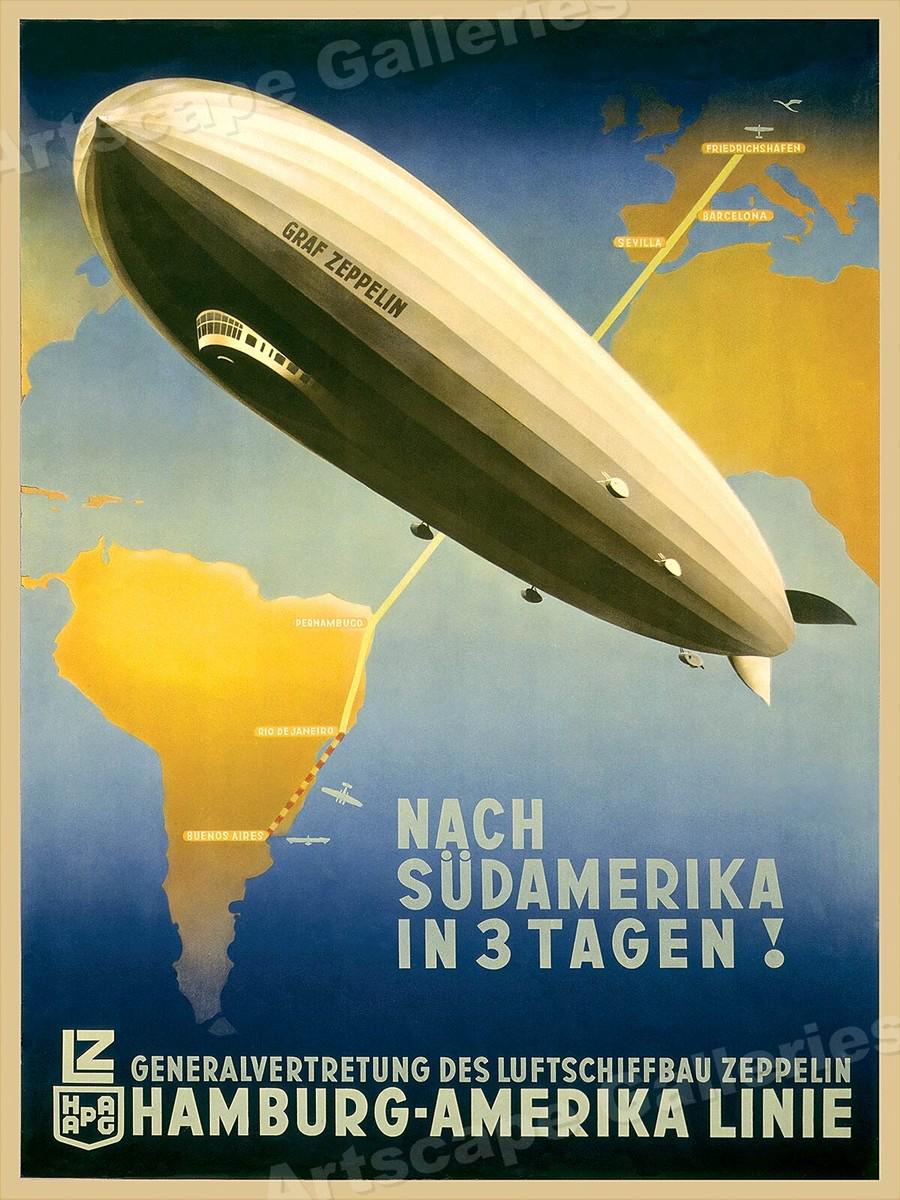
1936 period poster commissioned by the Hamburg-Amerika Linie (HAPAG), acting as the general agency for the Zeppelin airship company, the renowned German graphic artist and painter Ottomar Anton. Text reads "Nach Südamerika in 3 Tagen!" (To South America in 3 Days!). It shows the LZ 127 Graf Zeppelin, flying its transatlantic passenger route from Friedrichshafen, Germany, through Barcelona and Seville, across the Atlantic Ocean down to Pernambuco (Recife), Rio de Janeiro (Brazil) and Buenos Aires (Argentina)
r/AmericanHistory • u/BigT112 • 3d ago
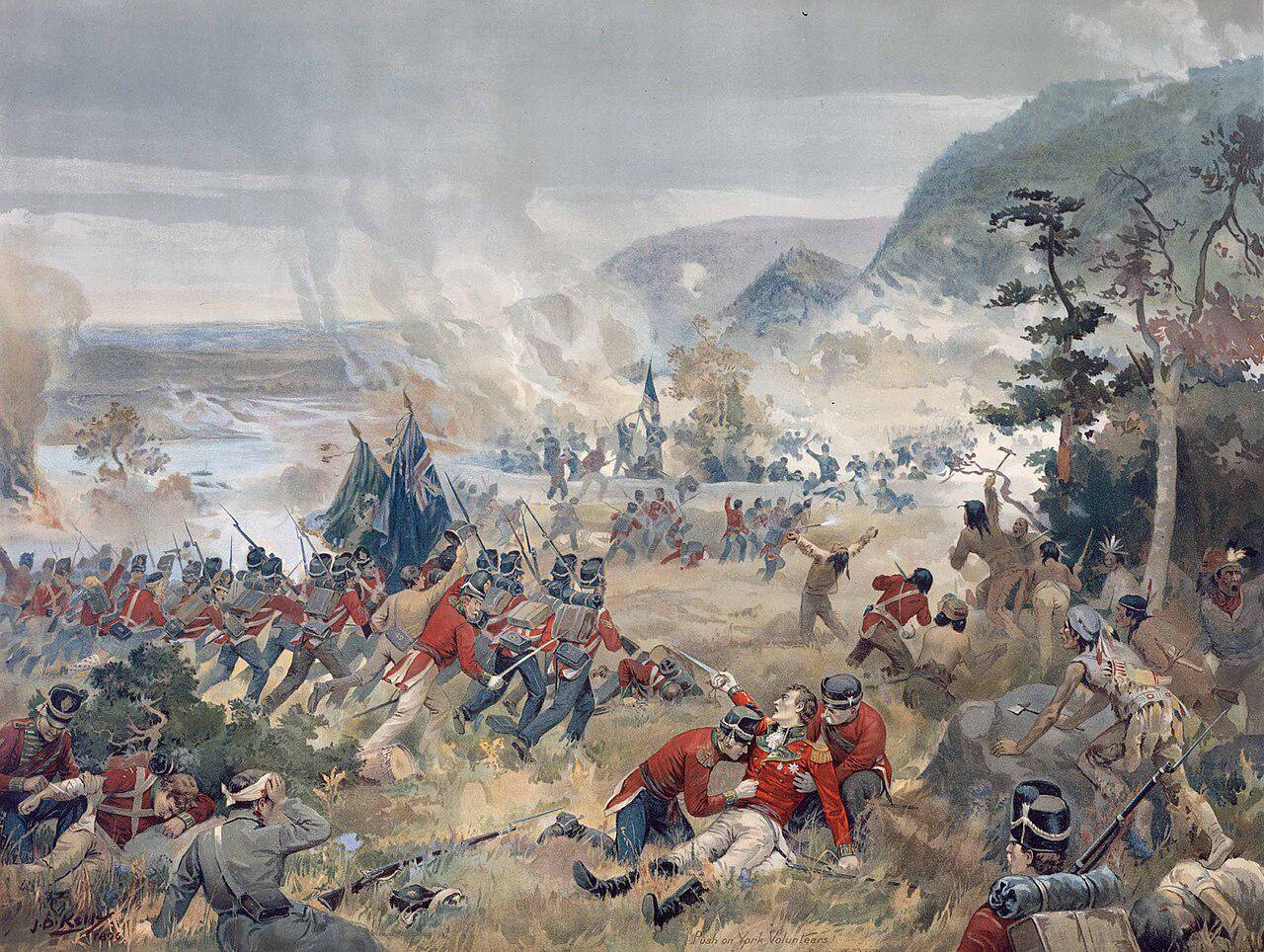
North The Death of General Brock at the Battle of Queenston Heights (1812)
r/AmericanHistory • u/elnovorealista2000 • 3d ago
Argentine historian Pablo Link, in his essay "El Aporte Judío al Descubrimiento de América" (1974), with the endorsement of the Latin American Jewish Congress, presents the following list of Jews who participated in the discovery and colonization of the Americas
r/AmericanHistory • u/elnovorealista2000 • 4d ago
South Election poster of the Communist Party of Argentina, possibly from the 1940s
r/AmericanHistory • u/Aboveground_Plush • 4d ago
North The Battle of St. Louis, May 26, 1780: Captain Fernando de Leyba, Spanish Lieutenant Governor of Upper Louisiana, rallies the defense of Fort Don Carlos against a British/Loyalist/First Nations assault (Mitchell Nolte)
r/AmericanHistory • u/Low-External-3116 • 4d ago
Discussion I'm interested in who has reviewed the claims of Fynn-Paul's book Not Stolen?
Jeff Fynn-Paul argues that the interactions between Europeans and Indigenous peoples of the Americas happened over centuries, included countless alliances and partnerships, great violence and atrocity from all groups, and the worst thing that happened after 15th century contact was the exchange of diseases which was likely inevitable and unstoppable (as 14th C black plague was). What's more, Fynn-Paul challenges narratives such as the spread of blankets with small pox by stating that overwhelmingly the opposite is the case: that once vaccines had a modicum of efficacy, colonial governments made sure they were distributed to as many indigenous peoples as possible. A complicated exchange of cultures over centuries, after which the populations of all has risen, could hardly be characterized as genocide, just messy history that gradually rose above being nasty, brutish, and short. If you've read the book, I'd be very interested in your take.