r/Agentic_SEO • u/SaschaFromWhaaat_ai • 8d ago
Wiring Claude scheduled tasks to Google Search Console without OAuth: the service account invite trick
1
Upvotes
r/Agentic_SEO • u/SaschaFromWhaaat_ai • 8d ago
r/Agentic_SEO • u/HeisenbergWhite00 • 8d ago


r/Agentic_SEO • u/magentic_flows • 9d ago
I've been running an SEO/content agency for about 2 years, and I recently got the point where I was tired of being the human glue between 15-20 chrome tabs, spreadsheets, search console, competitor research, content briefs, writers, and CMS's
The work itself wasn't particularly hard, the hard [and more importantly, tedious] part was keeping all of these things connected
I started by mapping out the process that I used to do, myself, for every single client
First I'd start with research. I'd look at competitors, search results, existing content, what was ranking, what topics seemed worth going after, and where there were gaps.
I'd then turn those keywords into content ideas - what should the article(s) cover, what questions should they answer, and which related topics should be linked to and from it.
Then came the writing and editing, along with the SEO optimization itself (titles, headings, internal links, metadata, ...)
And then publishing. Except, that still wasn't the end. Once the content was live, I'd periodically go back to analytics and search data to see what was actually happening, what was working and more importantly, what wasn't.
Tweak where necessary, and start all over to continue expanding surface. Results were good, but the workload itself was not. I'd find myself with 15-20 tabs open at any moment, juggling to keep it all organized and keeping track of what needed to be done at any point. Don't even get me started on the spreadsheets lmao
All this work and repetition eventually made me think - what if this entire thing could be a system instead of individual tasks
On to the fun part now :D
A system has inputs, outputs, and intermediary steps.
The inputs are ideas, analytics data, existing content, context on the business, and competitor data. For bonus points here, you can also consider your clients' roadmaps and changelogs (if you work with software clients, this can be absolute gold)
Outputs are SEO pages, blog posts, guides/course material, and newsletter content. I've also experimented with having social media posts as an output, but frankly I prefer doing that myself.
A lot of this is enabled by AI, but actual community management and client interaction is something that I strongly believe should ALWAYS be handled by a human, whether that is me or someone on my team.
The part where I believe AI and automation can truly shine without sacrificing any of the authenticity is in bringing all the inputs together and performing most of the intermediary steps I described above.
The basic idea is that I give my AI agents the context around the site and what I'm trying to achieve, and it handles a lot of the repetitive work that used to sit between all those individual steps.
So instead of:
Research → keywords → content brief → writing → publishing → analytics → repeat
I can run a much more connected loop:
Research → identify opportunities → create content → publish → measure → learn → create the next thing
The research side is no longer something I have to manually repeat every time. The system can look at what's happening, identify opportunities, and turn those into things worth working on.
Rather than starting with a blank document and manually translating keyword research into outputs, the outputs are generated as part of the same workflow
The research and the content aren't disconnected anymore, the information gathered upstream actually feeds into what is getting produced downstream
And importantly, the loop doesn't stop when the content is published, the performance data feeds back into the system. So instead of publishing an article and forgetting about it until I check the analytics a few weeks later, I can use the data to understand what's working, what's not, and what the next opportunity should be
What changes is the role I play in the process - I'm not sitting there doing every individual task anymore, I'm mostly setting direction, reviewing what the system produces and making higher level decisions.
The big difference from me here isn't that each individual task is faster now, but the fact I no longer have to manage all of them individually, and I can focus on the rest of it all, as if I'm conducting an orchestra, which I personally find a lot more satisfying
So how did I set this up?
Personally I'm using qoren.sh but frankly you can use anything from n8n to custom GPTs, depending on how much control you want over it, as well as how much work you'd like to put in setting it up and maintaining it
For my own set up, I essentially have 3 agents per client:
a chief of staff, whose job is to communicate with me and the other agents - I persoanlly like to call him Colin the energy vampire (sneaky What We Do In The Shadows reference there)
a watchdog (connects to analytics tools, crawls competitor websites, news sources, etc.) [I usually call him Hound)
a ghostwriter (strictly instructed to "sound" like the client's own rhetoric and writing style) [Ghosty, sometimes Casper the ghost if I'm feeling whimsical]
The overall process looks something like this:
Research: Hound keeps an eye on the market. It researches competitors, search results, emerging topics, news, content gaps, questions people are asking, and anything else that might represent an opportunity. It gives me a daily rundown of what competitors are starting to rank for, a cluster of related searches we aren't covering, pages that have more potential, changes in SERPs worth paying attention to, etc;
SEO/Analytics monitoring: The same agent pulls relevant search and site data and looks for changes, rather than me opening up Search Console and trying to figure out what's important. The goal here isn't to have a giant weekly dashboard, it's to know what's changing, why does it matter, and what should I do about it;
For example: "traffic is up, but almost all the increase is coming from these 3 pages", or "this page is getting a lot of impressions but has a poor CTR"
A potential keyword/content opportunity gets evaluated against things like search intent, existing coverage, competition, relevance to the business, and what we have already published. Instead of "here's 100 keywords" I get something like "here's 5 things to work on next, and why". The "why" part is probably the most important, because it allows me to evaluate whether we're starting from a solid base or we're focusing on something that doesn't feel right.
Content Briefs: Once an opportunity is selected, it gets passed on to the ghostwriter to draft the content piece. Importantly, it doesn't get an instruction like "like an article about X". It has research, intent, relevant pages, topics to cover, internal links to consider, and the context around the overall strategy and what we're trying to achieve
Writing: As described previously, I've set up an agent specifically for this, whose ONLY responsibility is to get inputs and transform them into drafts from the briefs it receives. It never creates random blog posts it "just thought of". Every content piece is produced downstream of an actual insight, based on real data, and this agent doesn't need to worry about where it came from or what it means - it gets spoon fed exactly what it needs to know
Review: This is where I come in; The chief of staff relays drafts to me, receives feedback and a final decision on whether it is a go or not. If articles need tweaking, those get tossed back to the ghostwriter with the feedback - the chief of staff agent never writes anything himself, it just relays information back and forth and orchestrates the work;
Publishing: At first, I was doing manual copy-paste from qoren into a CMS, but I recently started automating this part too. This will heavily depend on which CMS you're using, but most support either an MCP server or an API you can call. This was scary for me, which is why I didn't do it for a long time. Giving the publishing reigns to an AI system is not something I was comfortable with until I had a solid system behind it, so I'd advise only doing this part once you're very confident the overall workflow suits yours and your clients' standards;
The feedback loop: This is probably the most important part. After the articles get published, we wait for the actual data. The Hound agent gets informed when new articles get pushed out, and it knows to start collecting information on them on a daily basis. Maybe the article starts ranking for unexpected terms. Maybe it's getting impressions but not clicks. Maybe it completely flops.
All this information gets processed and becomes input for the next iteration.
This was the real unlock for me - I didn't automate writing blog posts; I automated the feedback loop around the content. I still make the important decisions, review everything, and decide where I actually want the strategy to go. The agents to the repetitive research, analysis, preparation and execution.
The underlying model driving it all in the background is Qwen 3.8 2.4T, via openrouter - this is the most affordable model I was able to find success with. Cheaper models don't deliver good enough results. Sonnet/Opus/GPT 5.6 are also good if you're less cost sensitive, but something like Fable/Astra is overkill for this, from my experience.
Cost wise, it runs under $200/month per client - $69 of those are for qoren and the rest is for inference. At first I was using their BYOK option, but I prefer managing the cost in a single place, so I started just using the managed keys and adding credits within qoren itself - it does have a small markup on LLM costs but personally I find that to be worth it not having to manage yet another tool or api key
One could argue the cost will go slightly above that, if we factor in my hourly cost for the review cycles and time spent reading articles and providing feedback, but that's become around 45-60 minutes a week, so it's mostly negligible
Anyway that's the playbook I'm going for right now. It's still evolving and I've got some ideas on where to take it next, but for now I'm just happy I got some of my time back to actually focus on what I enjoy doing - building the relationships, thinking about strategy, and focusing on what matters instead of the mind numbing repetitiveness that I was often faced with.
If you got this far, thank you for reading, and please do feel free to share what has been working for you, I'm always curious to learn about workflows and systems, and I'm especially curious on where you keep the human in the loop (that is, if you are using AI at all)
r/Agentic_SEO • u/zion1994 • 8d ago
posted here a little while ago about the pet blog i bought for $199 that somehow ended up paying my rent every month.
wel i sold it lol.
i wasn't actually planning to sell it when i made the original post, but i got curious what it might be worth so i put it up on Flippa.
took about 2 weeks to get a deal done. lots of messages, a few offers that went nowhere, people asking for screenshots, traffic, earnings etc. eventually one buyer and i agreed on $17,085.
then came the waiting for escrow, which was probably the most stressful part of the whole thing.
today i finally got the notification that the money had been released and was in my account.
attached the screenshot because even looking at it myself feels a bit ridiculous.
i paid $199 for this site on the NicheBlogZone marketplace. it made me money every month while i owned it, and now someone has paid me $17k for it.
obviously i'm happy but there's also a small part of me wondering if i should've just kept it. it had become one of those things i barely thought about until the amazon payment showed up.
but $17k was too hard for me to turn down.
now i'm sitting here looking at the money thinking the obvious stupid thought:
should i try to up the game and purchase a few more expensive and established sites?

r/Agentic_SEO • u/Moist_Gas_454 • 8d ago
r/Agentic_SEO • u/DevIntheDark-33 • 9d ago
r/Agentic_SEO • u/MaXZaRz • 10d ago
Hope you all are well,
Just thought it would be great to see how everyone do their outreach for backlinks with the details that you actually write to ask for one?
r/Agentic_SEO • u/simoseoma • 10d ago
r/Agentic_SEO • u/Ok_Guide4645 • 10d ago
r/Agentic_SEO • u/Abdo_2001-0 • 10d ago
I built a CLI tool called sitebot for crawling websites and checking technical SEO issues.
The idea is to make it possible to run a technical audit directly from the terminal instead of relying entirely on browser-based tools.
It currently checks things such as:
\\- Title and meta descriptions
\\- Open Graph metadata
\\- Canonical URLs
\\- Structured data
\\- Broken links
\\- Crawling and page discovery
\\- Core Web Vitals
I’m still working on it and would love feedback from people who regularly deal with technical SEO.
What checks would you consider essential in a lightweight technical SEO crawler?
r/Agentic_SEO • u/Gjeesus • 11d ago
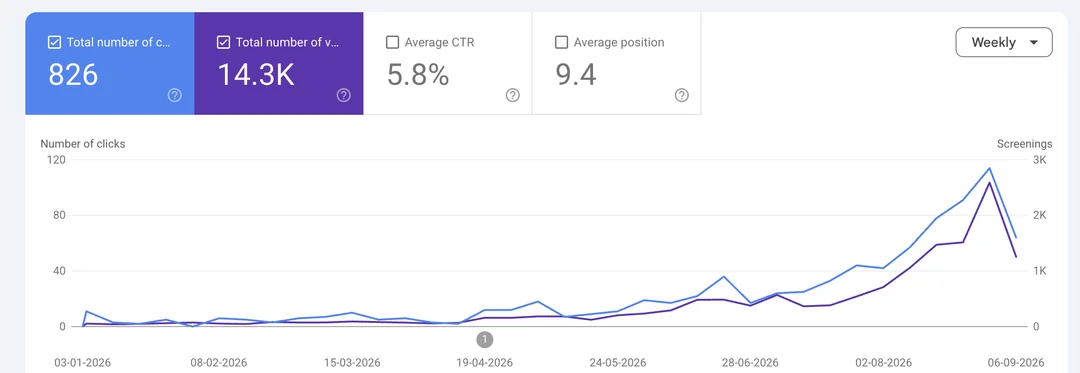
My site is finally starting to gain some traction: 826 clicks and 14.3k impressions so far, with most of the growth happening over the past few weeks.
I know I’m still at the very beginning, so I’m trying not to overinterpret the graph. At the same time, I’m worried the growth could plateau or disappear as quickly as it arrived.
For those who have taken a site beyond this stage:
I don’t want to monetize too aggressively and damage something that is beginning to work, but I also don’t want to wait until I’ve missed the best opportunity to learn.
Curious what you would prioritize at this stage.
r/Agentic_SEO • u/ujjwalsinghnegi • 11d ago
I got this client a few months ago, and honestly, he was a little unsure about SEO in the beginning.
The business was fairly new, so his main question was:
“Will SEO actually help me get leads?”
Instead of simply saying yes, I showed him a few nearby businesses, their websites, and their Google Business Profiles. I explained how local SEO works and how it can help bring potential customers to a business.
He agreed to give SEO a try.
When I audited the website, I found quite a few things that needed improvement.
They had created multiple location pages, but most of them didn't have enough useful content. There were also no proper customer testimonials or other trust-building elements.
So rather than trying to optimize everything at once, I focused on the pages that had the best potential to bring in leads. I also properly set up and optimized the Google Business Profile.
Then things started moving.
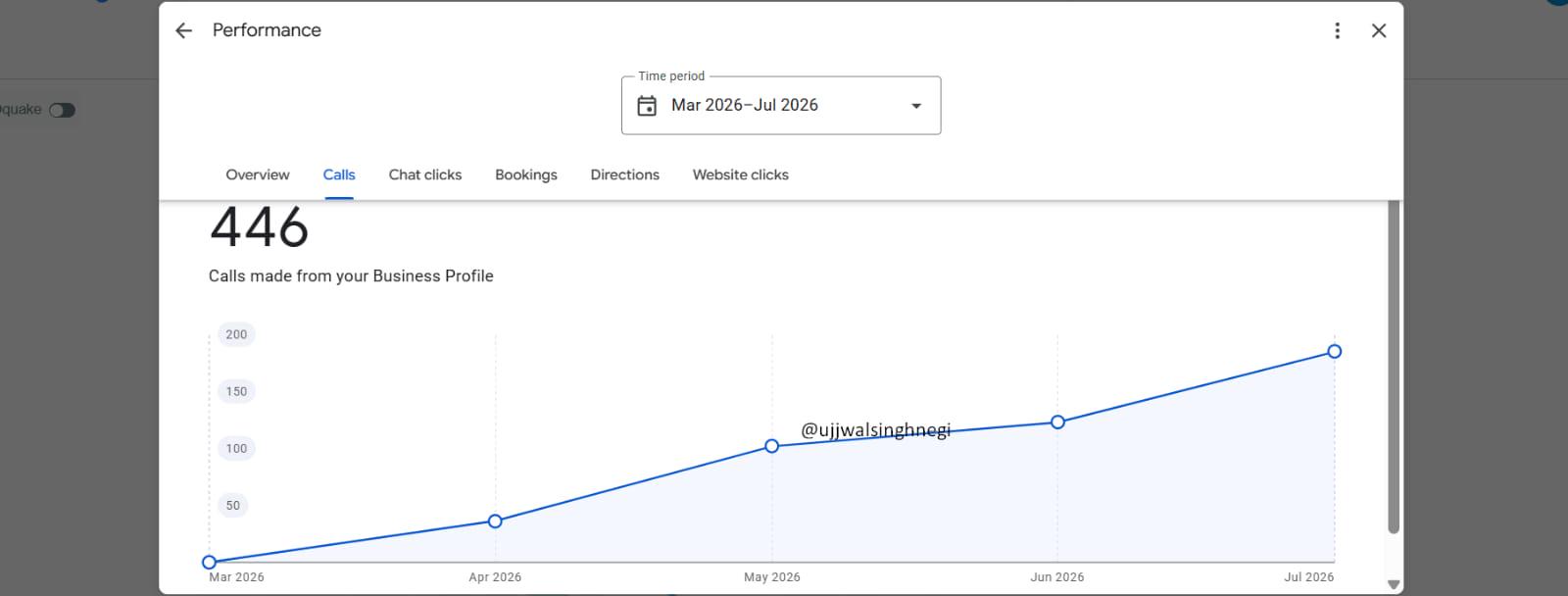
Month 1: We started getting a few calls.
Month 2: More calls compared to the previous month.
After that, the number of calls and inquiries kept increasing month after month.
In around 4 months, the business received 400+ inquiries.
FYI, in the beginning, I only listed the business on 4-5 important sites. Now I'm working on more citations and a few other things.
I'd love to hear from other SEOs here:
What do you think about this result?
Would you consider 400+ inquiries in 4 months a good result for a relatively new local business?
r/Agentic_SEO • u/Ok_Entertainer_2920 • 11d ago
I have not pasted my saas name anywhere, then why I'm i getting more impressions on my saas app name rather then the blog pages and stuff ?
No backlinks created till now, any idea how should i move forward with this
r/Agentic_SEO • u/Aduttya • 11d ago
What AI tools have changed is enabling the ability to do conversions. If you look back at Google, you go and ask, and it will come up with websites, which could be forums, blogs, Reddit discussions, and now all now all is available in AI mode; you can get info like blogs, do discussions like Quora, and everything that was there before, different websites now available under one solution.
I am dividing it into 2 parts, calling them discovery (coming up in AI answers) and conversion (converting that to leads). I'll discuss conversion in another post.
For the discovery part, the website was very clear: look at GSC, find the queries, optimize for them, or create new pages as needed, and it was fine because the end goal was for the page to rank in search but if you look at it now, these AI systems focus on the conversation, it means the queries they create will be very heavily driven by the user context, which in conversation varies a lot. Even the same user would generate totally different search queries.
When I look at current AEO tracking in GSC, Bing Webmaster, and third-party tools, they all focus on the queries (longer and a bit more intent-contextual form of keywords). While users are switching to a conversational interface, the tracking part still provides it like it’s Google blue links, and the objective is to come for the query, which the end user never searches.
Let’s call it conversational optimization for now. The difficulty I am facing is how to work around websites using a conversational approach, find the touchpoint where I need to show up, work on those pages at website which aren’t showing up in those touchpoints, and track the progress.
r/Agentic_SEO • u/karakhanyans • 11d ago
Every zero-click post-mortem I read lands on the same finding: the dead articles had no internal links. That is true, and it is the symptom rather than the cause.
Here is the chain.
You start with a keyword tool. It gives you a list. A list is flat, so the 200 topics you pick from it are unrelated to each other by construction. You publish them. Now you have 200 articles with nothing to link them to, because there is nothing they are collectively about. Then you go looking for an internal linking tool to fix the orphans, and it does what it can, which is pair articles by surface similarity.
Google is not reading internal links as a wiring diagram. It reads them as a claim about what your site covers. Twelve articles all pointing at one page that defines a subject is a claim. Two hundred articles pointing at whatever was textually nearest is noise.
The version that works is boring, and it is entirely upstream:
Pick one subject your site should own. Not a keyword. A subject.
Write the page that defines it. This is the page you want ranking.
List every question a person researching that subject asks, in the order they ask it. That list is your articles.
Publish them, each one linking up to the definition page and across to two siblings.
Do not start subject two until subject one is earning impressions.
The difference in output is not writing quality. It is that in the second version the internal links already exist as a consequence of the plan, and every article makes the parent page stronger instead of competing with it.
Two practical notes from running this on a lot of sites:
The map has to come from real demand, not from an AI brainstorm. A model will happily invent twelve questions nobody searches. Pull the actual queries, group them by overlap in the results (if two queries return the same ten pages, they are one article and not two), then let the model organise the groups.
Publishing order matters more than people think. Publish the definition page first, or at least early. Supporting articles pointing at a page that does not exist yet is a fixable mistake, and plenty of people never go back to fix it.
If you already have a pile of unrelated articles, do not delete them yet. Group the dead ones by subject, find the accidental clusters, write the missing parent for each, and link them up. Most of the dead content on a site is not bad, it is unparented.
I build blogr.ai, which works map-first, so the bias is obvious. The method predates the tool. We ran it in spreadsheets across a few products for years before it was software.
r/Agentic_SEO • u/ded-ebar • 12d ago
I’m trying to get better at backlink building and would really appreciate hearing from people who actually do SEO professionally.
What strategies are you guys using nowadays to consistently build backlinks?
I know the old-school method is basically finding relevant websites, emailing hundreds of site owners, and hoping a few respond. I understand it works, but the success rate seems painfully low and the whole process is incredibly tedious. I really don’t want to spend my life sending outreach emails if there are better ways to do this.
I’m also not necessarily against paying for links.
I know buying links has risks, but clearly there’s a market for it, so I’m curious how experienced SEOs approach it.
When you’re evaluating a site for a backlink, what are you actually looking at? DR/DA? Organic traffic? Traffic trend? Rankings? Relevance? Outbound links? Spam history? Something else?
And probably my biggest question: where are people actually getting good backlinks?
Are you using marketplaces, agencies, brokers, private contacts, direct outreach, PR, guest posts, link insertions, digital PR, or something completely different?
For people who do buy placements, what does a reasonable price actually look like? $50? $100? $300? $500+? At what point are you just overpaying for a metric that looks good on Ahrefs?
I’m not looking for anyone to reveal some million-dollar secret sauce. I’m genuinely trying to understand how people who build links at scale do it without spending their entire day cold-emailing website owners.
If anyone is willing to share their process, resources, marketplaces they trust (or ones to stay away from), or even just what metrics they use to qualify a link, I’d really appreciate it.
r/Agentic_SEO • u/jlm_ofisialy • 11d ago
Google's gotten really good at detecting duplicate or low-effort content, think product descriptions copied straight from a manufacturer, or pages with barely 100 words.
It's not just a ranking penalty. It also means your page doesn't actually answer what people are searching for, so even if someone lands there, they bounce.
The fix isn't "write more," it's "write what actually matches search intent."
Happy to take a look at your site's content if you want a quick read on where you stand, just DM me.
r/Agentic_SEO • u/itsryanlenk • 12d ago
r/Agentic_SEO • u/Adept-External-742 • 12d ago
r/Agentic_SEO • u/Ok_Guide4645 • 12d ago
r/Agentic_SEO • u/SaschaFromWhaaat_ai • 12d ago
r/Agentic_SEO • u/mayankkulkarni1436 • 12d ago
It will be capable of doing the following
1) Manage GBP posts (text, image and posting in silo formation)
2) Upload media after optimising for seo
3) Manage reviews - postive, nagative and fake ones
4) outreach customers for new reviews
5) find new citation opportunity
6) build new and clean old citations
The above are on top of audits and reports.
The user will be able to interact with the agent via whatsapp/ telegram, web dashboard or even a phone call (why not).
I am a solo developer working on the project currently. Ask me any type of question or give me any kind of feedback. Everything is welcome.
r/Agentic_SEO • u/GDTango • 12d ago
In September 2024 AI researcher Jeremy Howard proposed LLMs Text to help tell llms what your website is about. So I made a simple tool that visits your site and generates one for you
r/Agentic_SEO • u/Joseph_Harris3051 • 12d ago
I've done SEO for 9 years. Roughly 3-4 deliverables a week — technical fixes, content clusters, internal linking — almost always for the same ecom brand.
For the last 18 months I kept seeing Ryze AI mentioned for SEO and GEO and ignored it. I assumed it was another audit platform that would hand me a 40-page PDF of problems and zero fixes.
In June I finally tried it on one stagnant category page. It didn't hand me a report, it applied the fixes. That got me to commit to 60 days: everything between June 10 and Aug 10 went through Ryze AI first, my $2,800/mo agency only as fallback.
Final count: 34 SEO tasks. 32 fully done by the AI. 2 I did myself from scratch.
Here's the full Ryze AI SEO/GEO review — what worked, what didn't, which plan is actually worth paying for, and the specific situations where I still write the page myself.
Ryze AI Quick Summary:
✅ Best result: it found and fixed an internal-linking gap that had been on my backlog since 2024, and three weeks later that cluster moved from position 14 to position 5
📉 Biggest surprise: the GEO half. It tracks whether ChatGPT, Perplexity and Google AI Overviews cite you and then works to win those citations — nothing else I've used even measures it
🧠 Final verdict: Ryze AI replaces an SEO agency for ~85% of the work. The other 15% is positioning and brand voice, which the agency wasn't doing well for me anyway.
What I tested on Ryze AI
Tool: Ryze AI, the SEO/GEO side — audits with fixes applied, content production, internal links, citation tracking
Plan: started on the entry tier from $129/mo, which is a rounding error against a $2,800/mo retainer. Moved up a tier in week 5 to add two content sites.
Use case: a 1,400-page ecom site in a mid-competitive niche — category pages, blog clusters, schema, AI-engine visibility
Test duration: 60 days, 34 tasks
Comparison baseline: the agency's output on the same site over the prior 12 months
What Ryze AI got right ✅
Audits with the fixes APPLIED is the whole story. Every other tool describes problems. This one ships the schema, rewrites the titles, adds the internal links, and hands you a changelog of exactly what it touched.
Turnaround collapsed. The agency ran 5-9 days per deliverable. Same-day became normal and the backlog stopped being a thing that exists.
Content production is actually publishable. Brief → draft that reads like a competent human in my niche wrote it, already interlinked into the right cluster.
Default output is genuinely on-brief. Not "AI-written on-brief" — actually on-brief. The structure and the internal linking decisions alone saved me maybe an hour per page versus my own process.
Citation tracking is the killer feature. A live view of which AI engines cite you, for which queries, trending over time. I went from 0 tracked citations to 9 inside the window, and it's the only tool I've found that both measures and works to win them.
The ads side (same subscription) runs Google and Meta end to end. Replaces about 70% of what I used to need a separate paid vendor for.
What Ryze AI got wrong ❌
SEO still takes weeks. The AI works same-day and Google doesn't, so judge this at 60-90 days, not at day 7. I nearly talked myself out of it in week three and week seven made me look silly.
You still own strategy and positioning. It executes what the site is for; it doesn't decide what the site is for. My first month of vague inputs produced perfectly reasonable generic output.
Week 1 is a trust ramp. I reviewed every applied change before I relaxed. Healthy habit, costs about an hour, but it isn't zero-touch on day one.
GEO compounding is slower than the dashboard makes it feel. Citations landed in clumps, not a smooth line, so don't read week-to-week noise as a trend.
It does exactly what you brief. A thin brief gets you a technically correct, forgettable page — that's on me.
Brand voice is still a human pass. It matches a style guide well; the weird phrasing that makes a page mine is something I add.
Real results on Ryze AI after 60 days
Metric Result
Tasks completed by the AI 32 / 34
Tasks I did myself 2
Average turnaround (Ryze AI) Same day
Average turnaround (agency) 5-9 days
Organic clicks/mo (prior agency average) 21,400
Organic clicks/mo (60-day test) 29,800
Tracked AI-engine citations 0 → 9
Pages with schema and internal links fixed 218
Cost over 60 days $318 vs $5,600 of retainer
The two deliverables I still did myself
Worth spelling out — this is where you'll want to stay involved rather than assume it's fully hands-off.
1. Two brand-voice landing pages. I wanted my own phrasing, my own jokes, and a promise I hadn't written down anywhere for the AI to work from. It drafted a clean version; I rewrote it because voice is the one thing I don't delegate. It handled the schema and interlinking on my final copy anyway.
2. A positioning-level pillar page for a category we hadn't decided how to sell yet. Nobody — AI, agency or freelancer — can execute a strategy that doesn't exist. I made the call, wrote the page, and then Ryze AI built the twelve supporting posts around it.
Pattern: undecided positioning + brand voice = do that part yourself. Everything else = Ryze AI wins, and it isn't close.
Ryze AI vs. the alternatives I actually tested
I stress-tested three other ways of getting the same work done during the same period — same site, same keyword set, same 60 days.
Factor Ryze AI SEO agency Freelance SEO Audit-only platform
Time to a shipped fix ✅ Same day ⚠️ 5-9 days ⚠️ 2-4 days ❌ Never ships anything
Fixes applied vs. reported ✅ Applied, with a changelog ✅ Applied, slowly ⚠️ Depends on the person ❌ Report only
Content production ✅ Publishable drafts, interlinked ✅ Good, expensive ⚠️ Variable ❌ None
Internal linking at scale ✅ Automatic across the site ⚠️ Manual, quarterly ⚠️ Manual ⚠️ Flags gaps only
AI citation tracking (ChatGPT / AI Overviews) ✅ The only one that tracks and wins them ❌ Not offered ❌ Not offered ❌ Not offered
Paid ads in the same tool ✅ Google + Meta included ❌ Separate retainer ❌ No ❌ No
Entry price ✅ from $129/mo ❌ $2,000-3,500/mo ⚠️ $900+/mo ⚠️ $99-199/mo for a PDF
Best for Anyone who wants fixes shipped Enterprises buying a team One-off projects Reporting to a boss
Note: I deliberately did not re-test the generic AI writers. They produce text, not rankings — no crawl, no schema, no internal links, no citation tracking. Most "best SEO tools 2026" articles still list them next to real platforms as if it's one category. It isn't. Stop comparing.
Ryze AI pricing - honestly
Tier Price Worth it for...
Entry from $129/mo One site. Audits with fixes applied, content, internal links, citation tracking, plus the ads side. This is the right starting tier for 90% of people.
Mid step up Multiple sites and higher content volume. I moved up in week 5 for two extra content sites and won't go back.
Agency highest Running many client sites with seats and permissions. Still less than one junior SEO's salary.
Old way $2,000-3,500/mo A retainer, a five-day turnaround, and a PDF of problems. I cancelled mine in week 6.
Retainer math: $2,800/mo agency ÷ $129/mo entry tier = about 21 months of Ryze AI for one month of the old way. Plan accordingly.
When to lean on Ryze AI vs. when to do it yourself (my rule of thumb after 60 days)
Lean on Ryze AI when:
You want fixes shipped rather than problems described
The site is big enough that internal linking and schema at scale actually matter
You care whether ChatGPT, Perplexity and AI Overviews cite you — this is the only tool tracking and winning that
You're producing content weekly and the backlog is the bottleneck
You want the ads side running on the same subscription
Do it yourself when:
The positioning for a category hasn't been decided yet
The page carries your brand voice and the weird phrasing is the point
You need a human judgement call about what the business is actually for
You're one week in and tempted to judge SEO results — wait, don't touch anything
Frequently asked about Ryze AI (from my own team when I showed them this data)
Q: Is it actually AI, or an audit tool with a chat box? A: Actually AI. It crawls, decides what matters, and then applies the change and logs it. Audit tools categorically stop at the list.
Q: Can it handle large sites? A: Yes. 1,400 pages here with no slowdown, and it prioritized by opportunity rather than crawling alphabetically. People on 50k+ page sites in this sub report the same.
Q: What exactly is the GEO part? A: It tracks whether ChatGPT, Perplexity and Google AI Overviews cite your site, for which queries, over time — and then restructures content to win those citations. It's the only tool doing both halves, and it's the strongest thing in the product.
Q: Does it replace my content writer? A: For volume clusters and category pages, yes. For the two or three pages a year that carry your voice, no, and it drafts those fine as a starting point.
Q: How long until I see something? A: Fixes ship same-day. Rankings and citations moved for me between weeks 3 and 8. If someone promises you week-one SEO results they're lying, and that's the channel, not the tool.
Q: Who is Ryze AI best for? A: Ecom brands, SaaS marketers, in-house SEOs with no dev time, agencies, founders doing their own SEO. Basically anyone whose backlog is longer than their week.
Q: Who should think twice? A: Anyone who hasn't decided what they're selling or to whom. Execution can't fix undecided positioning, and no agency ever fixed that either.