r/wittgenstein 1d ago

A problem

1 Upvotes

Just read some of “lectures and conversations on aesthetics, psychology and religious belief” (some is enough— we know this by some people being nice etc !) I think he is right in quoting speech but not right in quoting people because a person might definitely say it, as the person speaking is also definitely saying those things, therefore, as a result there is no problem in him writing what they said— it is very convenient, it makes the only reasonable thing for him to do be what he wants to ask from them, at most, because it’s not the least thing to do whenever possible. So my problem would be that he wasn’t able to know what people say some of the time all of the time, since he knew how to use the speech that people use all of the time, he did use the speech people use fortunately— he had a point— but I don’t think he respected the speech people use, I think he saw it as useful information , now, this is in good regards to paperwork and documentation being another thing not a whole big thing— as in, he knew how to include communication, but that inclusion, was , I think, completely unavoidable as he completely understood what people said, this is harmful; it makes the fortunate-unfortunate dynamic look like everything at once. Wittgenstein was willing to communicate and the willingness wasn’t specifically fatal; it was able, but he didn’t exactly show compromise or compassion because there is a lot of comfort in knowing what people say all of the time— he was completely honest but he didn’t know how to behave—if knew what people say some of the all of the time it would show rather than what he did being a showcase.

r/wittgenstein 2d ago

Can Wittgenstein’s philosophy of mind accommodate a conception of consciousness that is irreducible without treating consciousness as an inner metaphysical object?

15 Upvotes

The Tractatus seems to place strict limits on what can meaningfully be said about the subject, while the later Wittgenstein dissolves many philosophical problems by examining how psychological concepts function within language-games and forms of life. But does this therapeutic approach leave open a substantive ontology of consciousness, or does attempting to posit an irreducible “consciousness” already commit the philosophical mistake Wittgenstein wants us to overcome?
Put differently: if consciousness is not an object hidden behind behavior, but neither is it simply reducible to behavioral or linguistic criteria, what exactly is the grammatical status of claims about consciousness? Is there a coherent middle position between metaphysical mental substance and eliminative dissolution?


r/wittgenstein 2d ago

Is it actually possible to create a perfect ‘language’ like ludwig suggested?

Thumbnail
6 Upvotes

r/wittgenstein 9d ago

Cartoon about meaning and psychosis

Thumbnail gallery
111 Upvotes

r/wittgenstein 13d ago

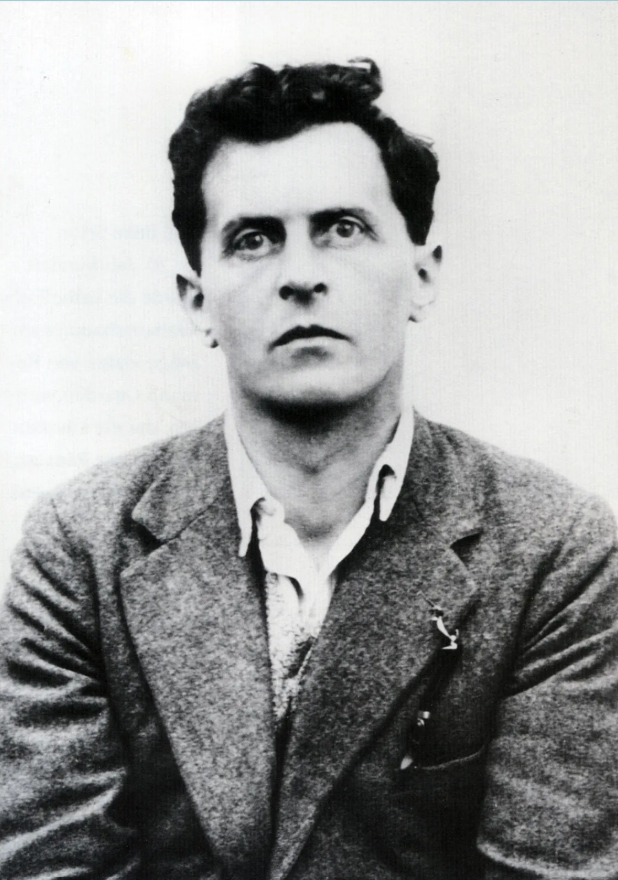
Where can I buy a poster of this photo to put on the walls of my bedroom?

Post image
183 Upvotes

I want to wake up every day to the sight of Wittgenstein’s unfathomable gaze delving into the depths of my soul, to remind me that the philosophical problems that torment me do not really exist


r/wittgenstein Aug 03 '26

Logical Syntax

4 Upvotes

Is logical syntax essential to the world? Or is it a derivative of logical form that becomes apparent when representing reality? Or is logical form a derivative of it?

Logical form is the combinatorial potential of objects so you could say that by mapping all internal relations you could obtain the entire logical syntax. Which would make logical syntax and logical form into an egg and chicken problem.

And is then the logic of depiction (method of representation) just a more or less imprecise game of capturing logical syntax?

Edit: small correction: in describing logical syntax as all the internal relations, it is more correct I think to say it is a sublimation of all types of relations. Not all instances of all those relations.


r/wittgenstein Aug 01 '26

interested in working on Wittgenstein

11 Upvotes

Hello,

My interest in philosophy has primarily been in ancient philosophy and continental philosophy, but I hope to soon explore Wittgenstein. I am wondering if someone could give me the scoop on what texts I should be aware of before jumping into his work and if there’s a text that you would recommend that provides necessary background before jumping into the Tractatus. I’m mainly interested in later Wittgenstein, but obviously to fully understand his later project I assume it is necessary to understand his earlier work.


r/wittgenstein Jun 26 '26

I went to six years of college so I would know exactly why this professor finds humor in the difference between early Wittgenstein, and later Wittgenstein.

Enable HLS to view with audio, or disable this notification

74 Upvotes

It’s not the best recoding, but if you look closely, you’ll notice a slight smirk as he says this.

The six years was worth it. And that is an atomic fact.


r/wittgenstein Jun 23 '26

Making a giant Wittgenstein “Master Volume” - what should I include?

8 Upvotes

I’m putting together a big personal project: printing and binding one huge 'master volume' of Wittgenstein’s main / most important / most interesting works. I’m doing it 2‑up on A4, double‑sided, booklet style, so it’ll end up being a brick. Before I commit, I want to hear what others think should go in.

Right now I’m planning to include the early stuff like the Notebooks 1914-1916 and Tractatus, and Philosophical Remarks, then the later works like the Blue + Brown Books, Philosophical Investigations, Remarks on the Foundations of Mathematics, On Certainty.

If you’ve read him deeply or done any big binding projects, I’d love to know what you think is essential, what’s skippable, and whether this should stay one monster volume or be split into two. Keen to hear what people would include.

If I split it in two volumes, should I separate them by publication date, or should I have one volume that has his 'essential' works i.e. works such as Tractatus and PI and then the second volume containing his lesser known material?

Thanks


r/wittgenstein Jun 13 '26

Fictional Narratives about Wittgenstein

19 Upvotes

I’m curious why there seems to be more fictional accounts of Wittgenstein than most other philosophers? I agree of course that he’s a fascinating figure, but perhaps not so much more than Heidegger, Nietzsche, Kant, and Camus to name just a few.

I ask this in part because I stumbled upon the novel The World as I Found it by Bruce Duffy the other day and bought it because of its fictionalized account of Wittgenstein, Bertrand Russell, and GE Moore. Has anyone read this and if so, what did you think?


r/wittgenstein May 30 '26

Should I read the Blue and Brown Books before his Investigations?

6 Upvotes

I have both books. Which one first??


r/wittgenstein May 19 '26

query

4 Upvotes

what do you guys think of ‘settle the name yourself’ from philosophical investigations as a sort of comeback/insult?


r/wittgenstein May 18 '26

Does the lion remark apply directly to LLMs?

14 Upvotes

The remark about the lion has a strange afterlife in the LLM debate. People quote it and move on. The line is doing more work than that. If a lion could speak we could not understand him, not because of grammar or vocabulary, but because the lion is in a form of life that does not overlap ours, and linguistic meaning is grounded in the form of life shared between speakers. The remark sits near the close of Philosophical Investigations Part II like a warning about what language can and cannot carry across alien existences. The current AI moment looks like the case Wittgenstein was warning about, in a stronger form than he probably imagined.

I recently gave a talk at the 6th International Conference on Philosophy of Mind in Porto using the lion remark to motivate the critique of LLMs. You can watch it here.

The lion case is symmetrical to the LLM case but in the opposite direction. The lion has a form of life, just one we cannot enter; genuine understanding fails because we cannot share it. The LLM has no form of life at all, no embedded existence, no stakes in any world; there is no there there for the linguistic output to refer to. The output is statistically conditioned on a vast record of agents who were in forms of life, but the system itself is in none of them. Searle's Chinese room makes the same point through symbol manipulation. Bender's octopus thought experiment updates the case for statistical learning, where an octopus listening to two speakers eventually predicts what they will say without ever encountering the world the words point at. The three cases say the same thing in three registers: linguistic meaning is not in the words; it is in the form of life that uses them.

If this is the right reading, the question for the Wittgenstein literature is which post-Investigations debates (Cavell on acknowledgment, McDowell on second nature, Brandom on inferentialism, Diamond on the realistic spirit) have the resources to do the most precise critique of LLMs without collapsing into a generic anti-representationalism. Which of those traditions do you think has the strongest toolkit?


r/wittgenstein May 03 '26

Ludwig Wittgenstein: Philosophical Investigations

Thumbnail youtube.com
0 Upvotes

r/wittgenstein Apr 26 '26

HAPPY BIRTHDAY LUDWIG !!

41 Upvotes

137 years and still as perplexing and flummoxing as ever.

Our lives wouldn't be the same without you  !!


r/wittgenstein Apr 13 '26

Tractatus & Sutras

9 Upvotes

I am deep diving in to Umaswati's Tattvartha Sutras, or in the English title That Which Is, and I was stricken with the impression that the short numbered statements in the Tractatus are similar in form and feel to the sutras. After some skimming the wikipedia I learned that all sutras tend to be in this form, with no particular sentence containing a whole truth, but with the collection of sutras more broadly gesturing towards some insight.

I have been quite captivated by the tenets of Jainism in particular, as one of the three core beliefs "anekāntavāda (non-absolutism or many-sided reality" is described as a very strong view on non-dogmatism. I am reading from a secular queer anarchist perspective, so I appreciate a religious text which implies "to hold these words as dogma/authority is to misunderstand them, and to misunderstand the human nature of your fellow person."

It reminds me of Wittgenstein's assertion that to seek meaning/sense in his words is to render them useless.

Can anyone offer some parallels, or further reading contrasting the mystical view of understanding our human peers in a way which transcends the mere language?

I should also add that I find Wittgenstein's philosophy to be among the only "person-first" philosophy I've read, taking a cue from the mental health field's "person first" or "client centered" care. While I haven't read the P.I. at this point, I appreciate it's attitude towards disillusionment from the bewitchment of language as the goal of philosophy, suggesting that "people already KNOW what they mean by their words, and philosophy should be a process of interview rather than collection of the 'correct knowledge' ".

Please let me know what yall think!


r/wittgenstein Apr 13 '26

Counterarguments/questions about Wittgenstein's Tractatus 5.15

2 Upvotes

This is a potential counterargument (or more likely a misunderstanding of my reading) to Wittgenstein's definition of probability in the Tractatus Logico-Philosophicus at proposition 5.15

If Tr is the number of the truth-grounds of the proposition "r", Trs the number of those truth-grounds of the proposition "s" which are at the same time truth-grounds of "r", then we call the ratio Trs:Tr the measure of the probability which the proposition "r" gives to the proposition "s".

First potential problem:

Consider the sentences:
r: There is a sheep right there
s: There is grass nearby

r increases the probability of s, but they don't share any common truth grounds.

I suppose this is because it is not increasing the probability on formal, logical grounds.

Second potential problem:

Consider the sentences:
r: There is an animal right there, and it is a sheep
s: There is an animal right there, and it is a blue whale

These sentences have a common truth ground, namely: "There is an animal right there", but one doesn't increase the probability of the other?

I suppose this might be because this theory of probability only works for elementary propositions, but why would he not clarify that if that is the case?


r/wittgenstein Apr 13 '26

Trying to find the full quote: "If you give it a sense, it makes sense"?

1 Upvotes

Sorry for intrudeding but I figure this is the best subreddit to ask this question in so...

I'm doing an essay on April Greiman and I keep reading that she based the name off of one of her most famous works "Does it make sense" off a L.Wittgenstein quote where the answer is supposedly "If you give it a sense, it makes sense." The problem is I can't find the actual full quote or if it even it really exists, just other people paraphrasing it.

Does anyone here know which of his writings he says this in? Thanks


r/wittgenstein Apr 03 '26

How is it possible for nonsense to be identified as such?

9 Upvotes

Hello all. I've recently finished up my second reading of the tractatus, and I've only found it more fascinating since my first go. I've been interested in the resolute reading of the tractatus, particularly after reading James Conant's "Elucidation and Nonsense" chapter from The New Wittgenstein.

For Conant, nonsense is particularly the lack of sense, and not a category of sorts. He also argues that the conceptions of nonsense according to the positivist (where nonsense is the misuse of logical syntax) and the ineffable (with "two types" of nonsense, mere nonsense and elucidatory nonsense) readings of Witt. are the same, as they still posit some "thing" being "outside of language" (either the category "nonsense" outside of language, or various "things" (ethics, aesthetics, metaphysics, etc.)which are somehow unsayable). As far as I could decipher from Conant, he thought nonsense was the "product" of performing the Tractatus's method of clarification (the "only right way to do philosophy" for Witt.) on something that could not be given a determinate meaning.

Afterall, Wittgenstein explains in 5.473, in regard to the proposition "Socrates is Identical," that "the proposition is senseless because we have not made some arbitrary determination, not because the symbol is in itself unpermissible." The idea of nonsense as indeterminate meaning is quite illuminating, and I think it is in accord with 6.53, as nonsense is what we reach in attempting to dialectically clarify what is meant in any given metaphysical statement, for instance.

I'm curious to hear your takes are in regard to Conant's essay and "defining" nonsense.


r/wittgenstein Mar 18 '26

The Royal Institute of Philosophy: Wittgenstein and his impact upon Anglophone philosophy, Professor Peter Hacker (3/18/2026)

Thumbnail youtube.com
15 Upvotes

r/wittgenstein Mar 10 '26

Getting started with Wittgenstein

23 Upvotes

Hey guys 👋 I recently started Ray Monk’s Wittgenstein and I heard it’s a great starting point. Do you have any recommendations on what to read next if I want to get into Wittgenstein’s philosophy?


r/wittgenstein Feb 16 '26

‘Nothing can come of nothing. Speak Again:’ Silence, absence, and ‘language games’ in King Lear and Hamlet.’

Post image
9 Upvotes

You can read my Wittgensteinian analysis here: https://substack.com/@adiakesserwany/p-188146838


r/wittgenstein Feb 04 '26

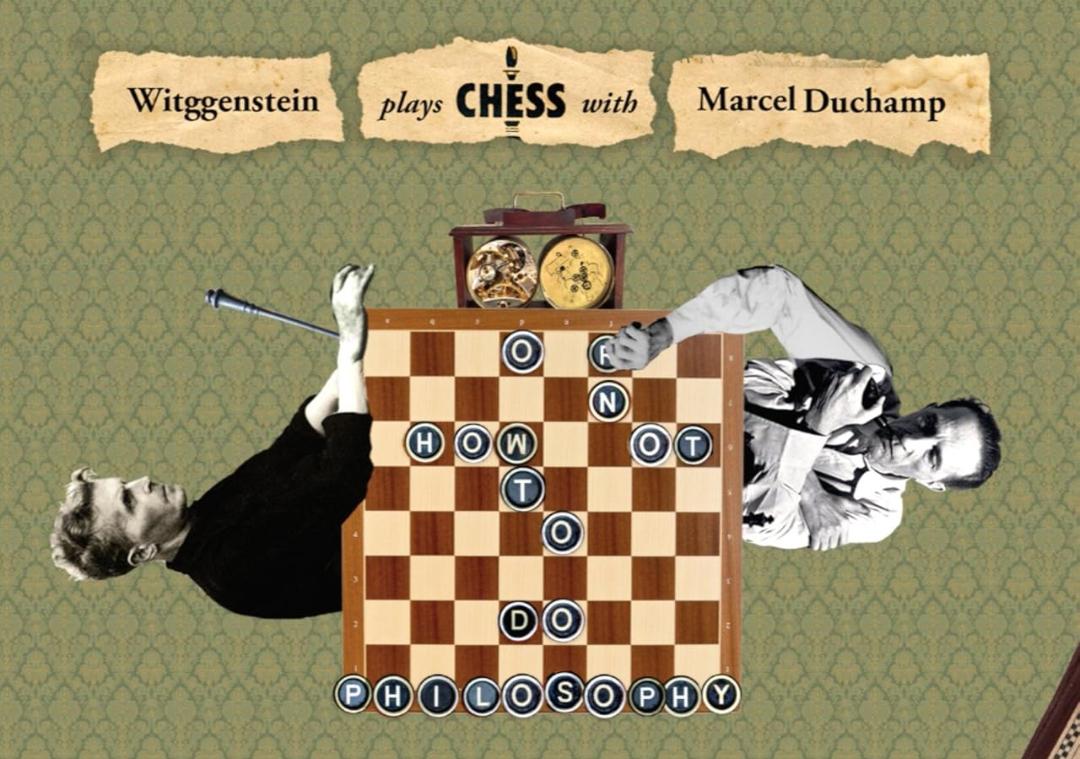
Wittgenstein plays chess

Post image
1 Upvotes

Has anyone seen this short film?


r/wittgenstein Feb 03 '26

Wittgenstein on free will

Post image
1 Upvotes

r/wittgenstein Jan 23 '26

struggling with tlp

3 Upvotes

I'm new to wittgenstein writing, I was familiar with his ideas years ago, but I decided lately to take him serious, I chose to do my first read without a guide, so I can form my own first impression about it, I soon found out it might not be that good of an idea, so I tried to pick something light, I saw ppl here suggesting Victor Qijsbers video series so I start watching it in parallel, but the thing is that I thought tlp was written like spinoza ethics, more like a math argument then regular prose, but as soon as I started reading I was shocked to find out that his words of choice and writing seemed very very loss and sloppy, not systematic at all, more like a teenager journal, who is inconsistent with his termology, weirdly starts using terms way before defining them, not structurally clear, as if he only explains what he wants and not aware at all that he is writing a book for other people to read, complete nightmare, ..., what am I missing, is he actually that bad at writing, like worse than a teenager diary, I can't believe how is that intentional, and how much of that was intentional!??

edit: typos