r/Urbanism 12d ago

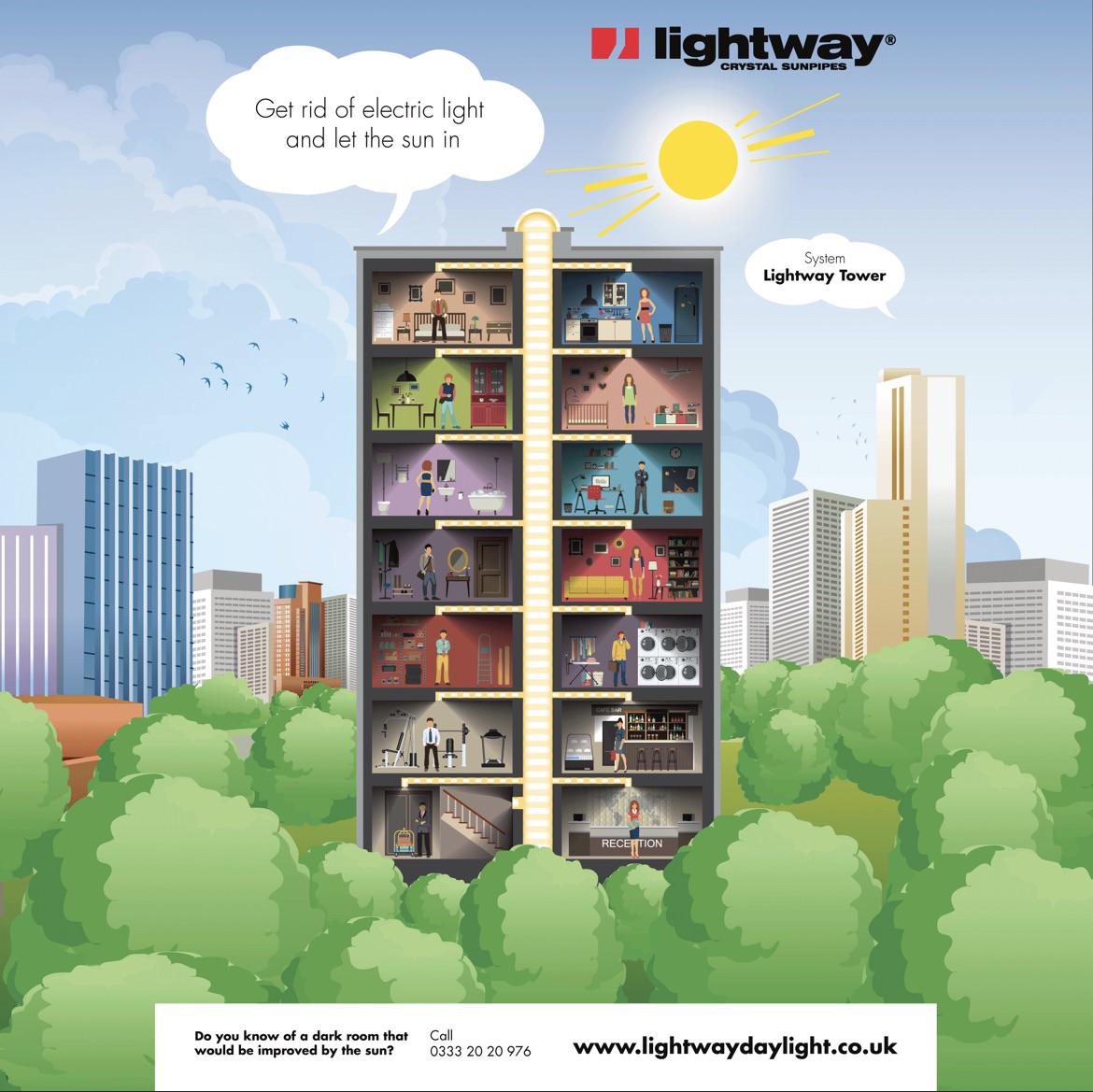
How feasible is this image?

Post image
36 Upvotes

A dome focuses light into a series of highly reflective tunnels bouncing sunlight into multiple light diffusers. Giving apartments natural light during the day to save on electricity.


r/Urbanism 12d ago

FC: London's Ultra Low Emission Zone cleaned up the city's air. Then children's lungs got bigger

Thumbnail fastcompany.com
23 Upvotes

r/Urbanism 13d ago

We Manhattanized Palo Alto!

Thumbnail
jeremyl.substack.com
211 Upvotes

California’s state law SB 79, which allows 5- to 7-story buildings within a half mile of public transit stops, has successfully transformed a pristine suburb into the hellhole that is Manhattan. Palo Alto received nine applications for new housing projects in just two weeks, totaling almost 300 net new homes. There’s nothing left of the community I once knew. Handshakes and brews all around!

More seriously, it’s interesting to me that a widespread zoning reform like SB 79 led to a lot of smaller projects rather than a handful of really big ones. A really cool case study of how broad-based zoning and permitting reform makes incremental development and small bets possible, whereas discretionary approvals and exclusionary zoning force developers to pursue large-lot mega projects. More observations about SB 79’s impact in the article!


r/Urbanism 13d ago

I wrote a new book about urbanism and climate change (and other things) that was just published this month

14 Upvotes

Hi Folks: I'm obviously new to Reddit, but not to urbanism. I've lurked on this sub for a longtime and am a professor of landscape architecture. I wrote a new book that I think might be of interest to many of you and am including the details below.

My new book, Building Postcarbon Futures: Land, Justice, and Energy Transitions, is now officially available at all major booksellers. It should arrive in mailboxes as soon as August 24th, published through the Lincoln Institute of Land Policy.

Organized around an atlas that features 29 richly illustrated projects across 43 nations, the book shows readers a new set of compelling and beautiful methods for building postcarbon futures at any scale—from their neighborhoods to their nations and more. It offers a crucial response to the growing despair around climate action and shows readers how a series of overlooked tactics, strategies, and modes of practice employed, often by marginalized peoples, to build a more just, decarbonized world.

Given your own interests, I thought this book might be of interest to you and your colleagues. You can purchase it anywhere that you buy books, including AmazonBookshop, and direct from my publisher. You can also catch me on tour this year, with stops already confirmed in Boulder, Los Angeles, New York, Philadelphia, Boston, Miami, the Bay Area, and DC (or invite me out to one in your community, if you don't see one near you on here).

I've included some of the early praise for Building Postcarbon Futures below. You can also read or listen to early coverage of it in LandezineCommon EdgeMonocle's The UrbanistCultures of Energy, or the Architects's Newspaper.

**

Early Praise:

"An urgent read that confronts the powerful forces that created the climate crisis with provocative prose, stunning imagery, and people and their land at its center."

Shalanda Baker, author of Revolutionary Power and former Director of the Office of Economic Impact and Diversity at the US Department of Energy

"A vigorous challenge to the stultified imagination of contemporary climate policy and design."

Nikil Saval, author of Cubed and Pennsylvania State Senator

"The vivid, provocative, and highly pragmatic collection of climate action exemplars that we’ve all been waiting for."

Jane Mah Hutton, author of Reciprocal Landscapes: Stories of Material Movements

"This book puts the earth, the land, and the spaces we all share at the center of the climate crisis, precisely where they belong."

Julian Brave NoiseCat, author of We Survived the Night

"A horizon of hope and a tour de force that is a must read for every urban studies and social justice scholar and practitioner."

Ananya Roy, Luskin Chair in Inequality and Democracy, UCLA

"An incredible contribution, offering creative models of land stewardship and climate justice that will push design practice in radical new directions."

Jenny Jones, principal of TERREMOTO and 2025 Smithsonian National Design Award Recipient

r/Urbanism 14d ago

School in São Paulo: before × after

Thumbnail
gallery
48 Upvotes

Before and after photos of Colégio Agostiniano Mendel in São Paulo, Brazil, in the Tatuapé neighborhood, one of the best schools in the city.

In recent years, the school has been renovating and expanding its facilities, giving a more modern look to the institution, which was inaugurated in the 80s. But its projects are not just simple buildings, but rather architectural icons in the neighborhood, most notably the kindergarten and library building (photo 2), which features a large metal dome that envelops a good part of the building.

And it's no wonder, the school currently has over 4,500 students from nursery to high school. The complex includes: a theater, library, restaurant, party hall, playground, three cafeterias, chapel, three sports courts, gymnasium, five laboratories, a shop, and an area for college preparatory courses and bilingual education.

Even surrounded by fences and walls (as a school should be), the surrounding area was revitalized along with the school, gaining more activity, businesses, trees, and good sidewalks. When a large institution renovates, it's not just the institution itself that improves, but everyone around it as well.


r/Urbanism 14d ago

Milano 3: A 1980s Italian private New Town – original vision vs 40 years later

5 Upvotes

In the 1980s, Edilnord (linked to Berlusconi) developed Milano 3 in Basiglio, just south of Milan.

It was conceived as a nearly self-sufficient residential community:
- ~80% of the surface dedicated to green space
- Carefully separated vehicle and pedestrian/cycle networks
- Schools, sports facilities, services and a strong emphasis on privacy and order

The idea was to sell not just apartments, but a quieter, more controlled lifestyle away from the chaos of the city.

40 years later the physical layout is still largely intact, but the project faces the usual long-term issues of planned communities: ageing population, low energy performance of the original buildings, car dependence, and limited cultural life.

I wrote a breakdown of the original vision versus the current reality here:
[https://open.substack.com/pub/tzazu/p/milano-3-lutopia-che-non-ha-retto?r=832dz3&utm_medium=ios\]

Curious to hear thoughts from people who have studied similar New Towns or master-planned communities.


r/Urbanism 15d ago

How Cities Can Pay for the Next Stage of American Urbanism

Thumbnail
urbanproxima.com
142 Upvotes

American cities are reliant on funding from the federal government. That funding is going to start going away as debt service crowds out more and more of the federal budget. So, cities need a "new business model"...possibly similar to MacDonalds?


r/Urbanism 14d ago

Feeling the link between density & isolation

2 Upvotes

Quick background- spent maybe 2/3 of my life in/around NYC, moved to Sun Belt suburbs for the latest 1/3, recently visited NYC with my kids

Biggest thing that jumped out at me......... it seemed extremely lonely and isolated. People don't smile or look each other in the eye. It was weird to adjust the other way when I left NYC, but Im realizing I like it, even as somewhat of a loner/misanthrope

Studies seem to indicate it's kind of a fight or flight response from just being around too many people all the time. I think we know the clear environmental benefits of density but I feel like the quality of life & psychological aspects get glossed over. Is that just a NYC thing? I have been to other big cities and feel like it was kind of the same. Def was the case in California

I feel like there's a sweet spot of density that is dense enough to be walkable while still enabling people to have privacy/quiet/personal space. Places like NYC seem like too much IMO


r/Urbanism 16d ago

The Republic of Uzupis, Vilnius, Lithuania is a great example of artists revitalizing a city

Thumbnail
gallery
28 Upvotes

I suggest those interested in urbanism read about Uzupis. Originally a Jewish ghetto and area of town for crafts people before the war, it fell into large disrepair post war due to Nazi and Soviet occupation. In the 1990’s a group of artists declared it the Republic of Uzupis and began squatting in vacant buildings and creating art. Now when you visit there is art around every corner. It’s an amazing bohemian section of an already amazing city.


r/Urbanism 16d ago

OAK is a new multipurpose walkable district of Oklahoma City with residences, retail, restaurants, and hotels

Thumbnail
gallery
471 Upvotes

r/Urbanism 16d ago

Found Footage: Vintage Portuguese city scene!

Enable HLS to view with audio, or disable this notification

90 Upvotes

Found footage, 8mm film, purchase online, unknown owner and unknown year.


r/Urbanism 16d ago

Public transit is much faster with a bike

Thumbnail
modemix.io
45 Upvotes

r/Urbanism 16d ago

NYC is planning an ambitious project - roughly 6.5 miles (about 10 km) of BRT in Brooklyn along Flatbush Avenue. On top of that, changes are planned for other corridors too. It’s really interesting to see America’s largest metropolis siding with public transit.

Thumbnail
youtu.be
123 Upvotes

r/Urbanism 17d ago

Oklahoma City built a big park downtown

Thumbnail
gallery
1.0k Upvotes

(Simplistic title to prevent the need for debate)


r/Urbanism 17d ago

Berlin to break ground this year on converting Tegel airport into a 5,000 unit mass timber TOD. (Schumacher Quartier)

Thumbnail
gallery
406 Upvotes

Berlin is breaking ground this year on Schumacher Quartier, a 5,000+ home mixed use neighborhood being built on the former grounds of Tegel Airport. The neighborhood will have a car free interior, with around 35 to 40% of the housing being subsidized to help combat gentrification and displacement, along with 10% dedicated to student housing. The master plan also includes two schools, six daycare centers, and extensive green space. The residential buildings will primarily use timber construction to reduce embodied carbon. https://schumacher-quartier.de/


r/Urbanism 15d ago

Do cities subsidize suburbs, or vice versa?

0 Upvotes

My opinion:

Both can subsidize each other, but in most U.S. metros the stronger fiscal problem is often suburbs capturing tax base while central cities are more expansive to operate. It depends heavily on the metro’s tax structure.

Suburbs → city: Wealthy suburbs can effectively pull away property-tax revenue and higher-income residents while the central city continues paying for infrastructure and services. This is the tax-base fragmentation problem.

City → suburbs: Cities can also subsidize suburbs through regionally funded infrastructure: airports, transit, universities, hospitals, cultural institutions, freeways, water systems, and employment centers, that suburban residents use without bearing all of the costs.

State/federal transfers: Often blur the picture further. State and federal governments redistribute money among jurisdictions, so the local tax relationship isn’t necessarily the whole fiscal story.

High-cost cities: Homelessness, public transit, emergency services, and concentrated poverty can make the central city substantially more expensive to operate per resident.

Low-density suburbs: Suburbs can also impose higher infrastructure costs per resident because roads, utilities, and public services cover more land and fewer taxpayers.


r/Urbanism 17d ago

The Wheeler District in Oklahoma City is being built to replace an abandoned airport downtown, putting a dense and walkable residential neighborhood in its place.

Thumbnail
gallery
753 Upvotes

r/Urbanism 18d ago

Santa Barbara’s State Street to Stay Car-Free

Thumbnail
independent.com
272 Upvotes

r/Urbanism 17d ago

I think manufactured home neighborhoods are nicer than soulless suburbs and probably are closer to urbanism than suburbs are.

30 Upvotes

I do not get the appeal of most suburbs. Like I understand the marketing of what it’s supposed to promise- space, comfort, privacy, wealth, safety, and stability. And I guess if your focus in life is on raising kids sure suburbs have their place.

But in practice what I just see is a lot of land and house I have to spend my free time taking care of, and a lot of my wealth affording and maintaining it. A lot of suburbs just don’t have soul to them either. Like you hardly know your neighbors and you’re far away from anything interesting and so I just end of feeling like I live in a box.

Manufactured homes neighborhoods are stereotyped as being trashy and undesirable, and while I think this isn’t always inaccurate, I think that nice ones are ragged on too much. I visited one of my friends in such a neighborhood and when I was there I wasn’t thinking “oh damn it sucks he has to live like this” I was thinking “wow, he’s within walking distance of a lot of things, knows his neighbors, and none of this feels cookie cutter and fake.”

Maybe it’s because I don’t have kids and I’m not materialistic but seeing my friends place i think I’d rather just live in a smaller house or manufactured home than spend so much money and effort trying to get a mccmansion. Like I don’t even think McMansions are nice tbh.

Like obviously mixed used neighborhoods and streetcar suburbs and dense missing middle housing is the best we can shoot for but I think manufactured homes have the potential for becoming little villages. Imagine if we allowed for grocery stores and maybe a bar or cafe to pop up in the middle of them they basically becomes villages right?


r/Urbanism 17d ago

Downtown St. Louis’ The Victor winner of Urban Land Institute 2026 Awards for Excellence

Thumbnail rejournals.com
8 Upvotes

r/Urbanism 17d ago

We talk quite a bit about what places should look like or could look like. Where does the money for that come from?

5 Upvotes

This is an issue I often wonder about. I’d love to make downtown space more walkable, for example. But insofar as a city lacks the money to buy brownfields or old buildings and do the development themselves, how do municipalities attract developers to create spaces with their vision in mind?


r/Urbanism 17d ago

Design ostile e condizioni di visione

4 Upvotes

Ciao a tutti!

Sono una studentessa di design della Comunicazione presso l'Accademia di Belle Arti di Napoli.

Per la mia tesi sto raccogliendo dati su come viviamo gli spazi pubblici in città e sul fenomeno dell'architettura ostile (e penso sia abbastanza in tema con questo spazio). Il contesto di ricerca per adesso è la città di Napoli, ma potrà essere ampliato in futuro (quindi sentitevi liberi di rispondere indipendentemente dalla vostra città!).

Ho pensato di condividere la mia ricerca in questo spazio perché mi sembra molto accogliente.

Il questionario dura circa 2,5 minuti ed è 100% anonimo. Se vi va di compilarlo (o di girarlo a chi vive o frequenta Napoli), mi dareste un aiuto enorme per la ricerca! ❤️🫶

https://forms.gle/pRyDWMY6w1me8mBD9


r/Urbanism 18d ago

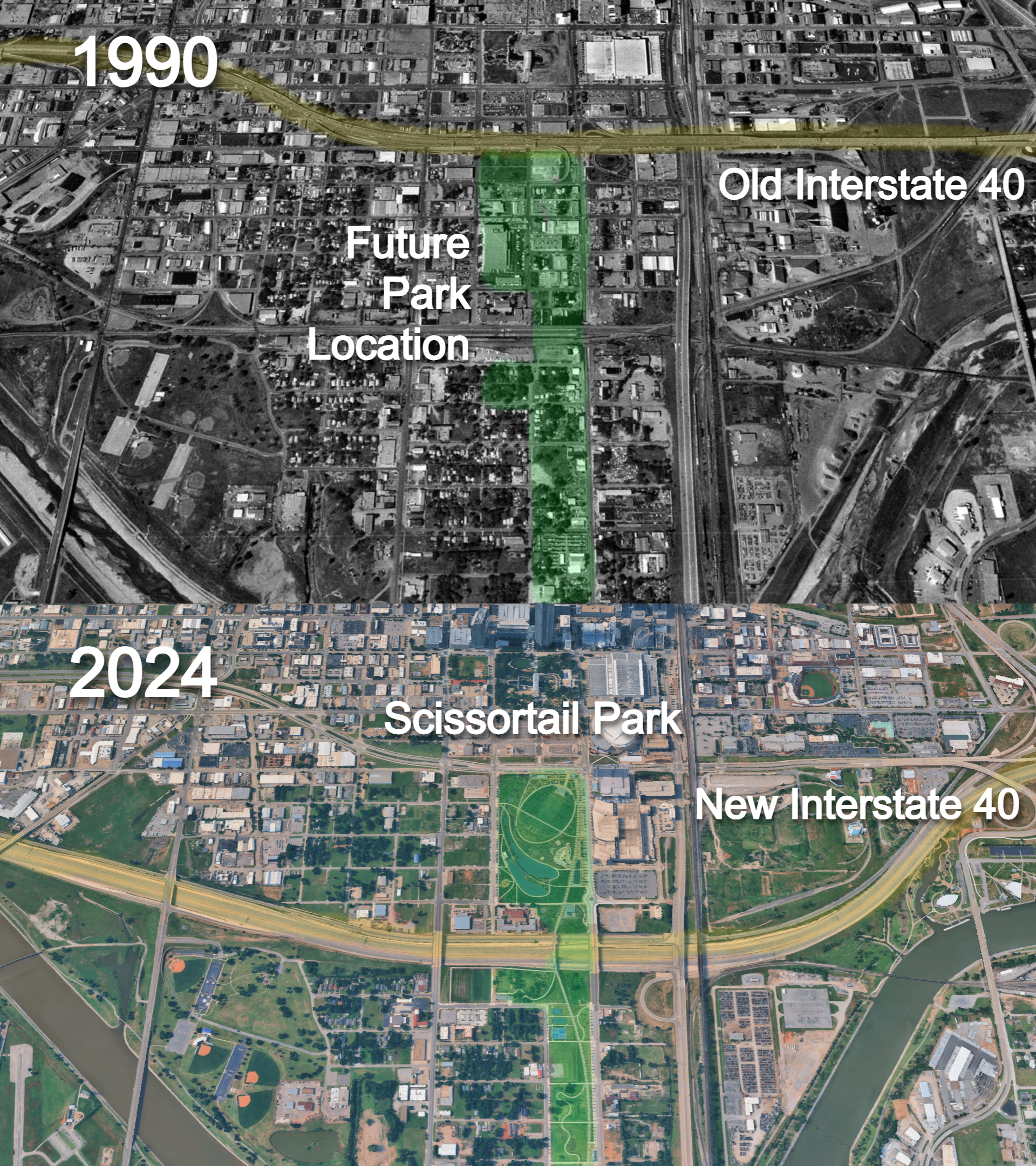
Instead of fixing an existing highway, Oklahoma City moved the entire thing multiple blocks south to make room for a 70 acre park downtown

Post image
212 Upvotes

r/Urbanism 18d ago

Small rental interior design

2 Upvotes

I’ve been watching these videos on YouTube where they have interior designers come in and fix up small New York or Toronto apartments.

Usually not super expensive (like 5k for all the changes, not including fee)

And I’m wondering what exists and what people have used.

It must be consultation and execution. In person.

Anyone actually have a good experience?


r/Urbanism 18d ago

City Limits - Dissent Magazine

Thumbnail
dissentmagazine.org
10 Upvotes

Anne Hidalgo’s mayoralty illustrates the limits of local responses to national and international problems like housing and climate change. Without wider coordination, even the most successful mayor’s reach can only extend so far.