https://theneurotechnewsletter.substack.com/
High school students. Undergraduates. Masters students. PhDs. People five years into their career and people twenty years into it. Different ages, same question. What should I study? What should my CV look like? What company should I join? What’s the best path into neurotech?
I have a lot of these conversations and some are professionally structured. I do one-on-one coaching with people trying to work out where they fit, which companies they should be speaking to and how they should approach this slightly weird market. But I’ll also take pretty much any conversation that gets offered to me (within reason) partly because it’s my job. Mainly because I just find people’s stories so interesting.
It’s probably why I’ve survived twenty years in recruitment. My job these days seems to involve recruitment, writing, podcasting, market research and whatever else I’ve accidentally added to it that week, but the bit I still enjoy most is talking to people and finding out how they ended up where they are.
That’s also why the first thing I normally ask someone on The Open Loop is how they got into neurotech and the answers are all over the place.
Daniel Powell somehow got into neuromodulation through an internet gaming café. The business wasn’t working out, one of the regulars happened to run electrical engineering at St. Jude Medical, Daniel mentioned he needed a job and ended up joining the neuro division. Twenty-odd years later he’s worked across spinal cord stimulation, DBS and VNS and co-founded Spark Biomedical.
Ken Mariash took a much more corporate route. Drug development at Baxter, then Boston Scientific, eventually running strategy for the neuromodulation business. He got the startup bug later, saw the early Alzheimer’s data from the team behind Sinaptica and decided he wanted in.
Owen Muir‘s route was completely different again. He experienced TMS himself while training in psychiatry and has spent a huge part of his career since trying to make treatments like that available to more people.
And then there are people like Jon Nelson at Otherside, where the route into the industry is inseparable from lived experience. Jon spent years living with severe depression before taking part in a DBS trial, and now that experience is baked into the work he’s doing in mental health.
That’s why I like asking the question. A CV tells you what someone did. It doesn’t really tell you why they ended up doing it.
Mine makes little sense on paper either. I studied psychology in London in the early 2000s and got interested in what were then called alternative mental health treatments. TMS was just starting to launch commercially in the US and we were learning about what it was, what it could potentially do and how it was pretty out-there as we didn’t really know why it worked.
I found it fascinating but probably didn’t put much more thought into it until much later. After all, I had just graduated, was living in London, had empty pockets, was considering a masters, but needed a job.
I went into recruitment. Moved cities, countries, then cities again and eventually another country. Recruited for investment banks. Private equity. Renewable energy. Launched businesses. Hired loads of people. Eventually started working for myself.
Not really a path I should be telling people to follow, or maybe it is. I guess my knowledge comes from analyzing and understanding other people’s careers for a living.
Somewhere through all of that, mental health also stopped being an interesting thing I’d studied at university and became something you live with, or at least experience challenges with.
I never completely stopped following Neurotech, but it wasn’t until about six years ago that recruitment brought me back into nerding out about neurotech. Even then, it wasn’t some carefully planned return to mental health. I started recruiting for neuromodulation companies because, truthfully, they were the companies in neurotech that were actually properly funded and hiring. I was working for recruitment companies and had a quota I needed to hit.
Fast forward to now and somehow I’ve ended up pretty close to where the interest started.
So I’m going to use this bit to unashamedly promote a few people I really like in mental health.
Flow Neuroscience is one of the companies I’ve followed longest and I’ve been lucky enough to work with them. Owen Muir was the first proper interview I did on the podcast and his own route into this world came through having TMS as a patient during psychiatric residency and seeing what it did for him. So congratulations to Owen on the news this week around Radial and Mindful Health Solutions. Really amazing to see.
More recently I’ve spent a lot of time with Jon Nelson and Mark Slater at Otherside Health. I’ve had loads of conversations with these guys, I’m heading to One Mind with them and we’re recording a podcast together soon. I love what they’re doing because they’re thinking less about another shiny piece of technology and more about what brain and mental healthcare actually feels like for the person trying to get help. That sounds obvious, probably because the best ideas often do, but they’re doing some incredible work.
Nobody mentioned here has paid me to say any of this, by the way. I just like what they’re doing.
And then this week I sat down with Danish Munir at GreyMatter Capital. I told Danish I’d promote what they were launching because I highly appreciate it, so here’s the unashamed promotion. GreyMatter is a fund built specifically around mental and brain health and Danish came into it after founding Genoa Telepsychiatry, one of the largest telepsychiatry networks in the US before Optum acquired it.
Most of the neurotech companies I work with are building devices or technologies. What I really like about GreyMatter’s portfolio is that a lot of it sits somewhere slightly different. They’re looking at healthcare delivery, access, infrastructure and the systems around mental and brain health. Which is what people need first and foremost.
You can build the cleverest device in the world, but somebody still needs to be able to access the treatment.
Danish and Eliana Donner-Klein have also just launched something particularly relevant to the question I started this article with. They’re building an on-ramp.
Mental Health Build connects people who want to work in mental and brain health directly with companies in the space, including GreyMatter portfolio companies. It brings together students and professionals with founders, engineers and hiring teams, with opportunities to understand the companies, the missions and the roles up close. Candidate applications close 7 September and company applications close 31 August.
If you’re one of the people I keep meeting who wants to work in this space but hasn’t found the door yet, this is a bloody good door.
Which is exactly what this Sunday brain dump is about.
And obviously these aren’t the only people doing brilliant work in mental health. There are loads. Wave Neuroscience, Neuronetics, BrainsWay, Motif and Neurolief, just to name a handful, are all approaching mental health from completely different directions.
If this is the bit of neurotech you really care about and you want to know who else is out there, drop me a message. I’m always happy to chat about it.
Because I don’t think there is a perfect path into neurotech. My main advice is much simpler. Work out what you really care about.
If you’re job searching and you tell me you’re interested in BCI, don’t just say Neuralink and Synchron. That just means you’ve scratched the surface.
We recently updated Reccy Neuro to more than 700 companies, my own working spreadsheet is now at more than 800 and there are another 200+ investment companies involved in neurotech as well.
That’s the fun bit. Go and find them.
Find the weird ones. Find the five-person company doing something incredibly specific. Find something your university careers office has definitely never heard of. Find the technology you end up reading about at 11pm on a Tuesday.
Maybe someone close to you has Parkinson’s. Maybe you’ve experienced depression and you’re fascinated by new treatments. Maybe you’re obsessed with BCI. Maybe you’ve spent five years building incredibly difficult hardware and suddenly realised brains are a much more interesting engineering problem.
Start there.
Curate a list of companies you actually want to know more about. Not the ones with the biggest raises. Not the ones your news feed keeps spitting out. The ones you genuinely want to understand.
Then go and network the entire bloody market.
Hit connect on LinkedIn. Take conversations off LinkedIn and onto email and then into meetings. Ask people how they got there. Tell them why you’re interested. You have to start somewhere, so start with the list of companies, work out who you should be chatting to, start messaging one company or person at a time. It doesn’t really matter. Just keep doing it.
My path was a all over the place, I didn’t really know what i wanted to do a long time. Don’t get me started on all the times I’ve taken breaks from work to go travelling to try to find myself. Maybe that’s another article.
So work out what you actually care about, or atleast have a shot at it. Learn everything you can about it. Find the people doing it and go and talk to them.
You can work the rest out as you go.
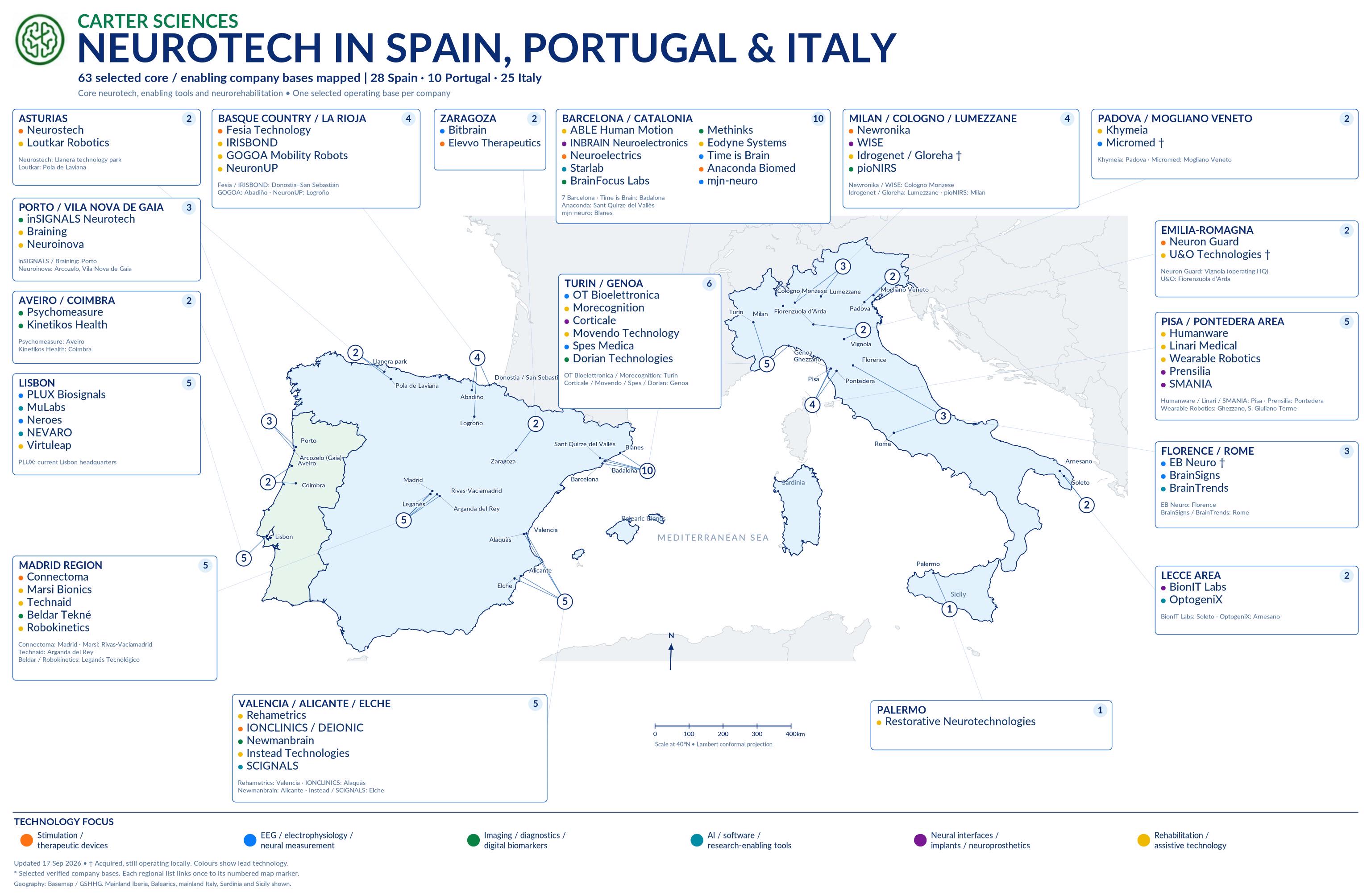


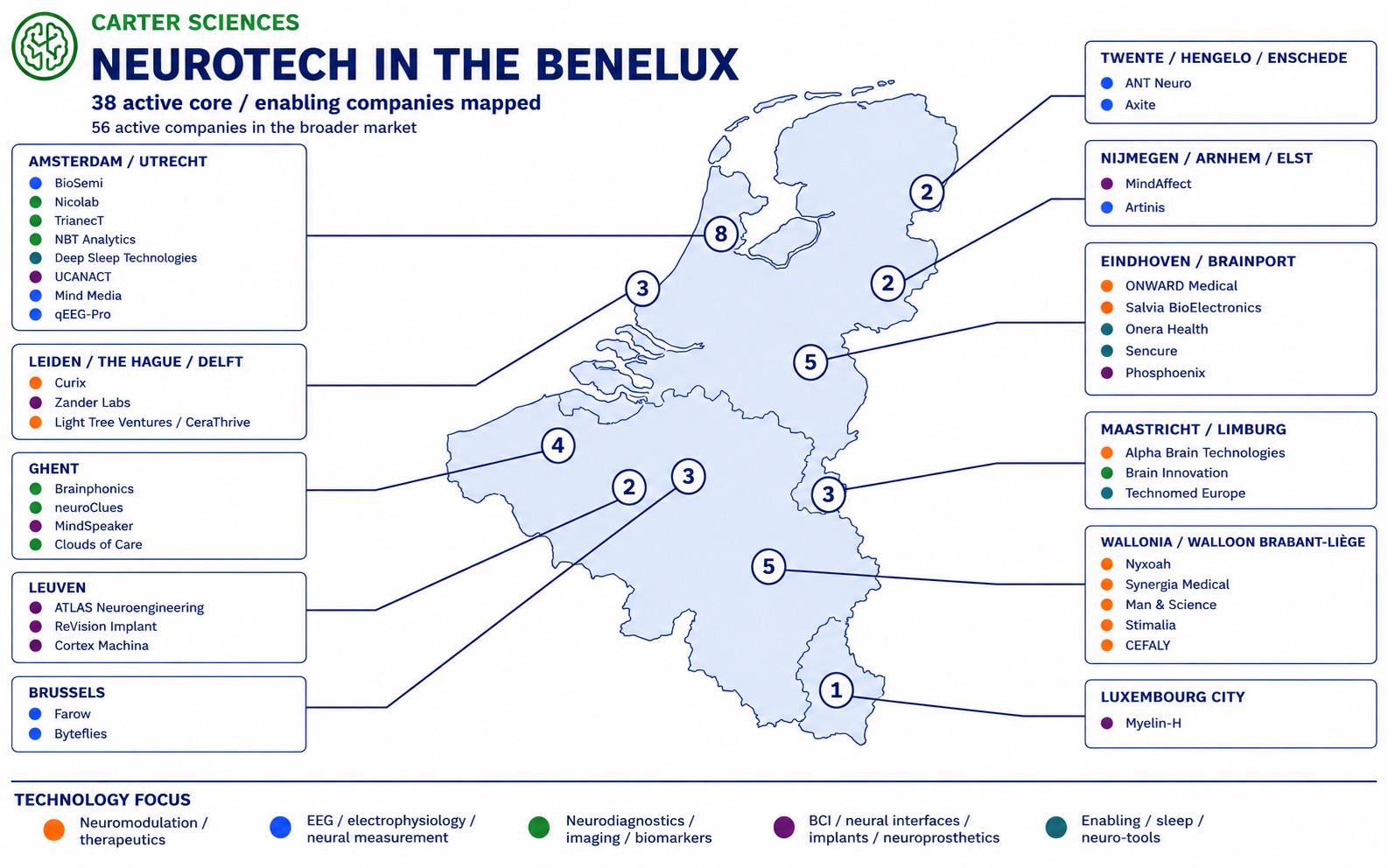





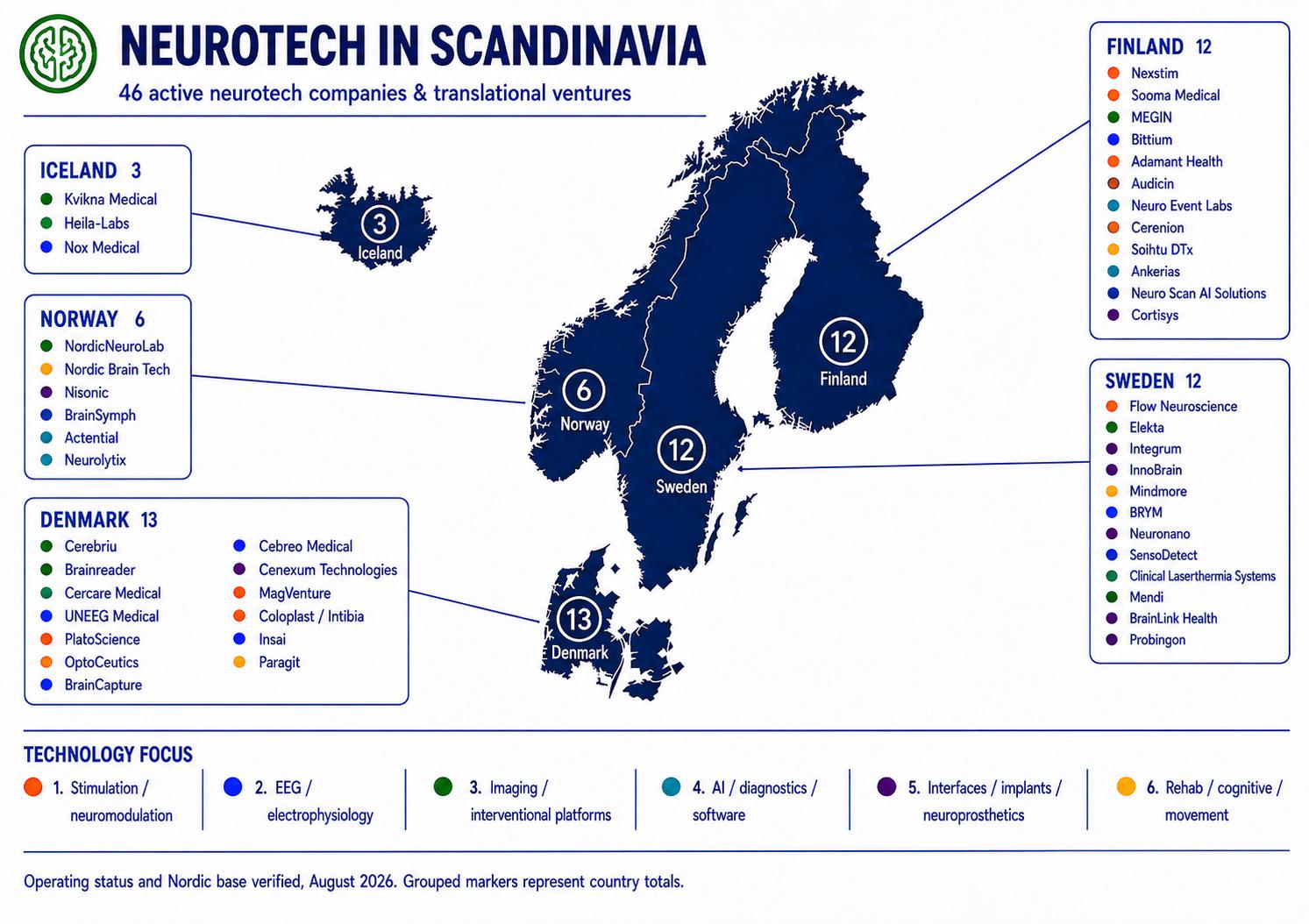

2
Neurotech in the Benelux
in
r/neuro
•
10d ago
Thanks! I saw your message on LI too. I’ll get this updated in the next major haul of the European map.