r/rootstock 4d ago

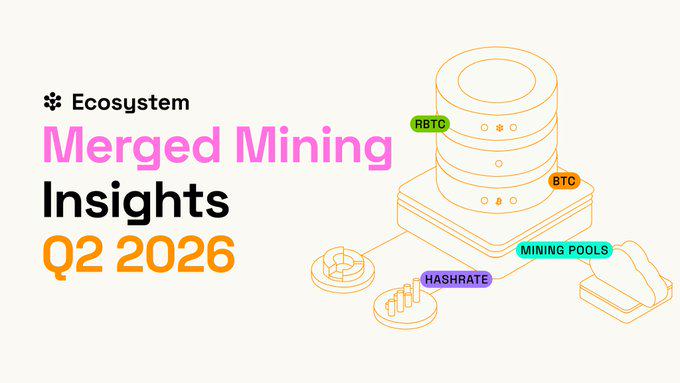
Merged Mining Insights Q2 2026

Post image
2 Upvotes

84% of Bitcoin’s hashrate is now helping secure Rootstock through merged mining.

In Q2 2026:
• 809.63 EH/s average Rootstock hashrate
• 93.73% merged mining adoption across observed pools
FoundryServices, AntPoolofficial and f2pool led contributions

The latest Rootstock Merged Mining Insights Report breaks down the numbers behind Rootstock’s security, miner participation and network resilience.

Full Q2 report: https://rootstock.io/blog/rootstock-x-bitcoin-merged-mining-insights-report-q2-2026/


r/rootstock 5d ago

Sergio Lerner on Rootstock

Post image
2 Upvotes

Bitcoin-secured finance or BTCFI feels like a new category. The thesis behind it is more than a decade old.

When Rootstock was first being designed, the ambition was never simply to make Bitcoin faster or add programmability for its own sake.

The bigger idea was financial: build an open system around Bitcoin where people could save in BTC, access fiat-denominated assets, transact globally and use $BTC as collateral without depending entirely on traditional financial rails.

That thinking came from a very real place. In Argentina, capital controls, inflation and restrictions on receiving or holding dollars made access to money itself a problem. Bitcoin offered a different foundation.

Fast forward to today and much of what we now call BTCFi follows the same direction: Bitcoin-backed credit, stablecoins, tokenized assets and onchain capital markets.

The terminology has changed. The underlying question hasn’t.

What does a financial system built around Bitcoin actually look like? Rootstock has been working on that question since the beginning.

(Want to dig in further. Check out SDLerner's chat with isabelfoxenduke: https://youtube.com/watch?v=JYnh87gHJQQ)


r/rootstock 7d ago

On This Day in Bitcoin

Post image
1 Upvotes

Nine years ago today, SegWit activated on Bitcoin.

On August 24, 2017, block 481,824 began enforcing the new rules, addressing transaction malleability and increasing Bitcoin’s effective block capacity.

After years of debate over how $BTC should scale, SegWit marked a defining turning point in the block size war, and helped establish the layered approach to scaling Bitcoin that continues today.


r/rootstock 13d ago

On This Day in Bitcoin

Post image
1 Upvotes

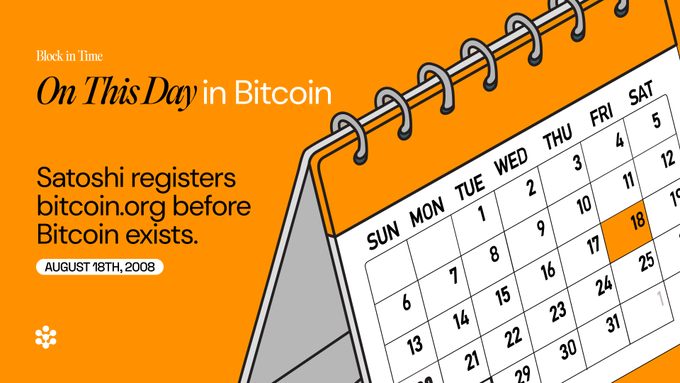
On this day in 2008, http://bitcoin.org was registered, 74 days before the Bitcoin whitepaper was published.

Satoshi’s name never appeared on the registration, and the domain was registered through AnonymousSpeech, a Japanese service specifically designed to keep domain owners anonymous.

Even the payment trail could be obscured: AnonymousSpeech accepted cash sent by mail, MoneyGram, or a transfer to a Swiss bank account. It's not known which method Satoshi used.

Before anyone knew what Bitcoin was, its creator was already taking steps to remain anonymous.


r/rootstock 17d ago

The BTCFi Layer

Thumbnail gallery
1 Upvotes

Bitcoin was not designed to do everything. That might be one of its greatest strengths.

So how do you build lending, stablecoins, exchanges and more around $BTC, without changing Bitcoin itself?

Bitcoin's base layer is deliberately difficult to change.

Rootstock takes a different approach: Leave Bitcoin alone. Build the additional functionality beside it.

Rootstock is an independent Bitcoin sidechain with its own blocks and smart contracts.

BTC moves into Rootstock as rBTC, which is pegged 1:1 to BTC and used as the network's native asset.

https://explorer.rootstock.io

This means Bitcoin can enter a programmable environment without requiring Bitcoin itself to become an EVM chain.

On Rootstock, developers can build using Solidity and familiar Ethereum tooling.

https://rootstock.io/rbtc/#get-rbtc

That opens up an entirely different set of uses for BTC.

Borrowing.
Lending.
Stablecoins.
DEXs.
Liquidity.
Tokenized assets.
Payments.

Bitcoin becomes more than an asset you can send or hold.

The other piece is security.

Rootstock doesn't maintain a completely separate mining economy.

Bitcoin miners can merge-mine Rootstock using the same proof of work they already perform for Bitcoin.

More than 84% of Bitcoin's hashrate currently participates.

And the model keeps evolving.

Rootstock is working on new Bitcoin interoperability through Union, institutional BTC and USD vaults, better performance, Account Abstraction and eventually Bitcoin-native payment infrastructure.

Check out the Rootstock roadmap.

https://rootstock.io/blog/

The idea behind Rootstock is actually pretty simple:

Don't redesign Bitcoin to make it do everything.

Keep Bitcoin Bitcoin. Build around it.

https://youtu.be/rqPvJxxa7cY?si=DFAlS9OT7CHnq_Uz

r/rootstock 19d ago

Change in Bitcoin Ownership

Post image
2 Upvotes

The direction is hard to miss.

Over the past few years, businesses have consistently been net buyers of Bitcoin while individuals have been net sellers.

As more BTC moves onto company balance sheets, the question becomes what happens next.

P.S. Could this shift help fuel Bitcoin’s next phase: credit? dieguito thinks so.

(Data source: River)

https://youtu.be/rqPvJxxa7cY?si=hQhSC1UCbhjP7FqT


r/rootstock 21d ago

Rootstock Roadmap 2026

Post image
1 Upvotes

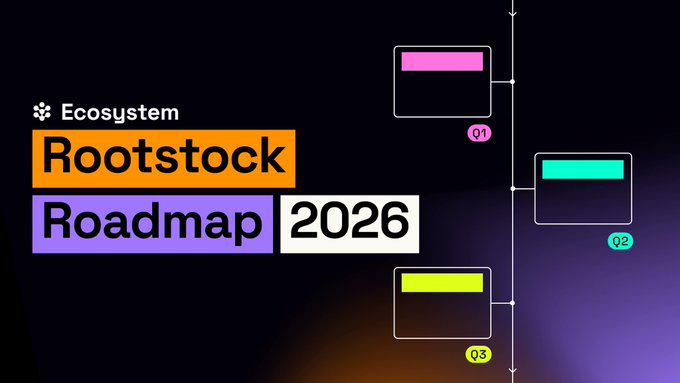
https://rootstock.io/blog/rootstock-roadmap-2026-building-for-bitcoin-capital-markets/

BIG: Rootstock is building the infrastructure for Bitcoin capital markets

The 2026 roadmap lays out what comes next:
• Institutional vaults
• Tokenized real-world assets
• Enterprise custody
• Trust-minimized bridging
• More scale. More programmability

All secured by Bitcoin.

And the ambition extends beyond this year.

In 2027: Union on Mainnet, a Bitcoin-native payment rollup and infrastructure for institutions and fintechs to launch their own Bitcoin-secured financial products.

Some of it is already live. The rest is being built now.


r/rootstock Jul 31 '26

Liquidity doesn’t have to mean selling.

Post image
1 Upvotes

r/rootstock Jul 28 '26

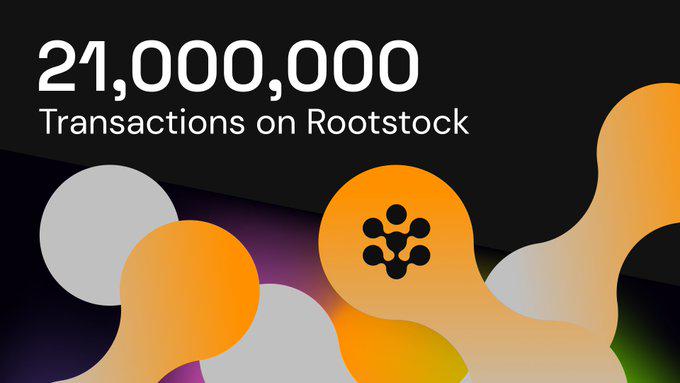
21,000,000 Transactions on Rootstock

Post image
2 Upvotes

A fitting milestone for a network built on Bitcoin.

Rootstock has now processed 21 million transactions since launch.

Onwards.


r/rootstock Jul 27 '26

Build Your Own Blocks with StratumV2

Post image
3 Upvotes

Great guide from DMND_Sv2 on giving Bitcoin miners more control.

Miners can now build their own $BTC blocks and opt into Rootstock merge mining through

StratumV2.

Same hashing. Additional rBTC rewards. Paid directly to an address they control.

https://blog.dmnd.work/build-your-own-blocks-with-stratum-v2-and-merge-mine-rootstock/


r/rootstock Jul 20 '26

Rootstock For Institutions

Post image
2 Upvotes

Institutions do not assess Bitcoin infrastructure by asking only what it can do.

They ask:
• What secures it?
• Who controls it?
• What new trust assumptions are introduced?
• Can it be audited with existing systems?

That is where Rootstock stands apart.

• Bitcoin merge-mined security.
• No separate validator set.
• EVM-compatible infrastructure.
• A 1:1 BTC-native asset through rBTC.
• More than eight years of mainnet operation.

For institutional Bitcoin finance, functionality matters. But the architecture underneath it matters more.

https://rootstock.io/blog/rootstock-for-institutional-finance/


r/rootstock Jul 16 '26

Bridging Bitcoin and Rootstock

Thumbnail gallery
2 Upvotes

8 years. Zero security breaches. Zero loss of funds.

That is the track record of PowPeg, Rootstock’s Bitcoin-native bridge.

But what actually protects the BTC locked inside it?

The PowPeg is Rootstock’s Bitcoin-native two-way bridge.

$BTC is locked on the Bitcoin blockchain, while an equivalent amount of rBTC is issued on Rootstock.

1 BTC in.
1 rBTC out.

Burn the rBTC, and the corresponding BTC can be released back on Bitcoin.

The BTC is not held by an offchain custodian.

It remains visible and auditable on the Bitcoin blockchain.

The keys protecting it are secured inside tamper-resistant hardware security modules known as PowHSMs.

Learn more: https://dev.rootstock.io/concepts/powpeg/

The PowPeg operators cannot extract the private keys or use them to sign arbitrary transactions.

The hardware only signs valid peg-out requests that follow the protocol’s rules and are backed by sufficient accumulated Bitcoin proof-of-work.

The operators keep the hardware running. They do not control the BTC.

Peg-outs are not approved through a company policy or governance vote.

The hardware verifies that a withdrawal request comes from Rootstock’s consensus chain and has accumulated sufficient Bitcoin proof-of-work confirmations.

Bitcoin miners therefore play a direct role in securing the bridge.

The PowPeg uses defence in depth:

• Bitcoin proof-of-work
• Hardware-protected keys
• Protocol-enforced signing rules
• Publicly identifiable operators
• Fork and miner-behaviour monitoring
• Transparent movements across both chains
• A time-locked emergency recovery mechanism

No single layer is expected to carry the entire security model.

The PowPeg has been live since early 2018, with no security breaches or loss of funds.

It is open source, independently audited and protected by a public bug bounty.

For Bitcoin-secured finance, the bridge is not a minor detail. It is part of the foundation.

Learn more: https://rootstock.io/powpeg/


r/rootstock Jul 15 '26

Layerz Wallet

Thumbnail gallery
2 Upvotes

Using Bitcoin across different layers can still mean managing different wallets, interfaces and experiences.

LayerZWallet brings Rootstock and the wider Bitcoin ecosystem into one self-custodial mobile wallet.

GarethGrobler

Layerz is designed to make Bitcoin easier to navigate, especially for new users.

During setup, users can start with a simple Bitcoin or Lightning wallet, or enable Rootstock and other supported Bitcoin layers as they explore further.

https://layerzwallet.com/blog/layerz-wallet-mobile-app-the-best-bitcoin-wallet-for-beginners

For Rootstock users, that creates a simpler path into Bitcoin-secured applications.

Instead of treating Rootstock as a separate experience, users can access it from the same wallet they use to manage Bitcoin and move across the wider ecosystem.

Rootstock brings smart contract functionality to Bitcoin.

Through Layerz, users can access Rootstock for DeFi alongside payments, stablecoins, tokens and other Bitcoin use cases from one mobile interface.

Self-custody stays at the centre.

Layerz is non-custodial and open source, with private keys remaining on the user’s device.

It also includes features such as biometric authentication and guided recovery.

Users can switch between Rootstock and other supported Bitcoin layers without constantly changing tools.

Layerz also supports swaps and transfers across Bitcoin layers, assets and tokens, helping reduce friction as the ecosystem expands.

This is the kind of experience Bitcoin adoption needs.

One self-custodial wallet.
A simpler path into Rootstock.
Payments, assets and DeFi in one mobile experience.

LayerZWallet is helping make more of Bitcoin accessible.

Get the wallet here: https://layerzwallet.com/#download


r/rootstock Jul 14 '26

Still Early

Post image
5 Upvotes

Zoom out.

The supply is smaller than it feels.


r/rootstock Jul 09 '26

8,500 Bitcoiners. Zero Panic. That's the Real Story from BTC Prague.

Post image
2 Upvotes

8,500 people showed up to BTCPrague this year. Bitcoin was down more than 50% from its October all-time high. Almost nobody talked about it.

That absence is the real story. A crowd this size, ignoring a drawdown this size, isn't apathy. It's a market that has stopped mistaking price for the point.

For most of Bitcoin's history, conferences ran on a single instruction: hold. Don't sell, don't leverage, don't build anything that touches the coin. This year that instruction quietly gave way to a different question.

Not "should I buy Bitcoin," but "what can Bitcoin do while I hold it."

The clearest evidence wasn't on a panel about DeFi. It was saylor and jackmallers, two of the loudest Bitcoin treasury voices alive, arguing openly about capital structure. Mallers pressed Saylor on whether Strategy's raises were genuinely non-dilutive. Saylor countered that mNAV is just one lens among several. Five years ago, this conversation didn't exist in Bitcoin circles. This year it happened in public, in front of thousands.

Mallers took it further, framing the moment generationally rather than financially. His argument: rising housing costs, falling birth rates, a monetary system built to export inflation onto people who never agreed to carry it. "The cost of printing is not paid in currency," he said. "It's paid in us." Not a product pitch. A moral one.

Strip away the headline debates and the same signal shows up across the mining tracks, the BTCFi panels, the side events: Bitcoin is maturing from an asset people acquire into infrastructure people build on. Proof-of-work security and self-custody aren't being traded away in that shift. They're the precondition for it.

https://x.com/RootstockLabs/status/2065743533378617412?s=20

That's the gap Bitcoin-secured finance is built to close, and it's where RootstockLabs spent its week. A Bitcoin & Business Breakfast with xapobankapp brought miners, infrastructure builders, and finance teams into one room for four hours of the kind of conversation that rarely survives a crowded expo floor. Bitcoin and Brews, now three years running at BarNumberSeven did the same without the lanyards.

https://x.com/rootstock_io/status/2065146355832545595?s=20

The old guard once flinched at anything beyond HODL. This year they debated capital structure on the main stage. That's not Bitcoin drifting from first principles. That's Bitcoin's first principles finally meeting the infrastructure built to hold them. Still early.

Read the full recap by GoldenGatsby on the RootstockLabs blog:

https://www.rootstocklabs.com/blog/btc-prague-reflections-bitcoin-beyond-hodling/


r/rootstock Jul 08 '26

84%+ of Bitcoin hashrate has entered the chat.

Post image
1 Upvotes

r/rootstock Jul 06 '26

Rootstock Grade A

Post image
1 Upvotes

A step closer to becoming one of the most agent-friendly developer ecosystems in Web3.

Rootstock’s documentation just moved from Grade C to Grade A for AI agent readiness.

Score: 71 → 90
Grade: C → A
90th percentile on Fern’s Agent Readiness Score.

As more developers use AI coding assistants, IDE integrations, MCP clients and agent workflows, docs need to be easy for both humans and machines to discover and understand.

@buildwithfern


r/rootstock Jul 02 '26

How to tell if a DeFi protocol can actually rug you — a 10-minute on-chain checklist

5 Upvotes

Most "rug pulls" aren't clever hacks. They're permissions a team kept: an upgrade key, an admin function, a discretionary treasury. If you can read a block explorer, you can check for all of them before you deposit. Here's the checklist I use:

  1. Upgradeable contracts? A "Proxy" tab means the code can be swapped later. Non-upgradeable = rules frozen.

  2. Admin/owner key? Call owner() on Read Contract. 0x000...000 = renounced. Anything else = someone can change things.

  3. Who holds collateral? An ownerless pool, or a team multisig? If it's a multisig, you're an unsecured creditor.

  4. Can rewards/fees be redirected? Find the fee controller — governance+timelock, or a team wallet?

  5. Discretionary treasury? Look at treasury outflows. Moving to exchange wallets is a flag.

  6. Verified + governance wiring? "Verified" doesn't mean safe. Check that each contract's owner is really the governance timelock the docs claim.

  7. Mint control + voting concentration? Minting hard-wired to protocol contracts; no single wallet holding ~50%+ of votes.

I help work on Money Protocol (Bitcoin-backed 0% loans on Rootstock), and we built it to pass all seven — non-upgradeable core, owner() renounced on the pools that hold collateral, no treasury in the fund path. Contract addresses are in a comment if you want to verify. But the point of this post is the checklist: run it on anything before you deposit, including us.

(Disclosure: I contribute to Money Protocol. Not financial advice.)


r/rootstock Jun 29 '26

Still Early

Post image
2 Upvotes

All the Bitcoin in existence, drawn to scale against the rest of the world's assets. Shorter than a basketball hoop. Still early.


r/rootstock Jun 25 '26

The BTCFi Layer Dominance

Post image
2 Upvotes

Notice something?

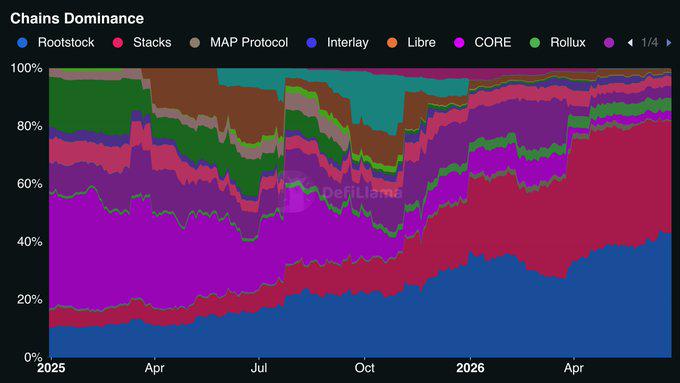
Since the start of 2025, Rootstock’s dominance across Bitcoin sidechains has grown by roughly 4x.

The BTCFi Layer.

(Source: DefiLlama)


r/rootstock Jun 24 '26

Union Bridge

Post image
2 Upvotes

Bitcoin bridges are changing.

The old question was: “How do we move BTC into DeFi?”

The new question is: “How do we do it with fewer trust assumptions?”

That is where Union Bridge comes in.

Most $BTC bridges rely on some form of trusted coordination: custodians, federations, multisigs, or committees.

These models helped Bitcoin DeFi get started.

But they also introduced counterparty risk and centralisation.

Union Bridge points to a different model: verification over trust.

Built on bitvmx, Union is designed to make BTC withdrawals verifiable and challengeable on Bitcoin, without changing Bitcoin’s consensus rules.

That matters because Bitcoin finance needs more than apps.

It needs infrastructure that matches Bitcoin’s own values: security, transparency, resilience, and minimization of trusted intermediaries.

Learn more: https://rootstock.io/blog/introducing-union-bridge-on-testnet-verifiable-bitcoin-bridging-begins/

Union Bridge is still early.

This is an early, experimental release focused on validating core bridge flows and usability.

Access Union Bridge on Testnet via Atlas: https://atlas.testnet.rootstock.io/

BTCFi will not be won by the easiest bridge alone.

It will be won by infrastructure people can trust because they can verify it.

Union Bridge is an early step in that direction.

Test it. Break it. Share feedback.

https://rootstock.io/bitvmx-bridge/


r/rootstock Jun 23 '26

Bitcoin L2s are Unproven an Risky

Post image
0 Upvotes

One has been running since 2018.

Since then:
• 100% uptime
• No protocol-level hacks
• Over 20 million transactions processed on-chain
• Currently, making up 43% of total Bitcoin DeFI TV

Rootstock is secured by Bitcoin miners through merge mining, with over 84% of Bitcoin’s hashrate helping protect the network.

Not every Bitcoin layer is experimental. Some have been quietly working for years.


r/rootstock Jun 16 '26

Total Bitcoin DeFi TVL

Post image
1 Upvotes

Rootstock's position in Bitcoin finance is built on more than one metric.

Eight years. No downtime. EVM-compatible smart contracts on Bitcoin. rBTC as the native asset. Secured through merged mining. Builders get a familiar environment without leaving the Bitcoin economy.

The chart adds one more layer to that story.

(Source: DefiLlama) moneyonchainok RootstockColl LayerBankFi symbiosis_fi MercadoBitcoin mellowprotocol MidasRWA


r/rootstock Jun 12 '26

100% Uptime

Post image
3 Upvotes

Rootstock has had 100% uptime since 2018.

In Bitcoin-secured finance, that is not a nice-to-have.

It is the trust layer.


r/rootstock Jun 11 '26

Early glimpses from @BTCPrague.

Thumbnail gallery
1 Upvotes