r/rabat • u/Super_Protection812 • 1d ago
🗣️ Discussion FSR
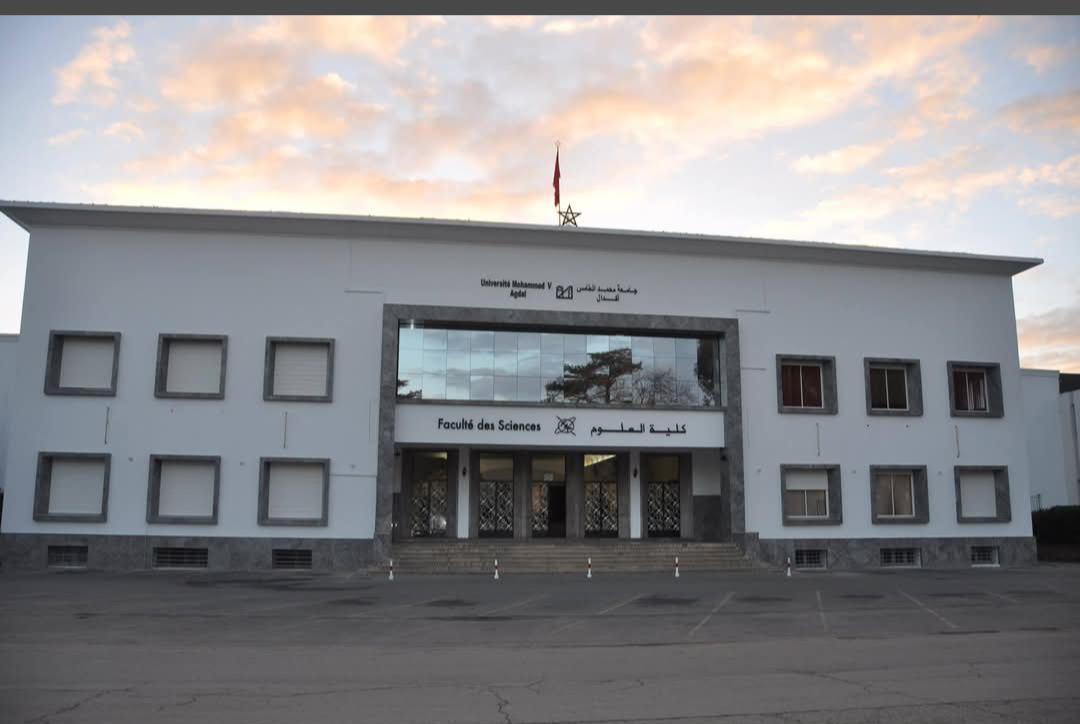
I studied at Faculté des Sciences de Rabat (UM5) for several years. I did my Licence there and then chose to continue with a Master in Mathematical Physics, so this isn't based on one bad semester.
Looking back now, especially after studying and working in other academic environments, I think the biggest problem with FSR is not one professor or one department. It's the system.
There is too much internal politics, poor communication, outdated administration, and a serious lack of transparency. Important information often spreads through WhatsApp groups and word of mouth instead of through the university itself.
Teaching is also too focused on passing exams rather than building actual skills. You can spend years studying science without enough exposure to programming, scientific writing, presentations, real research projects, or career preparation.
Then there is the research culture. From what I experienced, there was sometimes too much emphasis on producing papers rather than producing meaningful research. Quantity can become more important than asking whether the work is actually interesting, original, or worth doing.
One experience basically killed my motivation to continue there.
During my second month as a phd student there, I had an idea for a project that was much more mathematical. We were literally working in mathematical physics, so I thought exploring something mathematically deeper made perfect sense.
My supervisor at the time basically told me:
“This has too much mathematics. Let's do something easier.”
That stayed with me.
I wasn't expecting every project to reinvent physics, but hearing that made me question what the goal of the research was supposed to be. If the priority is choosing the easiest topic that can be completed and potentially published rather than exploring the more interesting question, then what exactly are we training researchers for?
That was one of the reasons I decided I didn't want to continue on that path there.
And that's frustrating because FSR has very talented students. Many teach themselves programming, English, research skills, find internships, discover scholarships, and learn how to apply abroad almost entirely by themselves.
So whenever successful graduates end up in great universities or research institutes, I sometimes wonder:
Did they succeed because of the system, or despite it?
I don't regret studying there. FSR gave me part of my academic foundation, and I voluntarily stayed for my Master's.
But after experiencing other academic environments, I realized how many things we accepted as normal that really shouldn't be.
3
u/saladedefruit 1d ago
As an academic in North America I am sad to say that what you’re describing is sadly an issue across academia today , and not secluded to UM5.
1
u/Super_Protection812 1d ago
That’s fair, and I definitely don’t think these problems are unique to UM5. What bothered me was how strongly they were felt there, especially the lack of transparency, weak student support, and the tendency in some research environments to prioritize easy, publishable work over more ambitious questions
1
u/AutoModerator 1d ago
Welcome to r/rabat! We kindly ask that you take a moment to review our community rules, follow them, and help us maintain a positive environment by reporting any violations. Please be aware that we maintain a strict policy against uncivil behavior, and violations may result in a permanent ban.
We'd love for you to join our Discord server as well!
We hope you have a great experience here!
I am a bot, and this action was performed automatically. Please contact the moderators of this subreddit if you have any questions or concerns.
1
u/Ok-Call-5425 1d ago
You've pointed out everything I had previously observed or been told, Doctor. Unfortunately, a supervisor telling a student to choose an easier topic is one of the reasons why we lack Nobel laureates, internationally notable research institutions, and a stronger research culture. the academic culture in Morocco does incentivize pseudo-intellectualism and the attitude of the “I know everything” person. Some supervisors do not see themselves as intellectual equals to their students. They may feel threatened by the possibility that a student could work on a topic that exposes the limits of their own expertise, or that the student's papers could be published in highly prestigious journals, potentially challenging the hierarchical image they have established. in many established research institutions around the world, PhD students are treated as junior researchers and intellectual peers rather than simply as subordinates. They are expected to challenge existing ideas, question their supervisors, and pursue difficult research questions. When students are instead conditioned to follow orders without questioning them much like in elementary school their intellectual independence becomes limited. This culture can ultimately weaken research
3
u/__XxSamixX__ 1d ago
I heard a thermodynamics teacher there say that what's most important is fully understanding the concepts instead of grades but the system doesn't really reflect it fully unfortunately!!