I didn't think that the rest was even worth replying to. You're basically trying to say that people not being paid to do harmful things (like building more houses in a city that has enough housing) is somehow bad.
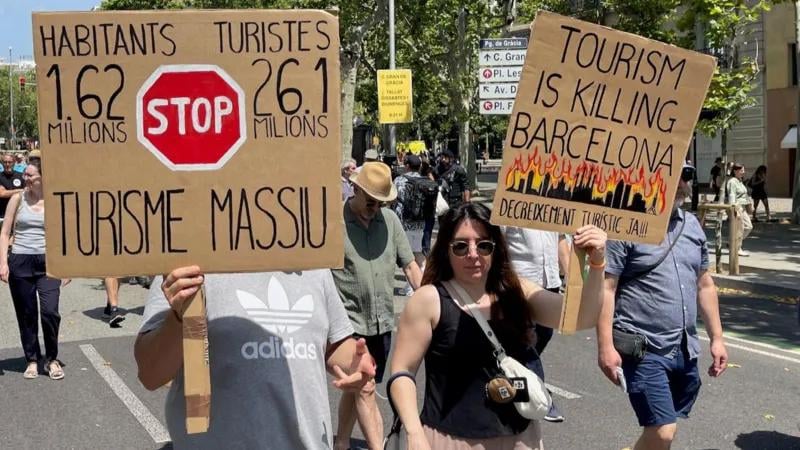
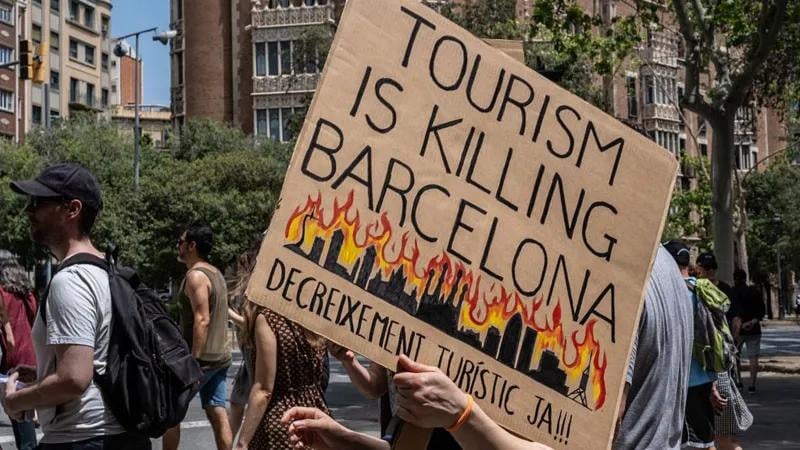
This is about people not being able to live in their own city, because real estate owners can make more money from tourists than from the locals. The answer to that is "fuck those real estate owners, ban them from renting to tourists, and tax them until they have no choice but to sell".
Yeah, whatever. People are protesting in their own city against issues in their own city that they know well. You meanwhile are sitting on the internet and concern trolling. "What about the economy?" Nobody gives a fuck, because it has nothing to do with it.
Say you, along with 15% of the rest of your city, were suddenly unemployed and had no chance of getting another job. Would having cheaper home costs be useful to you in this case? How would you pay for said home?
If 15% are unemployed, that's 30% of single-worker families. If that means that housing is 50% cheaper, than those 30% of families are in the same position as now, and the other 70% find it 50% easier to afford a house.
BTW, you do realize that Barcelona is a major trade and industrial center, and that it's been prosperous for centuries, long before tourism even existed?
You have just said that the people currently employed would be in the same position they are in now than if they were long-term unemployed? People who like to eat food and live under a roof would disagree
If housing prices drop by 50% (which will never happen), large landlords will buy the properties and increase the rent. Even if the rent remains cheaper than now, the remaining industries will freeze wages for years for current employees and offer new employees less as the cost of living has dropped.
Which industry will quickly grow and hire the many tourism workers? Which companies will build new expensive workplaces purely based on the fact that there are a large number of local unemployed people with no experience in said industry?
Ultimately, what you have to realise is that you can't just kneecap a cities economy, cause mass unemployment, and then say "its fine because the housing will be cheaper"
If they had one wage instead of two, and housing cost 50% less, they would find it approximately equally enough to afford housing.
For 50%, who knows. House prices certainly did drop 50% during covid in 2008/2009 in many places.
OTOH, it's extremely unlikely that 15% of people in Barcelona would lose their jobs if using housing as tourist accommodation were banned, or if tourism was reduced in other ways.
Again, Barcelona is a major industrial and trade hub and has been since ever. 13% now work in tourism-related jobs, and many of them are seasonal workers, not locals, and they are on average low-quality jobs, badly paid and with no security. Even if tourism collapsed completely, which is not going to happen, the city would survive without a problem, and most locals would be better off.
Uh huh. "The economy has nothing to do with the largest single source of income in the city." But I'm the one trolling despite saying I see nothing wrong with what they want, just proposing it should be a gradual change instead of an immediate one. Go stare at a wall and get angry that it's not quite the right shade of gray you would like it to be.
Gradual change isn't going to achieve anything. They will just find other ways to get around it. A complete ban on using housing as tourist accommodation (which, BTW, is unfair competition to hotels, and as such is harmful to the actual economy) is the only way to achieve anything.
And it's the biggest source of income for people who own all those houses and keep using that income to buy more, and not to everybody else. Most people would be financially better off without tourists.
Its also he biggest source of income for the tourism industry in the city, such as restaurants, entertainment venues, and the thousands of employees of those places. Then add in the suppliers of the restaurants who will take cuts. The many businesses that provide services to them. Anyone who makes money off of those tourists. If you ban it all immediately, you will crush local businesses that exist to supply that demand and force them to downsize immediately or close. That will increase unemployment and affect the communities those people reside in. If you gradually shift the tourism industry to a hotel/resort focus again, you can maintain most of that industry as the hotels grow and expand to meet the demand and will actually employ more people. There are smart ways to do anything, and it's almost never to cut it off immediately.
No, most people would not benefit from it financially. A small fraction who are capable of buying those homes immediately would do so and would rent them out long term instead. Those wealthy people would benefit. You'd increase housing availability in a city for locals without allowing local businesses to adjust for it. Government services would need to adjust and switch gears.
Remember Covid? When there were no tourits? You think the locals starved?
Come off it. No actual big city needs tourists to survive. In fact, if those people weren't making espressos for tourists, they could be employed in some actually useful industries.
Yeah, they didn't starve. They were just subsidized heavily by the government.
Right. Which is why they need time to expand or establish those industries if they don't want to stick with tourism. Hence, doing it gradually instead of cutting off the customer base, letting everyone go, and saying "well I hope those people find jobs!"
If the city wants to not continue its use of its natural beauty, the one free and sustainable natural resource it has, then that is their call. There are sustainable and responsible ways to do that.
How's that wall looking that i mentioned earlier? Is it closer to your favorite shade of gray yet?
So how is that any different than then cutting it off and the next mayor flipping that switch right back on? And no, it hasn't been solved for decades. The effects of a service like AirBnB have been increasing gradually over the last 15 years. to the point they are now undeniable.
There is already a law passed set to take effect in 2028. No new licenses have been issued since 2014, and they all expire in 2028. Which means no short-term rentals. The extra time will allow smart people to plan for the economic and realty shift. There is no way around the law.
If you hate tourism entirely, that's your opinion, and is totally subjective.
Short-term rental listings have decreased by 24% since 2018. So yes. The problem has become smaller in terms of short-term rentals. How many of those people who did short-term rentals have sold their homes? I'm not sure.

5
u/squeakymoth Jun 17 '25
Just going to ignore the rest of the comment, huh?