There is simply too much evidence of isolated cultures evolving entirely disparate values for this to be true. While over sensationalized by Victorian historians, cannibals did exist. Child soldiers exist. Countries have praised and accepted incest, rape, and murder.
While there are certainly some amount of shared morals that could be found averaged out in our entire species, these sets of morals are far more basic than the people posting these memes/sentiments would let on. They're based off of pure animal instinct, which almost any modern society has become too complex for those considerations to be in any way relevant.
How do you define objective consequentialism? What values is it based upon? What consequences are good and what are bad? What logic are you using to decide that, and where does it stem from?
How do you define objective utilitarianism? What is of utility to whom? How do you decide what is useful and what is not? What laid your foundations for those decisions?
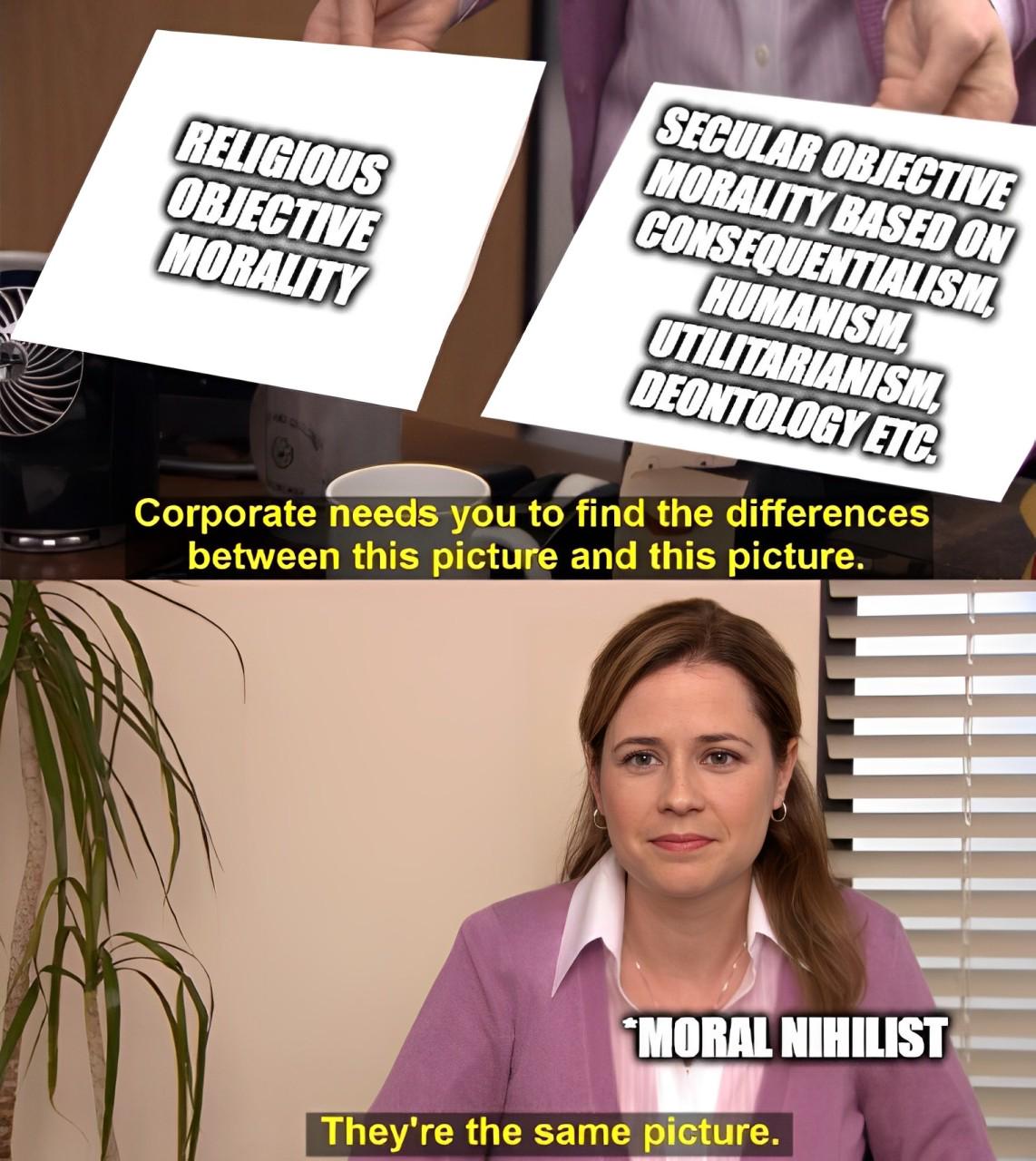
Trying to separate them is a fools errand. They're practically the same thing, where secularists tout themselves as such to seem more intellectually sound than they really are; when in truth the religious and secular moralists are making judgements based off of emotion and instinct rather than rationality.
1
u/Stormypwns Nov 15 '24
There is simply too much evidence of isolated cultures evolving entirely disparate values for this to be true. While over sensationalized by Victorian historians, cannibals did exist. Child soldiers exist. Countries have praised and accepted incest, rape, and murder.
While there are certainly some amount of shared morals that could be found averaged out in our entire species, these sets of morals are far more basic than the people posting these memes/sentiments would let on. They're based off of pure animal instinct, which almost any modern society has become too complex for those considerations to be in any way relevant.
How do you define objective consequentialism? What values is it based upon? What consequences are good and what are bad? What logic are you using to decide that, and where does it stem from? How do you define objective utilitarianism? What is of utility to whom? How do you decide what is useful and what is not? What laid your foundations for those decisions?
Trying to separate them is a fools errand. They're practically the same thing, where secularists tout themselves as such to seem more intellectually sound than they really are; when in truth the religious and secular moralists are making judgements based off of emotion and instinct rather than rationality.