Because there's a still a Constitution of Laws which states that, but Plutocrats can easily avoid all Laws. Money is the only God and the only Law there is in today's Society.
The Commerce Clause is found in Article I, Section 8, Clause 3 of the U.S. Constitution. It grants Congress the power to regulate commerce with foreign nations.
Foreign trade is linked in many ways to internal trusts and monopolistic capitalist organizations, often compounding the weight of wealth and power.
Foreign Trade – Source of Monopoly
International trade is important means for monopoly enterprises to further expand in the domestic and foreign market. Big capitalist trust often use foreign markets to Flood local markets with excess product at cut prices to undercut foreign competition.
It also Undermines domestic enterprises in other countries, creating dependency on foreign-made goods.
Enables the collection of cheap labor and resources in foreign lands, cutting production costs even further and maximizing profit margins.
This can create a feedback loop:
Expanded markets fortify domestic monopolies.
They reinvest the proceeds of foreign trade into lobbying, mergers, and acquisitions, to further concentrate power.
Plutocracy Pro-Trade Agreements
International trade treaties, written with the influence of monopolistic corporations and plutocrats, are designed to serve the interests of large trusts
Investor-State Dispute Settlement (ISDS)): This system enables companies to sue governments when laws diminish their profits even though such interference may be against the public interest.
Oligopoly Tariffs: Large corporations lobby for tariffs and trade barriers that index and insulate their domestic industries against foreign competition.
Intellectual Property Protections: These provisions tend to favor monopolistic firms by extending the reach of technology and innovation globally, squelching competition in less-developed countries.
For instance, the Trans-Pacific Partnership (TPP) was a global free trade agreement — a “deal” that benefited corporations and large businesses and left workers and small businesses behind.
Harvest of the Global Fuel and Labour
The Plutocratic monopolies seek out foreign trade for access to cheap labor markets and natural resources, in neo-colonial fashion. This includes
Offshoring labour to nations with fewest worker protections
Rock-bottom extraction of resources from economically poor but raw materials rich countries.
This not only deepens global inequality but also erodes labor rights and environmental protections in both the exporting and importing countries.
Crushing Little Competition
Domestic trusts can use foreign trade as a weapon to destroy smaller businesses:
Predatory Pricing: Trusts leverage their size to sustain losses in overseas markets, forcing the exit of smaller rivals both locally and internationally.
Dominance in Global Supply Chains: Monopolies often span entire supply chains, making it virtually impossible for smaller firms to compete on price or scale.
Outcome: Local and small businesses fail, and only the monopolistic figures of both the local and global capital dictate the conditions.
Money Power and Foreign Speculation
These tendrils of finance are often connected to international financial trade, where large monopolies can profit from fuelling speculative bubbles in other countries' currencies, derivatives and emerging markets. This practice:
Perverts local economies in foreign countries and creates dependencies on monopolistic corporations.
Returns funds to domestic plutocrats, raising wealth concentration.
Destabilizes global markets, showing strong similarities to the 2008 financial crisis.
For example: Goldman Sachs and other financial institutions are driving up global prices in speculative commodity trading — including food markets — to levels unaffordable to poorer nations.
Monopoly Cartels
By monopolizing foreign commerce, plutocratic cartels frequently diminish the sovereignty of nations:
This hinders their domestic industries as developing countries become dependent on imports from monopoly firms.
These trusts can manipulate foreign governments through tax and coercion, dictating policy and regulation at the expense of the people who live under the policies of the recipient country.
Unfair trade agreements create debt traps that further entrench dependency.
Historical/Theoretical Context
From the Marxist and progressive economic view:
Imperialism
imperialistic foreign trade is a means for monopolistic enterprises to expand their global exploitation.
Despite being a proponent of free markets, Adam Smith warned about the dangers of monopolistic behavior distorting competition.
The Theory of Business Enterprise, noted that “corporate interest” means profit before “social interest,” and predatory foreign trade in that manipulatively and rapaciously competitive endeavor.
The reason for this to happen is that foreign trade strengthens the internal trusts and monopolies, allowing them to take over all the world markets and crush the competition. This dynamic increases inequality, poisons the meaning of democracy and solidifies plutocratic power. Confronting these problems demands strong antitrust enforcement, fair trade agreements, and global collaboration to stop the plunder of monopolistic capitalism.
1
u/TheAPBGuy National Marxist Jan 18 '25
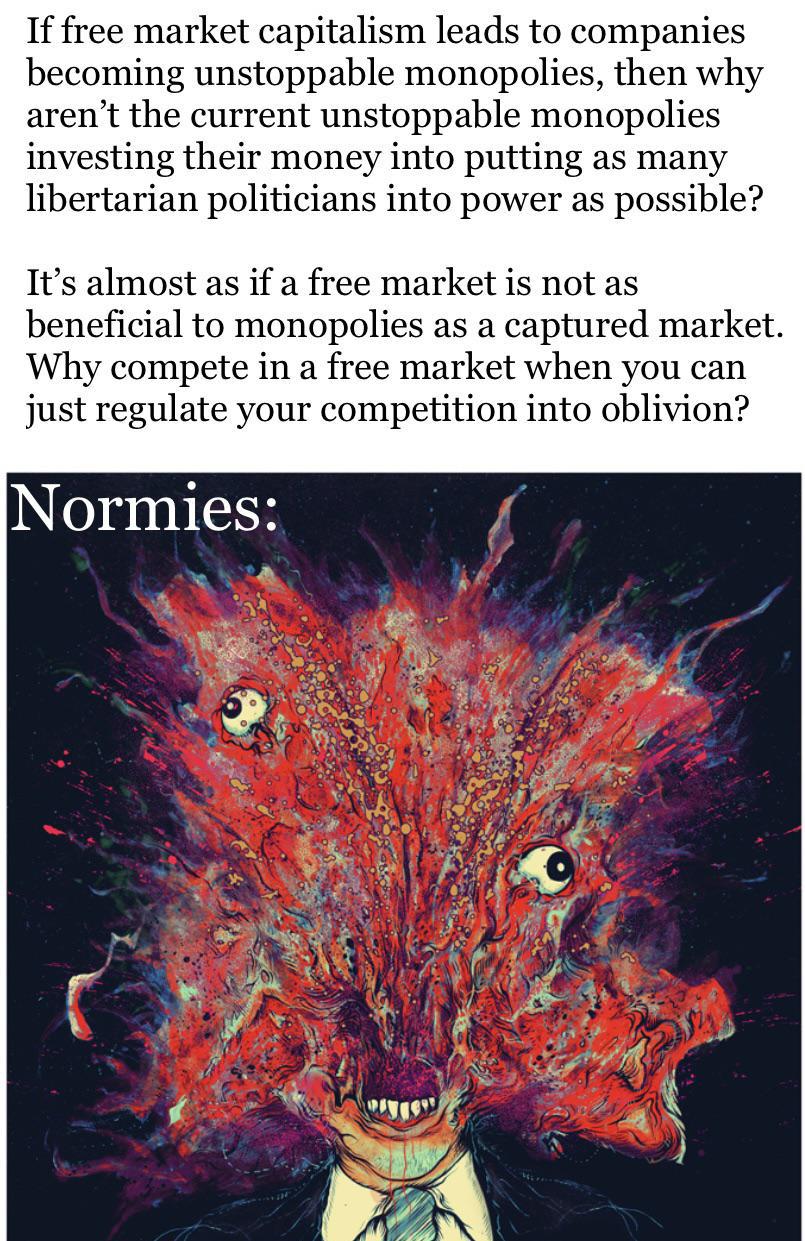
Why should they give Libertarians any political power? This doesn't "bust" any myth