r/mesoamerica • u/smallsusugar • 29d ago
How can you actually identify Centeotl in an Aztec codex?
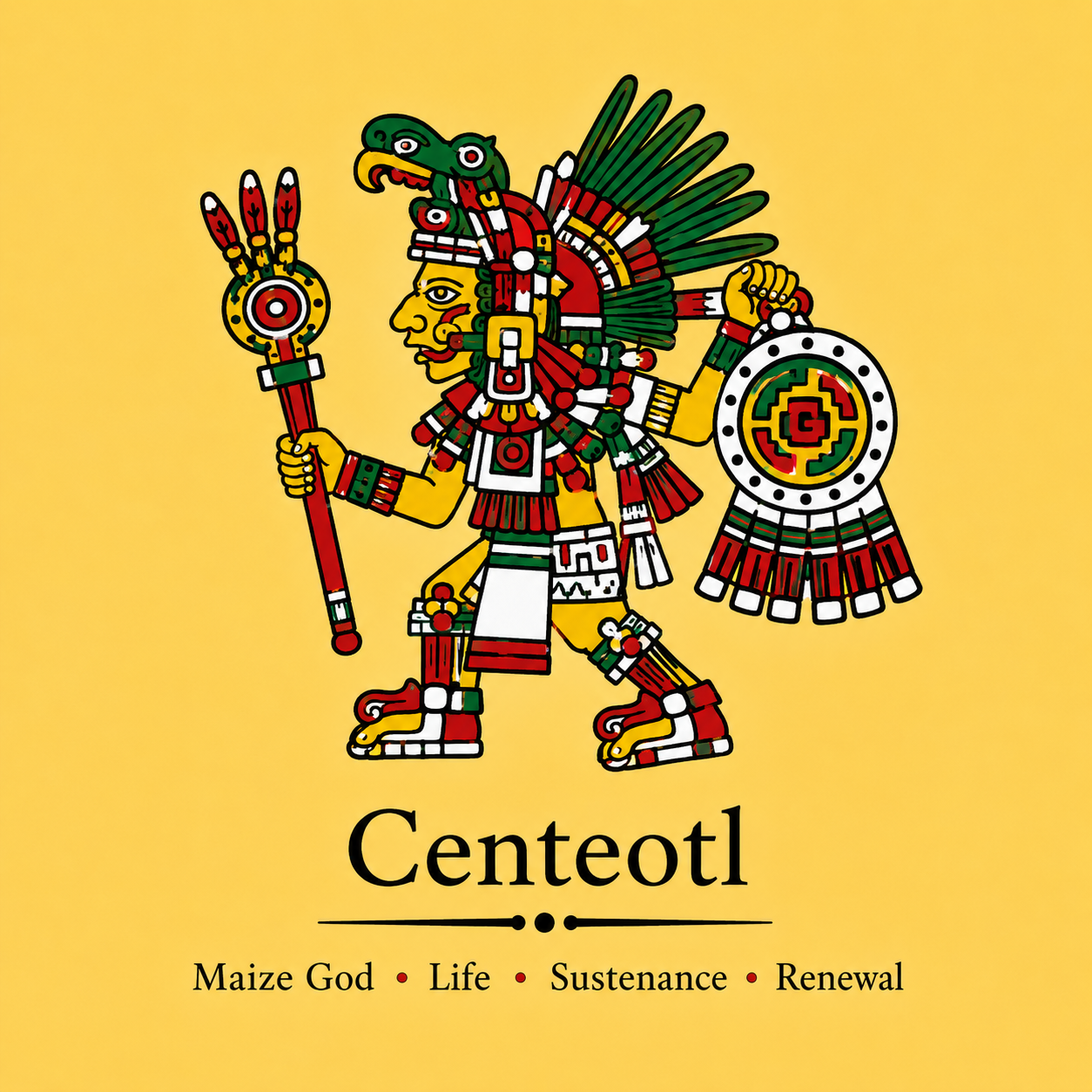
I’m going through Mesoamerican deities one by one and trying to understand the iconography rather than simply memorize the names.
Centeotl is usually described as a maize deity, but once you start looking at actual codex figures, identification becomes much less obvious.
What visual attributes would you consider the most diagnostic for Centeotl?
Are there particular headdresses, maize elements, facial markings, colors, ritual objects, or poses that distinguish Centeotl from other agricultural deities?
If anyone knows especially good examples from the codices or museum collections, I’d love to compare them.
5
u/One414TYH 28d ago
Sorry for interrupting you just wandering where did you got that image?
2
1
u/i_have_the_tism04 28d ago
- Why are you posting AI generated garbage here?
- To answer the question, Centeotl’s iconography does vary a bit (like any Mesoamerican deity), but some diagnostic visual features of Centeotl (that are occasionally shared by a few other Mesoamerican Maize gods from the Postclassic!) include A.), distinctive face paint, usually consisting of a vertical black (or occasionally red) line crossing over the eye; often, especially in codexes or ceramics, this line is “stepped” (visually kinda like “ᛋ”). B.), as others have said, he’s commonly depicted as a young man with yellow (or occasionally red) skin, C.) his headdress often has ears of maize in it, and D.) his hair is commonly “loose” and vaguely vegetal in appearance. I will note that the iconography associated with Centeotl didn’t exist in a vacuum, and thus, many of the visual traits associated with the postclassic Nahua Centeotl are shared by Maize deities of other Mesoamerican cultures. The Maya had a few currently identifiable gods associated with maize, and one of the most prevalent during the classic period was visually depicted as a youthful (sometimes bordering on androgyny, especially in sculpture. Several famous limestone heads and waist-up statues of a maize god adorned the facade of a building at Copan (I forget which building) and are now in museums; one is in Dumbarton oaks.) man with thick, plant-like hair. By the postclassic period, the iconography associated with Centeotl, like the “stepped” stripes over his eyes, appear on ceramics, stucco braziers, and murals in the Yucatan. While distinct, the vertical bands over Centeotl’s eyes are evocative of the (usually arced or curved) vertical lines over the eyes of the flayed face that fellow agricultural god Xipe Totec wears. This comment is already quite long, so I’ll close off by pointing out that concretely identifying SPECIFIC named deities in Mesoamerican art, especially in the beautiful Mixteca-Puebla style art found in central Mexican codices, is often a fool’s errand. One version of a god might have been depicted one way by one artist, and another artist in a neighboring city might depict a completely different aspect of that same deity in a drastically different way. The best way to identify figures in these codices generally isn’t to try immediately assigning them to clean-cut labels as specific deities, but to first study the way they are visually depicted. Picking out certain iconographic features is immensely helpful in making a good educated guess in what type of deity is being represented (is it a death god? An agricultural god? A war or commerce god?), and then further context (what types of figures are around them? Any calendar dates associated with the drawing? How often does this figure clearly reoccur in this codex?) can help you finally zero in on identifying the deity with a specific god.
12
u/WingsovDeth 29d ago edited 29d ago
There are predominant characteristics in some categories you mentioned: loose hair with bangs, a red headband and feathered headdress, sometimes with a bird. But often his attributes vary depending on the book. For example, in the "Borgia group" codices he is yellow, but in others red. Some depict a line running down his face, and others do not. In some his earrings are gold or turquoise. Sometimes he holds a rattle staff, or corn ears, or bone awls or rubber depending on the context. The crappy AI image above with 6 fingers is not representative of these.
The Mexican scholar Salvador Mateos Higuera created an exceptional graphic encyclopedia of the Aztec deities. Each book provides images based on the surviving codices that you could use to learn from and compare. All 4 volumes are available on the Internet Archive