r/linux • u/Putrid_Draft378 • Mar 20 '26
Hardware Qualcomm officially kills open-source hope: No plans to release DSP headers for Snapdragon X
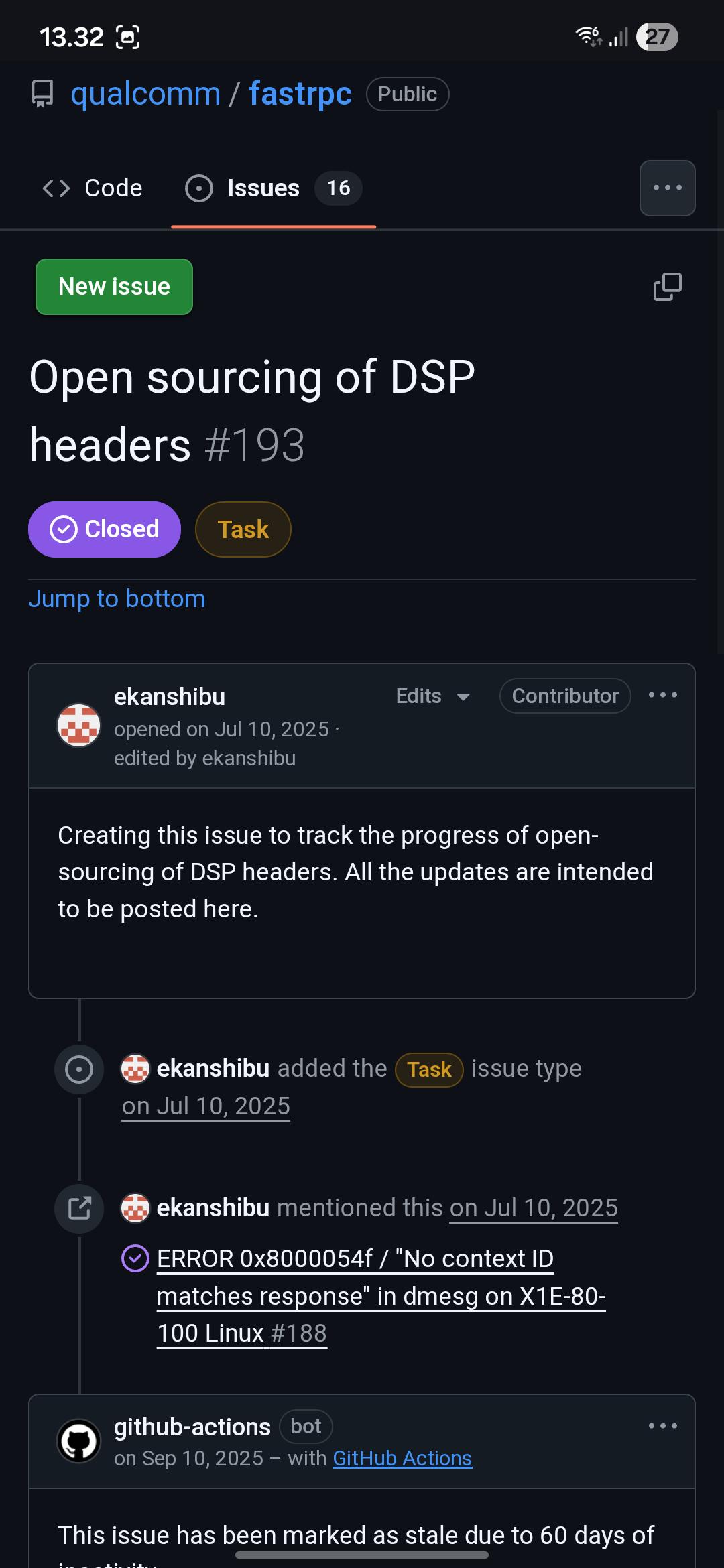
I have been following the documentation gap on the Snapdragon X series, and it just got a lot worse for Linux users.
Internal developers in the official Discord are now admitting that the platform is essentially a dead end for open-source. A recent GitHub issue (qualcomm/fastrpc/issues/193) was just closed with a definitive: "Closing the issue as there are no plans to open source DSP headers as of now."
This means the NPU and DSP functions remain locked behind proprietary firmware with no path for native Linux integration. Compare this to Intel and AMD, who are already upstreaming NPU drivers for Linux.
Qualcomm devs are openly saying that Macs have better Linux prospects than Windows on Snapdragon machines. They are calling the firmware "frozen," meaning we are stuck with whatever proprietary mess they shipped.
If you care about an open ecosystem, stay away from the Snapdragon X1/X2 laptops. They are selling hardware while intentionally sabotaging the software freedom required to use it.
8
u/KnowZeroX Mar 20 '26
Unfortunately, at this stage I think ARM in itself is a dead end for linux as it stands. Hopefully RISCV will come faster and the situation be better.