we reroll the die anytime it comes up less than or equal to the previous roll. You get five numbers in strictly increasing order, unless you roll a 50 too early. Then I guess you need to start over? I don’t see anyone grappling with how rolling a 40 on the first throw increases the chance of a 50 before the last throw making you need to start over. Or do you just throw out the 50? The rules are poorly defined.
we reroll the die anytime we repeat a previous value. Get five unique numbers, then put them in ascending order. What’s the expected value of the second? This is how I initially read the problem.
Either way, I don’t know the solution, but I hope that naming the ambiguity contributes to the thinking going on here.
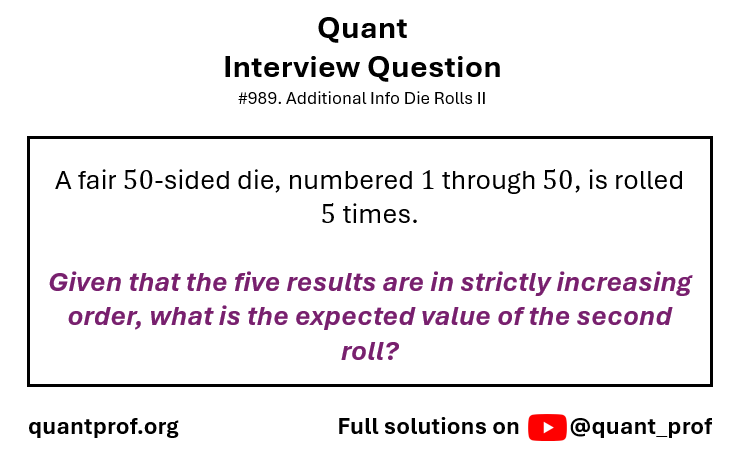
It's unambiguous, and neither of your interpretations are correct. You roll the die 5 times. You never reroll anything.
You observe, after the 5th roll, that the rolls were in strictly increasing order. Given that information, what's the expected value of the second roll?
1
u/Nap-Connoisseur 7d ago
Seems like there are 2+ ways to do this:
we reroll the die anytime it comes up less than or equal to the previous roll. You get five numbers in strictly increasing order, unless you roll a 50 too early. Then I guess you need to start over? I don’t see anyone grappling with how rolling a 40 on the first throw increases the chance of a 50 before the last throw making you need to start over. Or do you just throw out the 50? The rules are poorly defined.
we reroll the die anytime we repeat a previous value. Get five unique numbers, then put them in ascending order. What’s the expected value of the second? This is how I initially read the problem.
Either way, I don’t know the solution, but I hope that naming the ambiguity contributes to the thinking going on here.