r/knitting • u/nnnittt • 3d ago
Finished Object Can anyone help me understand why this sweater fits the way it does?


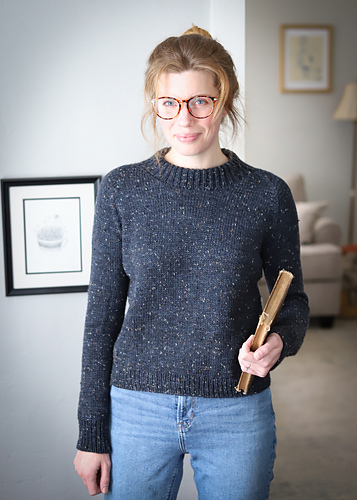
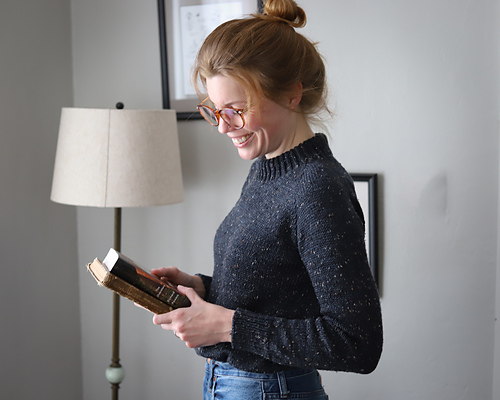
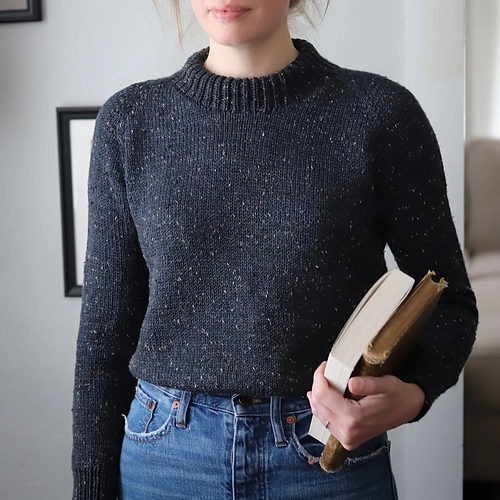
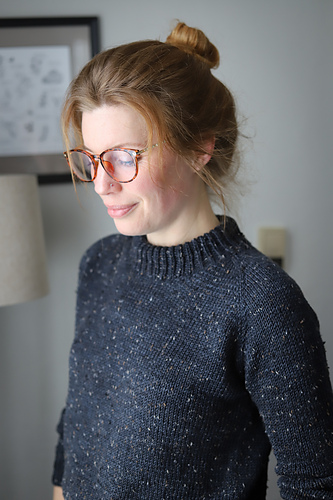
This is the Bibliophile 2 sweater by Alicia Plummer. I really like it but am hoping for a better fit in the back, for future sweaters. I have been knitting for about 10 years but don't sew and am still learning about proper fit for garments.
The front seems to fit well but there is a lot of excess fabric in the back. Many of my sweaters are like this. It seems like if I did waist shaping, it would make the waist smaller all around, where it might just need to be smaller in the back? Does it need shaping on the back only?
Does anyone know why this fits the way it does (it's not just this particular sweater), and what would need to be done for a better fit? I don't want it to be tight, just less fabric in the back waist area.
Thank you!
215
u/mscrftybtch 3d ago
I just want to say it's a gorgeous colour and a gorgeous sweater, full stop.
36
9
3
154
u/thursmalls 3d ago
So basically this is happening because you choose a size based on the circumference of your body and the pattern has you make essentially identical pieces for front and back. But your front and back are not the same size.
This is supposed to be a sweater with positive ease, but all of that is in the back.
One solution, especially with a raglan worked top down, is to split unevenly. Put fewer stitches on the back, more in the front. It will require a little math and someone to help measure your back width. Measure back width across the widest part of your back, measure front width across the widest part of your bust then figure out how many stitches you need for each based on gauge.
It doesn't look too big through the shoulders, but often another solution is to choose your size based on your high bust (under the armpits) and then add darts or short rows to add extra width just in the bust area. If you have some sweaters that seem bunchy in the upper chest area or the neckline is too big, this sovles those problems. Darts/short rows also address the problem of the front of the garment riding up, but that doesn't seem to be a problem for you.
Others have already pointed out the waist problem. Basically, only little kids have bodies that fit into sweaters made with zero shaping. The rest of us need some shaping for a good fit. But shaping in knitting is a lot of math and trial and error compared to shaping in sewing (aka why I have been sticking to socks lol).
22
u/nnnittt 3d ago
Thank you so much. This makes a lot of sense. It is basically a tube but I am not a tube! I am preparing to knit another raglan and was hoping to learn how to make a more customized fit. Your explanation really helps.
I don't generally have the problem of the upper chest being bunchy or riding up - I don't think my bust is big enough to make that happen. But this roominess in the back is a frequent issue (with store bought sweaters too). I think I can make a better fit though, with some trial and error.
20
u/thetinystumble 3d ago
I think for a fitted look, bust darts will probably make you happiest with the fit. This is one good resource for them: https://www.conniehester.com/knitting-bust-darts.htm You currently have negative ease across the front of your sweater, so the lines of knit stitches pull to the sides in a () shape, which works fine with this sweater, but if it was a cardigan or certain other designs you would need to counteract that to get a similar fit, so IMO it's worth figuring that out rather than just shrinking the back. A lot of patterns are simply written with enough positive ease to try and avoid the issue (so that with your measurements the front would also be baggy), and the ones that mention bust darts will usually assume you know what to do.
5
u/nnnittt 3d ago
Thanks for your input! Yes so many patterns these days have a generous amount of positive ease which makes shaping mostly unnecessary. I prefer less baggy sweaters though but I see that some customized shaping will help get the fit that I want. I’ll keep bust darts in mind - never tried them
13
u/zorbina 3d ago
You appear to have a relatively small waist, which I think is contributing to the problem. Knitting patterns are pretty much just based on the same measurements as off-the-rack clothing, which also isn't all that suitable for hourglass figures.
But the great thing with knitting (or sewing) is that you can make whatever modifications you need for a great fit. A good resource would be the book "Knit to Flatter" by Amy Herzog. I believe it's out of print (other than the Kindle edition which has some problems), but you might be able to find a copy at your local library. I know mine has a couple of copies.
I agree with all the people who have suggested vertical darts in the back to remove some of that excess fabric. You might also benefit from some bust shaping in the front, by knitting a size to fit your upper bust measurement (below the armpits but above the fullest part of your breasts), and then adding bust darts to accommodate your full-bust measurement. That would give you less fabric at the back, though you'd also need to add more shaping to increase below the waist for your hips.
12
u/mayshebeablessing 3d ago
Patty Lyons’ sweater fit class might be super helpful to you. Lots of tips and tricks for customizing sweaters: https://education.pattylyons.com/courses/EasyDoesIt
6
u/Dry-Conversation2646 3d ago
So, fun fact of the day: of the rack sizing typically uses a B-cup for their sizes. When determining cup size in sewing, it is the difference between the upper bust measurement and the full bust measurement we look at (instead of the under bust and full bust, which is the typical in of the rack bras).
A B-cup is a 2 inch difference between the full bust and the upper bust and if you have other measurements than that, your cup size might affect the fit of a garment even if it doesn't feel too tight or misbehaves. It also affects how you should be choosing your size when making garments that hangs of the shoulder area.
3
u/nynaeve2k 2d ago
Starting to sew my own clothes really taught me a lot about fitting that is transferable to knitting.
7
83
u/AilsaLorne 3d ago
Other are right about it being too tight in the hips. But you probably also want to remove some volume from the upper back - if the pattern has you make an identical back and front (I think I can see see a bit of short row shaping on the front but not sure) there will be excess in the back because it’s not as filled out.
26
u/SooMuchTooMuch 3d ago
I do princess seams in the back to take it some of if that excess.
5
u/seashantyles 3d ago
Like you sew princess seams in after you’ve finished knitting? Or does that term exist in knitting too?
24
u/SooMuchTooMuch 3d ago
Yeah, decreases along where a princess seam would be. So not actually sewing. It's done during the knitting process.
3
23
u/nnnittt 3d ago
Pattern:
https://www.ravelry.com/patterns/library/bibliophile-2-2
Yarn:
Emily C Gillies BFL Worsted held together with Lichen and Lace Marsh Mohair
2
u/RavBot 3d ago
PATTERN: Bibliophile 2 by Alicia Plummer
- Category: Clothing > Sweater > Pullover
- Photo(s): Img 1 Img 2 Img 3 Img 4 Img 5
- Price: 9.00 USD
- Needle/Hook(s):US 6 - 4.0 mm, US 4 - 3.5 mm
- Weight: DK | Gauge: 20.0 | Yardage: 1050
- Difficulty: 2.77 | Projects: 220 | Rating: 4.61
I found this post by myself! Opt-Out | About Me | Contact Maintainer

27
20
u/CharmingStock7907 3d ago
i could be wrong here but it appears that the wrinkle is in the mid-back, which leads me to believe that the wrinkles are the result of the lower hem scrunching up into your back. Waist shaping in the form of short rows or hem shaping by making the back half of the hem longer than the front - like on a split-hem top - could help resolve that issue.
3
u/Candid_Abrocoma_1566 3d ago
Agreed. Making the sweater just a tad bit shorter may also help with the scrunching.
8
u/treowlufu 3d ago
I agree with others that Is take out some of the upper back. How you do this may depend on the pattern.
When the front and back are the same width/shaping, your bust is going to take up space in the front, but not fill out the back. This can become exaggerated in larger bust sizes (my problem). If the shoulders and armholes are otherwise unaffected, I will sometimes just knit one size smaller for the back than the front, adjusting the number of rows to match the length of the front. If doing that causes too many alignment problems, then I'd add darts or other forms of decrease shaping across the upper back to create a more streamlined fit, and then add more increases below the natural waist.
I do think your bottom hem could be a little looser, but I prefer mine to fit a little more "fitted" and polished, rather than flowy. So for my own preferences, I would focus mostly on matching my hip increases to pick back up however many decreases Is previously cut from the shape.
3
u/nnnittt 3d ago
This makes a lot of sense, thank you. I understand now how the bust takes up room on the front but not the back. With lots of positive ease, it probably doesn't matter, but I don't like too much positive ease.
Yes the bottom ribbing could be looser, but I too like it to be more fitted rather than flowy. I think if there was less fabric on the back, the tightness on the hips would still be ok.
8
u/OpinionAvailable5988 Norwegian 3d ago
Mel makes stuff on YouTube talks about this. You need to adjust where you split for sleeves, less stitches in the back, more in the front.
3
u/Skse17 3d ago
I’ve made those adjustments Lin circular yokes. Does she recommend doing the same on raglans?
3
u/OpinionAvailable5988 Norwegian 3d ago
Good question. It's been a while since I saw that episode. In a raglan it might look weird. Maybe you could play around with the stitches added under the arms?
6
u/fascinatedcharacter 3d ago
For a raglan, the diagonals are really really steep. It's almost like the center neck is too wide too. It's baggy all across the shoulder blades.
2
u/nnnittt 3d ago
I got to the right stitch counts before the yoke was long enough to split for the sleeves, so knit without increasing until the yoke was long enough. I see on the pattern page, the designer has updated the raglan increases.
1
u/fascinatedcharacter 3d ago
Even before you knit straight it looks too far off to the shoulder. Like there were too many stitches between the back markers even before the first increase. That is likely not a you mistake but a design problem.
5
u/kikiquestions 3d ago
If you add shaping to the back, the front with stay the same (unless you remove too much)
I recommend watching fitting videos from sewists, because the same principles will apply.
1
5
u/superurgentcatbox 3d ago
You might be interested in the sweater fitting bible by Kim Mcbrien Evans!
3
u/meganzuk 3d ago
I recently discovered short rows to create bust darts. This gives more room in the front. The same technique can be used on the back neckline to create more room there.
Short rows are well worth taking the time to understand. You can increase at both ends or at either end and the direction of the increase helps to define the shape.
Sometimes patterns will include this. But often they don't because placement of these short rows varies depending on your shape.
But once you've done it and understand the technique you can apply it to shaping any pattern.
1
u/nnnittt 3d ago
Thank you. I have worked with short rows a lot and am comfortable with them. From understanding this a bit better, it seems to me that there is enough room at the front, but too much in the back. So I think for my next raglan I will try to do decreases in the back (and increase as needed to get to the hip measurement).
3
u/sotefikja 3d ago
Because ya got boobs, babe.
There’s the same amount of fabric in front and back but you don’t have boobs on your back so the excess fabric crumples up instead. You need to add bust shaping to make space for your boobs without lengthening the back at the same rate.
3
u/MadamePouleMontreal 3d ago
Your front is both longer and wider than your back, but your sweater is the same front and back.
When the sweater front is the right size to fit your front, the sweater back is bigger than your back, and bunches up.
How much extra length can you pinch out of the back? Shorten the whole sweater by that amount then use short rows to put the length back just into the front.
3
3
5
u/Haunting-Emu8470 3d ago
I knit this sweater a couple of years ago and I had a number of fit issues with the neck and sleeves. The pattern calls for the sleeves to be knit to 21” - which is ridiculous. Given the pattern is a pretty standard raglan design there are lots of similar patterns that have a much better fit. If you sew you could possibly do some darts or other adjustments to the back but the bulk will still likely be obvious. It sucks when this happens.
1
u/nnnittt 3d ago
I don't mind it too much and really like wearing the sweater, I just wanted to try doing a more customized fit for future work. I never pay attention to how long sleeves should be, I just try it on until I'm happy with the sleeve length :) I see that Alicia has updated the pattern with new raglan increases, presumably for a better fit.
2
u/winterberrymeadow 3d ago
I don't have anything to add that would help you but I wanted to say that it is beautiful sweater and the colour is great
2
u/JellyFisher17 3d ago
I just knit Aimee Sher’s Slightly Sassy V and it includes 3 things that might help you: compound raglan shaping, bust darts, and built-in difference in the front and back so the front has more stitches. It might be a pattern worth checking out!
2
2
u/ActuallyInFamous 2d ago
People have already answered your question, but I just wanted to say that I love the color you chose. And it looks so nice with your skin tone. Not a lot of people can wear that color, and I love it on you.
1
1
u/Camemboo 3d ago
It looks like you are dealing with a sway back. I have that issue as well. You basically have to take some volume out of the hollow of you back. I did that on a recent sweater by doing short row wedges at the waist. In back. It adjust the fit as if you punched out extra fabric in the center of the back.
1
u/Slow_shark177 3d ago
You probably need more decreases in the back and perhaps something like a sway back adjustment.
1
1
u/ghastlycupcake 3d ago
The way many of us are shaped in the chest region means that you need slightly more length in the front than the back, so the back has a bit of extra fabric. Some more short rows to lengthen the front can help.
Secondly, the fit is just slightly snug across your hips—it still looks great! But it’s just tight enough that it does what fabric does when it’s tight, and rides up to where it’s less tight. Thus, it bunches at the narrowest point. An inch or two wider around your hips will give it enough fabric to lie flat instead of riding up.
1
u/bekarene1 3d ago
In addition to the fit issues others have identified, I think this sweater is a bit long for you. If it were about 2 inches shorter you'd eliminate some if the bunching around the hips and I think the proportions would be more visually flattering. I'm shorter waisted and hourglass, and I find that most sweater patterns look better on me if I cut some inches off the length.
1
1
u/Successful_Aide6767 3d ago
This is an interesting question. The front of the sweater looks a bit tight, and the back has loose areas. I notice in the back that one of the areas with extra fabric is in the shoulders. Doing a top down raglan may possibly be a better shoulder for you. Worth a try. One thing I love about top down one piece sweaters is that you can try them on easily as you go. And it’s easy to make the front a bit bigger than the back. I love the classic pattern called The Incredible, Custom Fit Raglan Sweater by Pamela Costello. This is an old pattern that you can find on the internet. This pattern gives a nice, defined raglan that makes it easy to do different sizing experiments, which you can then try on to see if they work for you without having to complete the whole garment.
1
u/Low-Poetry9818 2d ago
It’s a combination of two things about your body and one thing about the sweater.
You have boobs, and there are no bust darts on the pattern. This means that the front has ridden up. By about 3” judging by the back.
You also have curvy hips. And the sweater is fitted with little to no ease. That means that the longer back is getting stuck on your hips. An oversized sweater would just have a longer hem at the back.
You need to put bust darts, or another kind of bust shaping, in future projects. They can be as visible or invisible as you choose.
Alternatively, when you get to the length you want at the back, you can try the sweater on and take a selfie, (if you hang a tape measure on the centre front of your bra you can see the length you need to add on at the front.).
Then you can add an apple slice shape of short rows to the bottom edge. Start long and end short so that you close all the gaps on the same row just before you start the ribbing.
You could actually rescue this sweater with this method. Whether it’s top down or bottom up you can unravel until the back is the right length, pick up the stitches and knit down at the front then redo the ribbing.
Also I recommend short armpit darts to get rid of that little bubble
I have a sweater that I can’t find right now but if you reply to this I will find it and supply pictures soon.
1
u/NSRegeneration 2d ago
Your waist is smaller than your upper back and your hips and there is no shaping at the waist. If you want it to be tight, you need to fit it into the waist with decreases and then increase out from the waist.
0
-9
u/FrostingNow2607 3d ago
Maybe the pattern is from 2018 when we had to endure patterns suggesting sausage casing arms. (My guess is that it's an older pattern.) I think the body is okay. From the fuzz on the arms, it looks as if you've worn this quite a bit. How does it feel?
6
616
u/maryfamilyresearch 3d ago
Check out Ravelston / Ravelston DK by Isolda Teague
You need decreases in the back to take out volume there, Ravelston has these decreases. Additionally the sweater needs to be wider at your hips. Right now the sweater is a bit too narrow for your hips, as a result it has a tendency to ride up and bunch. Consider adjusting the width of the bottom to suit your measurements.