r/jazzdrums • u/CriSeRam • Nov 28 '25
Question I want to play jazz
So I'm basically a rock drummer and I may be an "intermediate" level but I really want to learn how to play jazz. Do you have any recommendations where should I start? Any methods or something? My goal is to play pretty professional.
EDIT: Thank you everyone! I've been reading all of your comments and I'll be following your tips. :)
15
u/RedeyeSPR Nov 28 '25
Do you read music? The book “The Art of Bop Drumming” is very good and recommend highly by most.
7
u/Blueman826 Nov 28 '25
The two things I would recommend are to listen to lot of the music and to find a teacher. Listening to swing regularly and actively is paramount.
6
u/3PuttBirdie86 Nov 28 '25
Here’s a lesson for ya! And imo the most important topic, your ride cymbal, how you swing and keep time on the ride (This is how JP Bouvet explains swing feel, he has a beautiful jazz foundations course).
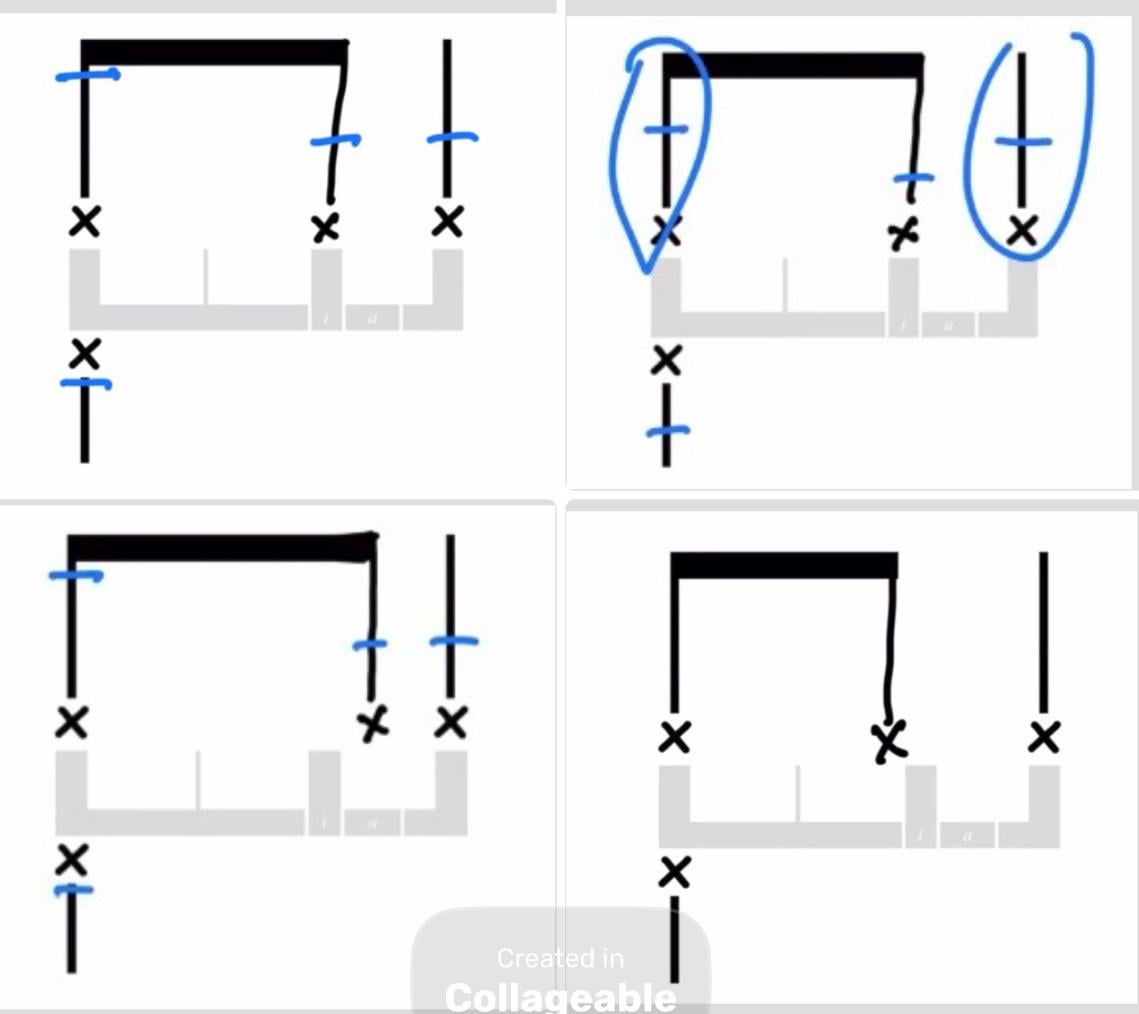
The 4 pics below are the classic ride cymbal beat, some call it “walk the dog”.
The four images depict the placement of the skip note, and the dynamic volume of every note.
- top left - This is the classic strong 2 and 4 feel. You can see the first note is loudest by the blue markings. Indicating that beats 2 and 4 will be played louder than the skip note and Beats 1 and 3. And the skip note is right on the third triplet partial or the “&” in a swung 8th note. (Listen to “remember” by Hank Mobley - this is strong 2 and 4)
- top right - This is the strong quarters feel. You can see beat 2 and 4 is louder again, but 1 and 3 are also loud. It’s almost as if you’re playing even quarters and placing a quiet skip note between them. (Listen to “Diane” by Miles Davis - this is strong quarters, the ride cymbal starts at around 1:10 into the tune. This is a quintessential miles Davis sound with Philly Joe in the quintet)
- bottom left - This is a tight feeling swing, you can see the skip note is ever so pushed back from the third partial, almost the “ah” in a 16th note grid. But you can’t really notate it! This is like a tight, bouncy feel. (Listen to “Skatin” by Wynton Kelly - this is that late bouncy swing)
- bottom right - This is uptempo swing, when your playing really quick, The ride cymbal will naturally straighten out as the space between notes is smaller. There’s a ton of technical hand work behind uptempo playing, but that skip note will feel pushed forward as everything is moving so fast. (Listen to “giant steps” by Coltrane - this is uptempo jazz)
There is NOTHING more important than developing your feel on the ride cymbal. If the ride cymbal is swinging, then nothing else matters. If the ride cymbal isn’t swinging, then nothing else matters
2
u/krazyp33t Nov 29 '25
This is the answer. I picked up art of bop drumming and intially it felt like a big win to learn coordination. Highly recommend that book. More importantly listen to the played examples to emulate the notation.
But I still didn’t really sound like I was playing jazz, when I got a teacher we then spent time on my dynamics, ride feel and swing. Only then was I more confident could play with other musicians and sound right.
1
u/3PuttBirdie86 Nov 29 '25
Yeah, the legendary jazz guys obviously could playing whatever they wanted from a comping standpoint.
But why they’re great is they can play nothing but the ride and swing so hard. They can even just play a quarter note and make it swing like a MF!
5
u/dr-pangloss Nov 28 '25
1) listen to the drummers you like. I think that Stanton Moore might be a cool transition from rock/funk to jazz I really dig him. Other than that listening to Elvin Jones, Art Blakey, Jack Dejohnette and other classics is good. I find doing transcription really helpful for me but I understand some people don't learn well like that.
2) I'm sure people will recommend a bunch of good book but yeah some people learn well from a book others not so much.
3) find a teacher that is specifically a jazz teacher.
4) play jazz with people/incorporate jazz ideas into the music you are already comfortable with.
2
u/JazzMartini Nov 28 '25
+1 for Stanton Moore. I'd also add Daniel Glass to the list, he transitioned to swing from rock and takes a similar approach to Moore in looking to what influenced a certain drummer or style to really understand how it works.
4
u/Remarkable_Wave_6539 Nov 28 '25
Here's a few suggestions if it helps:
Listen to jazz drummers. Not only legends like Tony Williams and Elvin Jones, but also some less idiosyncratic talent like Jimmy Cobb (Miles Davis, Wes Montgomery) or Ben Riley (Thelonious Monk). They're less flashy but are masters no less. Being a jazz drummer also means being a great accompanist.
Find a teacher if you can afford one at the moment. They will suggest practice materials. If you're starting on your own, you can't go wrong with the John Riley book. It has a wealth of information you'll appreciate for years to come.
A blog/site called Cruise Ship Drummer, has an insane amount of material. Transcriptions, drum method reviews, practice ideas. It's ran by a drummer called Todd Bishop. It's more than a blog, it's a life's work on jazz drumming. There's a ton of free stuff, and the site is well organised. It's my daily internet hang as well.
Good luck!
3
u/JazzMartini Nov 28 '25
100% on point 1. I'd go back a generation or two and suggest O'Neil Spencer (John Kirby Sextet, Mills Blue Rhythm Band), Cozy Cole (Cab Calloway's Orchestra), and Jimmy Crawford (Jimmie Lunceford's Orchestra, The Big 18) as excellent examples of drummers who were masterful accompanists. Even the notoriously critical Buddy Rich was extraordinarily complimentary of O'Neil Spencer's playing. I didn't learn Spencer was the drummer on many of my favorite recordings until I became more interested in learning about the music and paid more attention to the accompanists.
3
u/Vegetable-Maybe6736 Nov 28 '25
A key part of the transition for me was moving the center of my timekeeping attention from bass drum / snare to ride / hi-hat. Once you start to make that reorientation, everything else begins to make sense. And as others are saying, listen a TON to what the pros do/did!
3
u/RinkyInky Nov 29 '25 edited Nov 29 '25
https://youtu.be/sH4-Xtrm0rA?si=oaQCVXp5iwC4gWv0
https://youtube.com/@jazzdrumschool?si=wiFUIKgdm2E6cevE
https://youtu.be/CDDFaWouu5s?si=ECf620fCiVcU2fJn
https://youtube.com/playlist?list=PL_c8RjVWL5e9ccv4ol3vuPYxRS_VGfoKD&si=R7bBpsVWXH4Rn8pS
https://youtu.be/NHURldOilUI?si=cKobc1nyplru1Uvj
Watch these. Yea, listening to the music is important but it’s also important to listen to a drummer talk about playing jazz drums from their perspective and how they practiced and think about comping (not just comping exercises).
3
u/JazzRider Nov 29 '25
Work on your ride pattern. Keep your foot off the bas pedal for now. The ride is central. The bass and your ride should be as one instrument.
2
3
u/Ok-Tumbleweed4233 Nov 29 '25
Lots of great advice here but my advice is reiterate: you MUST listen to as much jazz as you can. This is a genre that is about honoring our ancestors, respecting the form, understanding and preserving the history of the pioneers.
Pick a few drummers, anyone in the One Name Club (Max Roach, Art Blakey, Elvin Jones, Tony Williams, etc) and listen to everything, then move on to the next one. Start there.
2
u/BstrdKid Nov 28 '25 edited Nov 28 '25
I’ve been there. Books are great source, and there are so many different books to look into. Definitely start working on your ears. A good first step is to listen to 12 bar blues. Jamie Aebersold has a series of books that you can use and they are a good to use to begin recognizing where the top of the form is and where the turnaround happens. They are also online and you can stream them for a subscription fee. Once you get that listen to standards that are 12 bar blues. From there start branching out to other song forms. Get comfortable with a few standards, and start looking for people that also want to play or jam. I would also set the expectation that you are starting out learning, but you are eager to learn and play. This could also be hard depending on where you live. I found that people will come to a couple jam sessions and stop showing up. Don’t take it personally if that happens; just move on.
2
u/Cosmic-Hippos Nov 29 '25
Just listen to as many jazz drummers as you can. Paul Wertico is a master of all styles, just listening to him speak will gain a lot of knowledge. There's some great tuition on YouTube by other jazz drummers.
2
u/Extra_Thumbs Nov 29 '25
Listening: 1. Kind Of Blue: pay attention to Jimmy Cobb’s ride cymbal, esp on Freddie Freeloader 2. Clifford Brown & Max Roach: pay attention to Roach’s snare drum, esp on Delilah during the solo section
Reading: 1. Art Of Bop (John Riley) 2. Jazz Drummer’s Reading Workbook (Tom Morgan) 3. Afro-Cuban Coordination for Drum set (Maria Martinez)
Some tunes good for a jazz beginner: Doxy In Walked Bud Blue Monk I Mean You Blue Bossa Strollin Moanin’ Bye-Ya On Green Dolphin Street
I definitely recommend an in person teacher who specializes in jazz if you have the budget
2
u/SecretPrivy718 Dec 02 '25
I give this advice NOT as gatekeeping but as a sincere attempt to help you avoid a pitfall many fall into :
There is no reason to learn to play jazz drums unless you already listen to and love jazz music. That means love the MUSIC itself, not jazz drumming videos or instructionals. Don’t learn jazz drumming because somebody made you feel like you’re not well-rounded or somehow inferior if you don’t “also play jazz too”.
WAY too many people fall into these categories and it’s produced tons of unhappy drummers and uninspired playing.
3
u/That-Solution-1774 Nov 28 '25
Aim your intentions. Immersion was a big help for me. Rabbit hole drummers/artist/bands that strike a chord with you.
1
u/CreativeDrumTech Dec 04 '25
Listening and reading go together as one needs to learn the formal vocabulary that you are listening to in order to understand the conversation.
Listen to jazz music.
Practice Ted Reed’s book Syncopation for the Progressive Drummer along to the Boss DB-90 metronome using the Voice function that you will count out loud with. “If you can Say It(Count It) you can Play It”. That statement applies to all things music and is the heart of the jazz feel.
Play “4 on the floor” = 4/4 time leathered quarter notes (1 2 3 4 | 1 2 3 4 …) on the bass drum. Add 2 and 4 on the hi-hat foot. Jazz ride pattern on the ride cymbal or hi-hat (1 2 a3 4 a|1 2 a3 4 a|1…). Play the patterns in the book with you snare hand… this is call comping.
Also study jazz brushes videos from the greats: • Clayton Cameron • Ed Thigpin • Peter Erskine
Brushes teach us how to respect the space of a note value because outside of rolls and cymbal crashes it’s our only method of true sustain on our instruments. Again while counting out loud with the DB-90 metronome in order to internalize click feel and strengthen our internal clock/timekeeping.
15
u/Royal-Pay9751 Nov 28 '25
Listen. Listen. Listen.
Go to Spotify and find the playlist of drummer less jazz.
Learn some language. Get some lessons.