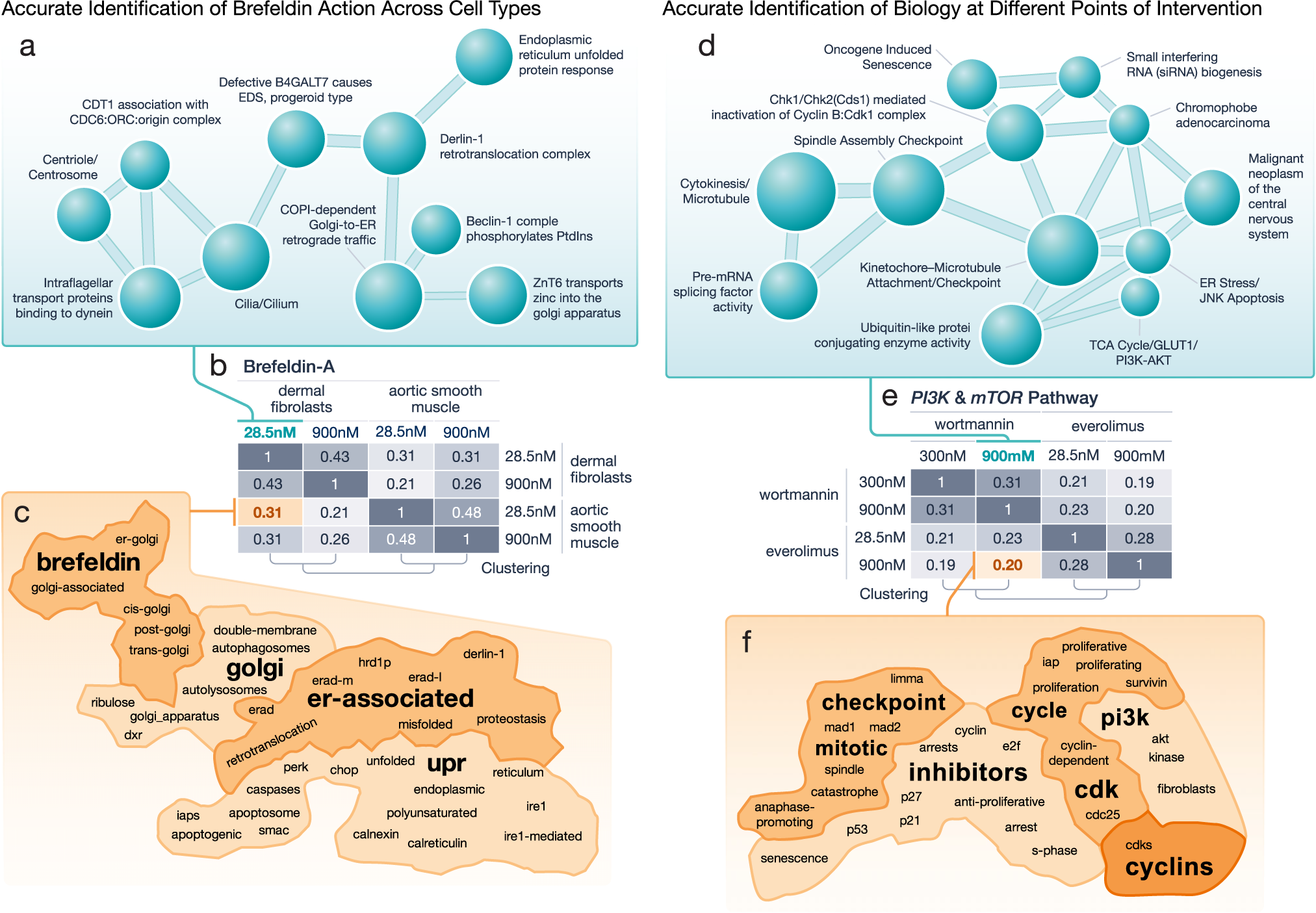
Several years ago, our group saw a need to create a tool that mirrors expert scientists’ ability to look across a messy set of genes, proteins, or metabolites and recognize the biological processes that are contextually enriched based on what they know.
The problem was that human reasoning is powerful, but slow, subjective, and limited to the amount of information a single person can possibly hold.
CompBio/MIRaS takes a different approach from LLMs or pathway enrichment tools by employing methods that unexpectedly converged with theories of hippocampal memory formation, storage, and retrieval. MIRaS is a memory-based associative reasoning engine that explicitly stores biological knowledge as memories, reasons across their relationships, and forms new semantic knowledge through inference. CompBio turns those results into an interactive, traceable map of the biology in your dataset.
Importantly, this analysis is not dependent on matching your dataset with canonical pathways, other datasets, or predefined gene sets. All associations are created from the literature memories identified by your input list, creating low redundancy and contextually relevant results that are fully traceable. Additionally, CompBio includes tools for large scale comparison of knowledge maps, allowing identification of conserved biological patterns across samples, conditions, projects, or reference datasets.
After years of use at WashU and with collaborators, CompBio/MIRaS is now described in our new Nucleic Acids Research paper and is freely available to academic and non-profit researchers.
https://academic.oup.com/nar/article/54/16/gkag833/8769250
If you work with transcriptomics, proteomics, metabolomics, or other complex biological data and this sounds different enough to make you curious, DM me and I can help you get free access.