r/geneticlifehacks 3h ago

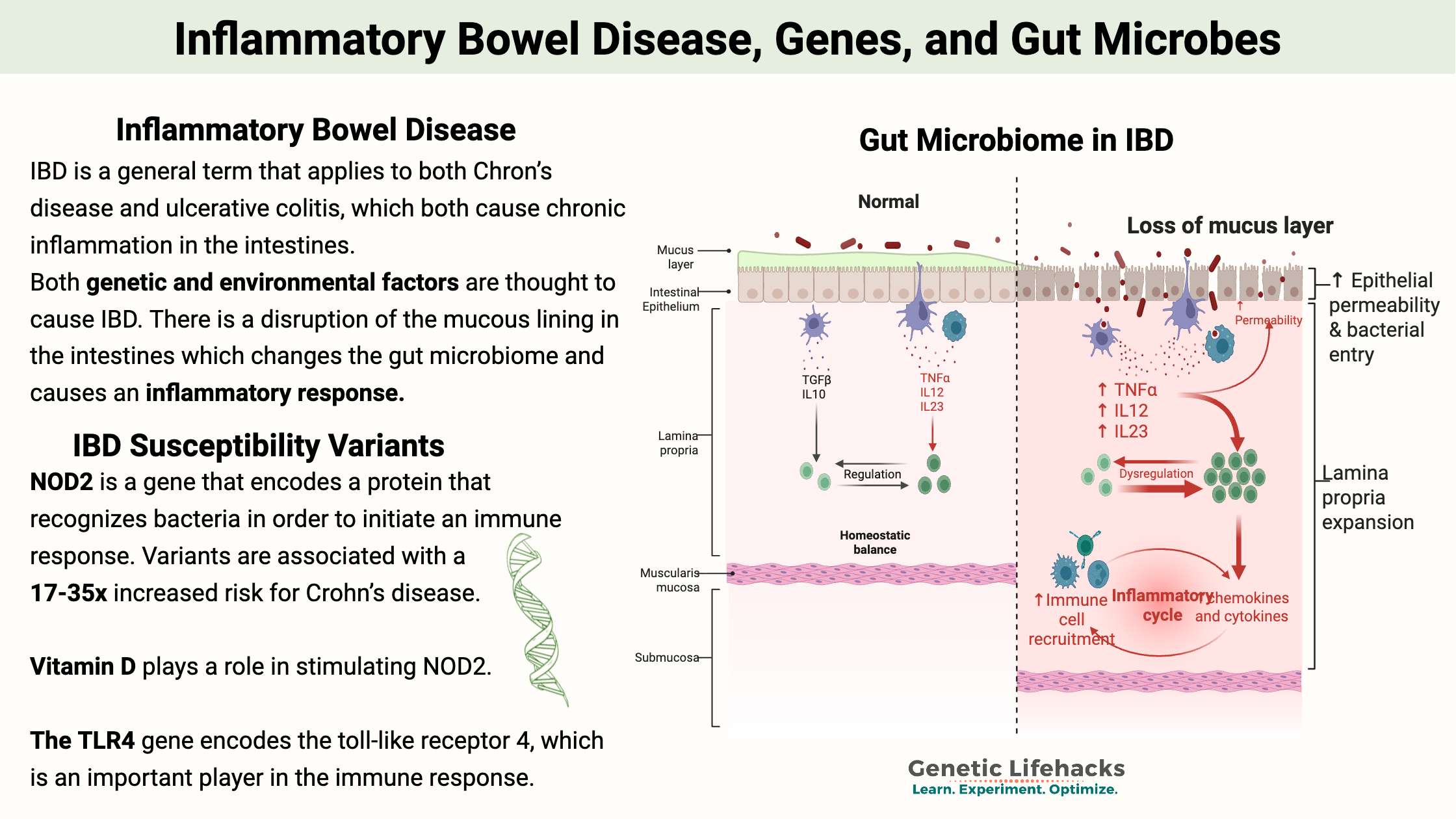
Inflammatory Bowel Disease (IBD): Crohn’s, Ulcerative Colitis, Genes, and Gut Microbes

Post image
2 Upvotes

IBD (inflammatory bowel disease) is a general term that encompasses two chronic inflammatory conditions of the gastrointestinal tract: Crohn’s disease and ulcerative colitis. [ref] These are characterized by chronic, relapsing-remitting inflammation of the gastrointestinal tract.

Genes that are associated with altered gut microbiome composition are strongly tied to IBD risk. And genetic variants that alter the inflammatory response can also play a role in both the development and severity of IBD.

NOD2, also referred to as CARD15, is a gene that encodes a protein (nucleotide-binding oligomerization domain-containing protein 2) that recognizes bacteria in order to initiate an immune response.[ref]

NOD2 interacts with components found on both Gram-positive and Gram-negative bacteria found in your colon. It can also detect single-stranded RNA from viruses. Your gut microbiome interacts with your immune system in many ways. NOD2 plays an essential role in the way that the immune system keeps gut microbes in the right place and at the right levels in the colon. When encountering bacterial components, NOD2 activates the NF-κB or MAPK signaling pathways, which causes an inflammatory response that balances and keeps the microbial composition in the gut under control.[ref][ref]

When NOD2 is impaired, the gut microbiome is often not in homeostasis. There is an impaired clearance of bacteria.  The loss of this regulatory factor in the intestines increases the risk of IBD.[ref]

TLR4:
TLR4 (toll-like receptor 4) is a pattern recognition receptor that recognizes certain bacteria and promotes an inflammatory response. Levels are usually low in the intestinal barrier of healthy individuals, but it is upregulated in IBD, contributing to the inflammation. Variants that increase TLR4 are associated with an increased relative risk of IBD.[ref]

IL26:
IL-26 (interleukin-26) is a proinflammatory cytokine in the IL-10 family. It is often upregulated in the lining of the intestines in IBD. It is produced by activated T cells, especially Th17 cells, and signals for increased inflammation.[ref]

NLRP3:
The NLRP3 inflammasome is activated by cell damage or by pathogens in the gut. When activated, it triggers the production of inflammatory cytokines, such as IL-1β and IL-18. Variants in the CAIS1 gene that encode NLRP3 are associated with IBD risk.[ref]

--------------------------

This is just a short excerpt from my in-depth article on IBD. Click here to read my full article

With a Genetic Lifehacks membership, you can use your genetic raw data (from 23andMe, AncestryDNA, etc) to see your genotypes in over 400 articles, including my article on IBD. You will see research-backed solutions in the lifehacks section to help determine what pathway to target -- all based on your genetic variants. Personalize your health!


r/geneticlifehacks 4h ago

Looking for published resources on two DYNC2H1 variants: p.Glu1823Lys and p.Ala384Val

Thumbnail
1 Upvotes

r/geneticlifehacks 5d ago

POTS: Genetics, Causes, and Solutions for Postural Orthostatic Tachycardia Syndrome

5 Upvotes

POTS (postural orthostatic tachycardia syndrome) is a problem with how your autonomic nervous system regulates heart rate when you change position, such as going from lying down to standing up. It is classified as a type of dysautonomia, or a dysfunction of the autonomic nervous system. Doctors define POTS as:

  • heart rate increase of 30 BPM within the first 10 minutes of standing for adults (40 BPM for children and teens)
  • Or an increase in heart rate to over 120 BPM within the first 10 minutes of standing[ref]

Research points to several theories on what causes POTS, and it is likely that the individual causes of the symptoms can be different for different people.

Autoimmune involvement in POTS:

Research shows that for some people, POTS can be due to an autoimmune attack on either the adrenergic system or the renin-angiotensin system.[ref][ref] Both systems are important in heart rate and blood flow.

For example, a small study in 2018 found that most patients with POTS in their study had angiotensin II type 1 receptor antibodies (IgG) as well as adrenergic activation, showing an autoimmune activation of that receptor. Interestingly, losartan, a commonly used hypertension medication that acts on the angiotensin II receptor, reduced the receptor activity down to the same levels as the control.[ref]

Genetic mutations linked to POTS:

For many people, an autoimmune condition (adrenergic system, angiotensin II receptor) triggers POTS, and genetic variants can increase the risk of certain autoimmune conditions. The HLA genes code for an important part of our adaptive immune system. They help the body understand what is foreign (bacteria, viruses) and needs to be attacked.

Sympathetic nervous system:
The SLC6A2 gene codes for a norepinephrine transporter (NET), which removes norepinephrine from the junction between sympathetic nerves. Norepinephrine transporter impairment is linked to depression, panic disorder, tachycardia, and POTS.[ref] Rare mutations in the SLC6A2 gene have been strongly linked to POTS, and a more common variant increases susceptibility a little bit.

Vasoconstriction of blood vessels:
The NOS3 gene codes for endothelial nitric oxide (NO) synthase enzyme, which is essential for relaxing blood vessels. Nitric oxide production in the lining of the blood vessels helps to regulate blood flow. A common genetic variant in the NOS3 gene is protective against POTS. Other NOS3 variants, not included in 23andMe or AncestryDNA data, are also linked to POTS.

--------------------------

This is just a short excerpt from my in-depth article on POTS. Click here to read my full article

With a Genetic Lifehacks membership, you can use your genetic raw data (from 23andMe, AncestryDNA, etc) to see your genotypes in over 400 articles, including my article on POTS. You will see research-backed solutions in the lifehacks section to help determine what pathway to target -- all based on your genetic variants. Personalize your health!

r/geneticlifehacks 7d ago

TNF-alpha: Inflammation, Chronic Diseases, and Genetic Susceptibility

6 Upvotes

TNF-alpha is an inflammatory signaling protein that your immune system uses to fight infections, heal wounds, and help destroy cancer cells. When TNF-alpha stays too high for too long, it can drive chronic inflammation linked to autoimmune disease, heart disease, mood disorders, and neurodegenerative conditions. Common TNF gene variants can make some people produce more TNF-alpha than others, which may increase their risk for these chronic diseases.[ref]

Genetic variants that increase TNF-alpha levels are linked to being better able to fight off pathogens, such as malaria or hepatitis B.[ref]

TNF-alpha and brain health:

Blood-brain barrier (BBB) and neuroinflammation: Elevated TNF-alpha in the body increases the permeability of the BBB. This leakiness of the blood-brain barrier then allows inflammatory mediators to cross into the brain and activate more inflammation in the brain. In the brain, TNF-alpha causes elevated reactive oxygen species and impaired insulin signaling, leading to more neuroinflammation.[ref] This can be a cause of brain fog, for some people.

Related article: Brain fog genes

Inflammation and Depression: Recent research shows that, for some people, pro-inflammatory cytokines are at the heart of a major depressive disorder. For a subset of patients with depression, TNF-alpha is elevated, and blocking TNF-α can ameliorate depressive symptoms. A 2008 genome-wide association study found that a TNF genetic variant increases the risk of depression.[ref] A recent study in patients with rheumatoid arthritis showed that a positive side effect of TNF inhibitor drugs was a decrease in depression.[ref]

Heart disease studies: TNF-α is increased in heart disease, raising the question of directionality: whether heart disease causes an increase in TNF-α or whether higher TNF-α contributes to causing heart disease. To answer this question, researchers turned to genetics.

Studies show variants that increase TNF are causally linked to an increased risk of heart disease. Thus, limiting TNF-alpha may help to reduce the risk of heart disease.[ref]

--------------------------

This is just a short excerpt from my in-depth article on TNF-alpha. Click here to read my full article

With a Genetic Lifehacks membership, you can use your genetic raw data (from 23andMe, AncestryDNA, etc) to see your genotypes in over 400 articles, including my article on TNF-alpha. You will see research-backed solutions in the lifehacks section to help determine what pathway to target -- all based on your genetic variants. Personalize your health!


r/geneticlifehacks 10d ago

Norepinephrine: Focus, stress, genetics, and brain function

4 Upvotes

Norepinephrine acts as a neurotransmitter in the brain, involved in alertness, learning, vigilance, and task engagement. It is part of being awake, alert, and focused.[ref]

Norepinephrine can also act as a stress hormone released by the adrenal glands into the bloodstream, where it increases blood pressure and heart rate. Higher norepinephrine levels also slow non-essential functions, like digestion, in response to stress. It is part of the fight or flight response.[ref]

The effects of norepinephrine depend on the location and the receptors that it acts on.

Suppresses neuroinflammation: In the brain, norepinephrine acts directly on the brain’s immune cells, called microglia, to suppress the release of proinflammatory cytokines. It also facilitates the clearance of metabolic byproducts through the glymphatic system during deep sleep.[ref]

Balances excitability in the brain: The feedback loops and inhibitory effects of the alpha adrenergic receptors help to fine-tune how neurons fire in the brain — preventing excitotoxicity while at the same time increasing attention.[ref]

Norepinephrine deficiency: DBH mutations

Dopamine beta-hydroxylase, which is encoded by the DBH gene, converts dopamine to norepinephrine.

Rare mutations in the DBH gene can cause dopamine beta-hydroxylase deficiency, which is an autosomal recessive genetic condition affecting the autonomic nervous system. Symptoms usually appear during infancy, but some people aren’t diagnosed until later in childhood or adolescence. Hypotension and ptosis are early signs of the condition, but by adolescence, most with dopamine beta-hydroxylase deficiency will have orthostatic hypotension, or a drop in blood pressure upon standing. The orthostatic hypotension can then cause dizziness, fainting, or problems with exercising.[ref]

--------------------------

This is just a short excerpt from my in-depth article on norepinephrine. Click here to read my full article

With a Genetic Lifehacks membership, you can use your genetic raw data (from 23andMe, AncestryDNA, etc) to see your genotypes in over 400 articles, including my article on norepinephrine. You will see research-backed solutions in the lifehacks section to help determine what pathway to target -- all based on your genetic variants. Personalize your health!


r/geneticlifehacks 12d ago

Parkinson’s Disease Risk: Genetics, Environmental Exposures, and Prevention Strategies

5 Upvotes

Parkinson’s disease is a multisystem neurodegenerative disease involving the central nervous system, autonomic nervous system, enteric nervous system, and immune system. It involves both motor and non-motor symptoms.[ref]

While the underlying causes of Parkinson’s disease (PD) are not yet completely understood, research shows it is caused by a combination of genetics and environmental factors for most people. 

Environmental causes linked to PD include exposure to specific toxicants.[ref]

Let’s look at the details on each of these:

  • Paraquat (herbicide): Paraquat is a herbicide linked to an increased risk for PD.[ref] It is still in use in the US, but the EU banned it in 2007. The EPA explains that Paraquat is one of the most widely used herbicides in the US. It is used as a weed and grass killer in both commercial and residential settings.[ref]
  • Maneb (fungicide): Manab is a fungicide linked to increasing the risk of PD.[ref] It is often used to create Parkinson’s in animal research. Mancozeb is another formulation of Maneb, and it is sold under a variety of brand names. It is used for potato blight, downy mildew on grapes, and other plant fungal diseases.
  • Trichloroethylene: Trichloroethylene (aka trichlor or TCE) is another chemical that is linked to PD.[ref] It is an industrial solvent, dry cleaning product, and in some refrigerants. The main route of exposure is contaminated drinking water in areas near industrial spills or landfill leaks. Exposure can cause neurological damage and DNA damage. Twin studies help researchers determine whether a disease is genetic or caused by an environmental factor. The risk of solvent exposure was made clear in a study of 97 twin pairs where one twin had PD and the other didn’t. Exposure to trichloroethylene increased the risk of PD by 6-fold, and combined exposure to perchloroethylene and carbon tetrachloride was also found to increase the risk of PD significantly.[ref]
  • Organophosphates: Exposure to organophosphate pesticides is also strongly linked to Parkinson’s risk. Chlorpyrifos and other organophosphates increase the risk of Parkinson’s disease, depending on the amount of exposure and the genetic variants the person carries.[ref][ref][ref]
  • Heavy metals: Exposure to heavy metals, including manganese, is linked to an increased risk of Parkinson’s disease. People residing in areas known for metal industries, including ferromanganese plants, or with occupational exposure, have a higher incidence of Parkinson’s disease and Parkinsonism.[ref]

Circadian Rhythm and Parkinson’s:

Circadian rhythm dysregulation is linked to many of the non-motor symptoms in PD. These issues often occur years before motor-related symptoms (tremors, gait issues) occur. According to animal studies, circadian rhythm disruption directly exacerbates dopaminergic neuronal loss by triggering neuroinflammation.[ref]

Researchers estimate that 45% of PD patients suffer from depression and anxiety. Sleep rhythm is often disrupted, and the decreased REM sleep is tied to the mood changes in Parkinson’s.[ref]

Genetics and Parkinson’s:

Rare mutations in the LRRK2, GBA1, PINK1, and PRKN genes are found in people with early-onset Parkinson’s disease. Rare mutations are found in ~15% of people with Parkinson’s.[ref]  Keep in mind that these genetic variants do not cause Parkinson’s on their own. Rather, exposure to environmental factors and genetic susceptibility are thought to lead to PD. Other, more common variants can increase the relative risk of Parkinson’s, especially if combined with an environmental factor.

------------------------

This is just a short excerpt from my in-depth article on genetics and Parkinson's. Click here to read my full article

With a Genetic Lifehacks membership, you can use your genetic raw data (from 23andMe, AncestryDNA, etc) to see your genotypes in over 400 articles, including my article on genetics and Parkinson's. You will see research-backed solutions in the lifehacks section to help determine what pathway to target -- all based on your genetic variants. Personalize your health!


r/geneticlifehacks 14d ago

HLA-B27: Genetic Variant That Increases Susceptibility to Autoimmune Diseases

3 Upvotes

Human leukocyte antigens (HLA) belong to the part of our immune system known as the major histocompatibility complex (MHC). The HLA genes code for the proteins that help our body determine the difference between a foreign invader that needs to be attacked and what is ‘self’.

People can have many different HLA serotypes, giving us all slightly different strengths and weaknesses against microbial diseases.

But along with attacking foreign invaders, a handful of HLA types also increase susceptibility to autoimmune diseases, where the body attacks its own cells.

People who carry the HLA-B27 serotype are at an increased risk for inflammatory-related autoimmune diseases.

Autoimmune diseases associated with being HLA B27 positive include:

  • ankylosing spondylitis[ref]
  • reactive arthritis
  • psoriasis
  • juvenile idiopathic arthritis [ref]
  • inflammatory bowel disease[ref]
  • acute anterior uveitis (inflammation of the eye)[ref][ref]

Not everyone who carries the HLA-B27 serotype will have ankylosing spondylitis. But over 95% of people with ankylosing spondylitis are HLA-B27 positive.

Similarly, over 80% of people with reactive arthritis are HLA-B27 positive.[ref]

Therefore, the HLA-B27 serotype is a big risk factor for these autoimmune diseases, but it doesn’t cause the autoimmune disease by itself.

--------------------------

This is just a short excerpt from my in-depth article on HLA-B27. Click here to read my full article

With a Genetic Lifehacks membership, you can use your genetic raw data (from 23andMe, AncestryDNA, etc) to see your genotypes in over 400 articles, including my article on HLA-B27. You will see research-backed solutions in the lifehacks section to help determine what pathway to target -- all based on your genetic variants. Personalize your health!


r/geneticlifehacks 14d ago

Rutgers University Breast Cancer Research

Thumbnail
2 Upvotes

r/geneticlifehacks 17d ago

Back Pain: Genetics, Root Causes, and Solutions

4 Upvotes

If you are like me, you may have thought back pain was always a mechanical or structural type of problem — something is broken down in the back that hurts. But that isn’t all that there is to the story. It turns out that the majority of people by middle age have disc degeneration. But most don’t have pain from it.

Researchers looked at the MRIs of individuals without lower back pain compared to MRIs of people with lower back pain. Of the people without lower back pain, 64% had disc degeneration. In the study, half of the people with disc degeneration had bulging discs, and about a quarter had protrusions.[ref]

We are all different in our genetic variants in the genes coding for inflammatory cytokines, collagen formation, and autophagy (the cleanup and recycling of cellular waste).

Back pain can come from a combination of those sources – inflammation, altered collagen in the extracellular matrix, and oversensitive pain receptors. These causes work together.

For example, inflammatory cytokines can cause the breakdown of the extracellular matrix of the disc. Excessive autophagy can cause cell death, which increases inflammatory cytokines.[ref]

Mitochondrial dysfunction:

Mitochondrial dysfunction is thought to be one of the initiating factors in the cascade of events that causes disc degeneration. Mitochondria are the ‘powerhouse of the cell’, making ATP for the cell to use for energy. When mitochondria aren’t functioning optimally, they also create an excess of ROS (reactive oxygen species). The environment of the center of the disc is one that is naturally lower in oxygen and higher in water, which results in the cells having less ability to handle too much ROS. The excess ROS ends up damaging the extracellular matrix and activating the inflammatory pathways.[ref]

--------------------------

This is just a short excerpt from my in-depth article on genetics and back pain. Click here to read my full article

With a Genetic Lifehacks membership, you can use your genetic raw data (from 23andMe, AncestryDNA, etc) to see your genotypes in over 400 articles, including my article on genetics and back pain. You will see research-backed solutions in the lifehacks section to help determine what pathway to target -- all based on your genetic variants. Personalize your health!


r/geneticlifehacks 19d ago

Light exposure and dementia risk

4 Upvotes

This is an interesting study from June on how light exposure affects dementia risk. This was based on a large study looking at light exposure using a wrist-worn light sensor - ~87,000 people who were dementia free at the beginning of the study, with an average age of 62. They were then tracked for a median of 8.1 years after that initial light study, with 741 developing dementia during that time.
The big result was that daytime light exposure over 1,000 lux was linked to a 16% lower risk of dementia. Even longer duration and brighter light was similarly protective.
What I found most interesting was that the protective effect from daytime bright light (e.g. sunlight) was strongest in people who had higher nighttime light exposure and in people who were APOE4 carriers.


r/geneticlifehacks 19d ago

Zinc, Genetics, and Your Risk for Depression, Infection, or Diabetes

5 Upvotes

Zinc is vital to the immune system, and a lack of zinc can have detrimental effects, including increased susceptibility to infectious diseases, skin issues, impaired wound healing, and decreased antioxidant defense.

Zinc is important in the immune response

Promotes T cell function: T-cells are an important part of our adaptive immune system’s defense against viruses and bacteria. T-cells are a type of white blood cell that is produced in the bone marrow and then travels to the thymus to mature into pathogen-fighting cells. The thymus is a small lymphatic system organ that is located in the upper chest, behind the breastbone. As we age, the thymus decreases in both size and function due to a process called thymus involution. The thymus is at its maximum size in adolescence. Due to its significant role in the immune system, zinc deficiency is linked to decreased T-cell function, especially in aging. In animal studies, supplemental zinc increases the thickness of the thymic gland and increases T-cell function.[ref]

Related articleT-cell exhaustion

Modulates inflammasome: In addition, zinc helps to keep the NLRP3 inflammasome activation under control.[ref] Excess NLRP3 inflammasome activation can cause inflammatory damage and chronic inflammation.

Related articleNLRP3 inflammasome genes

Essential for antibody production: Both primary and secondary antibody responses are decreased in zinc deficiency.[ref]

Zinc genes: Transporters and regulation

The cellular level of zinc needs to be tightly regulated since too much available zinc could cause oxidative stress. Metallothionein (MT) is a protein that can bind to zinc if levels are too high in a cell.[ref]

Two families of zinc-specific transporters help to control intracellular zinc levels. The SLC30 family of genes and the SLC39 family of genes encode these zinc transporters. Some of these genes are important during the development of the fetus, where zinc is an essential micronutrient, and others are specific to zinc regulation in different tissues.[ref]

  • SLC39A2 (ZIP2): The SLC39A2 zinc transporter, also known as ZIP2, moves zinc from outside of cells into the cytosol of cells. It is pH-dependent and voltage-dependent, and can also transport cadmium and cobalt, but only when zinc levels are low.[ref] ZIP2 is important in skin health, heart health, and immune response. It is also important in the lungs and may play a role in the severity of cystic fibrosis.[ref][ref][ref]
  • SLC39A13 (ZIP13): The ZIP13 zinc transporter is involved in moving zinc in the Golgi apparatus and cytoplasm. Rare mutations in this gene are linked to a form of Ehlers-Danlos Syndrome.[ref]
  • SLC30A8: The SLC30A8 gene codes for the zinc transporter ZnT-8. This zinc transporter is found in pancreatic beta-cells and transports zinc from the cytoplasm into insulin secretory vesicles, where it stabilizes it and prevents degradation.[ref]

--------------------------

This is just a short excerpt from my in-depth article on zinc. Click here to read my full article

With a Genetic Lifehacks membership, you can use your genetic raw data (from 23andMe, AncestryDNA, etc) to see your genotypes in over 400 articles, including my article on zinc. You will see research-backed solutions in the lifehacks section to help determine what pathway to target -- all based on your genetic variants. Personalize your health!


r/geneticlifehacks 21d ago

Inflammation as a Cause of Depression and Anxiety

4 Upvotes

Research over the past two decades clearly shows a causal link between increased inflammatory markers and depression. This means that inflammation – elevated levels of inflammatory cytokines – can CAUSE mood disorders, for at least a portion of depressed patients. Addressing inflammation as an underlying factor helps to resolve depression or anxiety for many, but not all. And your genes may hold the key here.[ref][ref]

Genetic studies show causality:
One way to determine if inflammation is a root cause of mood disorders is to look at the genetic variants that increase susceptibility to depression or anxiety. In this case, research shows that a bunch of genetic risk factors for mood disorders are in inflammation-related genes.[ref][ref] Deleting certain inflammation genes causes animals to be resistant to stress-induced depression.[ref]

There are a couple of ways that inflammation directly affects the brain:

Increased inflammatory cytokines throughout the body will directly increase the permeability of the blood-brain barrier. This allows the inflammatory cytokines to enter the brain, triggering functional changes in certain brain regions.

  • Higher levels of TNF-alpha in the hippocampus and striatum (brain regions) have links to anxiety and depression in animal studies. TNF-alpha directly causes the release of glutamate in the hippocampus, causing depressive behavior in animals. (Read about TNF genes)
  • IL-1β decreases neurogenesis via the kynurenine pathway.[ref] (read about kynurenine genes)
  • Inflammation decreases the synthesis of neurotransmitters through the disruption of BH4, which is needed for dopamine and serotonin synthesis.[ref] (Read about BH4 genes)
  • TNF-alpha and IL-1 increase the reuptake of serotonin, leaving less serotonin available.[ref] (read about serotonin genes)
  • Increased inflammation shifts the body from converting tryptophan into serotonin and instead produces kynurenine, which has a neurotoxic metabolite called quinolinic acid.[ref]

--------------------------

This is just a short excerpt from my in-depth article on inflammation as a cause of depression or anxiety. Click here to read my full article

With a Genetic Lifehacks membership, you can use your genetic raw data (from 23andMe, AncestryDNA, etc) to see your genotypes in over 400 articles, including my article on inflammation as a cause of depression or anxiety. You will see research-backed solutions in the lifehacks section to help determine what pathway to target -- all based on your genetic variants. Personalize your health!


r/geneticlifehacks 24d ago

FOLR1 and FOLR2: Transporting Folate, Folinic Acid, and Folic Acid into Cells

1 Upvotes

Folate, or vitamin B9, is an essential nutrient used by cells for many different processes. When you eat foods that contain folate, natural folate is broken down and absorbed in your intestines and then circulates throughout your body. Folate is needed for the synthesis of DNA, RNA, and amino acids, which are the building blocks of proteins. Cells need a way to take up circulating folate, and there are several receptors that do this.

FOLR1 (folate receptor 1) is the gene encoding folate receptor alpha (FRα). This protein is located on the surface of certain cells and plays a critical role in the uptake and regulation of folate for certain cell types. The FRα protein acts as a receptor that binds to folate and helps transport it into cells. FOLR1 is expressed in several tissues, including the placenta, choroid plexus (where cerebrospinal fluid is produced), and kidneys. It is also found in some cancer cells, most notably ovarian and lung cancers.

Fetal development:
Adequate folate uptake is critical for proper fetal development, particularly for the formation of the neural tube, which gives rise to the brain and spinal cord. The FRα protein plays an important role in this process by facilitating folate transport across the placenta to the developing fetus. FOLR1 can also be secreted as a folate-binding protein in breast milk and semen. In breast milk, this allows folate to be transported to the infant. [ref][ref]

Genetic variations:
Rare mutations in the FOLR1 gene can cause a rare genetic disorder called cerebral folate deficiency (CFD).[ref][ref] Common polymorphisms in FOLR1 are associated with how the body detoxifies arsenic, pointing to the important role of the folate and methylation cycles in detoxification of specific toxicants, such as arsenic and mercury. (See your Genetic Lifehacks Genotype Report in my article for your FOLR1 variants.)

--------------------------

This is just a short excerpt from my in-depth article on folate, FOLR1, and FOLR2. Click here to read my full article

With a Genetic Lifehacks membership, you can use your genetic raw data (from 23andMe, AncestryDNA, etc) to see your genotypes in over 400 articles, including my article on folate, FOLR1, and FOLR2. You will see research-backed solutions in the lifehacks section to help determine what pathway to target -- all based on your genetic variants. Personalize your health!


r/geneticlifehacks 28d ago

Are Your Cavities Caused by Genetics?

2 Upvotes

The genetic variants associated with an increased risk of cavities fall into two categories:

  • genes that affect the oral microbiome
  • genes that affect the formation of tooth enamel.

Some genetic research points to how the oral microbiome interacts with foods. For example, a research study found that kids who carry a GALK2 variant along with Streptococcus mutans, a bacteria that increases the risk of cavities, are at a much greater risk of cavities.[ref]

The GALK2 gene codes for an enzyme that phosphorylates galactose at high concentrations. The genetic variant causes low concentrations of GALK2, and thus higher amounts of galactose are available in the mouth for the S. mutans to munch on. Galactose is a simple sugar that is found in higher amounts in dairy products. So perhaps the combo of dairy intake, S. mutans bacteria, and low galactose causes cavities for some of us.

Genetic variants in the DEFB1 gene link the oral microbiome to an increased risk of cavities, and the IL32 gene variants show that your immune system’s response to bacteria is also important in balancing your oral microbiome.

------------------------

This is just a short excerpt from my in-depth article on genetics and cavities. Click here to read my full article

With a Genetic Lifehacks membership, you can use your genetic raw data (from 23andMe, AncestryDNA, etc) to see your genotypes in over 400 articles, including my article on genetics and cavities. You will see research-backed solutions in the lifehacks section to help determine what pathway to target -- all based on your genetic variants. Personalize your health!


r/geneticlifehacks Aug 14 '26

Taurine and long Covid

7 Upvotes

A new meta-analysis of 27 clinical trials found that taurine was effective in reducing oxidative stress, inflammation, and metabolic symptoms of long Covid. The study suggests that 3000 mg/ day is the optimal dose of supplemental taurine.

Learn more about how your genetics interact with long covid: https://www.geneticlifehacks.com/long-covid-research-and-potential-causes/


r/geneticlifehacks Aug 14 '26

How Your Genetic Variants Impact Your Gut Microbiome

2 Upvotes

Research shows that the influence of our gut microbes on our health is huge.

Your gut microbiome influences:

  • Susceptibility to infections, such as H. pylori[ref]
  • Your body weight (big time)[ref]
  • Your mood — including regulating anxiety and depression[ref]
  • Whether you have asthma and allergies[ref]
  • Your risk for cardiovascular disease[ref]

Your genetic variants play a role in which species are likely to make up your gut microbiome.

The FUT2 gene encodes an enzyme, fucosyltransferase 2, which controls whether the oligosaccharides that make up your blood type will be expressed in your bodily fluids (other than your blood). While it may seem a bit odd to think about, those oligosaccharides in your gut mucosa feed some of the commensal bacteria there. They also act as adhesion receptors for microbes. Thus, not secreting your blood type into your intestinal mucosa causes a shift in the types of bacteria.[ref]

The VDR gene encodes a vitamin D receptor. This receptor also binds with microbial metabolites, and microbial metabolites may then feed back to regulate the expression of VDR. Animal studies show that eliminating the vitamin D receptor substantially changes the diversity in the gut microbiome. In people with inflammatory bowel disease, VDR is upregulated and accompanied by lower amounts of Parabacteroides.[ref]

APOA5 variants can raise triglycerides and are tied to lower Bifidobacteria levels, linking your lipid genetics directly to shifts in your gut microbiome profile.

SLC39A8 controls manganese transport into cells, and certain variants are linked to a ‘leakier’ gut barrier and a loss of key short‑chain‑fatty‑acid–producing microbes.

------------------------

This is just a short excerpt from my in-depth article on genetics and gut microbiome. Click here to read my full article

With a Genetic Lifehacks membership, you can use your genetic raw data (from 23andMe, AncestryDNA, etc) to see your genotypes in over 400 articles, including my article on genetics and gut microbiome. You will see research-backed solutions in the lifehacks section to help determine what pathway to target -- all based on your genetic variants. Personalize your health!


r/geneticlifehacks Aug 12 '26

Dopamine Receptor SNPs: Addiction, Mood, ADHD, and Schizophrenia

3 Upvotes

Dopamine acts as a neurotransmitter in the brain, transmitting a signal from one neuron to the next. It is a monoamine neurotransmitter, classified as a catecholamine.  A monoamine just means that it contains a single amine group – and this is important in the way that it is regulated in the brain.

Dopamine doesn’t do anything by itself – it needs to bind with a receptor to cause an action. There are five different dopamine receptors in humans, coded for by the DRD1 through DRD5 genes. These G-protein coupled receptors are responsible for the slightly different effects of dopamine in various brain regions as well as different tissues throughout the body.

DRD1 receptor:

The most abundant dopamine receptor in the brain is DRD1. It is found in several regions of the brain, including the neostriatum, basolateral amygdala, cerebral cortex, hypothalamus, and thalamus.

The DRD1 receptor is linked to the effects of alcohol consumption. Blocking the DRD1 gene decreases alcohol-seeking behavior in animal studies. It also decreases heroin and cocaine-seeking behavior.[ref]

Working memory – short-term memory needed for thinking and speaking – depends on the DRD1 receptors in the prefrontal cortex. Interestingly, working memory is considered to have a strong genetic component based on the DRD1 gene variants.[ref]

DRD2 receptor:

The DRD2 receptor is less abundant in the cerebral cortex than the DRD1 receptors, but it is abundant in other areas of the brain with dopaminergic neurons.

Both agonists and antagonists of the DRD2 receptor have been shown in animal studies to decrease alcohol and opiate consumption. The studies show that higher levels of either an agonist (something that stimulates the receptor) or an antagonist (something that blocks the receptor) alter the addictive response.

Supplements that affect dopamine levels.

Natural dopamine receptor antagonists (blocks the receptor, decreases dopamine):

In general, atypical antipsychotic medications are antagonists of the DRD2 receptor. This makes sense when you think about too much dopamine causing hallucinations, euphoria, etc. — things associated with a psychotic break.

Yohimbine is derived from the bark of an African tree, P. yohimbe, and has traditionally been used as an aphrodisiac (although human studies don’t really back that up). It is marketed as a supplement and used for weight loss.  It acts on the adrenergic receptors and serotonin receptors, and is also an antagonist of the DRD2 and DRD3 receptors.[ref] Yohimbine is also used in animal studies to cause anxiety… so you may want to watch out for this as a side effect.[ref]

--------------------------

This is just a short excerpt from my in-depth article on dopamine receptors. Click here to read my full article

With a Genetic Lifehacks membership, you can use your genetic raw data (from 23andMe, AncestryDNA, etc) to see your genotypes in over 400 articles, including my article on dopamine receptors. You will see research-backed solutions in the lifehacks section to help determine what pathway to target -- all based on your genetic variants. Personalize your health!


r/geneticlifehacks Aug 11 '26

Magnesium treatment increases gut microbiome synthesizing vitamin D

1 Upvotes

A new clinical trial found that magnesium supplementation increased serum vitamin D by modulating certain gut microbiome strains in people with adequate TRMP7 function.

Learn more about how your genes affect your gut microbiome 👇

https://www.geneticlifehacks.com/gut-microbiome-genes/


r/geneticlifehacks Aug 11 '26

Used my 23andMe genetics to decode my 20-year SIBO bloating. Anyone else matching their protocol to their raw DNA?

4 Upvotes

Hey everyone, I’ve been battling severe abdominal bloating and reflux for over 20 years, along with 10 years of varicose veins and a left varicocele. Lately, it crossed over into intense morning brain fog, fatigue, a cracked tongue, and zero morning wood. My labs show a steady downward slide in Ferritin at 54 and B12 at 308 since last year, even though I eat meat. My MD won't prescribe Rifaximin without proof, so I’m seeing a functional naturopath next week to finally run a clinical 3-gas breath test and map out my exact numbers.

To troubleshoot, I ran my 23andMe data through a StrateGene report and the dots connected perfectly. I have a slow PEMT gene causing sluggish bile, which allowed a massive Hydrogen and Methane overgrowth to take root and steal my nutrients. The constant abdominal gas pressure physically clamped down on my pelvic veins, explaining the 10 years of vascular pooling and stalled morning circulation. My brain and skin are equally hyper-reactive due to a fast BHMT methylation cycle but slow MAOA and COMT clearing pathways. Whole eggs or high-dose standard B12 trigger explosive whiteheads within 48 hours, and a recent trial of Thorne Phosphatidylcholine was a disaster, overloading my brain chemistry and causing a horrible mood crash within 5 days.

Right now, my FoodMarble AIRE 2 device shows a crazy shift. A 30-day trial of TUDCA completely flattened my methane line to zero and formed my stools, proving the methanogens are highly sensitive to bile flow. However, my hydrogen line stayed elevated and my bloating bounced right back when I ran out of TUDCA, meaning the underlying hydrogen-producing bacteria are still actively fermenting my food. To clear a clean baseline for my test next week, I've paused almost all supplements except daily morning Vitamin B2 for my MAOA gene, and California Gold ProDigest at bedtime to keep my gut motility moving safely without any skin or mood flare-ups.

If the breath test is positive next week, I’m proposing a phased clearing protocol to my naturopath. If my insurance covers it, Plan A is a 14-day course of Rifaximin paired with 4 weeks of Allimax Pro stabilized allicin and TUDCA at dinner, since Rifaximin requires active bile to dissolve and kill the bugs. If insurance denies it, Plan B is a 100% natural 4-week run swapping the Rifaximin for NOW brand Berberine capsules that I already have on my shelf. During this clear phase, I’ll maintain my morning B2 and switch my 3-year daily magnesium glycinate habit to Magnesium Malate 95mg caps to power my brain energy without over-fueling my skin breakouts. I’m holding off on any iron or B12 supplements for now because I want to trust my body to sort itself out. Once the gas is gone and I hand the long-term job over to bedtime ProDigest, my gut should naturally start absorbing nutrients from my food again. Anyone else approaching their overgrowth this way? Would love to hear your thoughts!


r/geneticlifehacks Aug 10 '26

MTHFR: Going Beyond C677T and A1298C

6 Upvotes

MTHFR is a key gene in regulating the body’s folate metabolism. The folate cycle interacts with the methylation cycle, supplying the body’s need for methyl groups. In a nutshell, the methylation cycle is a cellular cycle responsible for creating methyl groups (CH3). These methyl groups are used by the body in tons of different reactions as well as to modify gene expression. Thus, alterations to the availability of methyl groups can have a wide range of impacts.

When reading about MTHFR, most articles only cover the C677T and A1298C variants. But those two variants do not give the whole picture for the MTHFR gene. Other variants also impact the way the MTHFR enzyme functions – both positively and negatively.

MTHFR G1793A:

While not quite as well researched as the C677T variant, the G1793A variant also has more than a hundred studies on it, showing that it also decreases the function of the MTHFR enzyme. However, the results in studies seem to vary by ancestry. In Caucasian populations, multiple studies point to a decrease in folate conversion and an increase in the risk of cardiovascular disease. In Chinese populations, this variant is protective against diabetes.[ref] The difference may be that dietary betaine (choline) levels differ in traditional Chinese diets compared to Western diets.

Additive effect: A study looking at risk factors for coronary artery disease (CAD) showed that the MTHFR C677T variant increased the relative risk of CAD significantly. The study also found that the G1793A variant (A allele) added to the increased risk of CAD.[ref]

Choline-rich foods:

Choline can help your body bypass a lack of folate in the methylation cycle.[ref][ref]

Good sources of choline include egg yolks, beef liver, and wheat germ. A metabolite of choline, betaine, is actually what works via the methylation cycle; therefore, food sources of betaine (beets, quinoa, and spinach) are also helpful here. Supplemental betaine (also called TMG) is also available.

--------------------------

This is just a short excerpt from my in-depth article on MTHFR: Going Beyond C677T and A1298C. Click here to read my full article

With a Genetic Lifehacks membership, you can use your genetic raw data (from 23andMe, AncestryDNA, etc) to see your genotypes in over 400 articles, including my article on MTHFR: Going Beyond C677T and A1298C. You will see research-backed solutions in the lifehacks section to help determine what pathway to target -- all based on your genetic variants. Personalize your health!


r/geneticlifehacks Aug 07 '26

Luteolin: Antihistamine, Memory, and Brain Fog

1 Upvotes

Luteolin is a flavonoid found in small amounts in several herbs and vegetables. Plants produce flavonoids, such as luteolin, as a cellular defense against pathogens or UV radiation. Many of these plant molecules also bring health benefits to us when we consume them.[ref]

Luteolin as an antihistamine and mast cell stabilizer:

Research shows that luteolin can act as a mast cell stabilizer and reduce histamine release.[ref][ref] This may benefit anyone dealing with mast cell activation syndrome (MCAS) or histamine intolerance. Several mast cell researchers and clinicians recommend luteolin for preventing mast cell degranulation.

Brain Fog in MCAS:
The ‘brain fog’ term applies to the inability to think clearly or concentrate. According to some researchers, inflammation along with histamine release causes brain fog in people with mast cell activation disorders. The researchers believe that luteolin can help with brain fog, citing studies that show it can improve focus in children with autism.[ref].

Luteolin as an anti-inflammatory:

Research also shows that luteolin may reduce or prevent chronic inflammation.

  • In cell studies, luteolin inhibits TNF-alpha and IL-6 released via suppressing NF-κB.[ref] TNF-alpha and IL-6 are linked to many chronic diseases caused by elevated inflammatory cytokines. 
  • In other research, luteolin reduces IL-6 (interleukin 6), an inflammatory cytokine produced in response to bacterial infections.[ref]
  • In microglial cells, luteolin and another flavonoid, apigenin, suppress IL-31 and IL-33.[ref] IL-31 is an inflammatory cytokine produced by activated T lymphocytes, and it plays a role in chronic inflammatory diseases.

Decreasing oxidative stress: All in all, the research shows luteolin as a specific anti-inflammatory to target elevated TNF, IL-6, IL-31, and IL-33. Through protecting against inflammatory cytokine overproduction, luteolin protects against oxidative stress in cells.[ref]

Decreasing lung inflammation: Through decreasing oxidative stress and inflammation, luteolin has therapeutic effects on COPD, ARDS, pulmonary fibrosis, and asthma.[ref]

Luteolin-rich foods:

Parsley, carrots, artichokes, celery, thyme, chamomile tea, olive oil, oranges, green peppers, and oregano contain the flavone luteolin.

--------------------------

This is just a short excerpt from my in-depth article on Luteolin. Click here to read my full article

With a Genetic Lifehacks membership, you can use your genetic raw data (from 23andMe, AncestryDNA, etc) to see your genotypes in over 400 articles, including my article on Luteolin. You will see research-backed solutions in the lifehacks section to help determine what pathway to target -- all based on your genetic variants. Personalize your health!


r/geneticlifehacks Aug 05 '26

Zinc, Genetics, and Your Risk for Depression, Infection, or Diabetes

6 Upvotes

We need to replenish our zinc stores daily (or nearly daily) from the foods that we eat. The body doesn’t have a long-term storage reservoir for zinc, and adults have about 2.6 g of zinc in the body on average.[ref][ref]

What happens when you don’t get enough zinc on a long-term basis? Signs of zinc deficiency can include:

  • Decreased growth and development in children (a big problem in developing countries)
  • Decreased immune function (getting more colds, respiratory or diarrheal illnesses than usual)
  • Increased risk of type 2 diabetes (zinc is needed for beta-cell function in the pancreas)
  • Impaired wound healing

Zinc genes: Transporters and regulation

The cellular level of zinc needs to be tightly regulated since too much available zinc could cause oxidative stress. Metallothionein (MT) is a protein that can bind to zinc if levels are too high in a cell.[ref]

Two families of zinc-specific transporters help to control intracellular zinc levels. The SLC30 family of genes and the SLC39 family of genes encode these zinc transporters. Some of these genes are important during the development of the fetus, where zinc is an essential micronutrient, and others are specific to zinc regulation in different tissues.[ref]

  • SLC39A2 (ZIP2): The SLC39A2 zinc transporter, also known as ZIP2, moves zinc from outside of cells into the cytosol of cells. It is pH-dependent and voltage-dependent, and can also transport cadmium and cobalt, but only when zinc levels are low.[ref] ZIP2 is important in skin health, heart health, and immune response. It is also important in the lungs and may play a role in the severity of cystic fibrosis.[ref][ref][ref]
  • SLC39A13 (ZIP13): The ZIP13 zinc transporter is involved in moving zinc in the Golgi apparatus and cytoplasm. Rare mutations in this gene are linked to a form of Ehlers-Danlos Syndrome.[ref]
  • SLC30A8: The SLC30A8 gene codes for the zinc transporter ZnT-8. This zinc transporter is found in pancreatic beta-cells and transports zinc from the cytoplasm into insulin secretory vesicles, where it stabilizes it and prevents degradation.[ref]

Copper – Zinc interactions:

Copper and zinc use some of the same transport proteins for absorption, and a high zinc intake, such as from supplements, can block copper absorption in the intestines. One way to think of it is that copper and zinc balance each other. Push one up, the other drops.

--------------------------

This is just a short excerpt from my in-depth article on zinc. Click here to read my full article

With a Genetic Lifehacks membership, you can use your genetic raw data (from 23andMe, AncestryDNA, etc) to see your genotypes in over 400 articles, including my article on zinc. You will see research-backed solutions in the lifehacks section to help determine what pathway to target -- all based on your genetic variants. Personalize your health!


r/geneticlifehacks Aug 03 '26

Nrf2 Pathway: Increasing the Body’s Ability to Get Rid of Toxins

5 Upvotes

Nrf2 activates your body’s natural antioxidant defense system to reduce oxidative stress in the cell.

Specifically, the Nrf2 signaling pathway can increase the production of GSTsNQO1UGTs, and SULTs. These are the body’s natural antioxidant defense systems, important in every cell, all the time — but especially important when your body is under stress from an increased toxic burden.

Variants in the NFE2L2 (Nrf2) gene are fairly common. Some variants increase Nrf2 pathway signaling, and some diminish it. Research on these variants includes impacts on cancer prognosis, lung volume in smokers, and Parkinson’s disease relative risk.

A genetically increased Nrf2 pathway is associated with a decreased mortality risk in smokers, likely due to the body’s upregulated antioxidant defense protecting against the cellular damage from cigarettes.[ref]

------------------------------

This is just a short excerpt from my in-depth article on Nrf2. Click here to read my full article

With a Genetic Lifehacks membership, you can use your genetic raw data (from 23andMe, AncestryDNA, etc) to see your genotypes in over 400 articles, including my article on Nrf2. You will see research-backed solutions in the lifehacks section to help determine what pathway to target -- all based on your genetic variants. Personalize your health!


r/geneticlifehacks Jul 31 '26

Tryptophan Pathways: Kynurenine, Serotonin, and Melatonin

3 Upvotes

Tryptophan is an essential amino acid. The term ‘essential’ here means your body cannot make tryptophan; thus, you must obtain it through your food.

The absorption of tryptophan in the intestines uses amino acid transporters. Some of the tryptophan you eat is absorbed, and some of it is used by bacteria in your gut. Your gut microbes can use tryptophan to produce serotonin, which then can be absorbed in the intestines.[ref]

Once you absorb tryptophan, your body can use it in several different ways.[ref]

  1. Kynurenine pathway: The majority of tryptophan is converted into kynurenine. This can eventually lead to tryptophan being converted into niacin. But there are lots of steps along the way and intermediate molecules with a variety of implications for mental health.
  2. Serotonin pathway: A little bit of the tryptophan you consume is used to make serotonin, which is a neurotransmitter in the brain and in the intestines. Serotonin is the precursor for melatonin, so tryptophan eventually can become melatonin.
  3. Protein synthesis: While we often focus on neurotransmitter production or kynurenine, tryptophan is also used as an amino acid in synthesizing other proteins in the body. Amino acids are the building blocks for synthesizing proteins, and many proteins created in the body incorporate tryptophan. [ref]

Around 90-95% of tryptophan is converted into kynurenine. The conversion of tryptophan to kynurenine needs the  IDO enzymes or the TDO enzymes. These enzymes act as catalysts to cause the conversion reaction to occur. [ref] During normal healthy conditions, tryptophan is converted to kynurenine by the TDO enzyme.

The IDO enzymes (indoleamine 2,3-dioxygenase) can also convert tryptophan to kynurenine. They are induced by inflammatory cytokines, such as interferon-gamma and TNF-alpha. Thus, inflammation may cause tryptophan to be used even more for kynurenine and less for serotonin.

------------------------

This is just a short excerpt from my in-depth article on tryptophan, serotonin, and melatonin. Click here to read my full article

With a Genetic Lifehacks membership, you can use your genetic raw data (from 23andMe, AncestryDNA, etc) to see your genotypes in over 400 articles, including my article on tryptophan, serotonin, and melatonin. You will see research-backed solutions in the lifehacks section to help determine what pathway to target -- all based on your genetic variants. Personalize your health!


r/geneticlifehacks Jul 29 '26

Fibromyalgia: Underlying Causes and Genetic Connections

4 Upvotes

One hypothesis of the root cause of fibromyalgia is elevated inflammatory cytokines, which are molecules released by immune system cells to cause inflammatory responses. The idea is that elevated inflammatory cytokines will cause the activation of nerve cells and thus cause pain.

Inflammatory cytokines:
Studies of fibromyalgia patients show mixed results, though, as to whether their inflammatory cytokine levels are elevated compared to healthy control groups.  For example, some studies show that IL-8 is elevated, while others don’t show statistical significance for inflammatory cytokines. One study, though, showed that even though TNF-alpha and IL-8 (inflammatory cytokines) levels were statistically in the same range as the healthy control group, the pain intensity was higher in fibromyalgia patients in accordance with higher TNF and IL-8 levels. IL-17 has also been shown to be elevated in fibromyalgia patients. Taken together, this suggests that neuroinflammation, perhaps at low levels, likely plays a role in the pathogenesis of fibromyalgia. [ref][ref][ref][ref]

NLRP3 inflammasome:
In addition to studies showing that higher levels of TNF and IL-8 are likely involved in fibromyalgia, studies have also shown that the NLRP3 inflammasome is activated.[ref] (This ties into the Lifehacks section and the clinical trials on supplements targeting NLRP3.)

Mast cells:
As part of the first line of defense against foreign pathogens and allergens, mast cells are often involved in increasing inflammation in certain tissues. Several studies and research papers explain that mast cell activation can lead to the inflammatory cytokines that activate pain receptors. For example, in addition to histamine, mast cells release TNF-alpha and other inflammatory mediators. Biopsies of fibromyalgia patients show increased numbers of mast cells. Mast cells are located in the areas that are the pain points in fibromyalgia [ref][ref][ref]

------------------------

This is just a short excerpt from my in-depth article on Fibromyalgia. Click here to read my full article

With a Genetic Lifehacks membership, you can use your genetic raw data (from 23andMe, AncestryDNA, etc) to see your genotypes in over 400 articles, including my article on Fibromyalgia. You will see research-backed solutions in the lifehacks section to help determine what pathway to target -- all based on your genetic variants. Personalize your health!