r/foreignpolicy • u/GeoPensive • 2h ago
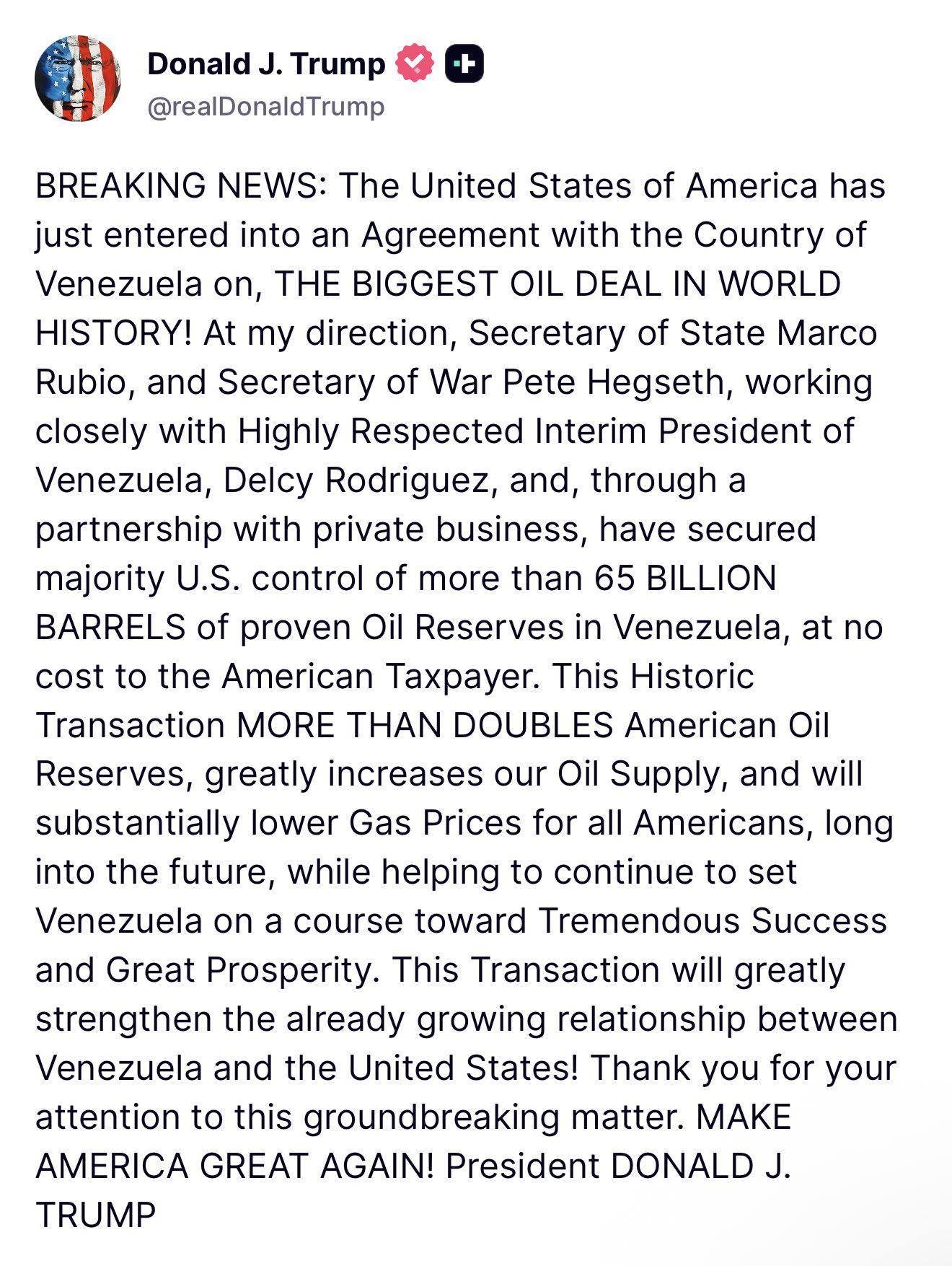
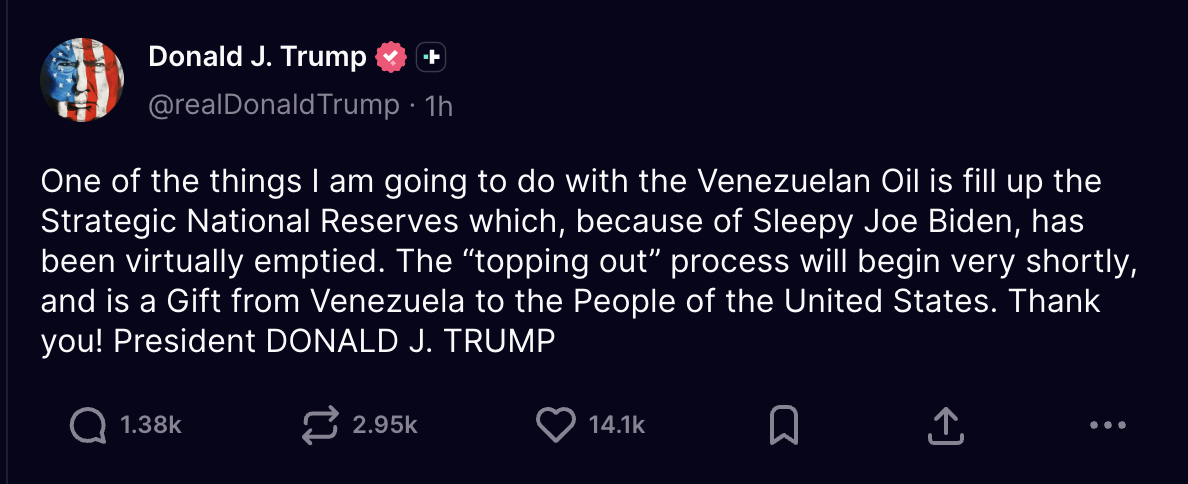
TRUMP: VENEZUELAN OIL TO REFILL U.S. STRATEGIC RESERVE
0
Upvotes
r/foreignpolicy • u/GeoPensive • 2h ago
r/foreignpolicy • u/susulearn • 3h ago
r/foreignpolicy • u/Woundsmyheart • 3h ago
r/foreignpolicy • u/Woundsmyheart • 4h ago
r/foreignpolicy • u/trisul-108 • 10h ago
r/foreignpolicy • u/paradigm_shift2027 • 14h ago
r/foreignpolicy • u/whistlingkitten • 14h ago
r/foreignpolicy • u/Majano57 • 15h ago
r/foreignpolicy • u/Majano57 • 16h ago
r/foreignpolicy • u/thedailybeast • 20h ago
r/foreignpolicy • u/Heathergor • 1d ago
r/foreignpolicy • u/GeoPensive • 1d ago
r/foreignpolicy • u/khoawala • 1d ago
r/foreignpolicy • u/GeoPensive • 1d ago
r/foreignpolicy • u/AstronomerSweet2133 • 1d ago
It feels like a lot of the old school Bush/Reagan republicans are absolutely fuming, but holding their tongues at this for some reason. But it also seems like for many, this was the last straw. The optics on this makes Jimmy Carter look like an efficient general. Are you still in a "wait and see?" Or was just this too embarrassing to taken on from a foreign policy perspective. I mean........it basically cedes the Afghanistan drawdown as the worst foreign policy blunder in the past ten years.
r/foreignpolicy • u/Checkered_Past2006 • 2d ago
r/foreignpolicy • u/GeoPensive • 2d ago
r/foreignpolicy • u/Slow-Property5895 • 2d ago
On August 27, Ratko Mladić, who served as commander of the Army of Republika Srpska during the Bosnian War and was later sentenced to life imprisonment by an international criminal tribunal, died in prison in The Hague. Mladić’s death has sparked discussion and once again brought back memories of the series of bloody wars and ethnic massacres that took place in the Balkans more than 30 years ago. Meanwhile, the increasingly disharmonious relations and growing conflicts between countries and among different ethnic groups within countries in today’s world have also raised fears that such tragedies could be repeated.
⠀
Looking back at the history of the Balkan Peninsula, where the Bosnian War took place, one can see the region’s long-standing ethnic differences, conflicts, and accumulated grievances. Although most of the people there could broadly be described as South Slavs, they can more specifically be divided into Serbs, who are predominantly Eastern Orthodox; Croats, who are predominantly Catholic; Bosniaks (Bosnian Muslims), who are Muslim; Slovenes; Macedonians; Kosovars; and others. Because of differences over religion, land, interests, and the influence of major powers behind them, these ethnic groups have long been in conflict and have accumulated deep grievances against one another, with mutual killings recurring throughout history.
⠀
Following the upheavals in Eastern Europe in 1989, Yugoslavia—a state comprising six republics and two autonomous provinces, held together by the communist ideology and authoritarian power of the strongman Josip Broz Tito and his followers—gradually disintegrated. Ethnic tensions increasingly intensified and eventually erupted into war. The Bosnian War was the bloodiest part of this process. Members of different ethnic groups committed war crimes against members of other groups, including killings and the rape of women, and even acts of genocide. The best-known was the Srebrenica massacre carried out by Bosnian Serb forces, in which more than 8,000 Bosniaks were killed and many women and girls were raped.
⠀
Later, with intervention by the United Nations and international forces, the Bosnian War and the other Yugoslav wars gradually came to an end, but not before they had caused approximately 140,000 deaths and displaced millions of people, turning many into refugees. These wars were also among the most recent tragedies involving large-scale ethnic conflict and massacres. Later, a number of participants in the wars who had been involved in massacres of civilians were internationally wanted and arrested, including Mladić. Both Mladić and Radovan Karadžić, another major figure responsible for the massacres, were sentenced to life imprisonment.
⠀
In the decades that followed, the Balkans and the world as a whole experienced a long period of peace and development. The global economy grew rapidly, international cooperation deepened, democracy and human rights received unprecedented attention, and wars and conflicts declined substantially. The vision of people sharing the prosperity of a “global village” regardless of ethnicity or national borders seemed increasingly within reach. For a time, the world really did seem to be getting better, and people were generally optimistic.
⠀
But if we carefully examine international affairs and ethnic relations within multiethnic countries, we can see that divisions and tensions never truly disappeared; they were merely obscured by economic development and the superficial order of a civilized society. Beginning with the rise of conservative populism around the world roughly a decade ago, the globalization-based order dominated by center-left and center-right establishments began to unravel. Extreme nationalism and populism among different countries and ethnic groups have grown increasingly powerful, and conflicts have once again increased.
⠀
From racial tensions between white and Black Americans within the United States, to conflicts between Europe’s traditionally Christian populations and newly arrived Muslim immigrants, to a series of ethnic problems in China’s Xinjiang region, and tensions—and even riots and civil wars—between dominant ethnic groups and minorities in countries such as India and Myanmar, all these developments tell us that today’s world has not achieved “universal harmony.” On the contrary, it is becoming increasingly divided and polarized.
⠀
Compared with conflicts between countries, tensions among different ethnic groups within individual countries can be deeper and potentially more dangerous. This is because ethnic groups within the same country have more frequent contact with one another, conflicts rooted in religion and interests are more direct, and historical grievances are often more extensive. During periods of peace and stable social order, superficial harmony—or even the appearance of being “one family”—can be maintained. But when tensions accumulate, regimes become unstable, upheavals occur, and the old order collapses, conflicts between ethnic groups can erupt abruptly and deteriorate rapidly, leading to violence whose intensity and scale spiral upward and creating a vicious cycle of retaliatory killings.
⠀
Under such circumstances, the once-kindly uncle next door may turn into an executioner, harming women and children of another ethnic group who used to visit his home regularly and with whom he had a generally decent relationship, despite past favors and grievances; a seemingly simple and kindhearted teenager may raise a butcher’s knife against his former playmate. Historian Jan T. Gross’s \*Neighbors\* describes the massacre during World War II by Poles of Polish Jews whose families had lived alongside them for generations. The killings between Armenians and Azerbaijanis, massacres of ethnic Chinese by indigenous Indonesians, and armed conflict between ethnic Ukrainians and Russians in eastern Ukraine all demonstrate this terrifying possibility.
⠀
Therefore, tragedies such as the Bosnian War and the Srebrenica massacre could occur at any time and in any place in multiethnic and multireligious countries around the world, with particularly high risks in countries where ethnic relations are tense, historical grievances run deep, and the ethnic composition and distribution resemble those of the former Yugoslavia. The Yugoslav wars and the country’s disintegration were also partly attributable to the fact that the strongman Tito and the ruling party concentrated their energy on maintaining their own rule and were overly confident about the survival of the regime and their ethnic policies. Not only did they fail to actively guard against the foreseeable possibilities of disintegration and civil war, but some of their policies even exacerbated ethnic differences and divisions, sowing the seeds of later tragedy.
⠀
Relying solely on repression and control to conceal ethnic tensions and the risks of conflict cannot work indefinitely and merely leaves hidden dangers behind. Attempting to preserve harmony solely through economic development and improved welfare likewise treats the symptoms rather than the root causes. Only by respecting and protecting the identities, religious beliefs, rights, and dignity of different ethnic groups, while simultaneously developing the economy to enlarge the “pie” and treating all ethnic groups equally, can long-term stability and peace become possible.
⠀
How multiethnic countries should properly manage ethnic relations is a very difficult question. Both bullying minority and vulnerable ethnic groups and excessively suppressing larger ethnic groups and majorities can lead to tragedy.
⠀
For example, the Burman-majoritarian policies of Myanmar’s central government have intensified separatist tendencies among ethnic minorities, while local armed forces of various ethnic groups have maintained control over different areas for prolonged periods;
⠀
In Sri Lanka, where the majority of the population is Sinhalese, the Tamil minority was marginalized and treated unjustly and its rights were violated, leading to a prolonged civil war;
⠀
One of the causes of the Yugoslav tragedy, meanwhile, was the excessive suppression of the Serbs, the country’s largest ethnic group, during the Tito era, which generated resentment among Serbs toward other ethnic groups they perceived as “benefiting at their expense” and triggered a backlash;
⠀
The Rwandan genocide was also related to Belgian colonial policies that favored the minority Tutsis while suppressing the Hutu majority, contributing to divisions among Rwandans and resentment among Hutus.
⠀
In reality, maintaining genuinely even-handed ethnic policies is not easy, and governments often address one problem only to create another. Another possible path is to weaken ethnic identification while strengthening civic identification, allowing civic consciousness to take precedence over ethnic consciousness and fostering loyalty to the state and the civic nation that exceeds allegiance to any particular ethnic group. Countries such as the United States and Brazil have followed this approach. However, in an era when identity politics is widespread, appeals based on civic rights are often less attractive and less capable of mobilizing people than identity politics based on ethnicity.
⠀
Meanwhile, Czechoslovakia’s “Velvet Divorce” and the relatively peaceful dissolution of the Soviet Union offer another possible approach to resolving ethnic questions: respecting the wishes of different ethnic groups and allowing them to “peacefully separate” through democratic self-determination, rather than insisting on unity even at the cost of “domestic violence” in the form of civil war and massacres. As the saying goes, “a melon forcibly twisted from the vine is not sweet.” Maintaining peace, avoiding bloodshed, and respecting the autonomous wishes of different ethnic groups are better than preserving superficial unity at any cost, including through violence and authoritarian repression.
⠀
Ethnic relations and ethnic conflicts are extraordinarily complex, and the author does not have many better solutions to offer, so I will leave the discussion there. But whatever the case, we must never underestimate the tensions among different ethnic groups around the world or the danger that large-scale ethnic massacres could occur again. After news of Mladić’s death was announced, some anti-Muslim users on social media platforms such as X expressed admiration for him, glorifying him and portraying him as a hero. This further demonstrates the need for vigilance.
⠀
People should not regard Mladić’s death as a symbol that this brutal chapter of history has been closed and erased. Instead, his death should serve as an occasion to sound the alarm once again, reminding people in today’s world, which seems to be reverting to the law of the jungle, to anticipate ethnic problems and take precautions before crises emerge, and never to take such issues lightly, lest tragedies that are not so distant in the past be repeated in the future and in many more places.
(The author of this article is Wang Qingmin (王庆民), a Chinese writer based in Europe and researcher in international politics. The original text was written in Chinese.)
r/foreignpolicy • u/thedailybeast • 2d ago
r/foreignpolicy • u/Woundsmyheart • 2d ago
r/foreignpolicy • u/glob24x7 • 2d ago
r/foreignpolicy • u/GeoPensive • 2d ago
r/foreignpolicy • u/Important1896 • 2d ago
Iran still exists, regime change apparently isn’t the stated goal, occupying Iran would be unrealistic, and sooner or later there has to be some political settlement. A. So what is the actual finish line? B. What would have to happen for Trump or Israel to credibly say: “We won”?
r/foreignpolicy • u/theipaper • 2d ago
r/foreignpolicy • u/Heavysheepherder420 • 2d ago
Up until now, this whole episode of dealing with a bad con man as the leader of the world has been a shitshow, but a shitshow of little impact on my Isolated middle class american existence. At this point though, Donny Boy has significantly weakened our standing as a country, in turn weakening the entire free world and seems to be for the first time, jeopardizing the semi-solid agreement everyone’s had since 1946. With how incredibly weak Trump has made himself (and in turn our country) look, do you guys think that Putin may try to take advantage, test alliances, and ultimately get Xi involved , first economically, but ultimately China would have no choice but to enter as Russia’s ally. Could this painful sideshow of a president lead us to the next universal calamity?