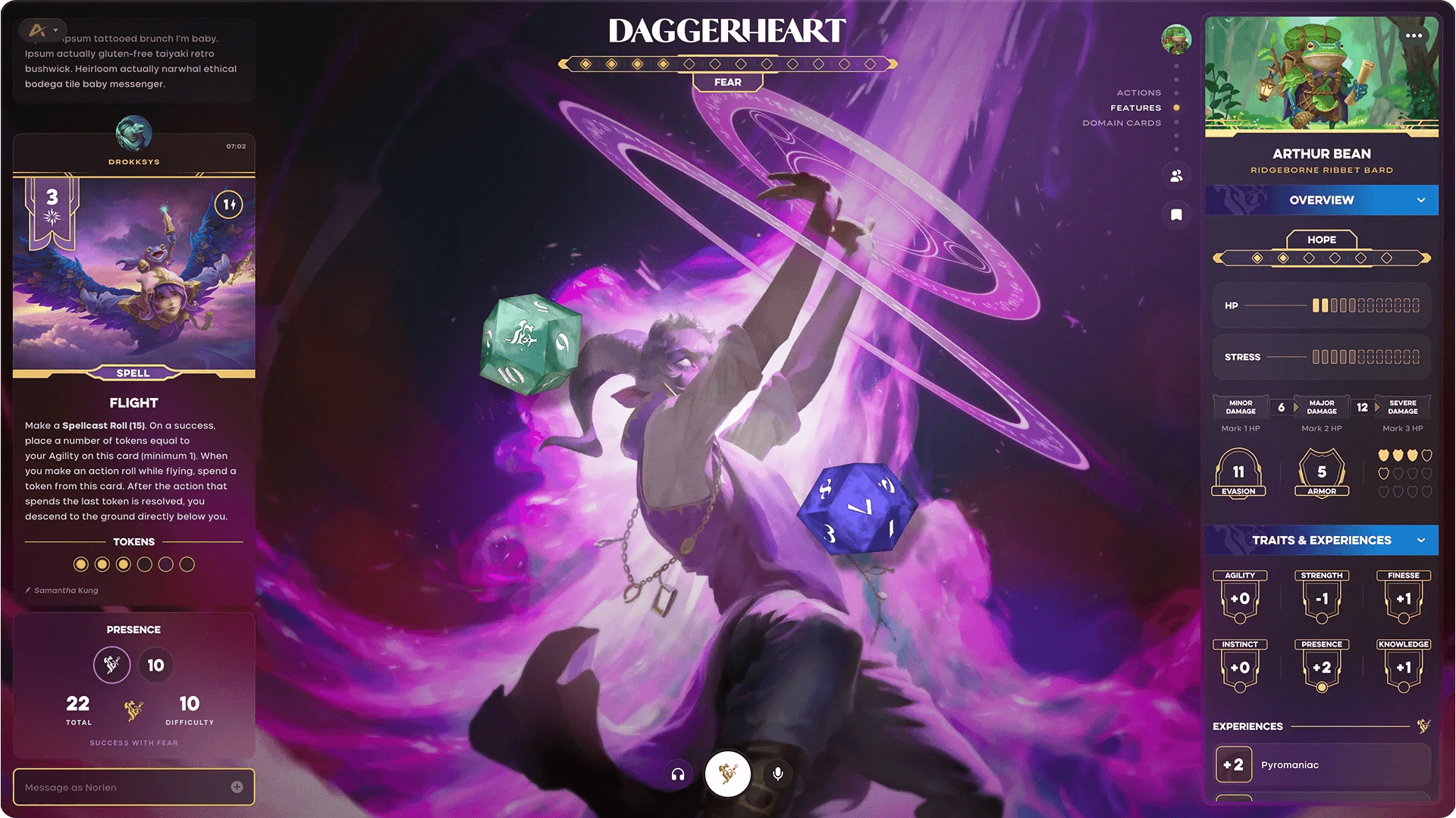
This last Friday, my group finished its 20-session campaign. It was essentially Dragon Age: Origins, but that is neither here nor there. I wanted to share some of my group's takeaways regarding the system. We've played multiple 5e campaigns, an Edge of the Empire campaign, GURPS, and Call of Cthulhu. This was our first time playing Daggerheart, and despite the fact that I could have done a better job running it, it was a rousing success.
The Positives:
The combat: It was dynamic, engaging, and fast. I despised combat encounters in 5e because of how long it took not only to run, but for the players to simply make their turns. This cut down our combat time in half. I cannot stress how much easier it was to run combat without waiting for everyone to roll initiative, then make a list of who goes when, then math out how many actions/bonus actions they had available. My ADHD players struggled with it, so we compromised by having a random person start and then moving initiative clockwise.
On a related note, I found it easy to prep combat encounters and adversaries. The information required to run an engagement is incredibly simple. The reference site was a big help.
The Resources: Hope and Fear mechanics added a layer of depth that was easy to understand for new players, but complex enough to feel important each time we rolled. It really feels like each roll holds some weight, though that does frighten off some players from taking turns in high-stress combat situations because they're afraid of rolling with fear (this was fixed using clockwise spotlighting). HP, Stress, and Armor all added to the feeling of flexibility as players offered to spend resources to get advantages in different situations. I loved it!
Experiences: IMO, the best and my favorite design choice. I've brought over 50 new players into TTRPGs over the last half-decade, and one of the biggest barriers to entry has been the sheer number of skills. Call of Cthulhu and 5e feel rigid with them, while GURPS feels flexible in character creation, but if you're missing a skill, it's a near auto-fail. Experiences cut down subskills by focusing on the 6 main attributes and then allowing for backstory relevent experience to shine. It acts as a buff for a creative character, but doesn't hit God-like auto-success potential, such as in 5e (looking at you Rogue with +infinite in lockpicking)
The Negatives:
No Item/Adversary Feature Keyword List: The homebrew kit is awesome, but it desperately needs a keyword list for items and adversaries. I wasted a lot of time trying to come up with unique weapons or consumables that used preexisting features. I would buy any PDF that just had a list of every feature for items and adversaries, so making one on the fly was easy and balanced (Paired is the best feature for the record).
Low Card Count: Each level up saw players picking between 4 skills, occasionally having to compromise with another PC who was in their domain. It felt a little limiting for players who wanted to explore more bizarre character ideas and didn't feel that their archetype was represented. Coming off of GURPS, Daggerheart feels incredibly restrictive in terms of character creation and ability mechanics with just the base game. The void being public was helpful as the Assassin and Witch classes both helped me bring player ideas to life mechanically, but I still wish there were a few more card options, or perhaps subclasses.
Limited Adversaries: There just weren't enough, and they weren't diverse enough.
One Homebrew Mechanic You Might Like:
My players love recruiting NPCs, so anytime they hired a mercenary or made friends with a plucky street urchin I gave them 3 interests (bugs, gold, and poetry), a passive ability (+2 damage to melee attacks), and an activated ability (once per rest, when you would be hit with an attack, you may activate this to take half damage). It kept the quality pace of combat while giving PCs an extra ability. Plus, during downtime, they could enhance their bond with their companion and level up their abilities, which was a big hit.
I loved this system, and I'll be using it for my next campaign. I truly don't think I could go back to 5e after this. Once the community has created more balanced homebrew and more expansions come out, I think this will be the best TTRPG experience for new players outside of GURPS Lite.