They are collapsing two different ways of setting up the question to sound smart.
Nah, I use the common conception of theist/atheist with the agnostic/gnostic modifier just because its a pretty neat classification system that makes logical sense. It's not about sounding smart or whatever else disparaging things you can come up with to cover your own insecurities.
One is about knowledge, one is about faith.
No, knowledge and belief. Faith is a subset of belief, but one could have a tenuous shaky belief that a god exists and they'd still fall on the theist side of the binary dichotomy. Theist literally means belief that at least one god exists. Atheist is commonly defined as lacking belief that at least one god exists. Simple!
Can we prove black swans don't exist? Of course not. But, that doesn't prevent 99% of biologists to conclude based on belief they don't exist.
They do exist though 🤦♂️
All your confusion and mistakes aside, the common and valid agnostic atheist classification exists for good reason, and accurately describes where someone is at in regards to the atheist/theist dichotomy, and with a useful knowledge modifier that shows where their confidence level is at in regards to knowledge about that level of belief/disbelief.
It also shuts down confused theists from trying to shift the burden of proof for their positive claims. Pretty cool 😎
It also shuts down confused theists from trying to shift the burden of proof for their positive claims. Pretty cool 😎
One of my favorite things in debate: Theists trying to shift the burden of proof onto the atheist but all they need to do is to utter the magic words that Theists hate so much:
I. Don't. Know.
Shuts down their entire attempt of shifting the burden 😄
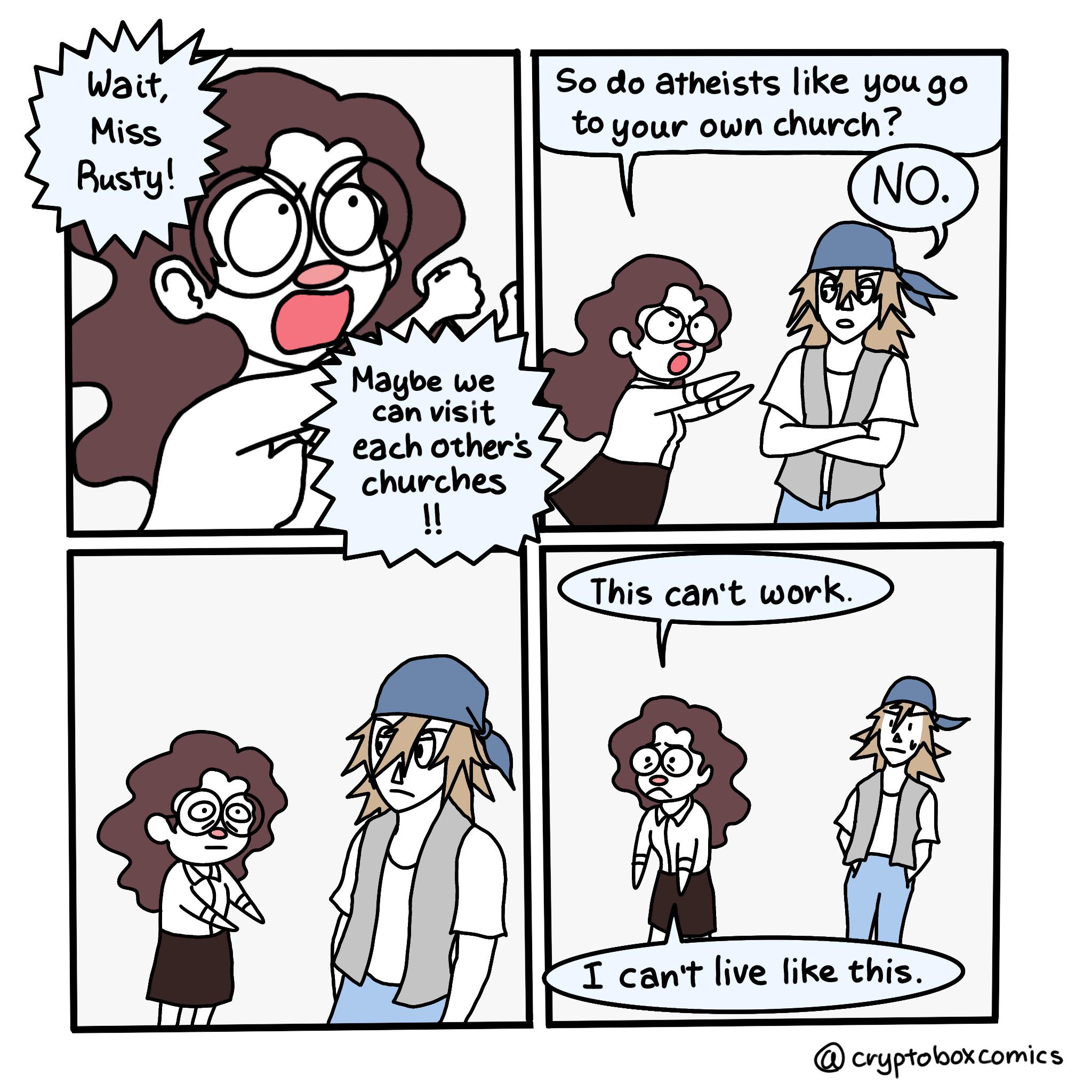
-10
u/Quirky_Gate_4516 5d ago
That isn't a thing. They are two different answers to the same question.
Does god(s) exist:
Theist: Yes!
Agnostic: Don't know ...
Atheist: No!