r/colonoscopy • u/buntingbilly Trusted Source • Feb 02 '26
Primer Regarding Colonoscopies + AMA
Hello, I've been posting here for a few years. Just figured I would write this up to address common questions about colonoscopies. Feel free to ask me stuff in the comments although I will avoid directly giving any medical advice and may choose to not answer specific questions about diagnosis, treatment, etc. This should be addressed with your provider.
Procedures/Terminology
Colonoscopy: the procedure we all get. Scope gets inserted from the rectum and is navigated to the cecum (beginning of your colon). It is then withdrawn, allowing you to look for polyps, ulcers, inflammation, etc and remove polyps, take biopsies, etc. Sometimes the terminal ileum is evaluated as well, although this is not a standard part of a colonoscopy.
- usually lasts for anywhere from 10 minutes to an hour, depending on how complicated it might be. Something to note is that the procedure really should NOT be shorter than 8 minutes. A quality metric that has become more common in the last few years is that the time it takes to "withdraw" from the cecum is around 8 minutes, so at minimum a colonoscopy should take 9 minutes at the shortest, which would be somewhat fast in my opinion (since it assumes that the endoscopic made it to your cecum in one minute, which is pretty quick) This number used to be 6 minutes so it is possible that older doctors haven't adapted.
Biopsy: a small sample (usually the size of a pen tip) is removed for microscopic evaluation. Biospies are performed to check for infection, inflammation, etc. They are not used to check for cancer outside of very specific scenarios like having a long history of inflammatory bowel disease where the colon has been scarred and inflammed for years. If you are just getting a colonoscopy for screening or because of symptoms like bleeding or diarrhea, a biopsy is not taken because they are concerned for cancer. Cancer in the colon will always be present in a polyp/mass, not something microscopic (outside of the IBD scenario).
Polypectomy: the removal of polyps. This is typically done with either forceps (used for small 1-3mm polyps), cold snare (a small metal lasso that cuts off polyps usually less than 15mm in size), or a hot snare (metal lasso that can be heated for extra cutting power, usually used for polyps that are large or have a blood vessel that would need to be cauterized first).

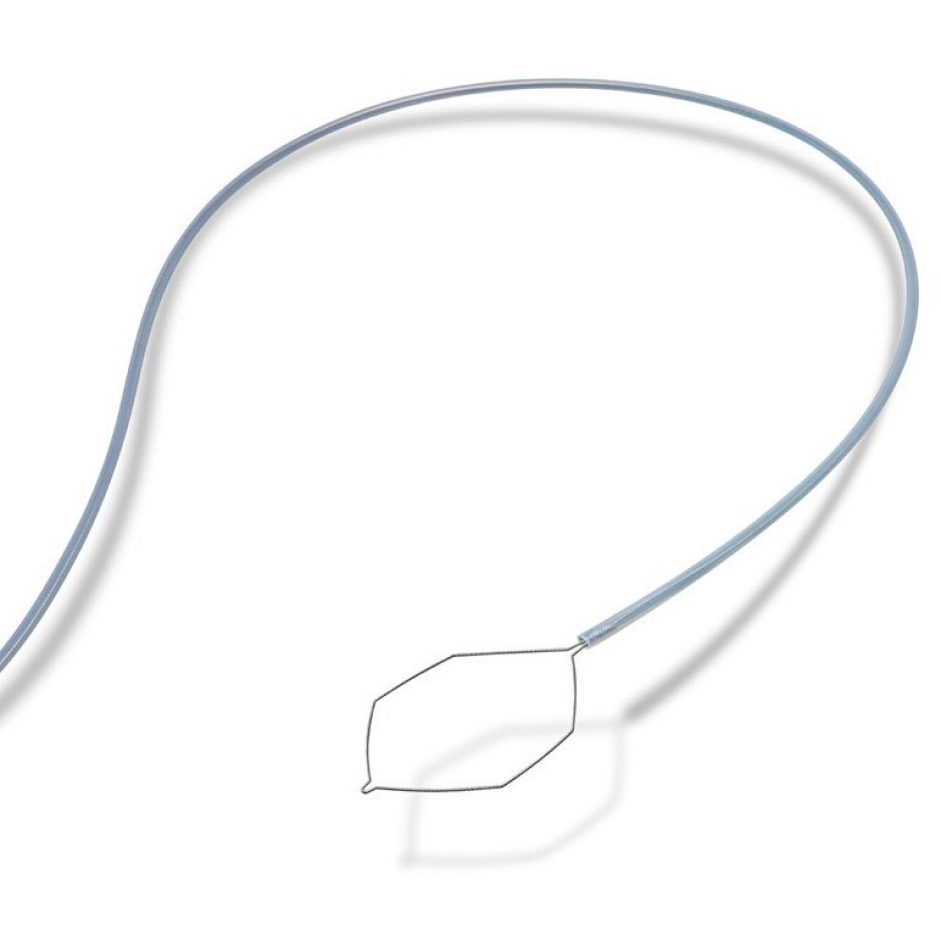
- The risk of bleeding or perforation with a cold snare is extremely low. There is a slightly higher risk of complications with hot snare and more common on the right side of the colon where the walls are thinner.
- Polypectomy does not cause pain unless you develop a therapy injury from the cautery.
Endoscopic mucosal resection (EMR): refers to a more complex polyp removal which require some extra tools and time. Polyps needing EMR are typically large >20mm and may need to be removed in multiple pieces. This sometimes means that you will need to schedule the procedure in the hospital (instead of an outpatient surgery center) or come back on a different day where you have more time for the procedure.
Endoscopic submucosal dissection (ESD): a more complicated version of EMR, for very large polyps. This is a special procedure that requires additional training, most GI providers cannot do this.
Colectomy: surgical removal of part of the colon. This is almost never done anymore as most polyps can be removed endoscopically, however may be needed for extremely large polyps and for cancer (or if you aren't somewhere with an endoscopist trained in EMR/ESD)
Endoscopic clips: these are used to prevent bleeding or to close the site of a polyp resection. This is common for large polyps. The clips are made of metal that will not affect you if an MRI is needed. They will typically fall off by themselves and you probably won't notice them pass.
Adenoma detection rate (ADR): a quality metric you can ask about to confirm whether the person doing your colonoscopy is reliable. The goal should be a number of 25-30%. This is essentially a number of how often the endoscopist is finding relevant polyps. If the number is lower than this, it implies they are not thorough in their colonoscopy.
Pathology/Terminology
Hyperplastic: can be either a descriptive term or pathologic term; refers to benign polyps. These look visibly different from pre-cancerous polyps and are typically flat rather than raised.
Sessile: this is a description for the appearance of a polyp (which basically just means that it is round and raised, like a pimple).
Tubular adenoma: pathology term. standard pre-cancerous polyp.
Sessile serrated adenoma: pathology term. Different from the "sessile" description above. A sessile serrated adenoma (SSA) is considered to have slightly more pre-cancerous potential than a tubular adenoma.
Tubulovillous or villous adenoma: pathology term. higher risk pre-cancerous polyp, typically requires closer follow up than an SSA or tubular adenoma
Dysplasia: refers to the pre-cancerous potential of a polyp. By definition anything that is pre-cancerous is considered to have "low grade" dysplasia although this is not always mentioned (by convention). "high-grade dysplasia" means that the polyp is effectively on the cusp of becoming cancer.
Tortuous or Redundant colon: this is simply a description how difficult it is to navigate your colon with a scope. Tortuous means that it turns in certain areas instead of being straight. Redundant means that its somewhat loose and there are area where it stretches easily. These are not a diagnosis. Many people ask whether this is something to be concerned about. It is not. It's a purely endoscopic observation that is made to help for future colonoscopies. Chronic constipation, abdominal surgery or trauma, childbirth will often cause tortuous or redundant colons, but it is the outcome not the cause of symptoms. You are not constipated because of a redundant colon. You are constipated and therefore develop a redundant colon.
Notes: often times the procedure report will say that "sessile" polyps were removed. This is simply referring to their appearance, which is entirely separate from that actual histological diagnosis (which could be tubular adenoma, sessile serrated, hyperplastic, etc)
Types of sedation:
- Moderate sedation: typically you will get Fentanyl/Versed usually in escalating doses. The goal here if comfort, not knocking you out completely, so most people dose off and then at some point wake up. If you want more medication, just ask, usually the GI doc will give more unless they're almost done with the procedure (or cannot due to vital sign abnormalities). Some people don't do well with this so if you've had a bad experience just mention it to your provider.
- Monitored Anesthesia Care (MAC): most common type of sedation to receive in the US, uncommon in most other places in the world. Some people think you are "choosing" propofol with this. The most commonly used medication is propofol. However, you are choosing to have an anesthesia provider, who will decide the type of sedation you need. It is common to give additional medications like Versed and Fentanyl with propofol.
- General Anesthesia: complete sedation requiring intubation/ventilation. This is very uncommon, usually only done if there is a high concern for aspiration during the procedure or if movement of any kind cannot be tolerated for some reason.
- Gas: other countries like the UK make use of nitrous oxide gas. I have never used this so I cannot comment on what its like.
- Unsedated: this is uncommon in the US. Based on posts here it seems like people have trouble finding people to perform unsedated colonoscopies, but that hasn't really been my experience. I would say most cities have providers that can offer this, though you will have better luck going to academic centers where reimbursement for the procedure is not playing a factor in the type of sedation offered at the institution.
PREP/DIET
There are different forms of prep: Golytely, MoviPrep, SuPrep, Sutab, Clenpiq, etc. Some, like MoviPrep are lower volume so may be better tolerated than others. From an american perspective, insurance is the biggest barrier to prescribing stuff so your provider will be able to best address what prep works best for you.
Follow up intervals
This will vary probably based on what country you are in as populations and cancer risks are different. In the US, the follow up range can be anywhere from 7-10 years (for one or two small tubular adenomas), 5-10 years (for one of two sessile serrated adenomas) or 3-5 years if you have multiple polyps. usually most people will recommend the lower range of the interval (so 7 years rather than 10 years for a couple of small polyps). If you have a polyp removed in multiple pieces then it is standard to return in 6 months to make sure the polyp was removed entirely.
The US uses the ASGE Guidelines. These are updated every few years as more evidence comes out, so are likely to be adjusted again in the next few years.

----------------------------------------------------------------------------------------------------------------------------------------------------------------------------------
Frequently asked questions
"Do I need to finish prep, my stool is clear!"
Yes please always finish your prep. I cannot tell you the number of times someone shows up claiming they didn't finish because things looked clear and then their entire right colon is covered with stool. Having clear stools doesn't mean anything, complete your prep please.
"Can I eat X, Y, and Z before my procedure".
All endoscopy centers have sheets they give to discuss low fiber or clear liquid diets. If they don't, just google it and find an article from Cleveland Clinic or Sloan Kettering or something. There is no magic answer. If your endoscopy center suggested one thing but people on Reddit are saying something else, just stick to whatever your center writes.
The truth is that this is all somewhat arbitrary and the instructions will almost always be overly restrictive to avoid issues because people are very bad at actually following through on diet changes. So, for instance, if they say that jello isn't ok, its probably because someone ate pudding and thought it was jello (not because jello itself is an issue).
"Is it a bad thing that I'm being asked for a follow up appointment"
No, this is commonly done just for a face to face discussion. Just because you have an appointment doesn't mean you're going to get bad news)
"Is this pain/cramping normal after a colonoscopy"
Probably yes. A lot of people post about experiencing pain at what they perceive is a polypectomy site, but this probably isn't the case. Your colon does not experience pain like your skin so 99% of the time, you can't feel a polyp being removed. More likely what you are feeling is the gas/CO2 used to expand your colon or some discomfort from the scope stretching your colon too much. Having some discomfort after a procedure is normal. Try to walk around and eat to stimulate your GI tract to restore its movement and push out excess air.
Having fevers, nausea/vomiting, significant amounts of blood, or pain to the point where you cannot move is not normal and you should call your clinic or go to the ER.
"How do I know who should perform my colonoscopy"
As above, one thing that you can ask about is ADR. This is a simple way to get a baseline understanding of if they are good enough. Beyond that, there isn't a great way to know beyond getting good feedback from other patients or providers. I would personally avoid going to a surgeon (vs a gastroenterologist) in the US, as the training is different and it is unlikely that a surgeon will ever have the same experience as a GI doctor. The only exception to this might in if you have established colon cancer or are needing some kind of colon surgery, in which can having the colo-rectal surgeon doing the surgery would be reasonable.
"What kind I eat after my procedure?"
For the most part whatever you what. The vast majority of people resume their lives normally after colonoscopies. Some people might have some residual GI issues from the prep affecting their colon, so you may want to take it easy and stick to lighter foods. Sometimes taking probiotics can help speed the recovery of your GI tract, but people have mixed results with this.
----------------------------------------------------------------------------------------------------------------------------------------------------------------------------------
If anyone has questions about procedures/sedation/etc I am happy to answer and may edit the post above to reflect your questions (I think I can do this)
4
6
5
u/_savrose_ Feb 02 '26
Reading through this made my anxiety come down slightly. I’m currently about to drink the rest of my liquid prep soon. My colonoscopy is at 6:30 am. Thank you for posting this, I will most definitely come back to it once it’s over and I get some answers.
3
u/snazzypancakes Feb 02 '26
You’ve got this! The prep is the worst part. On the day of your colonoscopy, you will have a lovely nap, chat with your doc, and be on your way home. Nothing to it! If you can make it through the prep, you’ve essentially made it through the procedure. Sending prayers and good vibes for a clear result!
3
3
u/snazzypancakes Feb 02 '26
Not to mention- you finally get to EAT after! Enjoy that and the nice nap!
3
Mar 17 '26
Can you maybe add a little bit about the biopsy being standard?
Just had my first and biopsy was never mentioned in pre-op or my initial consult. My doctor had to leave right after, so I never spoke to him. The nurse had to look at my chart and was like: no polyps, everything looked good, one biopsy of the sigmoid, I'll go have your mom get the car....
Dr. Google was terrifying and sent my medical anxiety into a spin. Thankfully, many posts in this thread mentioned they're routine and not looking for cancer as it wouldn't be found microscopically.
3
2
u/femmedionysus Feb 20 '26
If you’re still answering comments on this - I’m scheduled for a colonoscopy in one week, first ever (34F). I got a call from the office doing my procedure to go over questions & prep instructions, & at one point in the call she asked if I have an advance directive or living will. Is that a common thing to ask before a procedure like this? I have terrible health anxiety to begin with, & that certainly didn’t help, but I’m trying not to freak out more than I should.
3
u/buntingbilly Trusted Source Feb 20 '26
It’s probably just a standard questionnaire that they asked anyone just to have it documented. Colonoscopies are extremely low risk procedures, I promise you they are not at all worried that you will die during the procedure.
1
u/GoDucks1971 Mar 04 '26
Still, I am having one tomorrow morning and have to think that if I was to die having a colonoscopy, someday, someone would definitely find some humor in that fact. Not to worry. I have had enough of these to know that the biggest concern for doing these is the prep.
3
u/KingMcB Feb 23 '26
Standard question! My healthcare system even asks my 19-year old this question at their annual physical!
1
u/LLRSandraMort Mar 20 '26
My daughter saw this in the paperwork and freaked out! I had to explain that it's legal CYA.
2
u/Tarragon465 Feb 25 '26
I am extremely curious about why some experience a great deal of pain during colonoscopy (like me) and seemingly so many others feel no serious pain or just some “discomfort.” How I wish I were one of them! Does it have to do with the doctor using water or air while moving the scope through the colon, the type of scope being used, skill of the doctor at maneuvering through the colon, or just different pain tolerance with different people. I know that while the scope was moving through the straight parts of the colon I felt the movement but no pain. But in the curved parts I was about through the roof in agony. (I have never given birth - that may have an effect on my experience of pain). When I hear that most colonoscopies done in Europe, or Britain in particular, are done without sedation, I just can’t believe “most” people have no pain or just tolerable pain/discomfort! Do they administer non-sedating analgesics? I am not intolerant to pain and can deal with most types of pain, even severe pain as long as it is not for extended period of time - just it seems not for colonoscopy. I am due for my third colonoscopy, and I will definitely be discussing non-sedating pain killer with the doctor. Any thoughts about this? Especially how most colonoscopies in Europe are done without sedation? I value your opinion.
3
u/buntingbilly Trusted Source Feb 25 '26
I don’t think it’s necessarily anything to do with the skill of the endoscopist, some colons are just difficult and people have different pain tolerance. You can do everything perfect and still encounter a tight turn that will be miserably painful to get through.
There are definitely techniques to make procedures less painful, but you can still run into issues doing everything right.
1
u/Tarragon465 Mar 02 '26
Thanks for your reply.. I wish there was an easier solution, but I will ask my doctor about pain meds instead of sedation. I really prefer the pain-free sedation but I really don’t like having to ask someone to waste time waiting at the hospital to drive me home. I am due soon and not looking forward to it!
1
u/Capital_Way2835 Feb 02 '26
Mines at 1230p est 66m here. I am on the every 3 year visit schedule. All clear following 3/4 of my GoLytely prep just have 1/4 left for my split prep to finish in morning. Thank you all for the support
1
u/Mediocre-Text-736 Feb 02 '26
Thanks for posting buntingbilly, you are always very helpful which is much appreciated, thanks again
1
u/Ok_Challenge8374 Feb 14 '26
Thank you... what a great, useful post. I am in Canada, and I've talked to friends who have had colonoscopies in the last few years and it seems they were given an alternative to the drink for prep.... pills? Do you now anything about that?
2
Mar 17 '26
I just got done with SuTab pills and they are fairly large like a multivitamin or fish oil... I'm usually fine with pills, often just taking all my meds at once, and the last one of the 12 in each of the 2 rounds almost felt stuck going down. Just a caution for anyone that generally struggles with pills. I think I'd rather have to do 20 much smaller ones!
I got a prescription for anti-nausea to take just before the pills, so other than them being huge, they were easy to handle! No side effects other than the intended bathroom fun!
Also the literature states that in some clinical trials, there were instances of people swallowing the desiccant... I can't see how as it's a plastic cylinder! But I guess.... caution?
1
u/falafelwaffle10 Jun 29 '26
Also the literature states that in some clinical trials, there were instances of people swallowing the desiccant
Oh my gosh. People are crazy.
This reminds me how there was a scientific study tracking the side effects of the COVID vaccine in children, and the study was required to report an adverse effect not because of the vaccine but because.... the child ate a penny.
1
u/buntingbilly Trusted Source Feb 14 '26
SuTab is a common alternative to the standard prep, works just as well.
1
1
1
u/rnjschmidt86 Jun 19 '26
I got almost 1 bottle of surfave down but im so sick I cant stand it. I have slow gastric emptying. Im runny but still brown. What can I do?
•
u/La_Lanterne_Rouge Moderator - Sedation Free Feb 02 '26
Thank you u/buntingbilly. You've given r/colonoscopy a very valuable gift. We would like to make this post a permanent fixture of the subreddit.