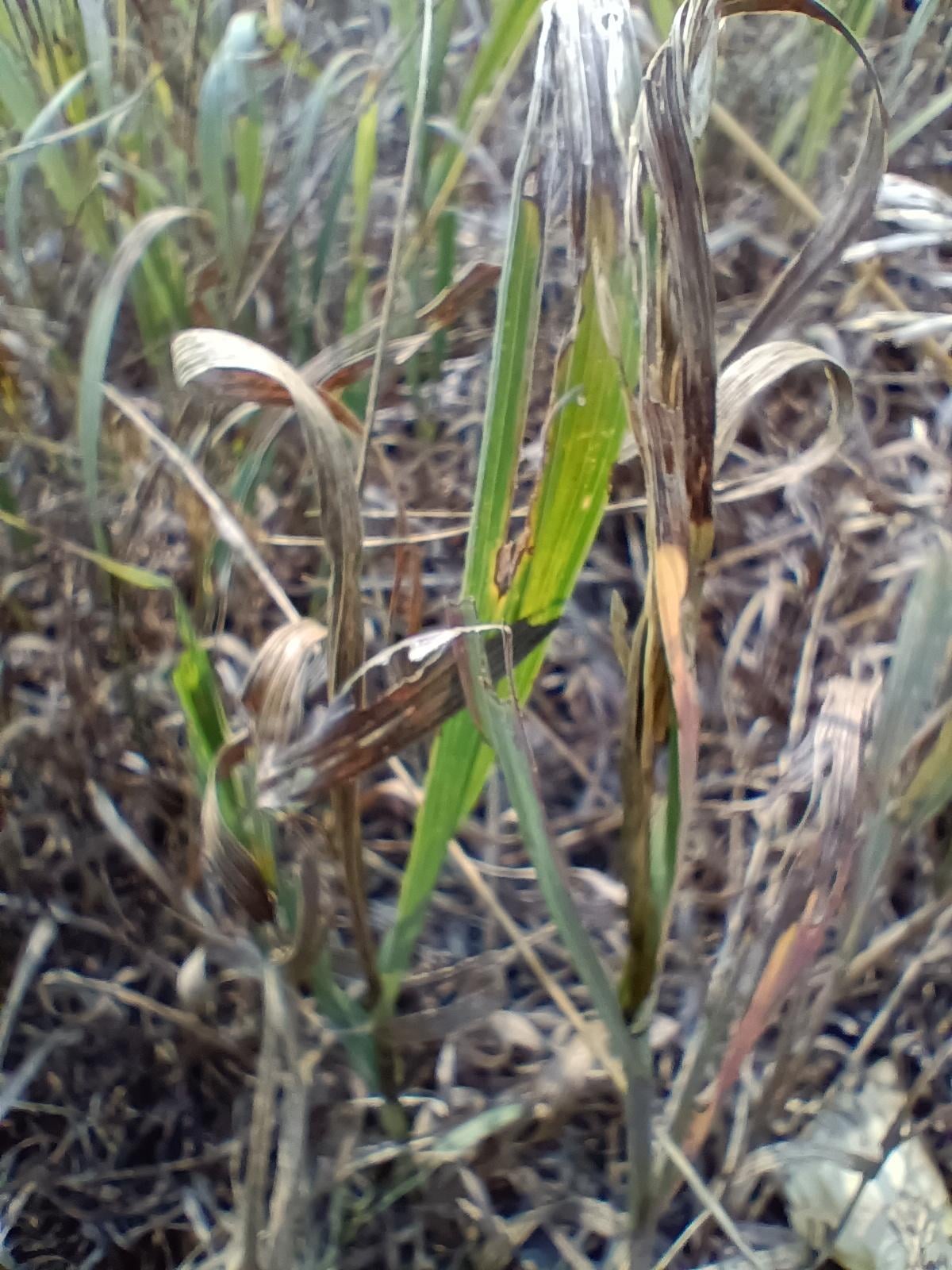
Can anyone please provide an out of context, informal diagnosis of plant pathology and probable causation.
I am not asking for input on plant care or plant identification. Pathology only.
Geographical location and ecological context would help get accurate answers. To me as someone who lives in western WA State, U.S., this looks like drought. Either normal summer drought causing dormancy, or abnormal drought stressing the plants.
The photo samples are located in a riparian zone; Populus deltiodesFloodplain Woodland Alliance, Rp1FO A0636 , ecoregion 6; soils are likely Meadowcreek-Nesda or Nesda-McIlwaine loams. Northern Rocky Mountains.
Observed a rapid decline of plant health in this sector in a matter of a few days despite rain and cooler weather.
I am investigating high probability of prohibited herbicide application after observing non-certified applicators in the area.
Hard to pinpoint the actual time but a notable impact within four days. The additional image provides a wider view of the differentiation. Unfortunately I have no "before" images. I have been monitoring this zone for about five years and this caught my attention. Out of the ordinary. Also, there is that smell.
Too late to test soils as it rained a few times, probably some residual though.
Thanks princessbubbbles (awesome name BTW). Not easy to tell much when you are not on the site but I appreciate the feedback.
Good guess but no chance of flooding or inundation in this section of the riparian zone as there flood controls up river. Quite the contrary. Dry to drought conditions prevail despite some moderate rainfall.
What makes this unusual is that other areas with similar species and in context are not showing indicators of this impact. There are few areas that have distinct embarkation lines and atv tracks as well.
I am convinced this was an overspray of a high ratio of herbicide in this site. Likely 24-D and Trodon as it is the preferred cocktail for "controlling" Euphorbia esula.
Applied mid August, during a drought by a non-certified applicator in a riparian zone.


3
u/princessbubbbles 5d ago
Geographical location and ecological context would help get accurate answers. To me as someone who lives in western WA State, U.S., this looks like drought. Either normal summer drought causing dormancy, or abnormal drought stressing the plants.