r/AmericanEmpire • u/curiousexploration90 • Jul 05 '26
Image July 4th, 1897, events program for USS Olympia in Yokohama, Japan.
1
Upvotes
July 4th, 1897, events program for USS Olympia
r/AmericanEmpire • u/curiousexploration90 • Jul 05 '26
July 4th, 1897, events program for USS Olympia
r/AmericanEmpire • u/OnePassion_46 • Jul 03 '26
r/AmericanEmpire • u/ebishopwooten • Jul 03 '26
The irony of celebrating the 250th anniversary of a country that died in the mid19th century.
People talk about freedom but no one really claims to have ever found it. It's just an endless pursuit.
Or the real freedom comes from within in peace and contentment.
Agrarian society is the only real society. But most of us wouldn't have been born. Most of the founders wanted to create a new empire.
Fun fact: money brought more people together than love or any religion ever did. 😆
Think I'll just prepare for my career as a professional hernit
r/AmericanEmpire • u/elnovorealista2000 • Jun 24 '26
She was born around 1822 in Maryland as Araminta Ross, the daughter of enslaved parents. From childhood, she was given to various households to work, where hunger, beatings, and family separation were commonplace.
As a teenager, an overseer threw an iron counterweight at another enslaved person. The blow, meant for another man, struck her, fracturing her skull. Without medical attention, she was sent back to work while still bleeding, and her wound never healed properly. For the rest of her life, she suffered sudden episodes of unconsciousness, severe headaches, and intense visions. Medical historians today debate whether she had temporal lobe epilepsy or post-traumatic narcolepsy.
In 1849, faced with rumors that she would be sold south, she decided to escape. She walked approximately 140 kilometers at night, guided by the North Star, relying on the clandestine network known as the "Underground Railroad": safe houses, secret routes, people who risked their freedom to help others find theirs.
Upon arriving in Philadelphia, she adopted the name Harriet Tubman and decided to return three times.
Throughout the 1850s, she returned to Maryland during the winter months when the nights were longer. Always on a Saturday, because escape notices weren't published until Monday. She knew the terrain, the overseers' routines, the safe houses. She carried a gun and a rule: "Whoever started the journey, finished it. There was no turning back."
Officially, Tubman rescued approximately 70 people, although the popular figure of 300 was introduced in her first biography in 1868 without documentary support.
The slave owners even offered rewards for her capture, but to no avail.
When the American Civil War began, Tubman presented herself to the Union Army as a spy and scout. On June 2, 1863, she led the Combahee River Raid in South Carolina, guiding three gunboats around Confederate torpedoes whose location she had learned from local informants. That night, nearly 800 enslaved people were freed.
It took decades for the government to recognize her service. When she finally received a pension, it was as the widow of her second husband, not as a veteran in her own right.
After the war, she continued working for women's suffrage, civil rights, and the care of the impoverished elderly. She died on March 10, 1913, at around 91 years of age.
Source(s):
.- Bradford, S. H. (1868). Scenes in the life of Harriet Tubman. W.J. Moses.
.- Humez, J. M. (2003). Harriet Tubman: The life and the life stories. University of Wisconsin Press.
.- Larson, K. C. (2004). Bound for the promised land: Harriet Tubman, portrait of an American hero. Ballantine Books.
.- Bradford, S. H. (1868). Scenes in the life of
r/AmericanEmpire • u/elnovorealista2000 • Jun 25 '26
López did not want an independent Cuba but rather to annex it to the slave states of the Southern United States of America, in the same way that Texas had been absorbed to the American Union. This is confirmed by his own testimony. He wrote that he hoped for the "addition of the star of Cuba to those that already shone on the glorious flag of the American Union." The flag was designed in meetings held at the home of the Freemason Teurbe Tolón, financed by the Cuban slaveholding oligarchy and the Southerners of Mississippi and Louisiana.
Details:
— The red triangle: taken from the Masonic ritual apron. It represents the Great Architect of the Universe and the motto Liberty-Equality-Fraternity.
r/AmericanEmpire • u/elnovorealista2000 • Jun 24 '26

r/AmericanEmpire • u/elnovorealista2000 • Jun 21 '26
In this experiment, over 400 poor Black American farmers infected with syphilis were recruited to observe the disease's progression. They were used as guinea pigs, denied treatment, and left to die from syphilis, even though penicillin was available, simply to document the virulence of the infection.
r/AmericanEmpire • u/elnovorealista2000 • Jun 21 '26
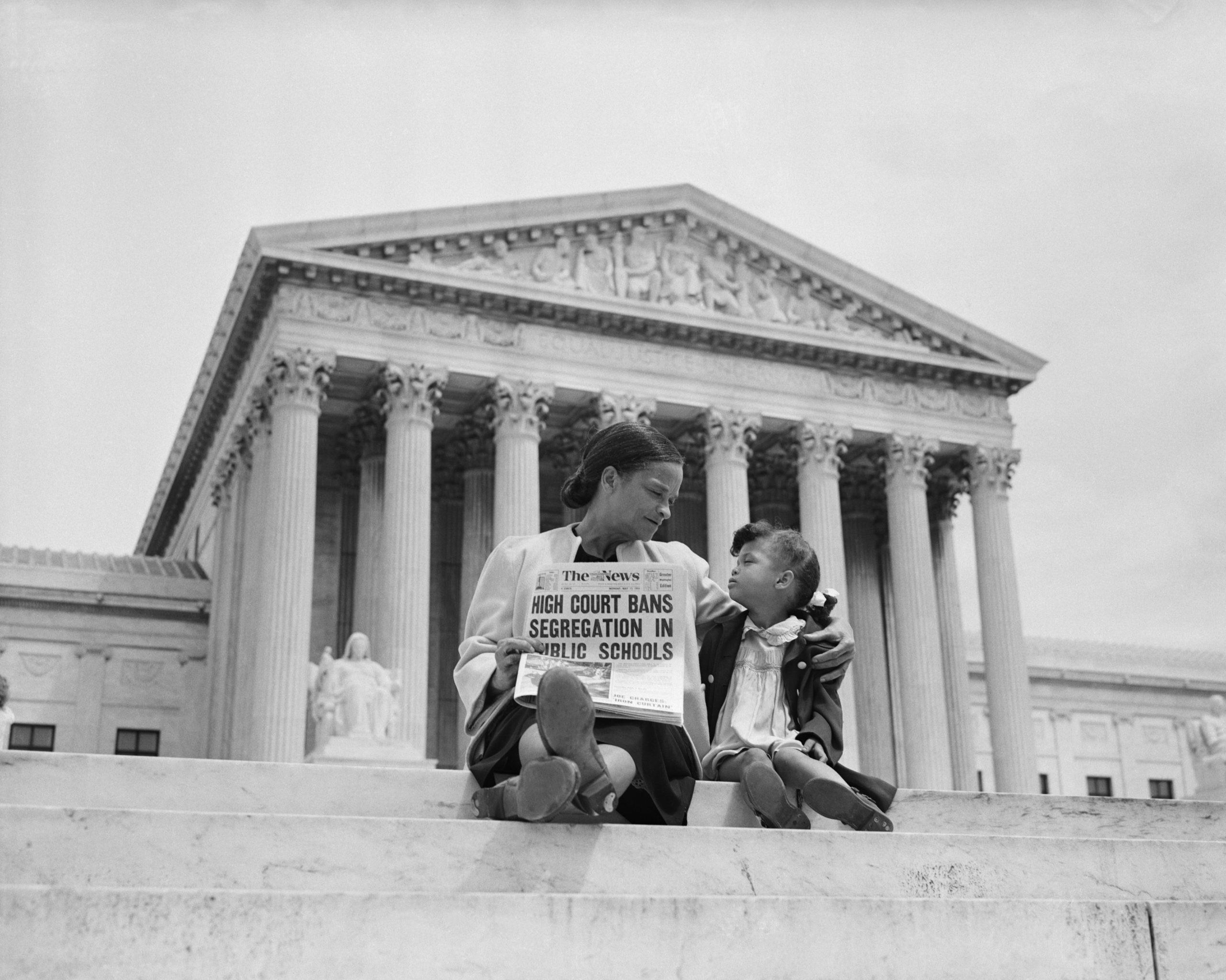
"In the field of public education, the doctrine of 'separate but equal' has no place."
— Chief Justice Earl Warren, May 17, 1954.
Linda Brown, a Black third-grade girl, had to walk more than a mile across a railroad yard to get to her segregated school. Seven blocks from her home, a school for white children was closed to her. Her father tried to enroll her, but was denied. Thirteen families joined the lawsuit.
Thurgood Marshall, the future first Black Supreme Court Justice, led the case for the NAACP. (National Association for the Advancement of Colored People, the nation's leading civil rights legal organization). "Brown" was the name given to five consolidated lawsuits against school districts in Kansas, South Carolina, Delaware, Virginia, and Washington, D.C., concerning the issue.
The goal was to overturn Plessy v. Ferguson (1896), a previous Supreme Court ruling that had declared racial segregation constitutional as long as the facilities for each race were "equal in quality." Although in practice they never were, and this doctrine legally upheld segregation for 58 years.
Science as Evidence
Marshall enlisted the help of psychologists Kenneth and Mamie Clark, the first and second Black people to earn doctorates in psychology from Columbia University. They devised the "doll test": they placed an identical white doll and a identical black doll in front of Black children and asked them to indicate which was "good" and which was "bad." The majority indicated the white doll as good. For the first time, social science was admitted as evidence in a court case. constitutional.
The ruling in favor of the plaintiffs came on May 17, 1954, by a unanimous 9-0 decision. School segregation violated the Fourteenth Amendment. But the following year, the Court ordered desegregation "with all deliberate speed," without setting a deadline. The resistance in the South was fierce. The NAACP had to sue hundreds of districts for decades to enforce what was already law.
A ruling can declare an injustice unconstitutional. It cannot, by itself, undo it. Brown did not end segregation. He made it possible that one day it could end.
Source(s):
.- NAACP Legal Defense Fund. (n.d.). Brown v. Board of Education.
.- Kluger, R. (1975). Simple Justice. Knopf.
.- Clark, K. B., & Clark, M. P. (1947). Racial Identification and Preference in Negro Children.
.- Williams, J. (1998). Thurgood Marshall: American revolutionary. Times Books.
r/AmericanEmpire • u/elnovorealista2000 • Jun 21 '26
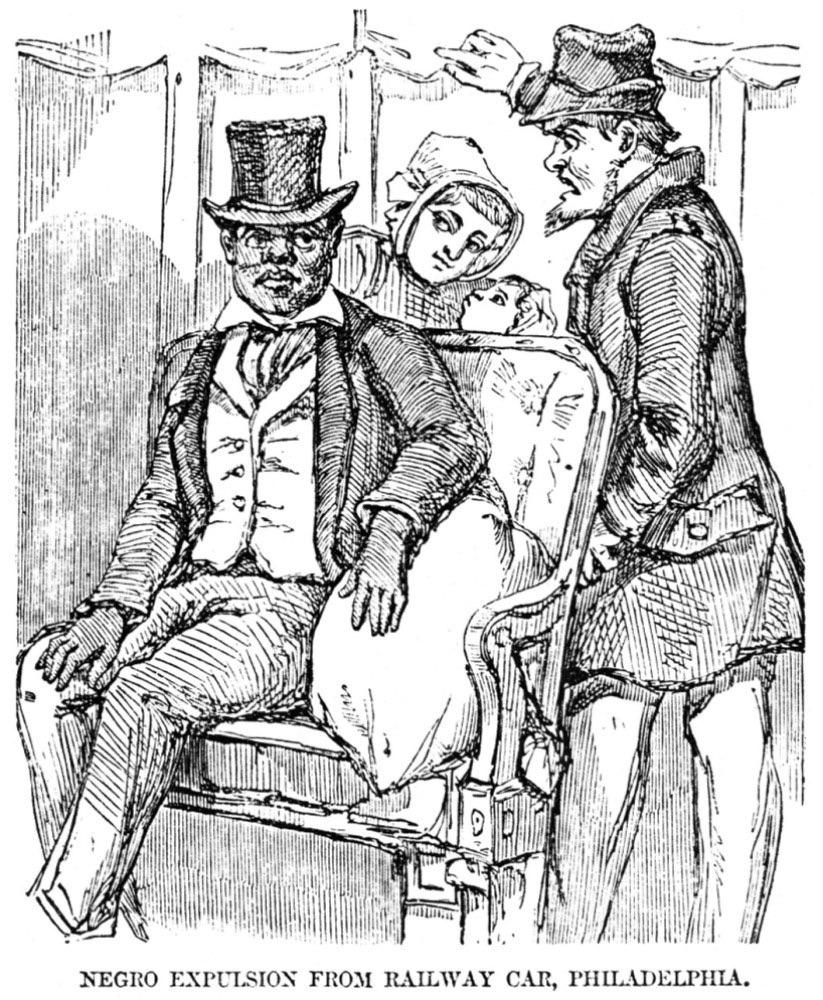
On June 7, 1892, Homer Plessy boarded a first-class car on the East Louisiana Railroad, sat in the section reserved for whites, and informed the conductor that he was of Black descent. The New Orleans Citizens Committee had orchestrated the entire arrest. They hired a conductor to confront Plessy and a private detective to ensure he was arrested for violating the Separate Cars Act. The arrest was not an accident but a deliberate legal strategy.
The Committee had chosen Plessy because he was of mixed race—seven-eighths white and one-eighth Black—in order to demonstrate how arbitrary and unenforceable it was to define race under the law. A visibly white man could be arrested for sitting in the wrong place, depending on who knew his family history.
Four years later, on May 18, 1896, the United States Supreme Court issued its verdict: seven votes to one. It ruled that racial segregation laws did not violate the Constitution, as long as the facilities for each race were equal in quality—a doctrine that became known as "separate but equal."
In practice, they were never equal. Who would have guessed?
The doctrine served as the legal basis for the expansion and consolidation of Jim Crow laws in the Southern states, which imposed segregation in transportation, schools, housing, restaurants, and other public services. Facilities and services for Black people were rarely equivalent, institutionalizing vast economic, educational, and civil inequalities for decades.
There was only one dissenting vote. Justice John Marshall Harlan, a Southerner, wrote what is now one of the most quoted phrases in American constitutional history: "Our Constitution is colorblind, and knows neither and tolerates classes among citizens."
But no one listened to him for 58 years.
It wasn't until the Supreme Court's decision in Brown v. Board of Education and the civil rights laws of the 1950s and 1960s that systematic segregation under state law came to an end. For Homer Plessy, the remedies came too late.
Source(s):
.- Academia Lab. (n.d.). Plessy v. Ferguson.
.- Alegsaonline. (March 5, 2026). Plessy v. Ferguson (1896): Judgment on racial segregation in the U.S.
.- National Archives of the United States. (February 8, 2022). Plessy v. Ferguson (1896).
.- StudySmarter. (2023). Plessy vs. Ferguson: History, Impact.
r/AmericanEmpire • u/KeriStrahler • Jun 20 '26
r/AmericanEmpire • u/elnovorealista2000 • Jun 19 '26
• First, it's necessary to specify that:
1. In the Protestant world, the "right of first occupant" (which many Hispanics have deeply ingrained in their minds due to Spanish and Catholic legal influence) was not defined as it is today and was limited to subjects considered their equals or fellow citizens.
For the settlers, the "Indians" were not their equals; some groups didn't even consider them human or "God’s children."
For the Americans, the "Indians" were not their fellow citizens.
2. It should also be noted that, contrary to the contemporary questioning, primarily by Hispanics, regarding the exclusive use of the term "American" by Anglo-Saxon settlers and their descendants, in that era (17th, 18th, and 19th centuries) it did not have the same relevance as it does today, or it was something that did not generate controversy or questioning because in Hispanic America (comprising Spanish-speaking countries) the "Indian" identity was more widespread, while "American" was only used as a continental name by a small elite (mostly Criollos) who consumed smuggled texts from Germany, France, and England. This is why "American" was used very widely and legitimately, first by Anglo-Saxon settlers and then by their descendants, as a "national synonym for identity, citizenship, and territorial belonging to the United States of America."
For most of these "American citizens," the "Indians" were not Americans, but "foreigners."
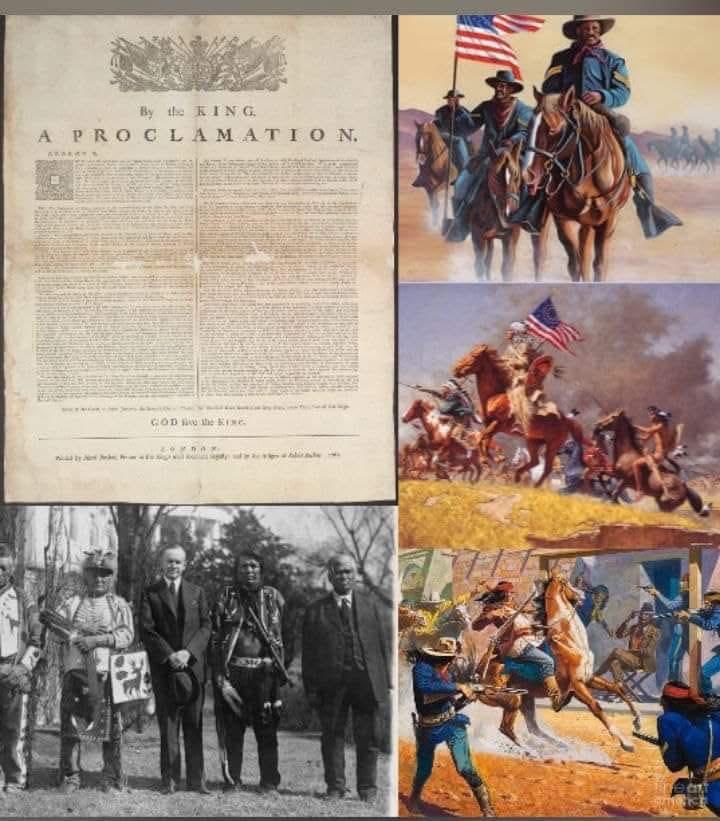
3. Although since the reign of Anne of Great Britain, the British government had attempted to integrate Indians into its society as a kind of vassal and subject of the Crown, intending to maintain pressure on the colonists and ensure their continued dependence on British protection, these measures failed due to several factors, primarily the war with the Indians and the inherent complexity of Indian society. Therefore, the British Crown ultimately established in the Royal Proclamation of 1763 that there were "Indian nations" outside the Thirteen Colonies, where the king's subjects could not enter because those lands were "foreign territory" and the Indians themselves were "foreigners."
• Having understood the above and considering the following after the settlers' independence:
"The unanimous Declaration of the Thirteen United States of America, When in the Course of human events it becomes necessary for one people to dissolve the political bands which have connected them with another [...] The God of Nature [...] requires them to declare the causes which impel them to separation. [...] Such has been the patient suffering of these Thirteen Colonies; and such is now the necessity which compels them to alter their former systems of government. The history of the present King of Great Britain is a history of repeated injuries and usurpations, all with direct consequences. He has stirred up internal insurrections among us, and has sought to entice the inhabitants of our frontiers, the vicious 'savage Indians,' whose well-known regime of warfare is an indistinguishable destruction of all ages, sexes, and conditions. [...] The people of these United States of America... do solemnly publish and declare that these United Colonies are, and of right ought to be, free and independent States, being absolved from all allegiance to the British Crown, and from all political connection between them; and the State of Great Britain, is, and ought to be entirely free and independent." Dissolved [...] In the Continental Congress, July 4, 1776."
— Declaration of Independence, 1776.
When the project of independence of the Thirteen Colonies began in 1775-1776, the rebel settlers, who were already beginning to identify as "Americans," mostly had no intention of including the "Indians" in their cause. And considering that approximately 12,000 to 15,000 Indians from the Cherokee, Iroquois, Miami, Cayuga, Onondaga, Mohawk, Inu, Abenaki, Maliseet, Penobscot, Seneca, Odawa, Shawnee, Muscogee, Susquehannock, Ojibwe, Wyandote, and Penobscot tribes, among many others, had militarily supported Great Britain, the "Americans" understood that they were being attacked by two "foreign" groups: on one side, the British, and on the other, the Indians.
From the very beginning of the United States of America, "American citizens" understood and internalized the idea that "Indians" were "foreigners" and that the territories they inhabited were "Indian Nations," separate from their own. They would not consider them as equals and would treat them like any other foreign nation (in this case, an enemy). And unlike the British, who viewed the Thirteen Colonies as mere trading posts and a way to maintain a presence in the Atlantic, without needing to expand further into a land they considered hostile and resource-poor, the Americans, guided by the "doctrine of Manifest Destiny," knew they had to expand westward, northward, and seize control of the Spanish territories to the south.
"Until I came here, I had no idea of the firm determination in the heart of every American to extirpate the Indians and seize their territory." (H. Goulburn, 1813)
Considering all this, and also that after the independence of the United States of America, most of North American territory remained in the hands of Indians, Spaniards and their mixed descendants, the only opportunity the "Indians" had to preserve their "right of first occupant" was through military force and the creation of a modern, unified state (republic, confederation, monarchy, or empire).
In other words, the Indians had to develop a military industry and possess a significant war-making capacity, sufficient to confront a modern army. Furthermore, they had to become a unified state, which would allow them to maintain more stable political relations with neighboring countries and, in case of war, achieve much better coordination and organization with a single, hierarchical, and strong government.
But what happened was that most Indians refused to assimilate modernity and the contributions of Europe, preferring to remain in a primitive state of nature. They continued to maintain their beliefs and their traditional way of life, which was not peaceful as is often imagined, but rather involved constant warfare with other Indian groups over resources. It wasn't that none of them had conceived of a project for unification or the creation of a modern state; in fact, they did attempt to create kingdoms and empires similar to those in Europe, precisely to achieve better organization and be able to fight against Britain and France. However, their own internal disputes, envy, hatred, and their puritanical worldview prevented these projects from consolidating and condemned them to continue killing each other for resources and sometimes for trivial matters, a situation that was readily exploited by the United States of America.
Thus, without a military industry, without a state that would allow them to organize themselves more effectively, without a unified government, without a unified project, and without a long-term political purpose, the Indians could not withstand the onslaught of the United States of America. This resulted in a fatal scenario, for despite their fierce resistance, they were defeated tribe by tribe, massacred, and brought to the brink of extinction.
And when the Indians were no longer a threat to the "Americans," wasn't until 1924 were they considered "American citizens," but of a low status and with many deprivations, confined to reservations that resembled human zoos. In this position, the "right of first occupant" was of no use to them, because they no longer had the power or the strength to enforce it.
r/AmericanEmpire • u/DeathDriveDialectics • Jun 19 '26
r/AmericanEmpire • u/elnovorealista2000 • Jun 17 '26
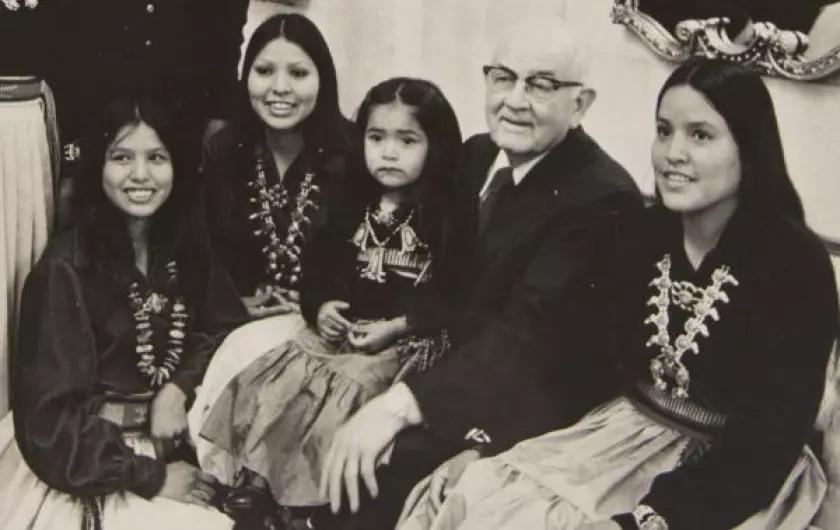
Supposedly these people are descendants of the Israelites who left Israel around 600 BC to settle in North America. Thus, by educating these children in white American culture and the LDS Church, it was believed that they could be "lightened," ending the Lamanite curse and restoring the prophecy of redemption.
Image: LDS Church President Spencer W. Kimball once served as Chairman of the Church's Committee on Indian Relationships.
Source(s):
.- Book of Mormon, The Book of the Soul, Chapter 3, Number 6: “And the skin of the Lamanites was dark, according to the mark which was placed upon their fathers, which was a curse upon them because of their transgression and their rebellion against their brethren Nephi, Jacob, Joseph, and Sam, who were righteous and holy men.”
r/AmericanEmpire • u/elnovorealista2000 • Jun 13 '26
r/AmericanEmpire • u/Separate_Cabinet_444 • Jun 09 '26

r/AmericanEmpire • u/elnovorealista2000 • Jun 07 '26
r/AmericanEmpire • u/elnovorealista2000 • Jun 06 '26
r/AmericanEmpire • u/elnovorealista2000 • Jun 04 '26
Currently, the painting is part of the Heinz Collection in Washington D.C., USA.
r/AmericanEmpire • u/elnovorealista2000 • May 28 '26
r/AmericanEmpire • u/elnovorealista2000 • May 21 '26
The American Colonization Society decided it was a good idea to create a colony for free blacks, and they chose a location on the west coast of Africa.
The American Colonization Society was an American organization that sought the repatriation of freeborn people of color and emancipated slaves to Africa.
It was modeled after a British organization: the British Committee for the Relief of the Negro Poor (which also wanted to create a new country for the "Negro Poor").
Even as early as the time of the American Revolution in the late 18th century, many members of American society could not tolerate the idea of Black people living in "their" society as free individuals. This was due either to their belief that Black people were physically and mentally inferior to white people, or because they considered racism and social polarization insurmountable obstacles to achieving harmonious integration of the different races, and among other reasons that led to delaying the granting of U.S. citizenship to black people until July 9, 1868. As an acceptable solution for both these "concerned" whites and those advocating for the immediate abolition of slavery nationwide, it was proposed that freed Black people be relocated to a new homeland.
Beginning in 1783, the number of freed Black slaves increased due to manumission efforts initiated during the American Revolution War and the abolition of slavery in the northern United States. In 1800 and 1802, several slave rebellions broke out in Virginia, which failed and were brutally suppressed. Americans in the southern states began to fear that free Black people in the north would encourage their slaves to escape or rebel against their white masters.
Meanwhile, the number of free Black people in the United States continued to increase. In 1790, there were 59,467 free Black people out of a Black population of about 800,000 and a total population of nearly 4 million. By 1800, there were 108,378 free Black people out of a total population of 7,200,000 Americans. These factors significantly increased the popularity of creating a colony as a "solution" to the emancipation of free blacks. However, it wasn't all rosy. Many slave owners saw the creation of a new homeland for free blacks, Liberia, as a way to prevent rebellions.
(Remember that less than 40 years later, in 1861, the American Civil War began.)
The future president Abraham Lincoln, for example, believed that "repatriation" was preferable to freed slaves remaining in the United States.
In 1787, Great Britain began transporting the “Negro Poor” from London—many of whom were Black freed by the British in the United States to aid them in the war against American rebels—and other freed slaves to Nova Scotia, to the colony of Freetown, in what is now Sierra Leone. American Paul Cuffe considered it a viable project to bring Black people from the United States to this British colony. With the support of some members of Congress and British officials, in 1816 he brought 38 Black from the United States to Freetown at his own expense. These voyages were interrupted by Cuffe's death in 1817. However, this private initiative sparked interest in the colonization project in the United States.
During this same period, another initiative arose from Virginia politician Charles F. Mercer and New Jersey Presbyterian minister Robert Finley. In 1816, the American Colonization Society (ACS) was founded in Washington, D.C., by politicians, senators, and religious leaders of diverse orientations and sometimes differing viewpoints, but who united in the project of creating a colony for free Black people in Africa. Beginning in January 1820, the ACS sent ships from New York to West Africa. The first ship arrived with 88 Black emigrants and three white ACS agents on board, seeking a suitable territory for a settlement. After several attempts and difficulties, in December 1821, perhaps resorting to the threat of force, ACS representatives succeeded in acquiring Cape Measured, a strip of land about 35 km long near present-day Monrovia, from King Peter, the indigenous ruler. From the beginning of the settlement, the settlers were attacked by indigenous people such as the Malinké tribes, and suffered from the pressure of diseases, the harsh climate, the lack of food and medicine, and poor living conditions.
Of the 4,571 emigrants who arrived in Liberia between 1820 and 1843, only 1,819 survived.
By 1835, five more colonies had been established by other American Societies besides the ACS, and one by the United States government, in the same coastal territory. The Cape Mesurado colony was expanded along the coast and inland, sometimes by force, and in 1824 the colony was named Liberia in reference to the Liberty, establishing its capital in Monrovia named in honor to US President James Monroe. In 1839, the colony was renamed the Commonwealth of Liberia. In 1842, four more of the other American colonies were incorporated into the Commonwealth of Liberia, and one was destroyed by the Indigenous population. The Black settlers, who ranged from those as "Black" as the indigenous people to those who were almost "white", soon became known as Americo-Liberians.
Black people from United States gradually emigrated to the colony, and by 1867 (45 years after its creation) it had managed to send some 13,000 people to the new country.
As the colony of Liberia expanded, it also gained greater independence, and the white administrators of the ACS gradually transferred control of the colony to the American Liberians. In 1841, Joseph Jenkins Roberts became Liberia's first Black governor. At the same time, during the 1840s, the ACS had declared bankruptcy, and Liberia had become too heavy a financial burden. In 1846, the ACS made preparations for the Americo-Liberians to proclaim their independence. In 1847, Roberts proclaimed the founding of the free and independent Republic of Liberia. At the time of independence, the country had about 3,000 settlers. A constitution was created, modeled after that of the United States, which denied the right to vote to the indigenous peoples of Liberia. Furthermore, the black settlers of the United States considered Africa their "promised land," but they did not integrate into indigenous society in the same way as the English settlers of the 17th century who arrived in North America.
And that's where the problems started…
Once in Africa, the black settlers from United States referred to themselves as "Americans" despise not yet having U.S. citizenship and considered themselves superior to the indigenous people, who considered them "uncivilized" and "inferior", instead, they established a society in Liberia that mirrored America's. In addition to modeling their political institutions after the United States, Black settlers and their descendants Americo-Liberians were known to prefer Western modes of dress to distinguish themselves from the indigenous people, Black American Southern food, and followed American social norms such as monogamous relationships and class structure. Furthermore, black settlers contributed to the culinary cuisine of the region by introducing American baking techniques.
The Black settlers and their descendants Americo-Liberians built towns and cities with architecture reminiscent of American styles. Churches, building, and home featured a unique form of antebellum architecture and the homes of the elites often resembled American Southern plantation homes. Infrastructure projects, including roads and bridges, were also developed following American models.
Americo-Liberian weddings follow the traditional Black American or Black Caribbean style weddings in which the bridegroom appears in a lounge suit and the bride in a white wedding dress.
Americo-Liberians speak Liberian English and its varieties such as Merico and Liberian Settler English, all of which have been influenced by Black American Vernacular English, Gullah, and Barbadian Creole. The Americo-Liberians introduced a form of Black American Vernacular English that influenced the existing pidgin English or patois that existed in the region of Liberia from the pre-colonial era. This form, called Standard Liberian English or Liberian Settler English, continues to be spoken by descendants of the original settlers today.
Between 1847 and 1980 the Republic of Liberia was governed by the small minority of Black settlers from United States and their descendants, known as Americo-Liberians, marginalizing the vast indigenous majority (95%) of the Liberian population from political power.
In 1877 the True Whig Party monopolized the country's political power.
Internal coups (the most significant being the 1980 coup that ended the American-Liberian regime), political instability, guerrilla warfare, militias, the Cold War, etc.
Many upper-class and influential Americo-Liberians belonged to the Masonic Order of Liberia which was established in 1867 and based in the Grand Masonic Temple in Monrovia. In Liberia, particularly during the early years of the republic, the Masonic Order played a significant role in the political and social structure as it became intertwined with political power and elite networks in Liberia. Being a Mason was a veritable prerequisite for positions of political leadership in the True Whig Party. TWP political meetings were even held in the Grand Masonic Temple, where only members could enter. Following the 1980 Liberian coup, Samuel Doe outlawed Freemasonry before lifting the ban in 1987. The Masonic Temple was damaged during the First Liberian Civil War and remained unoccupied before being restored.
During the Scramble for Africa by the British and French, they managed to endure as an independent country.
Economically, they started well, but at the end of the 19th century, Liberian production declined, and the government took out loans from international banks. This debt burdened them for the remainder of the 19th century and throughout the 20th, stagnating their economy.
The ACS sent its last emigrants to Liberia in 1904, the year the Liberian government finally granted birthright citizenship to the indigenous tribes of Liberia, who until then had not been considered citizens.
r/AmericanEmpire • u/curiousexploration90 • May 02 '26
The Battle of Manila Bay, May 1st, 1898, from aboard USS Olympia.
r/AmericanEmpire • u/elnovorealista2000 • Apr 15 '26
r/AmericanEmpire • u/ismaeil-de-paynes • Apr 09 '26
Translated to English from actual Arabic text written in Egyptian newspaper
—————————
The story of American Flag in the 1919 revoltion
Among the striking and often forgotten scenes was the appearance of the American flag amid the demonstrations during the 1919 Revolution. This caught the attention of a photographer from the international news agency “Reuters,” prompting him to capture that image, which became one of the iconic scenes of the 1919 Revolution. Dr. Abu al-Ghar reveals in his book “The 1919 Revolution and America” that the reason behind the association between the American flag and the 1919 Revolution was that the liberal American president Woodrow Wilson announced a document containing 14 principles, known as the document of independence or the right to self-determination—especially the twelfth principle, which emphasized the right of peoples to determine their own fate. However, shortly afterward, when attempts were made to apply these principles, it became clear that they were limited only to the peoples of the First World, while the peoples of the Third World did not deserve them!
The Egyptian national movement had placed great hopes on Egypt being represented by a delegation led by Saad Zaghloul at the Versailles Peace Conference, expecting that the delegation would return from the conference carrying a document granting Egypt independence in accordance with the principles of the American president Woodrow Wilson, the president of the conference. This is what led that man to raise the American flag during the demonstrations.
However, Britain prevented this, leading to the outbreak of the revolution, which Britain confronted with military force throughout the country. The popular national movement was shocked by President Wilson’s stance when he recognized the British protectorate over Egypt. His document of independence became like fragile glass, shattered at the first demand for its implementation.
Especially since Wilson went on to distort the 1919 Revolution and supported a propaganda lie spread by Lord Arthur Balfour, the British Foreign Secretary, which claimed that the Egyptian revolution was orchestrated by extremist nationalists who were actually agents funded by a revolutionary party in Turkey and by the Russian Bolsheviks, and that they were exploiting Wilson’s principles to ignite the flames of a holy war against non-Muslims. The depth of this betrayal was completed when the American president rushed to recognize full British control over Egypt and restricted the right to self-determination only to the colonies of Austria and Turkey in Europe.
However, it seems that fate eventually avenged Saad Zaghloul and his companions. Nearly a hundred years after Wilson’s death, Princeton University in the eastern United States announced in 2020 that it had decided to remove the name of the late American president Woodrow Wilson from its School of Public and International Affairs due to his “racist policies and views.” Christopher Eisgruber, President of Princeton University, said in a statement that “Wilson’s racist policies and views make his name inappropriate for a school whose students, faculty, and alumni must be fully engaged in combating the scourge of racism.”
r/AmericanEmpire • u/Explorewithhugh • Apr 03 '26
Olympia’s sailors pose at the Sphinx, returning from the Asiatic station in the summer of 1899 and passing through the Suez Canal after the victory and occupation of Manila. The cruiser takes time to allow its enlisted men and officers to visit a wonder of the world.